
What Is Can Sha? Medicinal Parts, Identification Methods, and Common Formulas
The name Can Sha may easily make people mistake it for a plant seed or mineral, but it actually comes from the dried feces of silkworm larvae. Many overseas users encounter the ingredient ‘Can Sha’ when looking into traditional formulas for dispelling dampness and harmonizing the stomach, and naturally want to know what it looks like, where it comes from, and how it differs from Wulingzhi and similar substances. This article discusses these questions and explains the source and safety issues to pay attention to before use.
What Does Can Sha Look Like? How to Identify It?
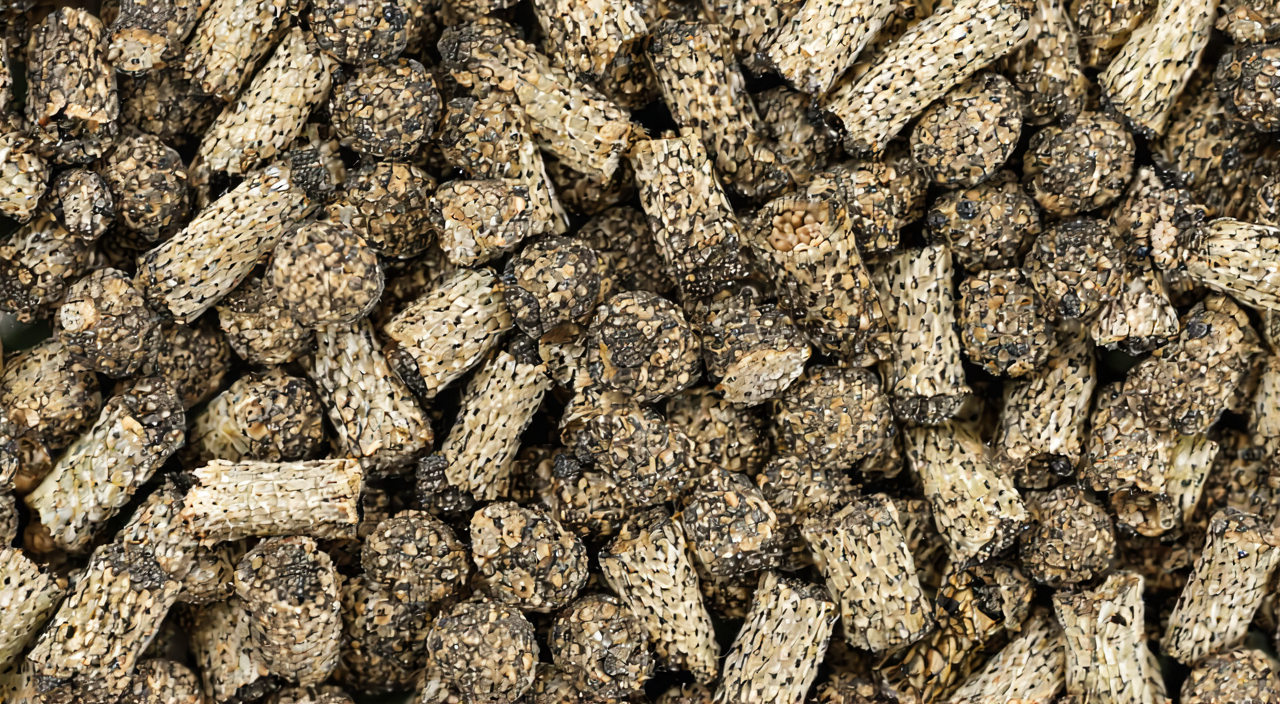
The typical appearance of Can Sha is not difficult to remember. Traditionally, Can Sha is mostly short cylindrical or small granular in shape, relatively short in length, and its surface is usually dark brown or grayish black, sometimes with a slightly dark green tone. The surface of the granules is relatively rough, not as smooth as some plant seeds. The texture is hard but brittle, and after breaking, grass-leaf-like or fibrous structures can often be seen on the cross-section. This is because after silkworm larvae feed on mulberry leaves, plant tissue remains in their feces. Can Sha has a distinctive odor, a mixture of stale grass leaves and animal excrement, which is not used as a direct basis for judging medicinal effect, but can serve as an identification reference. On the market, the granule size of Can Sha is not completely uniform and is affected by silkworm age, feed, and purification processing. What people usually see are purified granules with fewer impurities. If the granules are unusually shiny, have mold spots, or have a pungent sour smell, it may indicate problems with storage or cleaning.
What Is the Medicinal Part of Can Sha?
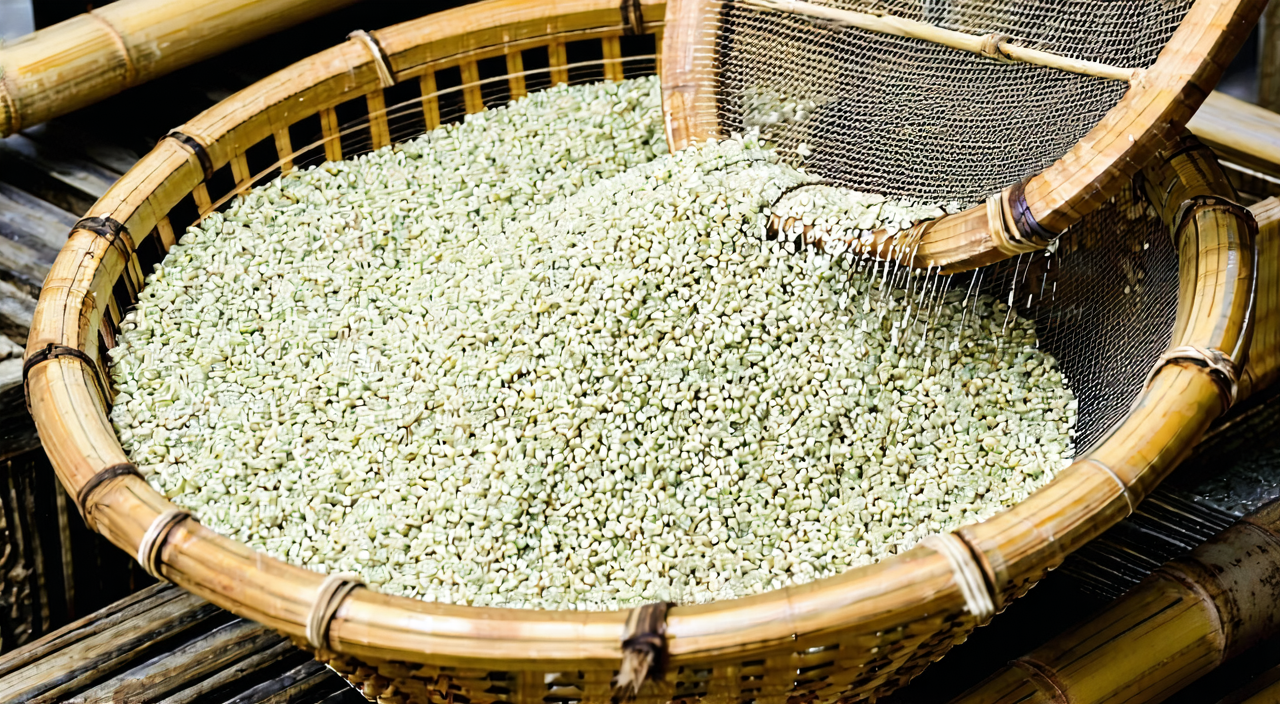
The medicinal part of Can Sha is quite special: it is not the root, stem, or leaf of a plant, nor the horn or shell of an animal, but the dried feces of silkworm larvae. In traditional collection, the feces excreted by silkworms are usually collected, and after removing mulberry leaf residues, dead silkworms, and other impurities, they are dried and further purified. It must be emphasized that medicinal Can Sha is not something that can be used simply by collecting it from an ordinary silkworm-rearing environment. The rearing environment, feed quality, cleanliness, and drying method all affect the hygienic condition of the medicinal material. Can Sha from proper channels usually needs to undergo screening, purification, and necessary quality inspection. When overseas users learn about or purchase related products, they should pay attention to whether the product source is clear and whether there is quality inspection information.
How Does Traditional Chinese Medicine Understand Can Sha?
In traditional Chinese medicine theory, Can Sha is often understood from the perspectives of dispelling wind and dampness, harmonizing the stomach and resolving turbidity, and invigorating blood and relieving pain. It often appears in regulating approaches for dampness-turbidity and wind-dampness conditions, especially when the body shows symptoms such as heavy limbs, joint discomfort, dampness stagnating in the middle burner, or night cramps. In ancient texts, Can Sha is used with other herbs to help transform dampness and free the channels. ‘Dispelling wind and dampness’ does not mean it can directly eliminate a certain modern medical disease; rather, it is traditionally believed to help improve the state of dampness-turbidity retention. ‘Harmonizing the stomach and resolving turbidity’ is mostly applied when dampness-turbidity affects the spleen and stomach, causing distension, nausea, decreased appetite, and similar patterns. As for ‘invigorating blood and relieving pain,’ it is more of an auxiliary approach for freeing the channels and relieving pain. Whether it is suitable for use depends on individual constitution, specific symptoms, and professional judgment; it is not advisable to apply a single herb by oneself based only on its name.
What Aspects Do Modern Studies Focus On?
Modern research on Can Sha does not only focus on traditional effects but also places great emphasis on safety. As a medicinal material of animal feces, Can Sha can easily involve issues such as microorganisms, mold, pesticide residues, and heavy metals. If the mulberry leaves eaten by silkworms have pesticide residues, or if the rearing environment is unclean, related substances may enter the feces. If drying is incomplete or storage is damp, mold can easily grow. Therefore, modern quality control usually checks microbial limits, mold counts, pesticide residues, and heavy metal indicators. For ordinary users, this means that they should not collect silkworm feces by themselves for use, nor buy loose Can Sha from unknown sources. If a product lacks basic quality information, safety risks increase. This article does not discuss the ‘modern medicinal effects’ of Can Sha as a reason to buy it, but only reminds readers to pay attention to source and hygiene when learning about it.
What Are the Differences Between Can Sha, Wulingzhi, and Yemingsha?
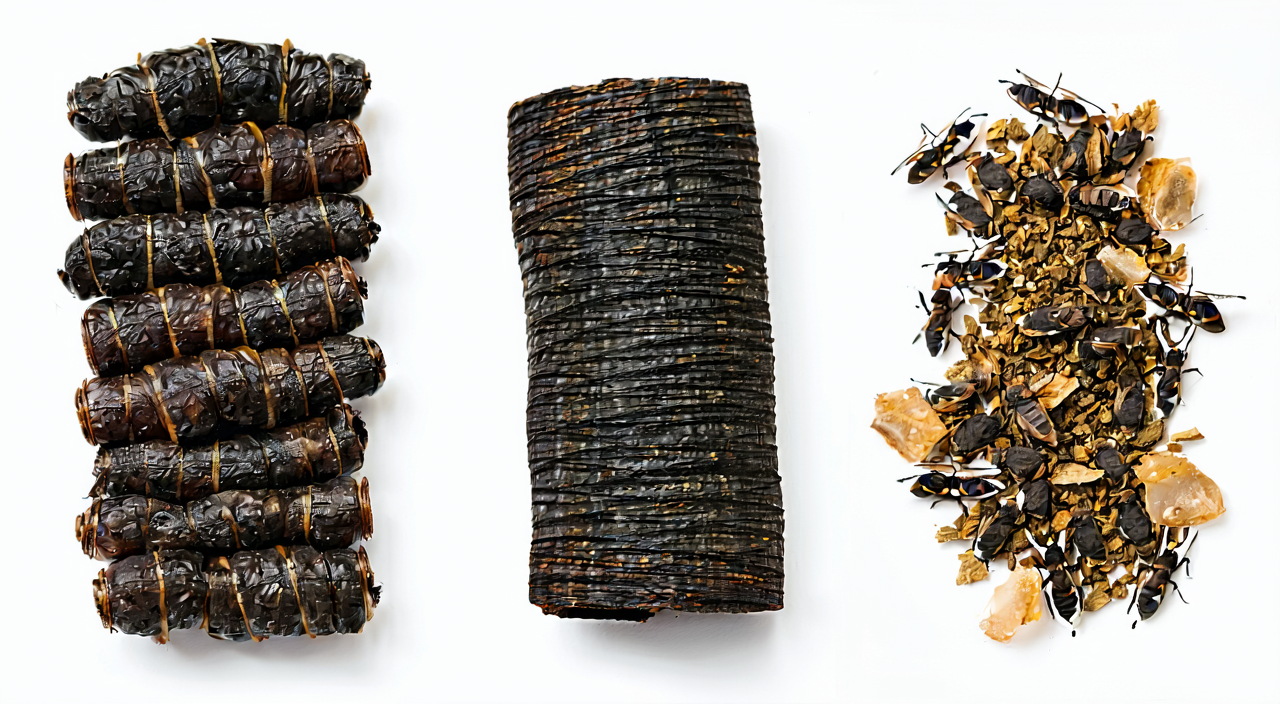
Can Sha, Wulingzhi, and Yemingsha all belong to fecal medicinal materials, and their appearances are easily confused. Can Sha comes from silkworm larvae, and the granules are mostly short cylindrical or small granular, dark brown in color, with grass-leaf-like fibers on the cross-section. Wulingzhi comes from the feces of flying squirrel animals, and traditionally there are Lingzhi blocks and Lingzhi granules; the shapes are irregular or granular, the color is dark brown to black-brown, the texture is relatively hard, the cross-section is often fibrous or granular, and the odor is relatively strong. Yemingsha comes from bat feces, mostly fine granules or powdery, with insect remains, brown to grayish brown in color, and sometimes shiny. Although all three are often classified as ‘fecal medicinal materials,’ their animal sources are different, and their forms also differ. Can Sha is closer to the plant residue characteristics of herbivorous animal feces, while Wulingzhi and Yemingsha contain more animal food residues. When identifying them, one should not only look at color but also consider granule shape, cross-section, and odor.
Which Formulas Use Can Sha?
Representative formulas containing Can Sha include Canshi Tang, Xuanbi Tang, and Cansha San. Canshi Tang is traditionally often used for traditional syndrome patterns such as damp-heat brewing internally and vomiting, diarrhea, and muscle spasms. It combines Can Sha with Mugua, Yiyiren, and others, with emphasis on transforming dampness and harmonizing the middle. Xuanbi Tang is often used for damp-heat obstructing the channels and joint discomfort, where Can Sha mainly plays the role of dispelling dampness and freeing the channels. Cansha San is also recorded in ancient texts and is often used for limb sinew and vessel discomfort and dampness-turbidity obstructing the channels. These formulas are only traditional directions of use and are not equivalent to being suitable for every user. Whether a formula is suitable needs to be judged comprehensively based on constitution, symptom presentation, product instructions, and professional advice. Especially when there is marked joint redness, swelling, severe pain, fever, persistent diarrhea, vomiting, or a tendency toward dehydration, one should not rely on a single formula or single herb on their own.
What Precautions Should Be Taken When Using Can Sha?
First, pay attention to source hygiene. Can Sha is silkworm feces, so the cleaning and drying process is very critical. Never collect ordinary silkworm feces by yourself for use, because microorganisms, pesticide residues, and impurities in the rearing environment are difficult to control. Second, there is the possibility of allergy. Some people may be sensitive to fecal medicinal materials or their residues. If rash, itching, respiratory discomfort, or other symptoms occur after use, stop contact and seek professional help. Third, pay attention to pregnancy and special populations. Pregnant women, breastfeeding women, children, and people with chronic diseases should consult a doctor or professional before use. Fourth, do not use it as a substitute for diagnosis and treatment. If symptoms such as joint pain, diarrhea, convulsions, nausea, chest tightness, palpitations, black stools, or weight loss occur repeatedly over a long period, seek medical attention as soon as possible rather than using Can Sha or related formulas on your own.
Summary
Can Sha is a traditional medicinal material derived from the dried feces of silkworm larvae. When identifying it, one mainly looks at granule shape, color, cross-section, and odor. It is often used in traditional regulating approaches such as dispelling wind and dampness, harmonizing the stomach and resolving turbidity, and is also associated with formulas such as Canshi Tang and Xuanbi Tang, but it still needs to be judged according to individual circumstances. When using Can Sha, special attention should be paid to source hygiene, allergies, pregnancy, and the need not to collect it by oneself. This article is for informational reference only and cannot replace professional diagnosis or treatment advice.