
What Is Zi Cao? Medicinal Parts, Identification, and Common Formulas
Introduction: Zi Cao is often mentioned in traditional Chinese medicine and topical Chinese herbal products, but many people are unclear about which plants the name specifically refers to, which part is used medicinally, and how it differs from other red or purple root herbs such as Danshen. In fact, the Chinese medicinal herb Zi Cao usually comes from the dried roots of Xinjiang arnebia or Inner Mongolian arnebia, both members of the borage family, rather than from every plant with purple-colored foliage or flowers. For overseas users purchasing Zi Cao balm, Zi Cao oil, or reading traditional formulas, learning about its source, appearance, and traditional uses can make it easier to judge whether it is suitable for them. This article covers what Zi Cao looks like, its medicinal part, traditional Chinese medicine perspectives, the boundaries of modern research, common confusions, and precautions for use. It is intended for educational reference only.
What Does Zi Cao Look Like? How Can It Be Identified?
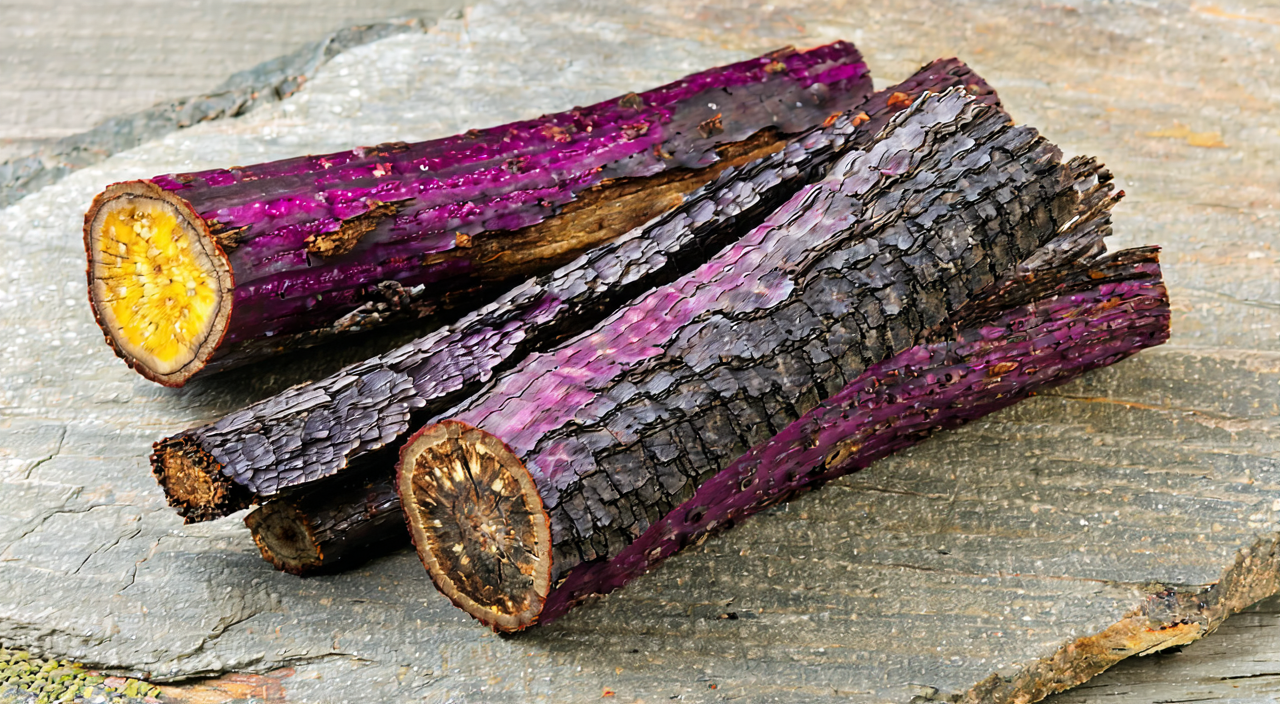
When identifying Zi Cao, the key is not to examine the stems and leaves of the plant, but to look at the dried root. Medicinal Zi Cao is usually long and cylindrical, sometimes slightly twisted, with roots that vary somewhat in thickness. The surface may range from purplish red to purple black, with older roots generally showing a deeper color. The outer skin often has a rough texture. One characteristic feature is the tendency of the outer skin to peel away in layered flakes, curling up in sheets like the bark of an old tree and revealing lighter-colored tissue underneath. When the root is broken, a yellowish-white woody core can be seen in the cross-section, creating a clear contrast with the purplish-red outer portion. Traditional identification often focuses on thick root strips, deeply colored outer skin, and a distinct woody core, although appearance can vary between botanical sources. Xinjiang arnebia is generally darker in color and softer in texture, while Inner Mongolian arnebia may be more slender and have a different degree of outer-skin peeling. When the herb is powdered or sliced, color alone is not sufficient for identification. The intact herb’s features, source, and cross-section should be considered together.
What Is the Medicinal Part of Zi Cao?
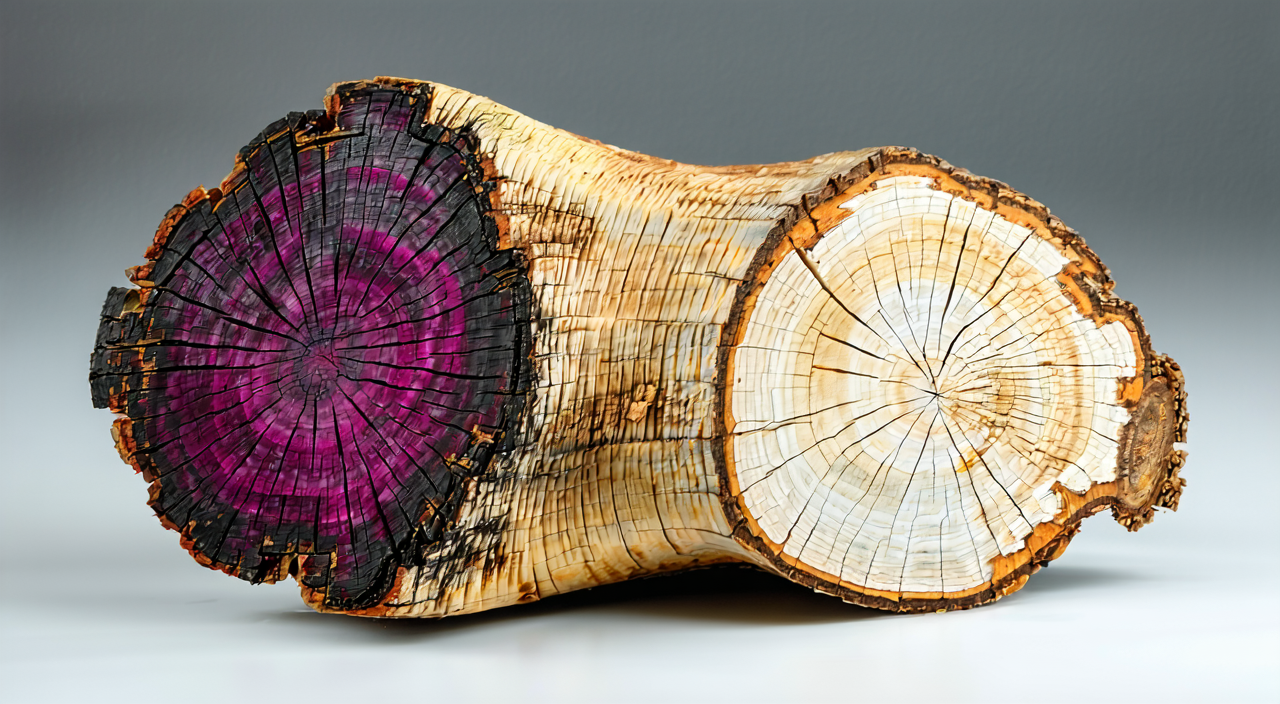
The medicinal part of Zi Cao is the dried root, not the stems, leaves, or entire plant. After harvesting, the roots are generally cleaned of soil and remaining stems, then dried in the sun or at a low temperature depending on their source. Because the roots contain purplish-red pigment compounds, traditional processing also takes care to avoid prolonged exposure to strong sunlight or excessive heat, which may affect their color and active constituents. Zi Cao roots have a relatively thick bark and a narrower woody section, which explains the yellowish-white core visible in the cross-section. Zi Cao balms and Zi Cao oils used in everyday life are usually made by soaking the root in vegetable oil or by extracting it into a topical preparation; they are not generally made by grinding and applying the entire plant directly. Understanding that the medicinal part is the root also helps distinguish Zi Cao from similarly colored purple plants that are used medicinally as whole herbs, reducing the risk of misuse.
How Is Zi Cao Viewed in Traditional Chinese Medicine?
Traditional Chinese medicine generally understands Zi Cao in terms of clearing heat, cooling the blood, promoting blood circulation, detoxifying, and helping rashes to emerge and spots to fade. In classical formulas, Zi Cao often appears in preparations for dark purple macules and rashes, sores, ulcers, eczema, and red or swollen skin. It may also be combined with herbs such as Forsythia fruit, Scrophularia root, and burdock fruit that are traditionally used to clear heat or promote the outward expression of pathological factors. The traditional term “helping rashes to emerge” does not mean that every skin rash should be forced to appear. Rather, traditional theory holds that when heat and toxins are excessive, the rash is dark purple, and its eruption is inhibited, cooling and blood-clearing herbs may be used for regulation. Zi Cao is considered relatively cold in nature and is not traditionally used as a long-term oral health supplement for the general population. In modern Chinese medicine practice, topical preparations are more often used for dry skin, minor cracking, or localized discomfort. Whether they are appropriate depends on an individual’s constitution, symptoms, and professional advice.
What Does Modern Research Focus On?
Modern research on Zi Cao has mainly focused on pigment compounds such as shikonin and acetylshikonin. Some in vitro experiments and animal studies suggest that these compounds may have anti-inflammatory and antioxidant activities and may inhibit the proliferation of certain cells. However, these findings are largely still at the basic research stage and cannot be directly equated with the same effects in humans. In particular, experimental research concerning anticancer activity should not be interpreted to mean that Zi Cao can treat cancer. The pharmacological effects, safety, dosage, and formulation stability of Zi Cao-related compounds are still being studied. For ordinary users, it is reasonable to be aware of these research areas, but they should not increase the dosage, take Zi Cao orally, or replace standard medical treatment based on such findings.
How Does Zi Cao Differ from Danshen and Qian Cao?
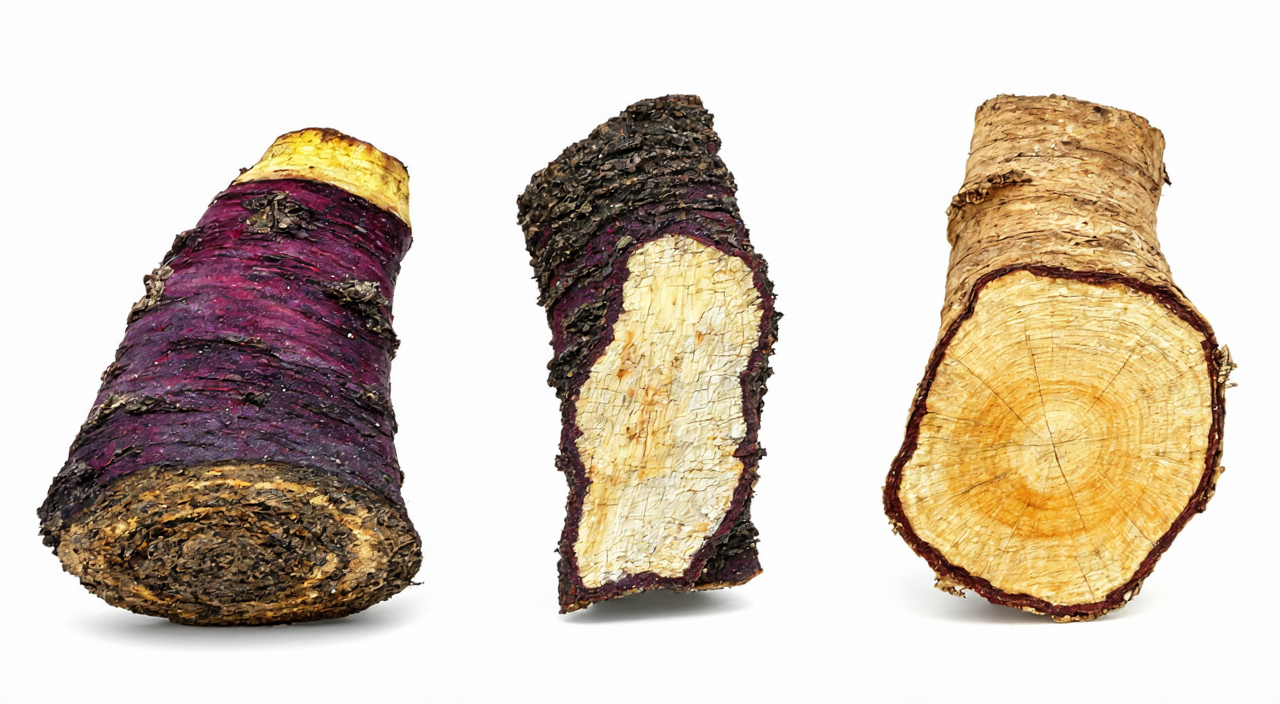
Zi Cao, Danshen, and Qian Cao are all red or purple root herbs, so their names and colors can easily cause confusion. Looking first at the root color, Zi Cao has an outer surface ranging from purplish red to purple black, with a very noticeable yellowish-white woody core in the cross-section. Danshen has a reddish-brown or brownish-red outer surface, while its cross-section is usually brownish red and generally does not show a distinct yellowish-white core. Qian Cao has a reddish-brown to purplish-brown surface and a relatively flat cross-section. In terms of traditional uses, Zi Cao is associated with clearing heat, cooling the blood, detoxifying, and promoting the emergence of rashes, and is often used in traditional approaches for macules, rashes, and sores. Danshen is associated with promoting blood circulation, regulating menstruation, calming the mind, and settling the spirit, and is more commonly seen in traditional approaches related to cardiovascular and gynecological concerns. Qian Cao is associated with cooling the blood to stop bleeding, removing blood stasis, and regulating menstruation, and is more often used in traditional approaches for bleeding due to blood heat or menstruation blocked by blood stasis. These three herbs come from different botanical sources and cannot be substituted for one another simply because their colors look similar. When purchasing or using them, check the Chinese medicinal name, Latin botanical name, and specific product instructions.
Which Formulas Contain Zi Cao?
There are many traditional formulas and preparations that contain Zi Cao. In everyday life, the products people are most likely to encounter are Zi Cao balm, Zi Cao oil, and Zi Cao Xiaodu Yin.
Zi Cao Balm
Zi Cao balm is generally a topical ointment. Traditionally, it is often combined with Chinese angelica root, Dahurian angelica root, and garden burnet root, and is used for dry skin, minor cracking, and localized discomfort after insect bites. The formulas and concentrations of different products may vary, so suitability should be assessed according to the product instructions and the condition of the individual’s skin.
Zi Cao Oil
Zi Cao oil is commonly made by extracting Zi Cao root in vegetable oil. Traditionally, it is used for dry skin, diaper rash, and minor abrasions. However, it is important to note that when the skin is broken, oozing, or infected, Zi Cao oil should not be applied without professional advice.
Zi Cao Xiaodu Yin
Zi Cao Xiaodu Yin is a traditional oral formula. It is often combined with herbs such as burdock fruit, Forsythia fruit, and Scrophularia root, which are traditionally used to clear heat and promote the outward expression of pathological factors. Traditionally, it is used for manifestations associated with pronounced heat and toxin patterns and rashes that do not emerge easily. This formula should be used only after pattern identification by a qualified professional. General users should not obtain and take it orally on their own simply because of its name.
Whether using a topical preparation or an oral formula, suitability should be assessed by considering one’s constitution, symptoms, product instructions, and professional advice. Do not assume that a product is appropriate simply because it contains Zi Cao.
What Precautions Should Be Taken When Using Zi Cao?
Several situations require particular caution when using Zi Cao. First, people with abnormal liver function or a history of liver disease should avoid taking Zi Cao-containing products orally without professional guidance. Second, because safety data are insufficient, pregnant or breastfeeding women and those trying to conceive should not use it on their own. Third, when using it topically, people with broken skin, oozing, infection, extensive ulcers, or burns should consult a professional and should not directly apply homemade Zi Cao oil or Zi Cao balm. Fourth, anyone allergic to Zi Cao or other ingredients in the product can first observe the skin’s reaction on a small area before broader use. Fifth, experimental findings about anticancer activity and similar effects should not be understood to mean that Zi Cao can treat cancer, nor can it replace standard treatment. If a skin problem does not improve, keeps recurring, or is accompanied by marked redness, swelling, warmth, pain, fever, or an enlarging ulcer, seek medical attention promptly.
Summary
What is Zi Cao? It can be summarized in three key points: it usually comes from the dried roots of Xinjiang arnebia or Inner Mongolian arnebia; its identifying features include a purplish-red to purple-black outer surface, layered peeling, and a yellowish-white woody core; and it has traditionally been used from the perspectives of clearing heat, cooling the blood, promoting blood circulation, detoxifying, and helping rashes to emerge and spots to fade. Although Zi Cao, Danshen, and Qian Cao are all red or purple root herbs, they differ in botanical source and traditional use. Whether using a topical preparation or a traditional formula, consider your individual circumstances, the product instructions, and professional advice before making a decision. This article is for educational reference only and does not replace professional diagnosis or treatment advice.