
What Is Shandougen? Medicinal Parts, Identification, and Common Formulas
Shandougen is frequently mentioned among Chinese medicinal herbs, but many people are unclear about what plant it comes from, which parts are used medicinally, and why it must be distinguished from Beidougen. Because it has a pronounced bitter and cold nature and carries potential toxicity risks, understanding its identifying features and precautions is important for safe use.
What Does Shandougen Look Like? How Is It Identified?
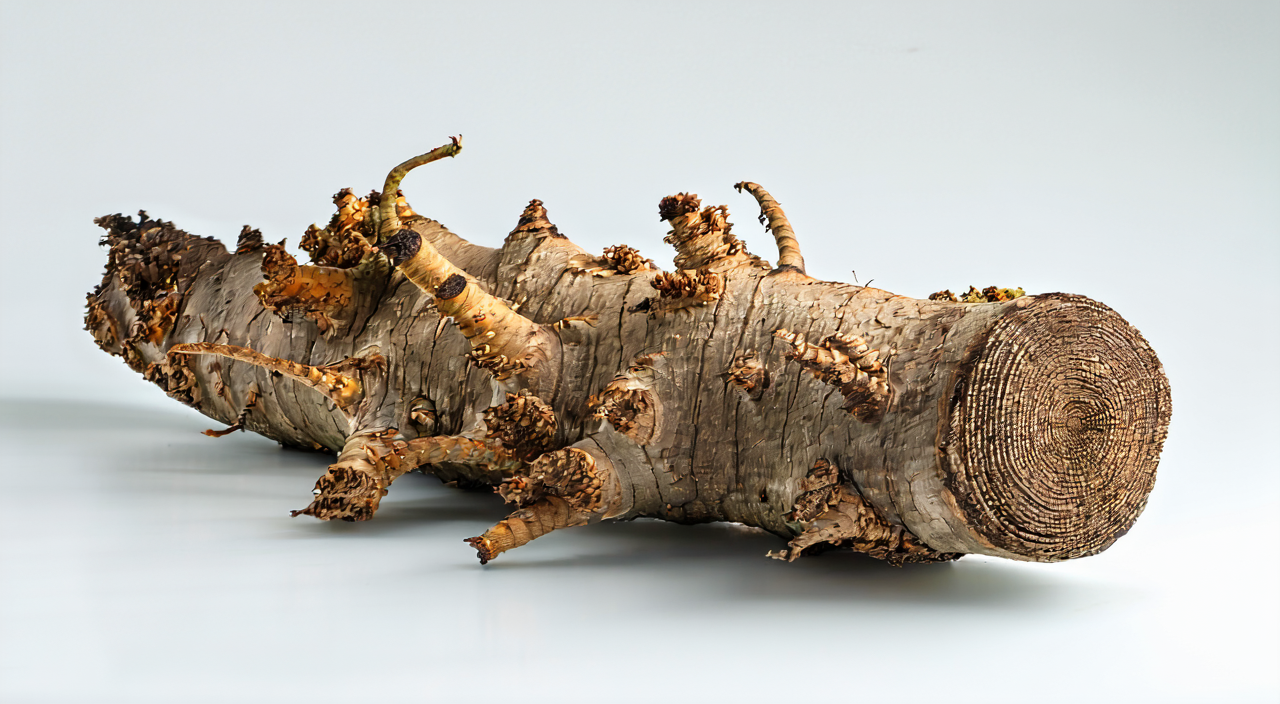
Shandougen comes from the dried roots and rhizomes of the leguminous plant Sophora tonkinensis. The medicinal material is usually not a single root but a structure in which the rhizome and roots are connected. The rhizome is often irregularly nodular, with stem scars or short remnants of stems at the top. Several long, cylindrical roots grow from the underside or sides of the rhizome; some may be slightly curved or branched.
On the surface, Shandougen is generally brownish-brown to grayish-brown, with distinct longitudinal wrinkles. Transverse lenticel-like projections and small rootlet scars are also common. The material is hard and not easily broken. The bark of the cut surface is generally light brown or pale yellow, while the wood is yellowish-white and may show faint light-colored ring patterns. Its odor is weak, but its taste is extremely bitter. This intense bitterness is one of the traditional features used for identification. Traditionally, thick, firm, and extremely bitter pieces are considered preferable.
However, the place of harvest and processing methods can affect its appearance, so Shandougen should not be identified solely by its extreme bitterness. Accurate identification is best based on both its source and physical characteristics; when necessary, consult a qualified professional.
Which Parts of Shandougen Are Used Medicinally?
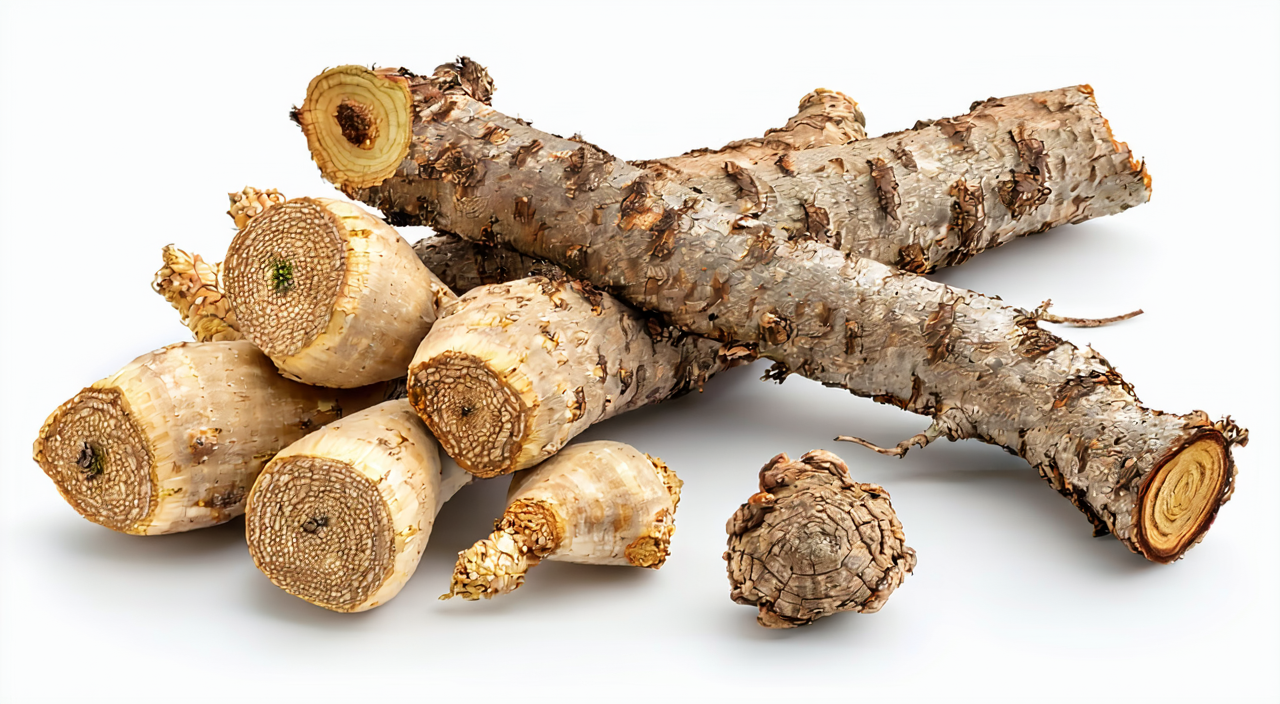
The medicinal parts of Shandougen are the dried roots and rhizomes of Sophora tonkinensis. In other words, both the underground roots and the rhizomes connecting them may be used medicinally. The rhizome is generally nodular, while the roots are long and cylindrical; the two are usually harvested and used together.
Traditional harvesting is generally carried out in autumn. After digging, the above-ground parts, rootlets, and soil are removed before the material is dried. Once dried, the roots and rhizomes become hard and darker in color. Pharmacopoeial standards clearly specify this botanical source and medicinal part, which is also an important basis for distinguishing it from similar materials.
Because the roots and rhizomes of Shandougen have a strong bitter and cold nature, they have traditionally been used for conditions involving intense heat toxin and throat discomfort. However, they should not be used casually or for prolonged periods.
How Is Shandougen Understood in Traditional Chinese Medicine?
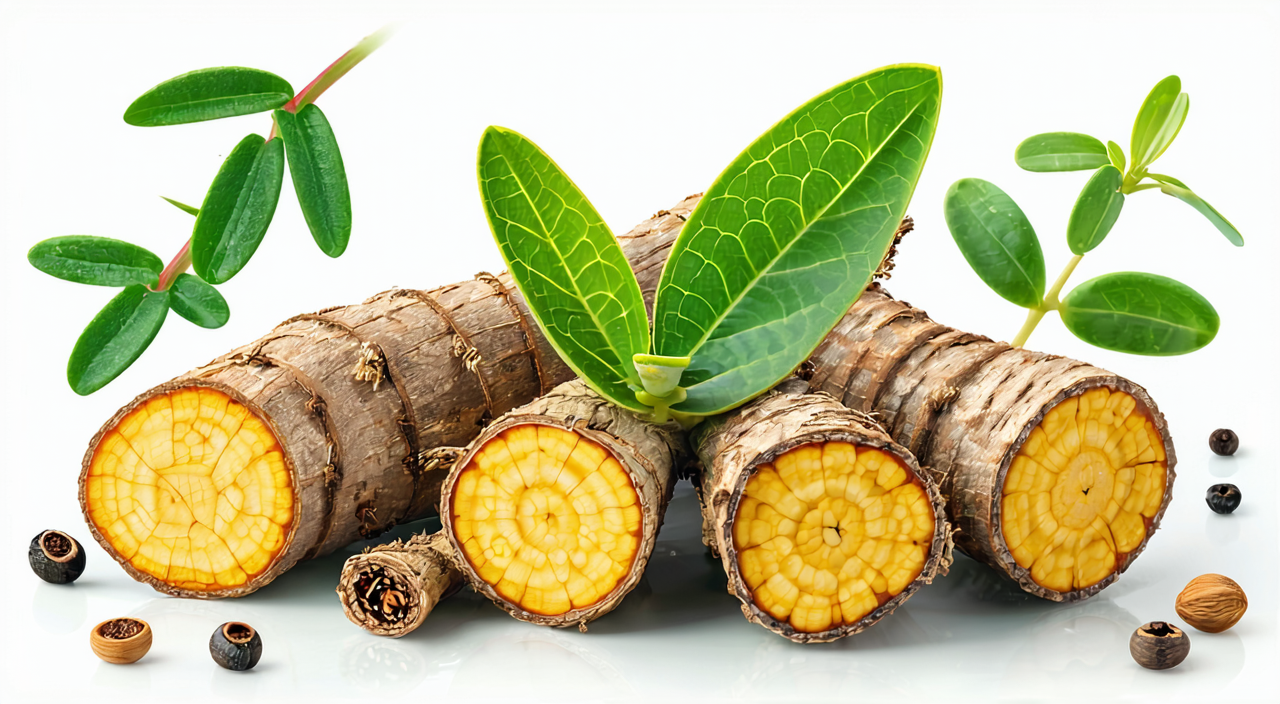
Traditional Chinese medicine generally understands Shandougen in terms of its taste, nature, and meridian associations. It is bitter in taste and cold in nature, and is associated with the Lung and Stomach meridians. When heat is excessive in the Lung and Stomach, the throat may become red, swollen, and painful, and dry mouth may occur. Because of its bitter and cold properties, Shandougen is traditionally classified among herbs used to clear heat and toxins, reduce swelling, and benefit the throat.
It should be noted that the traditional Chinese medicine terms “clearing heat and toxins” and “reducing swelling and benefiting the throat” describe a traditional pattern-based approach. They do not correspond directly to modern medical anti-infective treatment or the cure of a particular disease. Use should be determined according to the overall symptoms and constitution, and self-use is not appropriate for people with a weak, cold digestive system or a tendency toward diarrhea.
What Risks Are the Main Focus of Modern Research?
Modern research has found that Shandougen contains compounds such as matrine and oxymatrine. Their levels may vary depending on the place of origin and processing method. Research has focused particularly on potential toxicity affecting the nervous system, digestive system, and heart.
After excessive or prolonged use, people may experience nervous-system symptoms such as dizziness, headache, fatigue, and numbness in the limbs. Digestive discomfort, including nausea, vomiting, abdominal pain, and diarrhea, may also occur. In rare cases, the heart may be affected, leading to palpitations, chest tightness, or changes in heart rate. These reactions are related to dosage, individual differences, and duration of use.
For this reason, do not increase the dose of Shandougen on your own, and do not use it for extended periods. If any of the symptoms above occur during use, stop taking it and seek medical attention promptly.
What Are the Differences Between Shandougen, Beidougen, and Kushen?
Shandougen is most commonly confused with Beidougen. Beidougen comes from the dried rhizomes of Menispermum dauricum, a plant in the Menispermaceae family, so its botanical source is different. Beidougen is usually slender and cylindrical, often curved, with a yellowish-brown to dark brown surface. It has a relatively tough texture and a strongly fibrous cut surface, while its bitterness is generally less intense than that of Shandougen. Shandougen has an irregularly nodular rhizome and long, cylindrical roots, a brownish-brown surface, a hard texture, a yellowish-white cut surface, and an extremely bitter taste.
Kushen comes from the dried roots of Sophora flavescens. Although it belongs to the same family as Shandougen, it is a different species, and its root shape and traditional uses also differ. Kushen roots are generally long and cylindrical, with a grayish-brown or brownish-yellow surface, and they are also extremely bitter.
For ordinary users, distinguishing these materials by appearance alone can be difficult. It is advisable to purchase them through reputable sources and verify their botanical origin. When necessary, consult a qualified professional for identification.
Which Traditional Formulas Contain Shandougen?
In traditional formulas, Shandougen is often used as part of an approach aimed at clearing heat and benefiting the throat. Examples include Shandougen Decoction, modified Qingyan Lige Decoction, and certain compound Shandougen preparations. These are commonly associated with an auxiliary treatment approach for a red, swollen, and painful throat caused by intense heat toxin.
However, these formulas are not suitable for everyone. Shandougen Decoction generally combines herbs to clear heat, benefit the throat, reduce swelling, and relieve pain. Modified Qingyan Lige Decoction often combines heat-clearing herbs with measures to disperse wind and benefit the throat. Compound preparations may have different focuses depending on their formulations. Whether they are appropriate should be determined by considering the individual’s constitution, specific symptoms, and professional advice.
What Precautions Are Needed When Using Shandougen?
Shandougen is bitter and cold and carries potential toxicity risks, so do not increase the dose or use it for prolonged periods without professional guidance. It should be used for a short period and for an appropriate pattern under the supervision of a doctor or pharmacist. Children, pregnant women, breastfeeding women, older or physically weak people, and those with a weak, cold digestive system or a tendency toward diarrhea should be especially cautious.
If nausea, vomiting, dizziness, palpitations, chest tightness, numbness in the limbs, or other symptoms occur during use, stop taking it immediately and seek medical attention as soon as possible. For recurring throat discomfort, or symptoms accompanied by fever, difficulty breathing, or difficulty swallowing, do not self-medicate with Shandougen. Seek a professional medical evaluation first.
Summary
Shandougen is a bitter, cold-natured Chinese medicinal herb traditionally understood as helping clear heat and toxins, reduce swelling, and benefit the throat. However, it carries relatively significant toxicity risks. It must be accurately distinguished from materials such as Beidougen and Kushen and used cautiously under professional guidance. This article is provided for general educational purposes only and cannot replace professional diagnosis or treatment advice. If you experience throat discomfort or significant adverse symptoms while using it, consult a doctor or qualified professional promptly.