
What Is Purslane? Medicinal Parts, Identification, and Common Formulas
Purslane is a plant many people have seen in fields, along roadsides, or near vegetable gardens, and in some regions it is also eaten as a wild vegetable. Because its appearance can easily be confused with other low-growing herbs, many people wonder what purslane looks like, which parts can be used medicinally, and how it differs from spotted spurge. In traditional Chinese medicine, purslane generally refers to the dried aerial parts of the Portulaca oleracea plant in the Portulacaceae family. Folk practices may also use the fresh plant or refer to the whole herb. Wild vegetables and medicinal herbal preparations are not exactly the same in terms of source, harvesting, processing, and hygiene standards, so they should not simply be treated as interchangeable forms of use.
What Does Purslane Look Like? How Can It Be Identified?
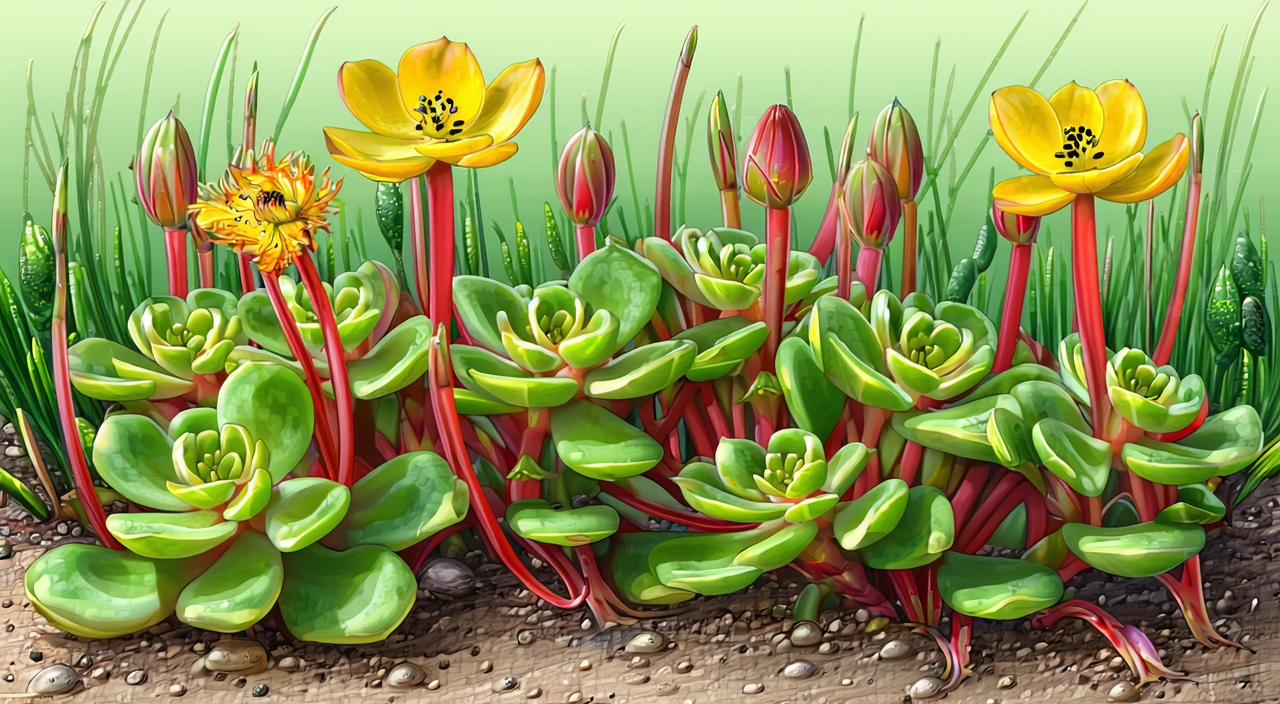
Purslane is an annual succulent herb that commonly grows close to the ground in a spreading habit. Its stems extend outward from the base and are usually reddish-brown or purplish-red. The surface is relatively smooth, and the stems contain noticeable moisture when broken. The stems are not tall or upright, which is one of the more distinctive features to observe when identifying the plant.
Main Physical Characteristics
Purslane leaves are usually obovate, spoon-shaped, or nearly round. They are thick and juicy, with a fleshy texture, rounded tips, and short petioles. The leaves often grow in clusters around the stem nodes. They are green, although the margins or petioles may sometimes have a reddish tint. In hot weather and abundant sunlight, the reddish-brown stems and thick leaves often become more prominent.
During the appropriate growing season, purslane produces small yellow flowers. The flowers are generally small and often open in strong sunlight, with a relatively short flowering period. After maturity, the plant forms small capsules containing numerous tiny black seeds. The large number and fine size of the black seeds can help distinguish purslane from some similar wild herbs.
Wild identification should not rely on a single feature. Before collecting, observe the stem color and growth habit, whether the leaves are thick and succulent, the flower color, and whether the plant produces any unusual milky-white sap. Even if a plant looks similar to purslane, it should not be collected for eating or medicinal use if it grows beside roads, in areas treated with agricultural chemicals, on industrially contaminated land, or where pets frequently stay.
Which Parts of Purslane Are Used Medicinally?
Traditional medicinal preparations of purslane mainly use the aerial parts, meaning the stems, leaves, flowers, and fruits that grow above the ground. These are generally harvested during vigorous growth, then washed, cut into sections, and dried for use as herbal pieces. Some traditional applications refer to the whole herb, while fresh purslane may also be mashed or decocted. However, fresh and dried materials differ in weight, water content, and method of use, so their doses cannot be directly substituted for one another.
Medicinal herbal pieces should come from sources that have been properly harvested, processed, and stored. Properly dried material generally has a characteristic plant odor and appearance, although its color may vary depending on processing and storage conditions. Material showing obvious mold, an unusual odor, insect damage, moisture, or clumping should not be used. Eating purslane is often part of a local dietary tradition, whereas medicinal purslane involves traditional applications and individual circumstances; the two should not be confused.
How Does Traditional Chinese Medicine Understand Purslane?
Traditional Chinese medicine commonly views purslane in terms of clearing heat and toxins, cooling the blood and stopping bleeding, and stopping dysentery. In classical herbal texts and folk experience, it has often been used within traditional approaches related to damp-heat, heat-toxin, blood heat, or dysentery-like symptoms. There is also a traditional practice of using the fresh plant externally for localized skin discomfort. These concepts belong to traditional theory and usage experience and are not equivalent to a modern medical diagnosis or established clinical efficacy.
From a traditional Chinese medicine pattern-differentiation perspective, the same symptom may have different causes, and the appropriate approach may vary according to constitution, cold or heat, deficiency or excess, and symptom severity. For example, diarrhea does not have only one possible cause related to damp-heat. Exposure to cold, contaminated food, infection, medication effects, or chronic intestinal problems may all produce similar symptoms. Therefore, people should not decide on their own whether purslane is appropriate based only on general descriptions such as “diarrhea” or “excess heat.”
Traditional external uses of purslane also require attention to hygiene. Fresh material that has not been properly processed may carry soil, parasites, or environmental contaminants, making direct contact with broken skin inappropriate. If the area of skin redness and swelling expands, pain becomes significant, pus develops, or fever occurs, consult a doctor promptly rather than relying solely on an external herbal application.
What Can We Learn from Modern Research on Purslane?
Modern research has examined compounds in purslane such as polysaccharides, flavonoids, organic acids, minerals, and fatty acids. Studies have also explored its potential antioxidant, anti-inflammatory, and antimicrobial properties through cell experiments, animal studies, and chemical analyses. This research helps clarify the plant’s chemical composition and potential mechanisms of action, but laboratory findings cannot be directly equated with effects in humans and cannot replace properly conducted clinical evidence.
In addition, the composition of purslane may be affected by variety, growing region, harvest time, processing method, and storage conditions. When reviewing related information, users outside China should distinguish between food studies, medicinal herb studies, and studies of specific preparations. A single experimental result should not be used to infer whether purslane is suitable for an individual.
How Does Purslane Differ from Spotted Spurge and Fish Mint?
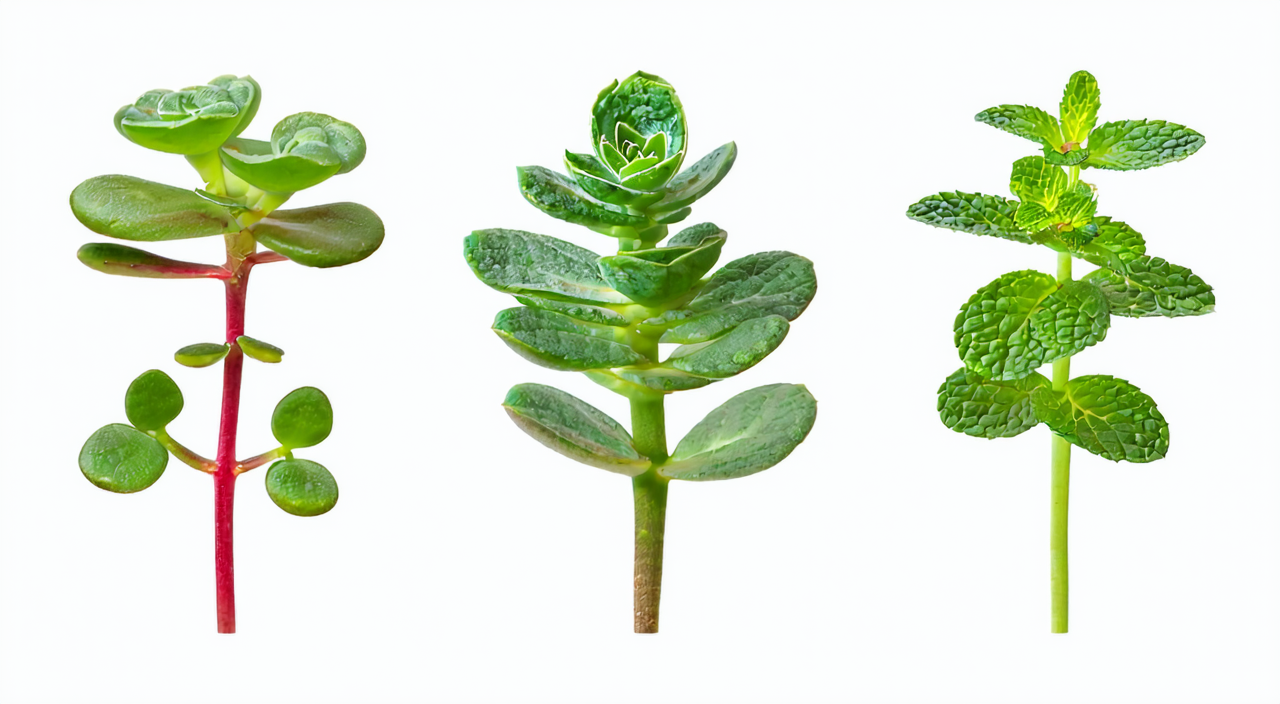
Purslane, spotted spurge, and fish mint may all appear in discussions of traditional herbs or folk plant identification, but they are different plants with clearly different appearances and odors.
Difference from Spotted Spurge
Purslane usually has reddish-brown, succulent, smooth stems that spread along the ground. Its leaves are thick and juicy, and it generally does not produce obvious milky-white sap. Spotted spurge has thinner stems that often grow in a spreading or slanted manner. Its leaves are relatively small, and breaking the stem may release milky-white sap, which is an important feature to observe when identifying it. Common names may be used interchangeably in different regions, so purchasing or collecting a plant based only on its name is not reliable.
Difference from Fish Mint
The aerial parts of fish mint usually have a noticeable fishy or otherwise distinctive odor. Its leaves are generally heart-shaped, and it has well-developed underground stems, giving it an overall form different from the succulent, creeping growth of purslane. Purslane leaves are usually thicker and more nearly obovate, and its odor is much less pronounced than that of fish mint. Plant appearance can vary with the growth stage and environment, so when there is uncertainty in the field, identification should be confirmed by a qualified professional.
Which Traditional Formulas Use Purslane?
Traditional medical texts and folk practices include purslane powder, purslane decoctions, and various heat-clearing and dysentery-relieving formulas in which purslane is either a principal herb or one of several ingredients. These names may refer to different compositions, dosages, and preparation methods in different texts, regions, and products, so the specific method of use cannot be inferred from the formula name alone.
Purslane Powder and Purslane Decoctions
Purslane powder and purslane decoctions can generally be viewed as examples of the traditional applications of purslane. The underlying approaches often focus on damp-heat, heat-toxin, or dysentery-like symptoms. Specific formulas may combine purslane with other herbs, and their indications, decoction methods, and contraindications may vary by version. Anyone considering use should first verify the ingredients and instructions of a reputable product or prescription, then consider their constitution, symptoms, and professional advice.
Heat-Clearing and Dysentery-Relieving Formulas
Heat-clearing and dysentery-relieving formulas containing purslane mainly reflect the traditional Chinese medicine perspective on intestinal damp-heat or heat-related dysentery. When diarrhea is accompanied by fever, severe abdominal pain, persistent vomiting, intense thirst, bloody stools, or black stools, the priority should be timely medical evaluation. Children, older adults, and people with chronic illnesses are more likely to become dehydrated after developing diarrhea and should not try formulas or herbs on their own for a prolonged period.
What Precautions Should Be Taken When Using Purslane?
People with a cold or weak digestive system, a tendency toward cold abdominal pain, or loose stools should consult a traditional Chinese medicine practitioner or doctor before using herbs traditionally viewed as cooling. Those who are pregnant or breastfeeding, children, and people taking prescription medications should also obtain a professional assessment first. Purslane is not suitable for everyone, and fresh and dried forms should not be substituted casually.
Some sources focus on the oxalate content of purslane. People with a history of kidney stones, abnormal kidney function, or a need to limit oxalate intake should be cautious about consuming large amounts or using purslane over a long period and should ask a doctor about their individual dietary restrictions. Wild harvesting may also involve contamination from pesticides, heavy metals, parasites, and bacteria. Plants from unknown sources should not be eaten or used medicinally without proper verification.
If diarrhea does not improve, or is accompanied by high fever, severe abdominal pain, persistent vomiting, bloody stools, black stools, marked thirst, reduced urine output, dizziness, unexplained weight loss, or other concerning symptoms, consult a doctor or seek medical care promptly. Purslane and related formulas can only serve as subjects of traditional-use information and general education; they cannot replace examinations and treatment directed at the underlying cause.
Summary
Purslane can generally be identified by its reddish-brown, succulent, creeping stems, thick and juicy obovate leaves, and small yellow flowers. Traditional medicinal preparations mainly use the dried aerial parts or the whole herb. Purslane is not the same plant as milky-sap-producing spotted spurge or distinctively fishy-smelling fish mint. Purslane powder, purslane decoctions, and similar formulas must also be assessed according to their specific ingredients and the individual’s circumstances. This article is provided for general educational reference only; serious or persistent symptoms require timely professional help.