
What Is Chinese Gallnut? Medicinal Parts, Identification, and Common Formulas
What is Chinese gallnut? Based on its name alone, it can easily be mistaken for a plant fruit or seed. In fact, Chinese gallnut is an insect gall formed when Chinese gall aphids parasitize the young branches or leaf stalks of plants such as Chinese sumac and green-bark Chinese sumac. The plant tissue is stimulated and develops into a gall, which is then collected, treated to kill the insects, and dried for use as a medicinal material. In traditional herbal texts and Chinese medicine practice, it is known for its pronounced astringent and consolidating properties. Understanding its origin and appearance can help distinguish Chinese gallnut from materials with similar names, such as galls, and support a more rational view of formulas and external applications containing Chinese gallnut.
What Does Chinese Gallnut Look Like?
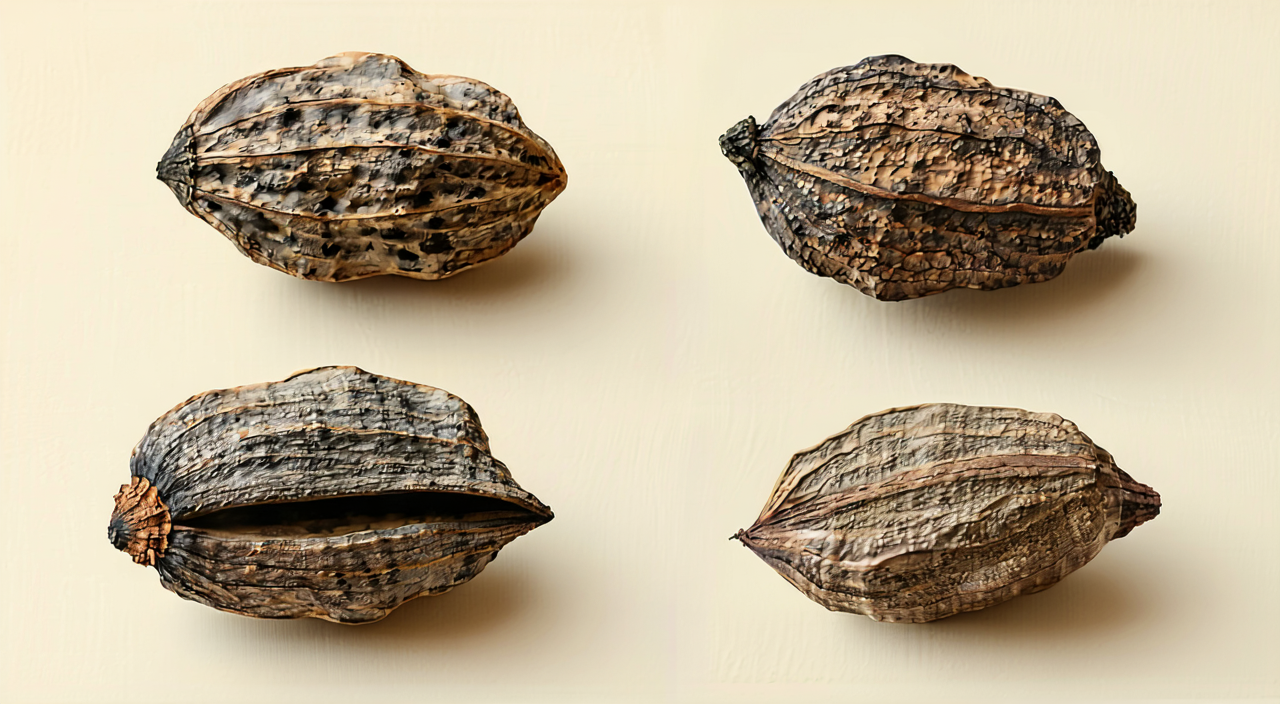
Chinese gallnut usually has an irregular appearance. Common forms include belly galls and horn galls. Belly galls are generally irregular and pouch-shaped, with a relatively full body and a surface marked by obvious bumps and wrinkles. Horn galls often have horn-like, diamond-shaped, or branched projections, giving them a more uneven appearance. Their size, color, and surface texture can vary according to the place of origin, host plant, and harvesting period.
After maturing and drying, Chinese gallnut is usually grayish brown, yellowish brown, or dark brown. The outer layer is relatively brittle and may crack when lightly pressed or struck. When cut open, the interior commonly contains cavities, membranes, or residual tissue. Early-stage galls may also show signs of insect activity. Traditional processing generally involves collecting the galls, killing the insects inside, and then drying them for storage and use.
A Simple Comparison of Belly Galls and Horn Galls
Belly galls are generally swollen overall and resemble irregular bag- or pouch-shaped structures. Horn galls usually have more pronounced points and ridged projections, making them look like galls with multiple angles. Reliable identification cannot be completed based only on online photographs or a single external feature. In practical use, attention should also be paid to the source, degree of dryness, odor, cross-section, and signs of mold or insect damage.
What Is the Medicinal Part of Chinese Gallnut?
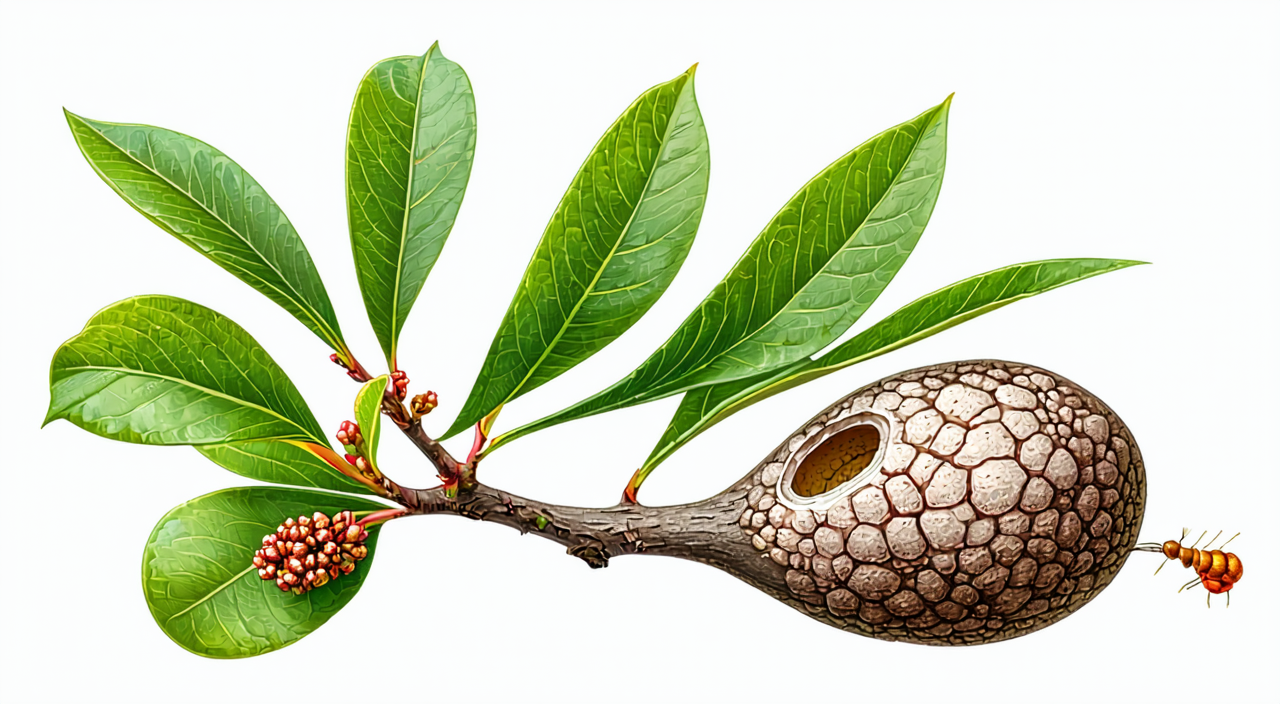
The medicinal part of Chinese gallnut is not the fruit, bark, or ordinary leaves of Chinese sumac, but the insect gall induced by parasitic insects. When Chinese gall aphids live on the tissues of Chinese sumac and other host plants, they cause abnormal local tissue growth, which gradually develops into a pouch-shaped or horn-shaped gall. This structure, formed through the combined involvement of plant tissue and insect parasitism, is what traditional materia medica refers to as Chinese gallnut.
Harvesting generally takes place after the galls have formed and become relatively substantial. Traditional processing includes killing the insects, removing impurities, and drying the material. Killing the insects does not mean that the insects are retained as the medicinal substance; it is done to prevent continued insect activity and reduce losses during storage. The degree of drying affects the material’s brittleness, storage condition, and suitability for subsequent cutting or pulverization.
When purchasing or identifying Chinese gallnut, check whether it has been exposed to moisture, developed mold, changed color abnormally, or acquired an unusual odor. For loose medicinal materials with unclear origins or incomplete packaging information, quality should not be judged by name alone. Galls found in the wild should not be used as Chinese gallnut without proper identification.
How Does Traditional Chinese Medicine Understand Chinese Gallnut?
Traditional Chinese medicine commonly understands Chinese gallnut from the perspectives of astringing, securing, and consolidating. Traditional materia medica records and historical usage patterns often describe it as being used to astringe the lungs and reduce fire, relieve diarrhea through intestinal astringency, secure essence, stop sweating, and dry dampness while promoting the healing of sores. These descriptions belong to traditional theory and clinical experience and are not equivalent to modern medical diagnoses or established treatment conclusions.
For internal use, Chinese gallnut is traditionally directed toward manifestations considered to require astringing or securing, such as chronic coughing, prolonged diarrhea, seminal emission, and excessive sweating. For external use, it is commonly associated with traditional applications involving drying dampness, promoting the healing of sores, and reducing local exudation. Whether it is appropriate generally depends on the duration of symptoms, patterns of cold and heat or deficiency and excess, tongue and pulse findings, and the presence of other medical factors.
Chinese gallnut has a strong astringent nature, so it is not necessarily suitable whenever diarrhea, sweating, or coughing occurs. If symptoms are related to unresolved external pathogens, pronounced damp heat, or factors that still need to be expelled from the body, simple astringency may not fit the traditional pattern-identification approach. Specific formulas and dosages should also be considered according to the instructions for an approved product and assessed under professional guidance.
Which Constituents and Characteristics Are Studied in Modern Research?
Modern research on Chinese gallnut has focused mainly on tannins, polyphenolic compounds, and properties related to astringency. Tannins can bind with proteins and other substances, and this property is thought to be associated with the traditional applications of Chinese gallnut for astringing, drying dampness, and local consolidation. However, laboratory studies, observations of external use, and traditional experience cannot be directly equated with confirmed efficacy for a specific disease.
It is also important to note that compounds in Chinese gallnut may irritate the skin, mouth, or other mucous membranes. Processing methods, concentration, contact time, and individual skin condition can all affect the actual response. People with sensitive skin, children, pregnant or breastfeeding individuals, and those with a damaged skin barrier should exercise particular caution before use. If redness, itching, burning, pain, or other discomfort occurs, discontinue contact and consult a professional.
How Does Chinese Gallnut Differ from Galls and Bee Hives?
Chinese gallnut, galls, and bee hives may all be associated with insects or insect activity, but their origins are different. They should not be substituted for one another simply because they look similar or are all used as traditional medicinal materials.
Chinese Gallnut and Galls
Chinese gallnut is a plant insect gall formed after Chinese gall aphids parasitize plants such as Chinese sumac. Common forms include belly galls and horn galls. Galls generally also involve abnormal growths on plants, but their primary sources, host plants, gall-forming insects, and external features differ from those of Chinese gallnut. Although both may be associated with astringent applications and tannins in traditional practice, their botanical origins are different, so they must not be confused during identification or use.
Chinese Gallnut and Bee Hives
A bee hive is a nest constructed by honeybees or other bees. It is an insect nest, not an insect gall formed from plant tissue. Its structure commonly consists of honeycomb-like cells, and its material and appearance are clearly different from the pouch-shaped or horn-shaped galls of Chinese gallnut. Bee hives may retain beeswax, propolis, or other nest components, and their traditional applications also differ from those of Chinese gallnut. Before purchasing, decocting, or applying a material externally, confirm its name and source.
Which Formulas Contain Chinese Gallnut?
Many traditional formulas contain Chinese gallnut, with applications generally centered on astringing, securing, drying dampness, and promoting the healing of sores. The ingredients, compatibility relationships, dosage forms, and intended uses vary among formulas. The mere presence of Chinese gallnut does not establish that a formula is suitable for a particular person or symptom.
Chinese Gallnut Powder
Chinese Gallnut Powder is one of the names used for a traditional formula. Its applications are often based on the astringent and dampness-drying characteristics of Chinese gallnut, while descriptions of its ingredients, dosages, and indications may differ among medical texts and schools of practice. When formulas share the same name, verify their source, exact ingredients, and dosage form. Do not prepare or use one independently for an extended period based only on the formula name.
Yusuo Dan
Yusuo Dan is also the name of a traditional formula based on the idea of astringing and securing. It is often discussed in relation to traditional patterns such as seminal emission and leakage. These manifestations may be associated with many different physical factors. If they recur or occur together with pain, abnormal urination, marked fatigue, or other symptoms, consult a physician or qualified traditional Chinese medicine professional rather than relying on the formula independently.
External Formulas for Promoting the Healing of Sores
In some traditional external formulas for promoting the healing of sores, Chinese gallnut may be combined with other medicinal materials intended to dry dampness, astringe, or cleanse the affected area. External use does not mean that a product is entirely risk-free. It should not be applied casually around the eyes, inside the mouth, to deep open wounds, or over large areas of skin. Before use, confirm the product instructions, appropriate application sites, and storage requirements.
What Precautions Are Needed When Using Chinese Gallnut?
First, Chinese gallnut is strongly astringent. When a cough is caused by an unresolved external pathogen, it should not be used independently based solely on the presence of coughing. Conditions involving damp-heat diarrhea, abdominal fullness, or tenesmus should not be simply interpreted as requiring astringency. People prone to constipation should also assess the situation carefully before use, because an astringent approach may complicate difficulty with bowel movements.
Second, Chinese gallnut contains a relatively high amount of tannins, and local contact may cause irritation or an allergic reaction. During external use, avoid prolonged or large-area application, and do not apply it to the eyes, visibly damaged mucous membranes, or deep wounds. When using an external preparation for the first time, monitor the local response according to the product instructions. If persistent burning, a rash, swelling, or increased exudation occurs, stop using it promptly and seek professional advice.
Third, pregnant or breastfeeding individuals, children, older adults, and people taking other medications should inform a doctor or qualified traditional Chinese medicine professional about their medical history, allergy history, and current medications before using formulas or preparations containing Chinese gallnut. Severe, long-lasting, or recurrent diarrhea, coughing, or abnormal sweating, especially when accompanied by fever, palpitations, chest tightness, pain, persistent vomiting, black stools, weight loss, or other symptoms, should be evaluated by a physician first. This article is for general educational reference about traditional medicinal materials and cannot replace professional diagnosis or treatment advice.
Summary
Chinese gallnut is an insect gall formed after Chinese gall aphids parasitize plants such as Chinese sumac; its medicinal part is not an ordinary fruit. Belly galls and horn galls can be provisionally identified by their pouch-shaped or horn-shaped forms, grayish-brown color, and brittle texture. Traditional Chinese medicine generally understands Chinese gallnut in terms of astringing, securing, drying dampness, and promoting the healing of sores. However, Chinese gallnut has a different origin from galls and bee hives, and formulas containing it should be considered according to individual circumstances, product instructions, and professional advice.