
What Is the Lotus Receptacle? Medicinal Parts, Identification, and Common Formulas
Many people have seen lotus pods but may not know exactly what the lotus receptacle is. It is also easily confused with the lotus seed shell, lotus plumule, or lotus leaf. In traditional Chinese medicine, the lotus receptacle, known as Lian Fang, comes from the mature flower receptacle of the lotus plant. It is generally the structure left after the lotus seeds have fully developed and been removed. Although it comes from the same plant as lotus seeds, its appearance, medicinal part, and traditional applications are different. The following sections introduce its appearance, medicinal part, processing methods, and common formula categories to help overseas Chinese readers develop a basic understanding.
What Does a Lotus Receptacle Look Like? How Can It Be Identified?
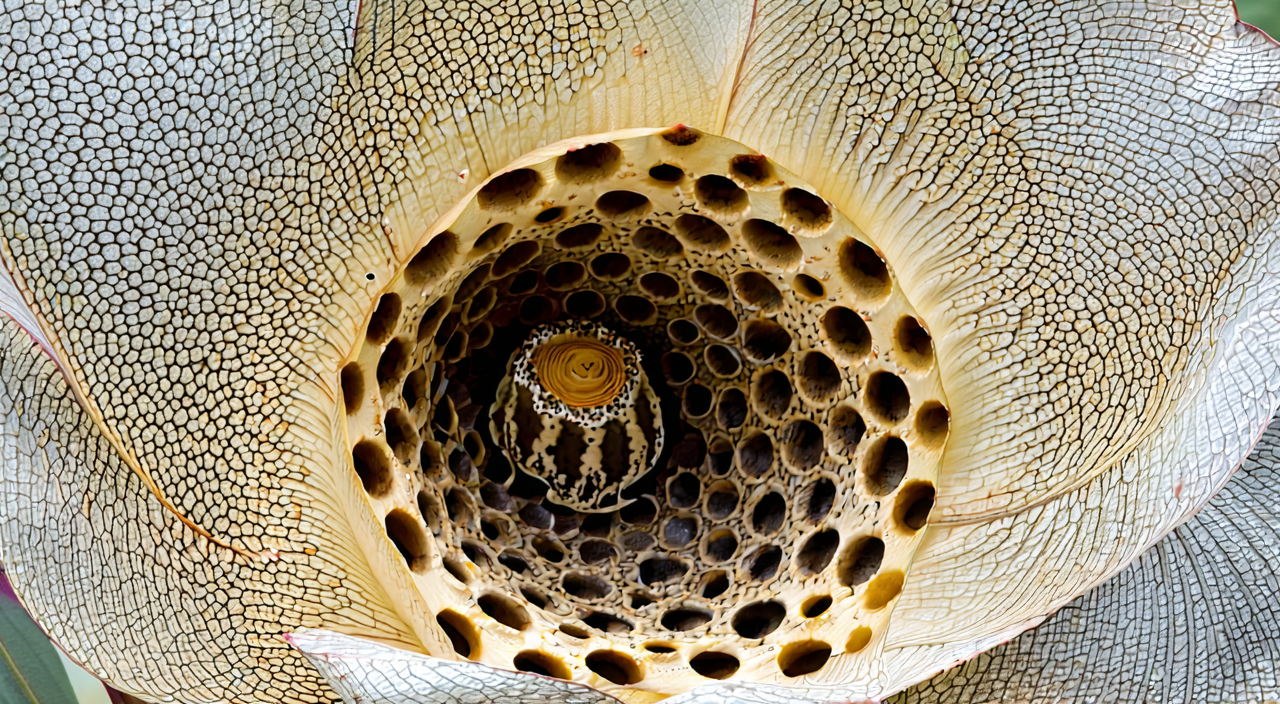
Shape and Color
A lotus receptacle is usually inverted-conical, funnel-shaped, or slightly umbrella-shaped, resembling a mature lotus pod. Numerous relatively regular round holes are distributed across its top or surface. These holes correspond to the positions where the lotus seeds were attached. After drying, the receptacle is usually gray-brown, brownish-gray, or dark brown. It shrinks in appearance and has a relatively light texture.
Fresh lotus pods may be blue-green, while mature and dried pods gradually become gray-brown or brown. The surface may sometimes retain pieces of the fruit stalk, fibers, and small amounts of fruit tissue, but the mature flower receptacle itself should be the primary object of observation. A cross-section often reveals a relatively loose fibrous structure. It does not feel as hard and woody as solid wood, but is more sponge-like or porous in texture.
Initial Distinction from Ordinary Dried Lotus Pods
Dried lotus pods used for decoration may look similar to medicinal lotus receptacles, but appearance alone cannot determine whether they meet medicinal standards. Factors such as harvesting time, drying method, cleanliness, storage conditions, and whether standardized processing has been carried out also matter. If the surface shows mold, an obvious unusual odor, moisture-related softness, or abnormal coloring, it should not be used as a medicinal preparation without professional assessment.
What Is the Medicinal Part of the Lotus Receptacle?
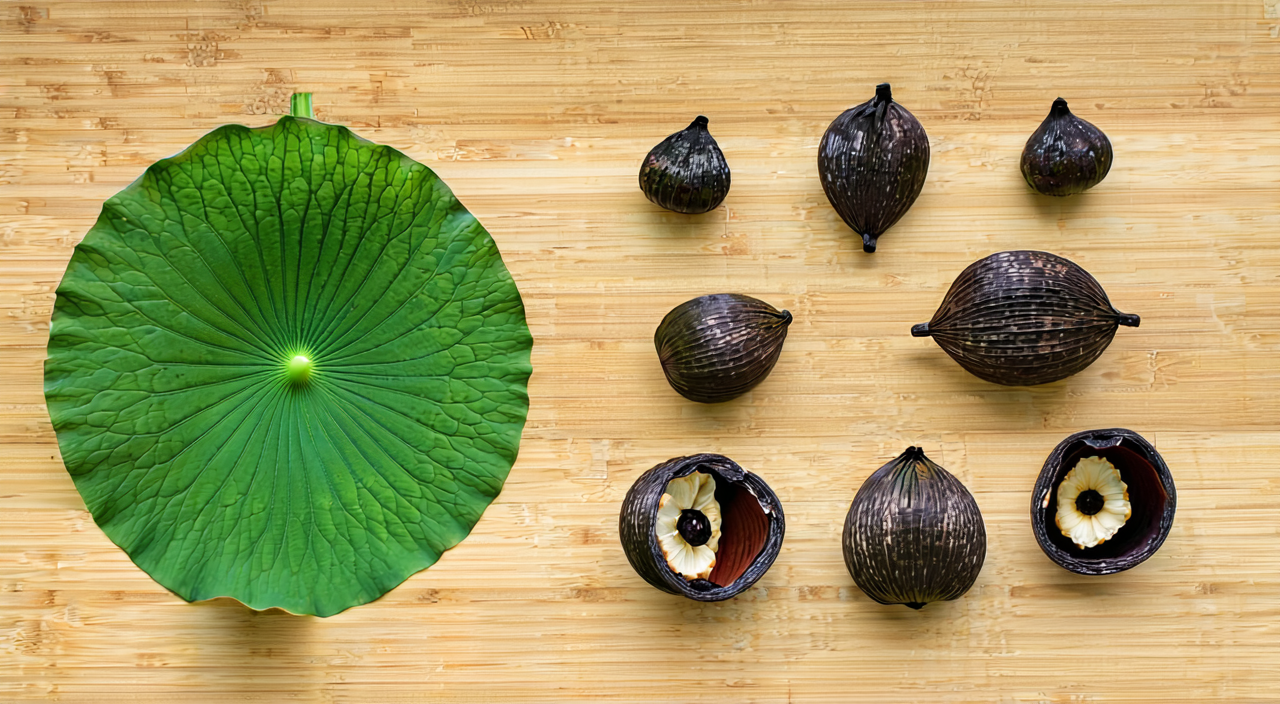
The medicinal part of the lotus receptacle is mainly the mature flower receptacle of the lotus plant. This is the part that supports the lotus seeds and forms the numerous holes in the lotus pod. It is generally harvested after the lotus seeds mature, with the fruits and impurities removed before drying to produce unprocessed dried lotus receptacle slices. It is important to note that the lotus seed itself, the seed coat surrounding the lotus seed, the lotus plumule, and the flower receptacle of the lotus pod are different parts. They should not be substituted for one another simply because they all come from the lotus plant.
Traditional processing may also produce charcoal-treated lotus receptacle, known as lotus receptacle charcoal. This is made by processing the lotus receptacle according to a specific method, which changes its external appearance and internal state. In traditional Chinese medicine theory, processed herbs may have different emphases in traditional applications, but the degree of processing, quality of the prepared slices, and method of use all affect assessment. Ordinary consumers should not roast the material over a fire at home or judge whether it has been properly processed based only on its color.
How Does Traditional Chinese Medicine Understand the Lotus Receptacle?
Traditional Chinese medicine commonly understands the lotus receptacle from the perspective of dissipating blood stasis and stopping bleeding. Related records and application principles generally focus on situations in which bleeding and blood stasis occur together. Particular attention is paid to the color and duration of bleeding, accompanying discomfort, tongue and pulse characteristics, and the person’s overall constitution. The lotus receptacle is not a single remedy that can be used whenever bleeding occurs. Different causes of bleeding may require different approaches.
From the perspective of traditional medicinal properties, unprocessed lotus receptacle and lotus receptacle charcoal may have different application emphases. The unprocessed form is often discussed within traditional approaches for stopping bleeding and dissipating blood stasis, while the processed form is commonly associated with a focus on stopping bleeding. These statements reflect traditional Chinese medicine theory and historical usage experience; they are not equivalent to modern medical diagnoses or treatment conclusions. If unexplained or recurrent bleeding occurs, or if the amount of bleeding is substantial, the underlying cause should be investigated first rather than relying only on one herb or folk experience.
What Can Modern Research Tell Us?
Modern research may examine polysaccharides, flavonoids, phenolic compounds, and other constituents in the lotus receptacle, as well as their antioxidant, coagulation-related, or other biological activities. Some experimental studies are based on in vitro tests or animal models. Because these conditions differ from actual human use, their findings cannot be directly used to determine effects or dosages for an individual.
In addition, the origin, harvesting period, processing method, and storage conditions may all cause differences in the constituents of the medicinal material. Modern research findings are best treated as background information for understanding the lotus receptacle, rather than as a basis for replacing medical care, adjusting medication, or determining the cause of a disease. People who are taking anticoagulant or antiplatelet medications should consult a doctor or pharmacist in advance.
What Is the Difference Between Lotus Receptacle, Lotus Seed Shell, and Lotus Leaf?
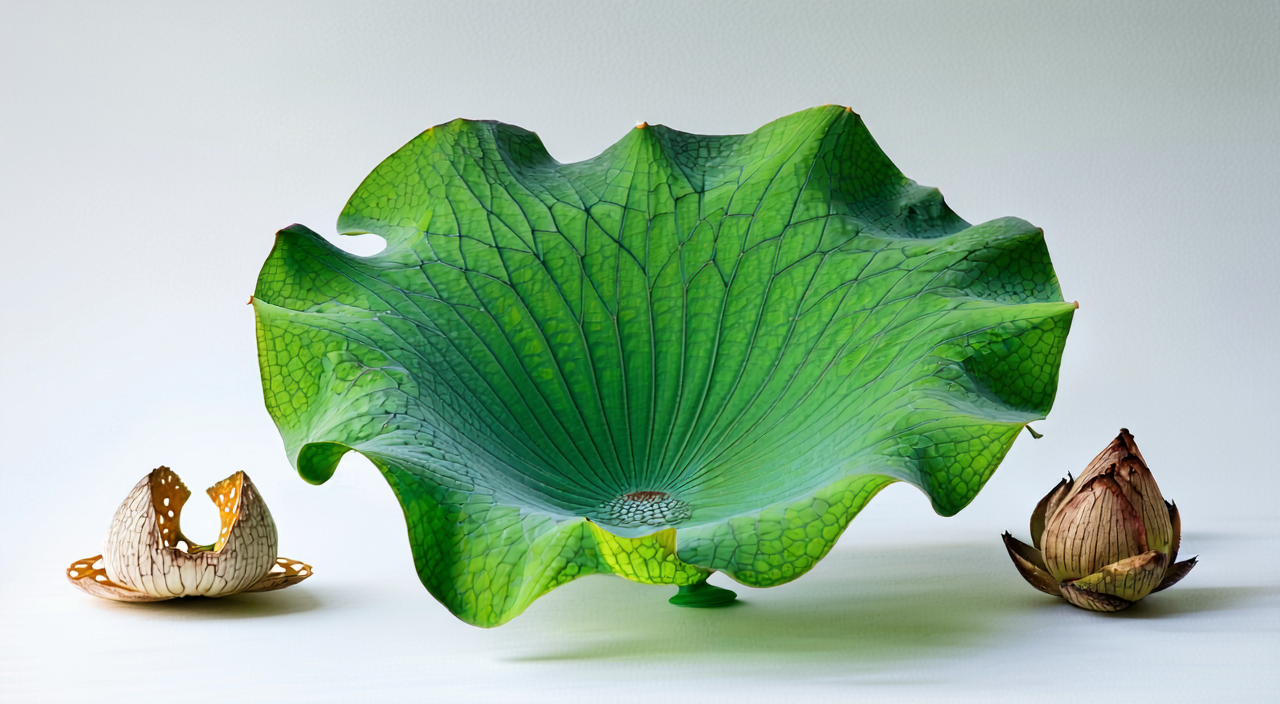
Although the lotus receptacle, lotus seed shell, and lotus leaf all come from the lotus plant, they are entirely different medicinal parts. The lotus receptacle is the flower receptacle of the mature lotus pod—the main body of the pod—and is characterized by an inverted-conical or funnel shape, numerous holes, and a porous, sponge-like texture. The lotus seed shell is the seed coat surrounding the lotus seed. It is smaller and usually appears as flakes, shell-like pieces, or irregular fragments, with a relatively tough texture.
The lotus leaf is the leaf of the lotus plant. It is generally round or nearly round, with a petiole attached at the center, and has visible veins and a broad leaf surface. Even after drying, its leaf veins and edges can usually still be identified, making it clearly different from the lotus receptacle with its many round holes. The lotus plumule is the small green embryo in the center of the lotus seed. It is narrow, strip-like, or found in fragments, and is not part of the lotus receptacle.
Therefore, when seeing a dried lotus pod, lotus seed shell, or lotus leaf, do not assume that their traditional uses and methods of application are the same simply because they belong to the same plant. When selecting a material, verify its name, plant part, processing status, and product information.
Which Formulas Use the Lotus Receptacle?
Among traditional formulas, Lotus Receptacle Powder, or Lian Fang San, may be discussed in relation to combining the lotus receptacle with other herbs for traditional approaches to stopping bleeding and dissipating blood stasis. The ingredients and methods of use may differ between medical texts, editions, and clinical schools. The name of a formula alone cannot determine whether it is suitable for a particular situation. Related formulas should be assessed according to symptom characteristics, the cause of bleeding, the person’s constitution, and other medications being used.
Modified Ten-Ingredient Decoction for Hemostasis, commonly referred to as modifications of Shi Hui San, is another direction often mentioned among traditional formulas for stopping bleeding. The term “modified” means that a practitioner may adjust the herbs according to the pattern, bleeding site, and accompanying symptoms; the formula is not fixed in every case. The lotus receptacle may sometimes be included as part of a traditional approach to formulas that stop bleeding and dissipate blood stasis. However, whether it should be used, whether the unprocessed or processed form should be selected, and how it should be combined with other herbs require pattern-based assessment by a qualified professional.
If readers simply want to learn about formulas containing the lotus receptacle, Lotus Receptacle Powder, modifications of Ten-Ingredient Decoction for Hemostasis, and other formulas for stopping bleeding and dissipating blood stasis can serve as subjects for further study. Online formula names should not be treated directly as personal medication plans. People taking prescription drugs, preparing for pregnancy, pregnant or breastfeeding individuals, and those with chronic diseases should consult a doctor, Chinese medicine practitioner, or pharmacist first.
What Precautions Should Be Taken When Using the Lotus Receptacle?
First, the lotus receptacle or formulas containing it should not be used without professional guidance when the cause of bleeding is unknown. Nosebleeds, blood in the stool, blood in the urine, abnormal vaginal bleeding, and coughing up blood may have different underlying causes. If bleeding is heavy, does not stop, keeps recurring, or occurs together with dizziness, palpitations, chest tightness, pain, fever, black stools, unexplained weight loss, or other symptoms, seek medical attention promptly.
Second, pregnant or breastfeeding individuals, children, older adults, and people taking anticoagulants, antiplatelet drugs, or other long-term prescription medications should obtain professional advice first. Unprocessed lotus receptacle and lotus receptacle charcoal differ in their processing status, and the specifications of prepared slices, granules, and compound preparations may also vary. Check the product information before use, and do not increase the dosage or extend the duration of use on your own.
Finally, dried lotus pods intended for decoration cannot directly replace medicinal materials. Decorative products may have been fumigated, dyed, treated with insecticides, or exposed to dusty environments for long periods. Their hygiene and medicinal standards cannot be guaranteed. When selecting a lotus receptacle, prioritize materials with a clear source, complete labeling, and proper storage, and make an overall judgment based on individual circumstances and professional advice. This article is intended for educational reference about traditional Chinese medicine only and cannot replace professional diagnosis or treatment advice.
Summary
The lotus receptacle is the mature flower receptacle of the lotus plant. Its common features include an inverted-conical or funnel shape, numerous round holes, a gray-brown color, and a sponge-like texture. It is not the same medicinal part as the seed coat of the lotus seed or the leaf of the lotus plant. Traditional Chinese medicine generally understands the lotus receptacle from the perspective of stopping bleeding and dissipating blood stasis. Lotus Receptacle Powder, modifications of Ten-Ingredient Decoction for Hemostasis, and similar formulas can serve as subjects for learning about traditional formula combinations. However, actual use still requires consideration of the cause, constitution, processing status, and professional advice. The information in this article cannot replace medical diagnosis or treatment.