
What Is Lotus Leaf? Medicinal Parts, Identification, and Common Formulas
What is lotus leaf? Many people first think of the round leaves floating in ponds or the lotus leaf tea commonly enjoyed in summer. As a traditional Chinese medicinal material, lotus leaf is more than the leaf of an ornamental plant. Its harvest time, drying method, and form of use can also affect identification and application. This article provides an introduction to its botanical source, medicinal parts, traditional understanding, common formulas, and precautions, helping overseas Chinese-speaking readers build a basic understanding.
It is important to first distinguish fresh lotus leaf, dried lotus leaf, and lotus leaf charcoal, as these are not exactly the same forms of use. Fresh lotus leaf refers to newly harvested leaves with a relatively high water content. Dried lotus leaf is processed for easier storage and combination with other herbs. Lotus leaf charcoal is further processed into charcoal, so its appearance, smell, and traditional applications may differ. Specific use should be assessed according to product instructions, individual circumstances, and professional advice.
What Does Lotus Leaf Look Like and How Can It Be Identified?
Typical Appearance
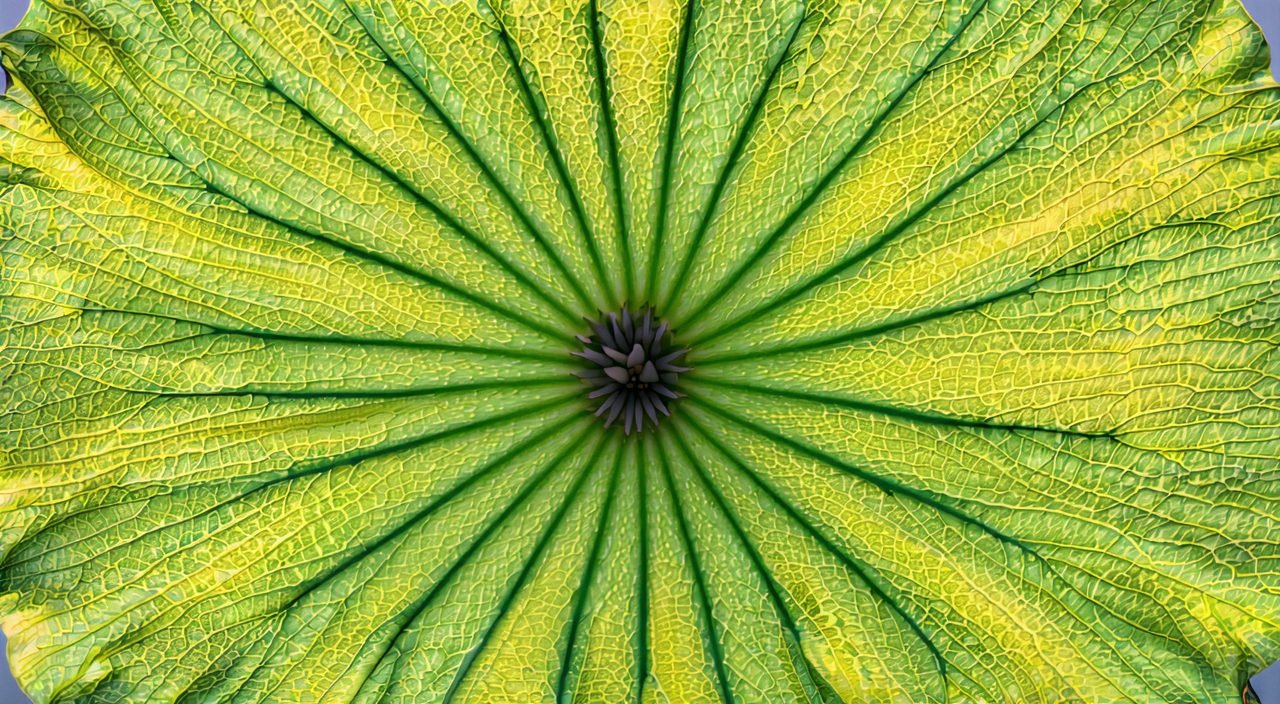
Lotus leaf comes from the leaves of the lotus plant, which belongs to the Nymphaeaceae family. Mature leaves are usually shield-shaped and round or nearly round, with a relatively large surface area and gently wavy edges. Unlike many ordinary broadleaf plants, the petiole of a lotus leaf is generally attached near the center of the leaf rather than at the edge. This is a useful clue for identification.
Viewed from above, lotus leaves usually have prominent radiating veins that extend outward from the center. Fresh lotus leaves are mostly green. After drying, they may become gray-green, yellow-green, or slightly brown, depending on the harvest period, drying method, and storage conditions. High-quality dried leaves should generally retain their basic shape as much as possible and have a natural smell, without an obvious musty odor, irritating off-smell, or unusual dampness.
Texture and Form of Dried Lotus Leaf
Dried lotus leaf is relatively thin and lightweight. After being folded or cut into pieces, it can easily become brittle and produce fragments. Dried lotus leaves sold on the market may be cut into large pieces, strips, or curled shapes, so they cannot be identified solely by looking for a complete round leaf. If the color is overly vivid, the surface has an obvious unnatural powdery coating, or the material shows insect damage, mold spots, or serious moisture exposure, its source and storage condition should be assessed carefully.
What Part of the Lotus Plant Is Used Medicinally?
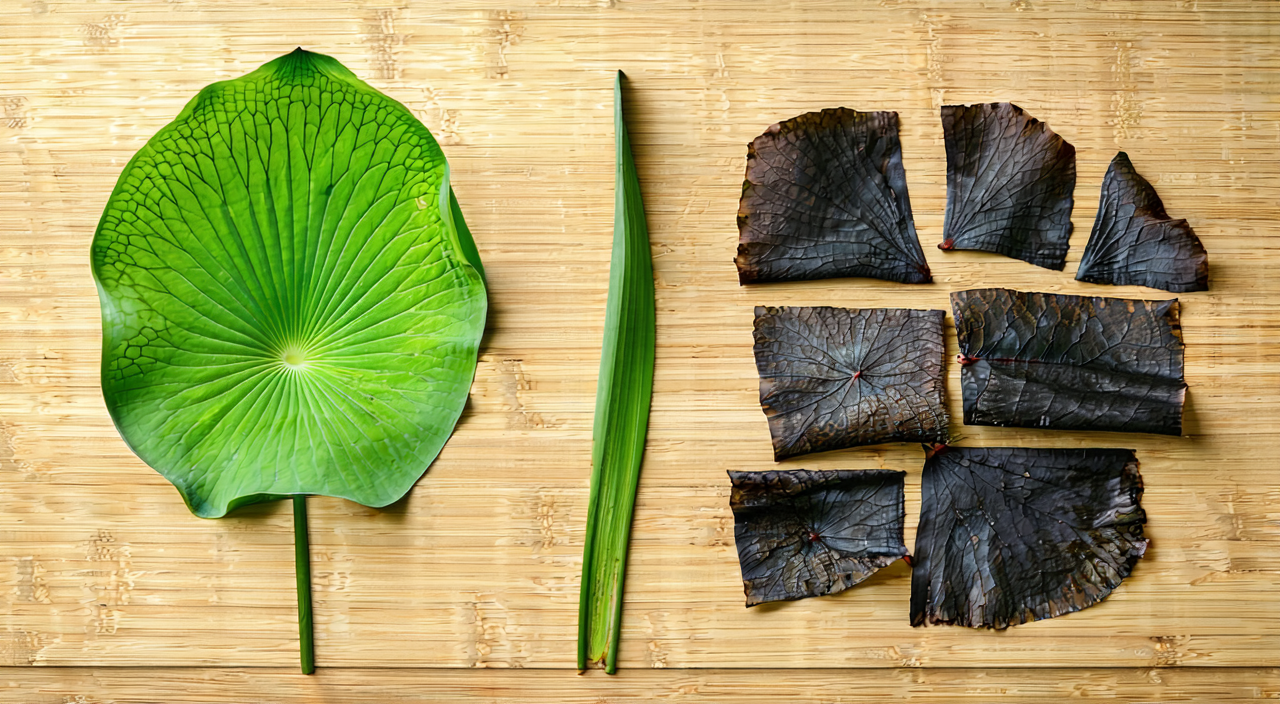
When traditional medicinal materials refer to lotus leaf, they primarily mean the leaves of the lotus plant, not the lotus flower, lotus seeds, or lotus root. The leaves are usually harvested during the summer, when the plant is growing vigorously, then cleaned, sorted, cut into pieces or strips, and dried for use. Differences in origin and processing may affect the leaves’ color, thickness, smell, and proportion of fragments.
Fresh lotus leaf often retains a relatively complete green surface and a fresh fragrance, making it suitable for traditional dietary therapy or combinations that call for fresh leaf material. Dried lotus leaf is easier to transport and store and is a common form of Chinese herbal decoction pieces. Lotus leaf charcoal is processed by heating and is usually darker in color; traditionally, it is used according to different combination principles. These three forms should not be regarded as completely interchangeable, and their dosage or method of use should not be changed solely on the basis of online information.
How Does Traditional Chinese Medicine Understand Lotus Leaf?
In traditional Chinese medicine theory, lotus leaf is often understood in terms of clearing summer heat, resolving dampness, raising clear yang, and cooling the blood to stop bleeding. When summer heat and dampness are especially pronounced, some traditional formulas include lotus leaf to reflect approaches such as clearing summer heat, resolving dampness, and using aromatic properties to awaken the spleen. These are concepts and therapeutic directions within traditional theory and should not be equated with treating disease in the modern medical sense.
Lotus leaf is also commonly used in combination strategies that aim to raise clear yang. Traditional Chinese medicine holds that clear yang has a tendency to move upward and outward, while lotus leaf is light, clear, and upward-moving. Therefore, in certain formulas, it may serve to guide clear yang upward or strengthen the overall action of the formula. Whether it is suitable for a particular person depends on a comprehensive assessment of constitution, symptoms, tongue and pulse findings, and other medications currently being used.
In discussions of cooling the blood and stopping bleeding, raw lotus leaf and lotus leaf charcoal are often distinguished according to traditional processing and formulation principles. If unexplained bleeding, black stools, persistent nosebleeds, unusually heavy menstrual bleeding, or other recurrent bleeding occurs, medical advice should be sought first. Lotus leaf or related formulas should not be used as a substitute for professional evaluation.
What Areas Does Modern Research Typically Examine?
Modern research examines lotus leaf from perspectives including phytochemical constituents, antioxidant-related indicators, metabolic processes, and experimental models. Such research can help clarify its material basis and potential areas of activity. However, laboratory findings, animal studies, or preliminary observations cannot be directly equated with established effects in humans, nor should they be used to claim that lotus leaf can treat obesity or promote weight loss as a medical therapy.
Online discussions often link lotus leaf with weight management, but changes in body weight are influenced by many factors, including dietary composition, physical activity, sleep, endocrine status, and underlying disease. Lotus leaf tea or products containing lotus leaf cannot replace a balanced diet, regular exercise, or professional assessment. People with long-term abnormal weight, marked changes in appetite, fatigue, palpitations, unexplained weight loss, or similar symptoms should consult a doctor or qualified nutrition professional first.
What Is the Difference Between Lotus Leaf, Mulberry Leaf, and Banana Leaf?
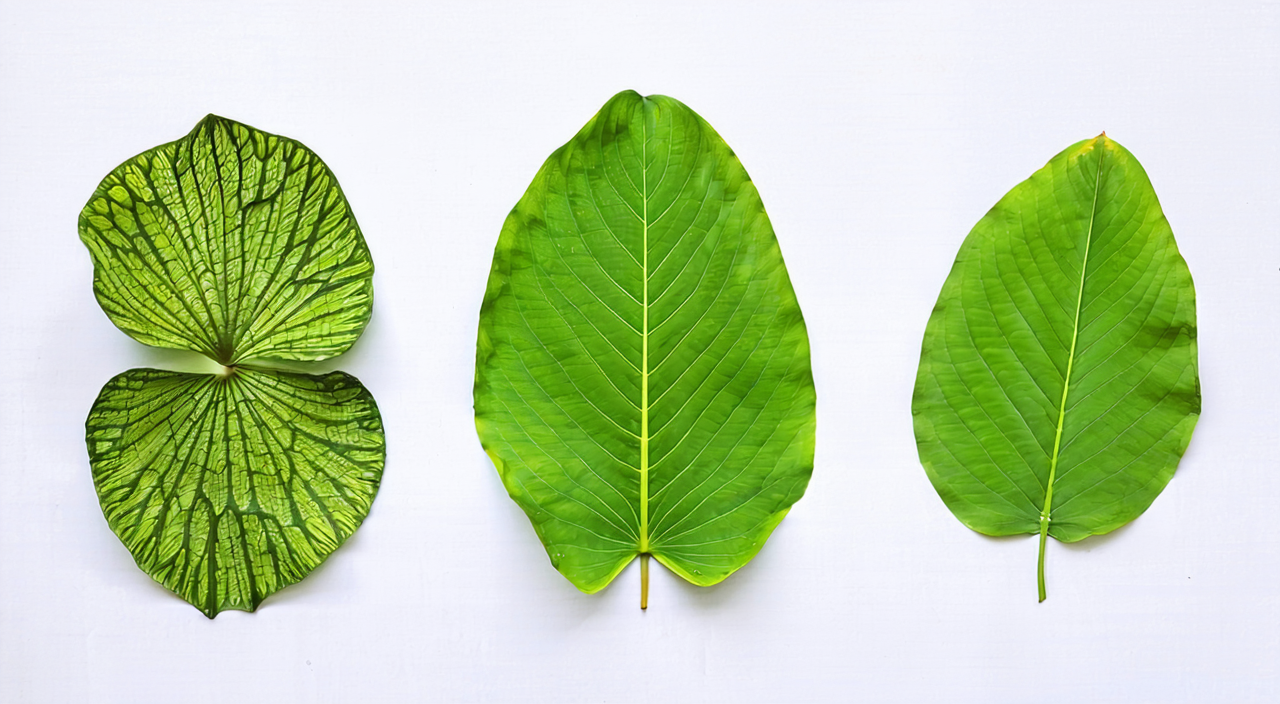
Lotus leaves, mulberry leaves, and banana leaves may all appear as green leaves, but their plant structures and traditional medicinal uses are different. For identification, observe the position of the petiole, the direction of the veins, and the size and texture of the leaf.
| Comparison | Lotus Leaf | Mulberry Leaf | Banana Leaf |
|---|---|---|---|
| Petiole position | Usually attached near the center of the leaf, showing the characteristic of a shield-shaped leaf | Usually attached at the base or one end of the leaf margin | Attached at the base; the petiole is relatively thick or sheath-like |
| Vein characteristics | Radiate outward from the center | Side veins are relatively prominent, and the leaf surface often has a net-like vein pattern | Thick, parallel veins are prominent, with longitudinal texture often forming between the veins |
| Leaf shape | Usually round or nearly round | Often ovate or broadly ovate, with serrated edges in some cases | Large and oblong, and easily torn |
| Texture after drying | Relatively thin and brittle; often curled or cut into pieces | Relatively thin and often retains the shape of the leaf edge | Long and broad; after drying, it has more noticeable fibrous texture and cracks |
Actual medicinal materials can also be affected by variety, harvest period, and processing method. If the source cannot be confirmed, do not pick, substitute, or drink the material long term based solely on its appearance.
Which Traditional Formulas Use Lotus Leaf?
Qing Luo Yin
Qing Luo Yin is one of the traditional formulas often discussed among formulas for clearing summer heat, with a formulation approach focused on clearing summer heat and regulating summer dampness. In related traditional applications, lotus leaf may serve as one of the herbs used to clear summer heat and resolve dampness. The formula’s ingredients and method of use should be determined according to authoritative medical texts, product instructions, or professional advice. Its name should not be taken to mean that it is suitable for every type of discomfort associated with summer heat.
Si Sheng Wan
Si Sheng Wan is commonly associated in traditional formula discussions with cooling the blood and stopping bleeding. Lotus leaf is one of the raw medicinal ingredients that may be included. If bleeding occurs, the location and cause should first be determined. In particular, black stools, significant abdominal pain, dizziness, or recurrent bleeding require prompt medical attention rather than self-prescribing a formula.
Lotus Leaf Pill
Lotus Leaf Pill is the name of a traditional prepared formula or related product containing lotus leaf. Different manufacturers, dosage forms, and formula versions may vary, so the name alone cannot be used to infer the exact ingredients or indications. When considering this type of Chinese patent medicine, read the product instructions carefully and assess its suitability in light of personal constitution, symptoms, and medications currently being used.
Formulas for Clearing Summer Heat and Supplementing Qi
Some formulas for clearing summer heat and supplementing qi may include lotus leaf as needed to reflect traditional principles such as clearing summer heat, supplementing qi, generating fluids, or raising clear yang. Because different formulas target different patterns and have different compositions and dosages, the presence of lotus leaf does not mean that they can be substituted for one another. Pregnant or breastfeeding individuals, children, older adults, and people with chronic illnesses should be especially sure to consult a professional before use.
What Precautions Should Be Taken When Using Lotus Leaf?
First, people with a weak and cold digestive system, a tendency toward diarrhea, sensitivity to cold in the abdomen, or discomfort after consuming raw or cold foods should be cautious with lotus leaf tea or related products, which are considered relatively cooling and clearing. If abdominal pain, diarrhea, nausea, or similar symptoms occur after drinking it, stop using it and monitor the situation. Consult a doctor if symptoms persist.
Second, people with low blood pressure or a tendency to dizziness and fatigue, as well as those taking diuretics, blood pressure medication, or other long-term prescription drugs, should not independently drink highly concentrated lotus leaf tea over an extended period. Lotus leaf is often included in products marketed as weight-loss teas, but long-term reliance on such products may lead to an imbalanced diet, abnormal bowel movements, or changes in fluid and electrolyte levels. Water loss or short-term fluctuations in body weight should not be equated with health benefits.
Third, pay attention to the source of the raw material and the risk of pesticide residues. The growing environment of lotus leaves may be affected by water quality, soil, and cultivation practices. Choose products with a clearly identified source, intact packaging, and standardized labeling. Avoid leaves that are moldy, damp, unusually odorous, or of uncertain origin. Before brewing, follow the product instructions, but do not assume that simple washing completely eliminates contamination risks.
If severe, long-lasting, or recurrent discomfort occurs, or if it is accompanied by marked anxiety, depression, palpitations, chest tightness, abnormal breathing, severe abdominal pain, persistent vomiting, black stools, unusual bleeding, or unexplained weight loss, consult a doctor or another qualified professional promptly. This article is provided for general educational reference about Chinese medicinal materials and cannot replace professional diagnosis or treatment advice.
Summary
Lotus leaf is the dried leaf of the lotus plant. Common identifying features include a shield-shaped round leaf, a central petiole attachment, and radiating veins. Fresh lotus leaf, dried lotus leaf, and lotus leaf charcoal differ in both form and traditional applications. Traditional Chinese medicine commonly understands lotus leaf in terms of clearing summer heat and resolving dampness, raising clear yang, and cooling the blood to stop bleeding. Related formulas should be considered in light of constitution, symptoms, product instructions, and professional advice. This article is for educational reference only; consult a doctor promptly if persistent or significant discomfort occurs.