
What Is Tianzhu Huang? Its Medicinal Part, Identification, and Common Formulas
What is Tianzhu Huang? For many Chinese-speaking users overseas, it is often associated with bamboo-based medicinal materials and traditional Chinese medicine concepts such as resolving phlegm and calming convulsions. However, Tianzhu Huang is not ordinary bamboo leaves or sliced bamboo stems. It is a dried secretion or coagulated substance formed inside the stems of bamboo plants. Because its source, appearance, and processing methods can easily be confused with those of bamboo shavings and bamboo sap, understanding its medicinal part and key identification features can help readers approach information about related Chinese medicinal materials or patent medicines more rationally.
It should be noted that medicinal material standards, commercial sources, and processing requirements may vary between regions. The following information is intended primarily for educational purposes concerning traditional Chinese medicinal materials and cannot replace diagnosis or medication advice from a doctor, pharmacist, or other qualified professional.
What Does Tianzhu Huang Look Like? How Can It Be Identified?
Appearance and Texture
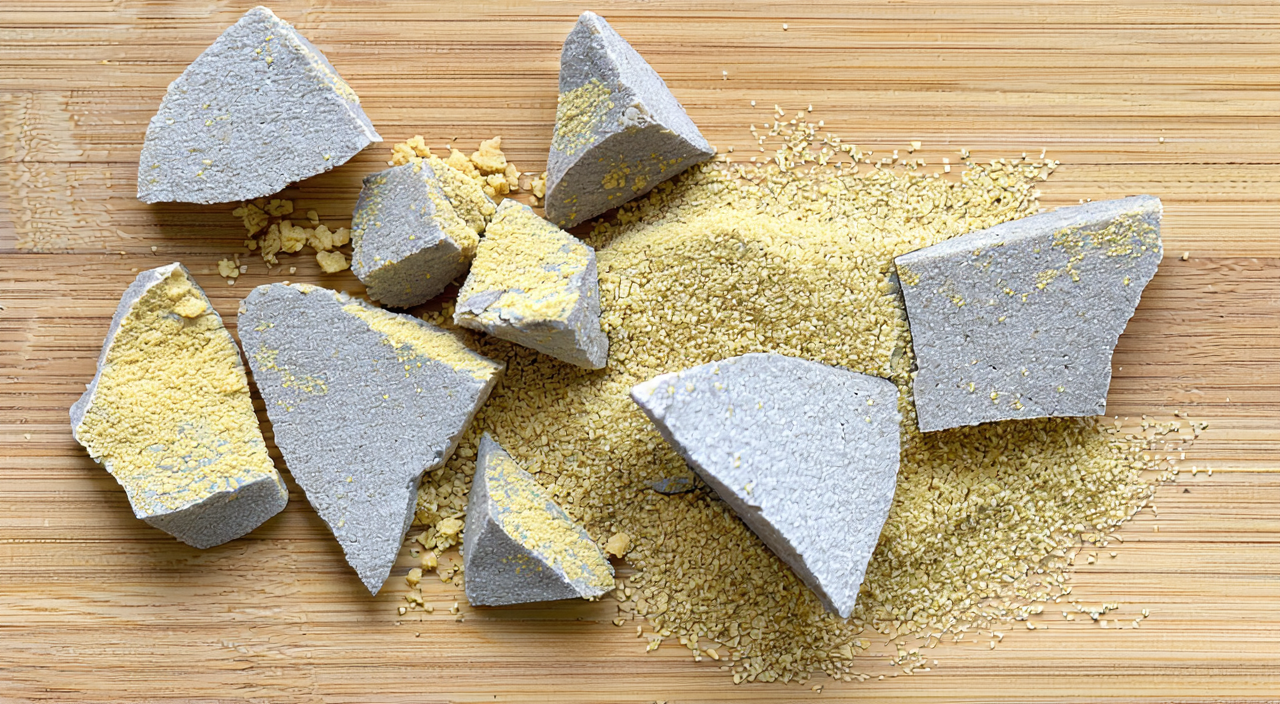
Tianzhu Huang usually appears as irregular granules, chunks, or fragments, with pieces that vary in size. Common colors range from grayish white and milky white to pale yellow. The surface may be relatively smooth or may have small uneven areas or powdery residue. High-quality prepared pieces are often relatively light, without a noticeable sense of heaviness when held. Their fracture surfaces are generally powdery, and the edges are brittle and may break under pressure.
Tianzhu Huang is somewhat hygroscopic. If stored in an overly humid environment, its surface may become soft, clump together, or even develop changes in color and odor. Therefore, checking whether it is sufficiently dry, whether it has absorbed moisture, and whether it contains obvious foreign matter is part of basic identification. Color and shape alone cannot confirm authenticity, especially for fragmented, powdered, or further-processed products. Source information, packaging details, and standardized testing should also be considered.
What to Look For During Identification
When purchasing or examining a sample, consider whether the color appears natural, whether the texture is light and brittle, whether the fracture surface is powdery, and whether there is any unusual, pungent odor. If a sample is excessively uniform, unusually bright white, noticeably hard, or mixed with large amounts of bamboo fragments, sand, or other powders, caution is warranted. Visual inspection at home can only serve as an initial reference and cannot replace microscopic identification, physicochemical testing, or quality inspection by an accredited institution.
What Is the Medicinal Part of Tianzhu Huang?
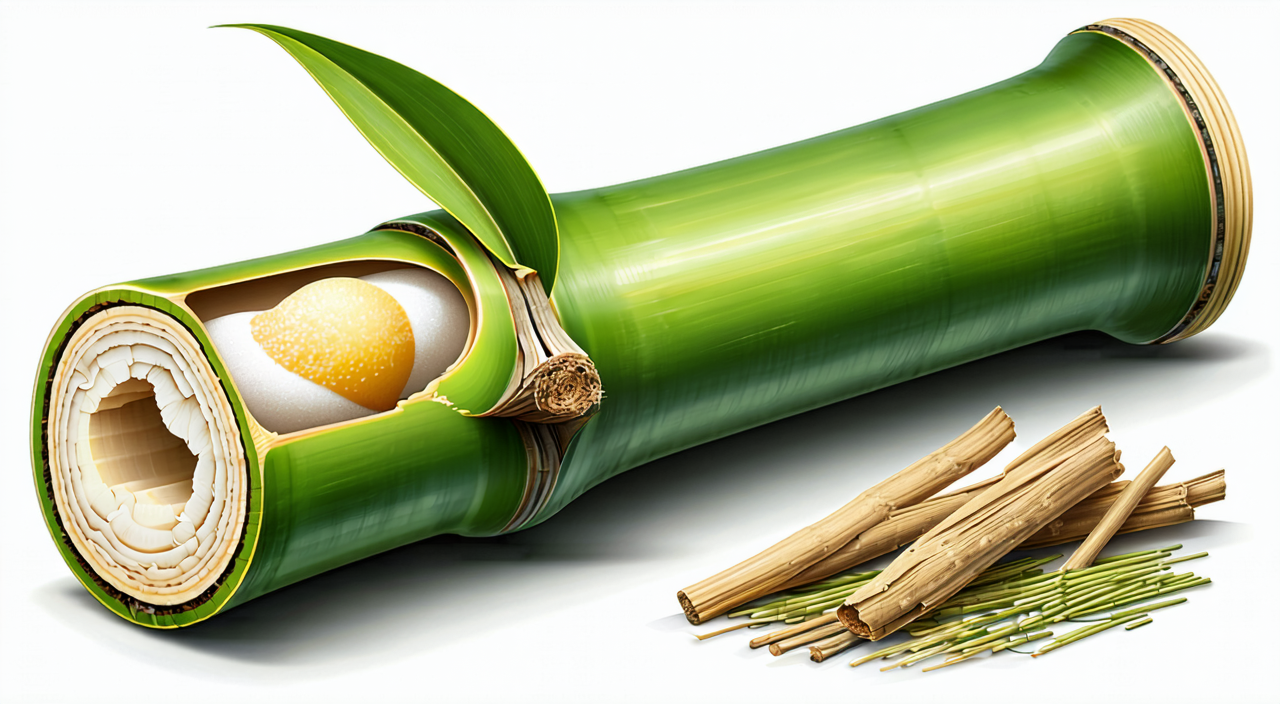
The medicinal part of Tianzhu Huang is not the bamboo leaves, roots, or stem itself. Rather, it is the secretion, deposit, or coagulated substance formed inside the bamboo stem. Traditional medicinal material references generally manage it as a dried coagulated substance found within the stems of bamboo plants. The specific botanical source should be determined according to the pharmacopoeia, medicinal material standards, and product approval information applicable in the region where it is used.
After these coagulated substances form, they must undergo collection, removal of impurities, cleaning, and drying before they can be used as a medicinal material. Because the natural formation process is influenced by the bamboo species, growing environment, collection method, and processing conditions, different batches may vary in color, size, brittleness, and chemical composition. Formal medicinal material distribution channels generally pay attention to source identification, impurity limits, degree of dryness, and storage conditions.
From a storage perspective, Tianzhu Huang should be kept in a dry, cool, clean environment with good sealing, protected from moisture and stored separately from strongly scented items. If it shows mold, insect damage, an obvious abnormal odor, or unusual discoloration, it should not be used independently.
How Does Traditional Chinese Medicine Understand Tianzhu Huang?
In traditional Chinese medicine theory, Tianzhu Huang is commonly understood in terms of clearing heat, transforming phlegm, clearing the Heart, and calming fright. It is often included in traditional treatment approaches associated with phlegm-heat, palpitations, fright, or an unsettled mind. Here, phlegm, heat, and fright are concepts used in traditional Chinese medicine pattern differentiation and do not correspond directly to one specific disease or test result in modern medicine.
Some traditional applications combine Tianzhu Huang with other medicinal materials for different regulatory approaches based on age and constitution. Whether it is appropriate in a particular case generally requires consideration of symptom patterns, tongue and pulse characteristics, age, medical history, and current medications. A formula should not be used independently simply because one symptom appears. Children, pregnant individuals, older adults, and people with chronic health conditions should consult a doctor or qualified traditional Chinese medicine professional first.
If persistent or recurring altered consciousness, convulsions, marked palpitations, chest tightness, abnormal breathing, high fever, severe pain, or similar symptoms occur, seek qualified medical care promptly rather than relying solely on educational information about Chinese medicinal materials.
What Are the Main Areas of Modern Research?
Modern research on Tianzhu Huang generally focuses on confirming its botanical source, understanding how it forms, investigating differences in chemical composition, and establishing quality-control methods. Because Tianzhu Huang is a coagulated substance formed inside bamboo stems, its composition may be affected by the bamboo species, place of origin, formation environment, collection time, and processing method. Research and testing may examine inorganic components, soluble constituents, microscopic characteristics, and differences among samples from different sources.
It is important to note that laboratory research, in vitro observations, or constituent analysis cannot be directly equated with actual effects in humans. Consumers should pay closer attention to whether the medicinal material has a clear source, has undergone standardized identification, has been stored appropriately, and whether any patent medicine being used has clear approval information and package instructions. Products with the same name but different sources should not be judged solely by promotional descriptions.
What Is the Difference Between Tianzhu Huang, Bamboo Shavings, and Bamboo Sap?
Tianzhu Huang, bamboo shavings, and bamboo sap are all related to bamboo plants, but their medicinal forms and processing methods are different.
- Tianzhu Huang: Refers mainly to the dried secretion or coagulated substance formed inside bamboo stems. It commonly appears as irregular grayish-white to pale-yellow granules or chunks, with a light, brittle texture and generally powdery fracture surfaces.
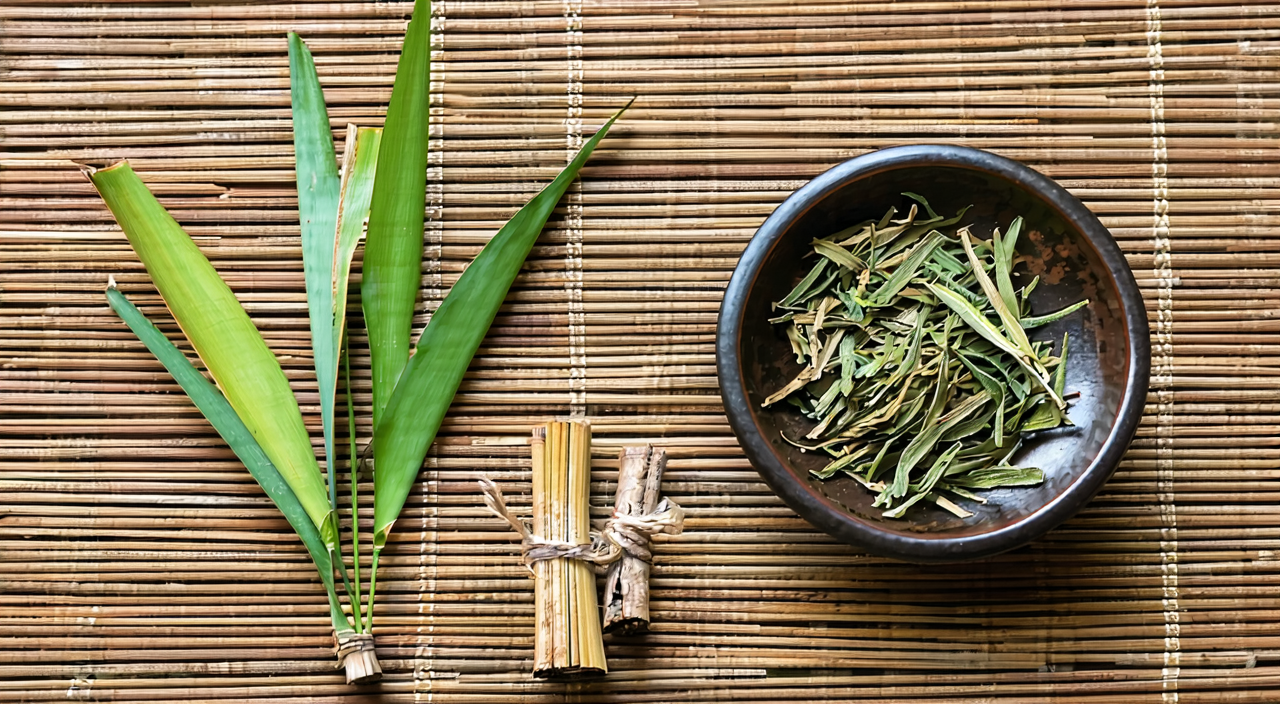
- Bamboo shavings: Usually refers to the fibrous thin layers scraped or peeled from the inner part of bamboo stems. They commonly appear as thread-like pieces, curled strips, or thin membranous flakes, with a texture clearly different from the coagulated chunks of Tianzhu Huang.
- Bamboo sap: Generally refers to the liquid obtained from bamboo stems after methods such as roasting over a fire. It is a liquid processed product and is not the same physical form as the solid medicinal material Tianzhu Huang.
Although all three may be associated in traditional theory with phlegm-heat, vexation, or related regulatory approaches, their medicinal sources, characteristics, preparation methods, and uses differ. They should not be substituted for one another. When reading a formula or patent medicine ingredients list, rely on the formal name, approval information, and product instructions.
Which Formulas Contain Tianzhu Huang?
Traditional formula and patent medicine references may list Tianzhu Huang in formulas such as Baolong Wan, Niuhuang Baolong Wan, and Xiao’er Huichun Dan. The ingredients, dosage form, directions, dosage, and intended user groups may differ between manufacturers, regions, and approved versions. Therefore, a formula’s name alone cannot be used to infer its specific purpose.
Baolong Wan
Baolong Wan is one of the names used for a traditional pediatric patent medicine. Some formulas combine it with Tianzhu Huang and other medicinal materials according to traditional approaches aimed at clearing heat, transforming phlegm, and calming fright. Whether it is appropriate for a particular child should be assessed according to the child’s age, symptoms, constitution, and the product instructions. The duration of use should not be extended or the dose increased without professional guidance.
Niuhuang Baolong Wan
Niuhuang Baolong Wan is the name of a patent medicine developed from related traditional formulas, and some products contain Tianzhu Huang. The medicinal ingredients, specifications, and package instructions may differ between products. Before use, check the approval number, manufacturing information, contraindications, and precautions, and consult a qualified professional when necessary.
Xiao’er Huichun Dan
Xiao’er Huichun Dan is also the name of a traditional pediatric patent medicine. Some versions may contain Tianzhu Huang or other medicinal materials traditionally associated with clearing heat and transforming phlegm. Medication for children requires particular attention to age restrictions, dosage requirements, and the risks of combining medicines. If a child has persistent high fever, an altered mental state, convulsions, persistent vomiting, or difficulty breathing, medical care should take priority.
What Precautions Apply When Using Tianzhu Huang?
Traditional references commonly associate Tianzhu Huang with treatment approaches for patterns characterized by heat and phlegm. For people with a weak and cold digestive system, a tendency toward diarrhea, poor appetite, or sensitivity to cooling medicinal materials, suitability should be assessed according to individual circumstances. It should not be tried solely on the basis of online information. Pregnant or breastfeeding individuals, children, older adults, and people taking multiple medications should consult a doctor or pharmacist first.
When purchasing or using it, confirm the medicinal material’s name, source, batch, storage condition, and packaging information. Tianzhu Huang may be subject to mixed sourcing or substitution with similar materials or other powders, and similar color does not mean equivalent quality. Powdered products are even more difficult to assess visually. Choose products with complete information from reputable channels, and keep the packaging and instructions.
If symptoms are severe, persistent, or recurrent, or are accompanied by significant anxiety, depression, palpitations, chest tightness, pain, abnormal breathing, severe abdominal pain, persistent vomiting, black stools, unexplained weight loss, or other concerning signs, consult a doctor or qualified professional promptly. This article is intended only as educational reference about Chinese medicinal materials and cannot replace professional diagnosis or treatment advice.
Summary
Tianzhu Huang is a dried secretion or coagulated substance formed inside the stems of bamboo plants. It commonly appears as irregular grayish-white to pale-yellow granules or chunks and is light, relatively brittle, and somewhat hygroscopic. It differs from bamboo shavings and bamboo sap in medicinal form and processing method. Related formulas and patent medicines should be assessed together with official instructions, individual constitution, and professional advice. This article is for educational reference only and cannot replace professional medical advice.