
What Is Snakeberry? Medicinal Parts, Identification, and Common Topical Uses
What is snakeberry? In some areas, it is grown as an ornamental ground-cover plant, while others may mistake its red fruits for wild strawberries when encountering it outdoors. It is important to understand that ornamental plants, wild fruits growing in natural environments, and Chinese herbal materials that have been properly collected, identified, and dried are not exactly the same thing. Learning about snakeberry’s botanical features, medicinal parts, and traditional uses can help reduce misidentification and improper use.
The scientific name usually refers to the whole herb of a snakeberry plant in the genus Duchesnea of the rose family. It commonly grows along forest edges, roadsides, grasslands, and in relatively moist environments. Its characteristic features include creeping growth, trifoliate leaves, and yellow flowers. The following information is intended for educational purposes regarding botany and traditional herbal knowledge and does not replace the judgment of a doctor or qualified professional.
What Does Snakeberry Look Like? How Can It Be Identified?
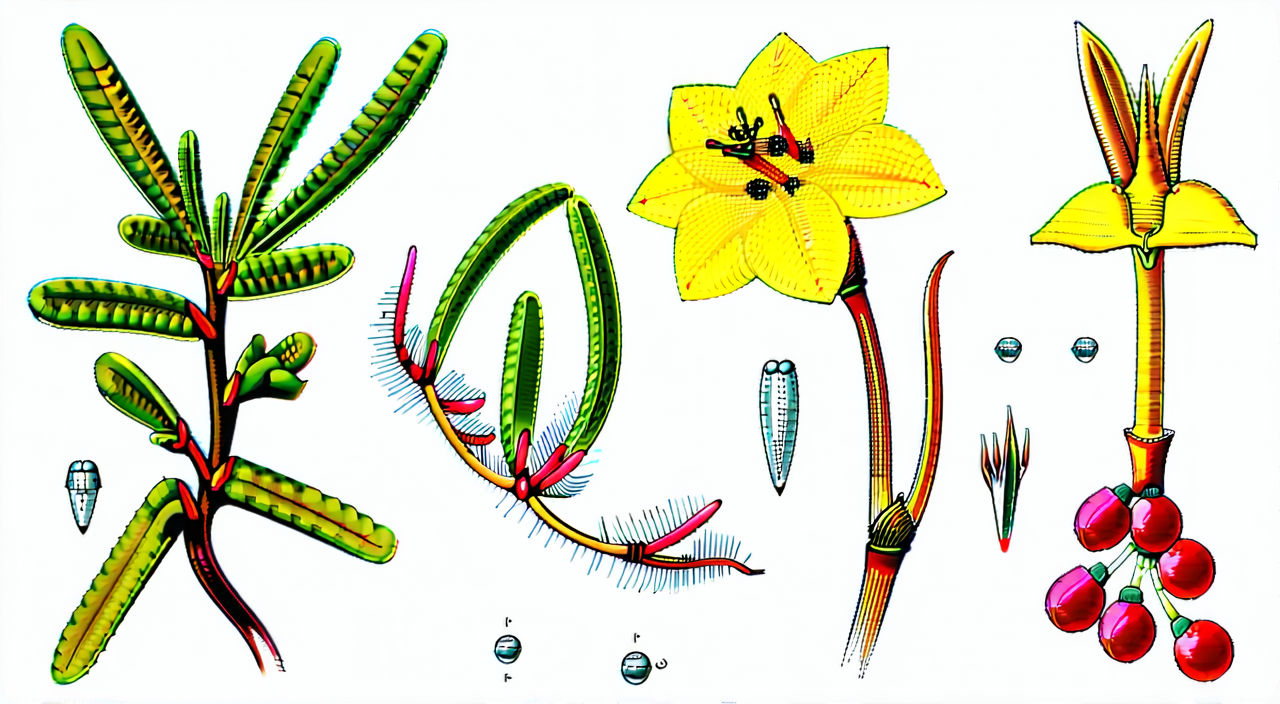
Snakeberry is generally low-growing, with slender stems that creep along the ground. The nodes can often develop roots or produce new leaf stalks, allowing the plant to form spreading ground cover in suitable conditions. The leaves are usually trifoliate, with short-stalked leaflets. Their margins may have rounded or more pronounced teeth, and the leaf surfaces are generally green and relatively soft.
The flowers are usually solitary near the leaf axils, with flower stalks emerging from the creeping stems or leaf axils. A notable feature of snakeberry is its yellow flowers, which usually have five petals. The flowers are not particularly large but are relatively easy to spot among the green leaves. After flowering, red aggregate fruits develop. They resemble small strawberries and have numerous tiny achenes arranged across the surface. Mature fruits may look bright and attractive, but similar appearance does not mean they are safe to eat or use medicinally.
When identifying the plant in the wild, observe the stems, leaves, flowers, and fruits together rather than relying only on the red fruit. The growing location, overall plant structure, and flower color are all important. If the plant has no flowers, the fruits are immature, or the plant has been damaged by trampling, accurate identification based only on a photograph or a single feature can be difficult.
Which Parts of Snakeberry Are Used Medicinally?
In traditional herbal texts and Chinese materia medica references, snakeberry is generally used as the whole herb. This includes the above-ground stems, leaves, flowers, and fruits rather than only the red fruit. It is generally collected from the flowering period through the fruiting period, depending on the plant’s growth condition, and then washed, sorted, and dried before being used as the traditional herbal material known as snakeberry.
The appearance of the dried whole herb differs from that of a fresh plant. After drying, the stems contract and become thinner, the leaves darken, and flowers and fruits may remain attached. Its aroma and texture also change. Herbal materials from regulated sources generally require species identification, proper harvesting and processing, and quality control. Plants collected independently beside roads, fields, or polluted areas may be contaminated with soil, pesticides, or other pollutants and should not be used directly as herbal medicine.
When purchasing or learning about related products, distinguish between plant specimens, ornamental seedlings, dried herbal materials, and compound preparations. Their purposes, processing methods, and quality requirements may differ. If you plan to use snakeberry for traditional health purposes, consider the product information, your personal circumstances, and professional advice together.
How Does Traditional Chinese Medicine View Snakeberry?
Traditional Chinese medicine commonly understands snakeberry in terms such as clearing heat, detoxifying, dispersing blood stasis, and reducing swelling. These descriptions are mainly found in materia medica records and folk-use experience. In this context, “clearing heat,” “detoxifying,” and “reducing swelling” are traditional theoretical terms and should not be equated directly with modern medical diagnoses or treatment conclusions regarding infections, inflammation, or other diseases.
In traditional practice, snakeberry is sometimes used topically for purposes associated with localized redness, swelling, a sensation of heat, or skin discomfort. It also appears in some compound formulas and folk remedies. However, methods of use may differ among regions, medical texts, and formulation systems. Dosage, processing, application site, and suitable users may also vary. Therefore, descriptions of a single herb in an online article should not be used as a basis for self-treatment.
If localized redness or swelling does not improve, spreads, is accompanied by significant pain or fever, or keeps recurring, consult a doctor first. Traditional topical practices should not replace professional assessment of wound infections, allergic dermatitis, or other skin conditions.
How Does Modern Research View Snakeberry?
Modern research on snakeberry and its extracts may focus on chemical analysis, antioxidant testing, or cell and animal experiments. Such studies can help researchers understand some of the plant’s chemical constituents and how they behave under specific experimental conditions, but laboratory findings are not equivalent to actual effects in humans.
Determining whether an herb is suitable for a particular health concern also requires consideration of the research subject, extraction method, dosage, route of administration, and outcome measures. In vitro experiments cannot directly establish the effects of topical or oral use, and animal studies cannot replace well-designed human research. Claims found online that snakeberry has “anticancer” effects or can be used for other diseases should not be treated as a basis for treatment, nor should they delay proper examination and medical care.
For severe, long-lasting, or recurring symptoms, especially when accompanied by marked anxiety, depression, palpitations, chest tightness, unusual pain, abnormal breathing, severe abdominal pain, persistent vomiting, black stools, or unexplained weight loss, seek timely advice from a doctor or another qualified professional.
How Does Snakeberry Differ from Strawberries and Potentilla?
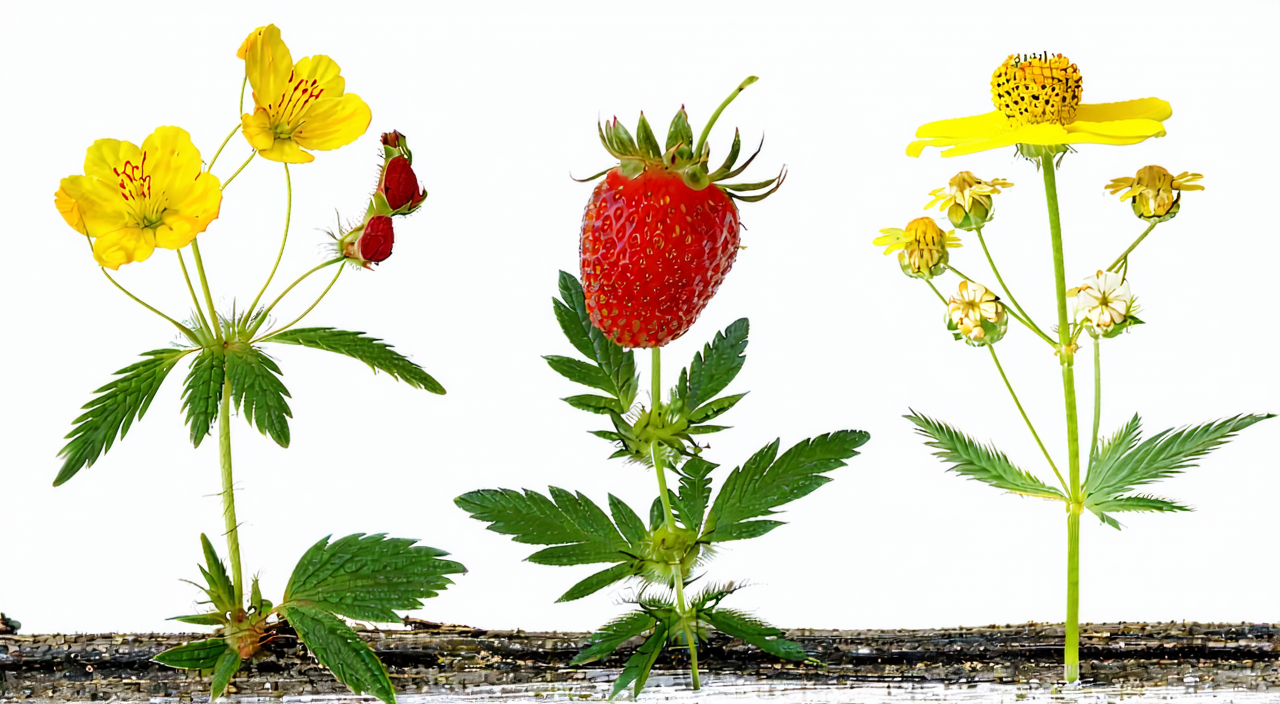
Snakeberry, wild strawberries, and potentilla may all occur in similar outdoor environments, and their leaves or fruits can easily be confused visually. The following features can help with an initial observation, but final identification should rely on a reliable plant guide, a qualified professional, or formal botanical identification.
Flower Color
Snakeberry usually has yellow flowers with five petals, which is a distinctive feature. Common strawberry plants generally have white flowers, with a different petal form from snakeberry. Potentilla species also commonly have yellow flowers, so flower color alone is not enough. The stem growth pattern, leaf structure, and fruit form should also be considered.
Fruit Structure
Snakeberry produces red aggregate fruits with numerous tiny achenes visible on the surface. They are generally spherical or nearly spherical, and the fruit develops from structures including the receptacle. Strawberries are also aggregate fruits, but they are often larger and differ from snakeberry in overall shape and surface structure. Potentilla usually does not produce the same bright-red, spherical fruits as snakeberry.
Leaves and Growth Pattern
Snakeberry commonly has conspicuous creeping stems, with trifoliate leaves arranged along the stems, allowing it to spread across the ground. Strawberries may also produce runners, but their leaf texture, stipules, inflorescences, and other features differ. Potentilla species commonly have trifoliate or palmately divided leaves. Their exact form varies by species, and the stems may be upright or ascending to different degrees. When collecting plants in the wild, do not mix or consume them simply because they look similar.
Which Formulas or Topical Methods Use Snakeberry?
Traditional references and folk practices include names such as “Snakeberry Powder” and “Snakeberry Decoction,” as well as traditional topical formulas for clearing heat and reducing swelling that contain snakeberry. The ingredients, proportions, preparation methods, and intended uses associated with these names may vary among regions, medical texts, and product systems. The name of a formula alone is therefore not enough to determine its exact composition.
Snakeberry Powder can generally be understood as a traditional preparation in which the relevant herbs are processed into a powder for use. Snakeberry Decoction usually refers to a formula in which snakeberry or other herbs are boiled to prepare a liquid. Traditional topical methods may also include washing with a decoction, wet compresses, or paste applications. The specific procedure, concentration, frequency, and contact time should be determined according to the source and professional guidance.
Traditional topical formulas for clearing heat and reducing swelling are based on traditional usage and are not necessarily suitable for every skin problem involving redness or swelling. Before use, confirm the plant species and read the preparation instructions. Test the product on a small area first to observe the skin’s reaction, and avoid contact with the eyes, mouth, and other mucous membranes. If stinging, itching, a rash, or worsening swelling occurs, stop using it and seek professional advice. Suitability still depends on individual constitution, symptoms, skin integrity, and professional assessment.
What Precautions Should Be Taken When Using Snakeberry?
First, do not treat online claims about snakeberry’s anticancer, anti-infective, or other disease-related effects as a basis for treatment. Traditional knowledge about snakeberry and modern medical diagnosis and treatment belong to different systems. Self-collected or self-prepared snakeberry should not replace medical examinations, prescribed medicines, or standard treatment.
Second, topical use does not mean that a product is suitable for everyone. People sensitive to plant constituents may develop contact skin reactions. Children, pregnant or breastfeeding individuals, and people taking other medications should consult a doctor or pharmacist before use. Unverified herbs should not be applied independently to broken skin, deep wounds, areas with significant discharge or pus, or suspected infections, as they may irritate the wound or mask the condition.
Third, wild harvesting carries risks of species misidentification and environmental contamination. Plants growing near roads, construction sites, farmland, or drainage areas may be exposed to pesticides, heavy metals, or other pollutants. Even if the plant is confirmed to be snakeberry, that does not establish that it is suitable for oral or topical use. For dried herbal materials and compound products, pay attention to the source, packaging information, storage conditions, and product instructions. Do not use products with an unusual odor, mold, or signs of moisture damage.
If breathing difficulty, swelling of the face or lips, widespread rash, persistent vomiting, or other significant abnormalities occur after use, seek medical attention promptly. Any severe, long-lasting, or recurring symptoms should be evaluated by a doctor or qualified professional.
Summary
Snakeberry generally refers to a creeping herb used as a whole plant in traditional herbal medicine. Identification should be based on the combination of trifoliate leaves, yellow five-petaled flowers, red aggregate fruits, and tiny achenes rather than fruit color alone, which can lead to confusion with strawberries or other wild plants. Snakeberry Powder, Snakeberry Decoction, and traditional topical formulas for clearing heat and reducing swelling represent traditional usage approaches. Modern experimental findings cannot replace human evidence, and caution is needed with wild harvesting, topical allergies, and use on damaged skin. This article is for educational reference only and does not replace professional diagnosis or treatment advice.