
Chronic Obstructive Pulmonary Disease
Chronic obstructive pulmonary disease (COPD) is a common, preventable and treatable disease characterized by persistent airflow limitation. The airflow limitation is progressive and is associated with an enhanced chronic inflammatory response of the airways and lungs to harmful particles or gases. Acute exacerbations and comorbidities affect the overall severity of the disease. COPD primarily affects the lungs, but can also cause systemic (or extrapulmonary) adverse effects. Lung inflammation caused by inhaling cigarette smoke and other harmful particles, such as biomass-fuel smoke, is a major contributor to COPD. This chronic inflammatory response can lead to destruction of the lung parenchyma (causing emphysema) and impair normal repair and defense mechanisms (causing small-airway fibrosis). In traditional Chinese medicine (TCM), this condition falls within the categories of “dyspnea” and “lung distention.”
TCM Pattern Identification and Medication Reference
|Common Symptoms
Clinical description:
Cough or wheezing; white, thin, watery sputum; fever, chills, and no sweating, or aching limbs; nasal congestion and clear nasal discharge. White tongue coating; floating or floating-tight pulse.
In plain language:
- Coughing or feeling short of breath, sometimes with wheezing
- White, thin sputum
- Fever, with feeling cold or shivering
- Little or no sweating
- Generalized aches
- Nasal congestion and clear, watery nasal discharge
- White coating on the tongue
- The pulse feels relatively superficial or tight (as noted during a clinical examination)
|Treatment Approach
Clinical description:
Disperse lung Qi, dispel cold, stop cough, and relieve wheezing.
In plain language:
- Promote the flow of lung Qi and disperse cold from the body to ease discomfort associated with exposure to cold, such as nasal congestion, chills, coughing, and chest tightness
- Help relieve coughing, wheezing, and rapid or labored breathing so that breathing feels steadier and easier
|Related Products
The products below are provided for informational purposes only and do not constitute medical advice or a prescription. Refer to the product packaging and instructions, and use under the guidance of a doctor or pharmacist.
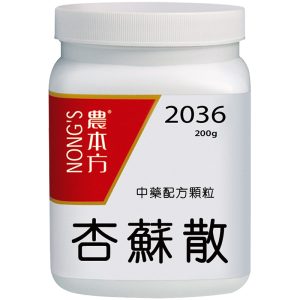
|Common Symptoms
Clinical description:
Cough or wheezing; chills and no sweating, or nasal congestion and clear nasal discharge, or aching limbs; thin white sputum, sometimes foamy, that is easy to expectorate; rattling phlegm in the throat; chest tightness, sometimes with upward surging breath that makes it difficult to lie flat. White, slippery tongue coating; wiry-tight or floating-wiry-tight pulse.
In plain language:
- Coughing or feeling short of breath, with a rattling sound from phlegm in the throat
- Feeling cold and sweating little or not at all
- Nasal congestion and clear, watery nasal discharge
- Generalized aches
- Thin, white sputum, often foamy and relatively easy to cough up
- Chest tightness; in more severe cases, a sensation of breath surging upward that feels worse when lying flat
- White, slippery tongue coating
- The pulse feels taut, or superficial and tight (as noted during a clinical examination)
|Treatment Approach
Clinical description:
Disperse wind and dispel cold; warm the lungs and transform retained fluids.
In plain language:
- Disperse external wind-cold from the body’s surface to ease chills, aches in the head and body, nasal congestion, and a runny nose after exposure to cold
- Warm the lungs and help resolve thin, retained phlegm so that there may be less sputum and it is easier to cough up; ease coughing, shortness of breath, chest tightness, and rattling phlegm
|Related Products
The products below are provided for informational purposes only and do not constitute medical advice or a prescription. Refer to the product packaging and instructions, and use under the guidance of a doctor or pharmacist.
|Common Symptoms
Clinical description:
Cough or wheezing with shortness of breath; abundant yellow or thick white sputum that is difficult to expectorate; fever or thirst with a preference for cold drinks; hard stools. Red tongue with yellow or yellow-greasy coating; rapid or slippery-rapid pulse.
In plain language:
- Coughing, rapid breathing, or becoming short of breath easily
- Abundant yellow or white, thick sputum that is difficult to clear
- There may be a fever and thirst, with a preference for cold drinks
- Hard stools or constipation
- The tongue may look red
- The tongue coating may be yellow or thick and greasy
- The pulse may feel fast or slippery (as noted during a clinical examination)
|Treatment Approach
Clinical description:
Clear lung heat, transform phlegm, direct rebellious Qi downward, and relieve wheezing.
In plain language:
- Help clear phlegm and inflammation from the lungs so sputum may become thinner and easier to cough up, easing coughing and a feeling of mucus sticking in the throat
- Help direct Qi downward to ease breathlessness and wheezing with a sensation of breath rising upward, and relieve shortness of breath and rapid breathing
|Related Products
The products below are provided for informational purposes only and do not constitute medical advice or a prescription. Refer to the product packaging and instructions, and use under the guidance of a doctor or pharmacist.
|Common Symptoms
Clinical description:
Cough or wheezing with shortness of breath; abundant white, sticky or foamy sputum; epigastric fullness and distention; a sticky feeling in the mouth; poor appetite or eating little. White, greasy tongue coating; slippery or wiry-slippery pulse.
In plain language:
- Coughing or feeling short of breath, with rapid breathing
- Abundant white, sticky or foamy sputum
- Fullness or tightness in the upper abdomen, as if the stomach feels blocked
- A sticky, unpleasant feeling in the mouth
- Poor appetite or eating less
- White, thick, somewhat greasy tongue coating
- The pulse feels slippery or taut (as noted during a clinical examination)
|Treatment Approach
Clinical description:
Dry dampness and transform phlegm; disperse and direct lung Qi downward.
In plain language:
- Help address excess “dampness” in the body and break up thick phlegm so it becomes thinner and easier to cough up, easing chest tightness and a sticky feeling in the mouth
- Promote the flow of lung Qi and help it move downward to ease coughing, shortness of breath, and labored breathing so that breathing feels easier
|Related Products
The products below are provided for informational purposes only and do not constitute medical advice or a prescription. Refer to the product packaging and instructions, and use under the guidance of a doctor or pharmacist.
|Common Symptoms
Clinical description:
Altered mental status (agitation, confusion, drowsiness, delirium, or coma); tremors of the limbs, possibly progressing to convulsions; wheezing and shortness of breath; rattling phlegm in the throat. Pale or red tongue with white-greasy or yellow-greasy coating; slippery or rapid pulse.
In plain language:
- Agitation, confusion, or drowsiness; in severe cases, incoherent speech or even coma
- Trembling or cramping of the limbs, possibly progressing to convulsions
- Rapid breathing or feeling short of breath easily
- A rattling sound in the throat, as if phlegm is obstructing the airway
- The tongue may be pale or red, with a thick, greasy white or yellow coating
- The pulse may feel slippery or fast (as noted during a clinical examination)
|Treatment Approach
Clinical description:
Open the orifices by resolving phlegm.
In plain language:
- Help break up and clear stubborn, sticky phlegm, easing obstruction and rattling sounds in the throat and airways
- Help clear passages obscured by phlegm so breathing may feel easier and the mind clearer, easing confusion and slowed responses
|Related Products
The products below are provided for informational purposes only and do not constitute medical advice or a prescription. Refer to the product packaging and instructions, and use under the guidance of a doctor or pharmacist.
|Common Symptoms
Clinical description:
Cough or wheezing with shortness of breath, worse with exertion; fatigue, weakness, or spontaneous sweating; aversion to drafts and susceptibility to colds. Pale tongue with white coating; deep-thin or thin-weak pulse.
In plain language:
- Coughing or feeling short of breath, with rapid breathing that is more noticeable after activity
- Low energy and easy fatigue; sweating after even light activity
- Aversion to drafts and a tendency to catch colds
- The tongue may look pale, with a white coating
- The pulse may feel deep and thin, or thin and weak (as noted during a clinical examination)
|Treatment Approach
Clinical description:
Tonify lung Qi and strengthen the body’s defensive Qi.
In plain language:
- Support lung function and replenish energy and resilience, easing shortness of breath, fatigue, and coughing
- Strengthen the body’s “outer defenses” to help address easy sweating and sensitivity to drafts or frequent colds, and reduce recurrence
|Related Products
The products below are provided for informational purposes only and do not constitute medical advice or a prescription. Refer to the product packaging and instructions, and use under the guidance of a doctor or pharmacist.
|Common Symptoms
Clinical description:
Cough or wheezing with shortness of breath, worse with exertion; fatigue, weakness, or spontaneous sweating, also worse with exertion; aversion to drafts and susceptibility to colds; poor appetite or eating little. Enlarged tongue or teeth marks along its edges; thin white or greasy tongue coating; deep-thin, deep-slow, or thin-weak pulse.
In plain language:
- Coughing or feeling short of breath, with rapid breathing that is more noticeable after activity
- Low energy and easy fatigue, with sweating that becomes more pronounced after even light activity
- Aversion to drafts and a tendency to catch colds
- Poor appetite or eating less
- The tongue may look enlarged, with tooth marks along its edges
- A thin white tongue coating, or a white, somewhat thick and greasy coating
- The pulse may feel deep and thin, slow, or thin and weak (as noted during a clinical examination)
|Treatment Approach
Clinical description:
Tonify the lungs and spleen, direct Qi downward, and transform phlegm.
In plain language:
- Support lung function and regulate the spleen and stomach to improve energy and appetite, reduce phlegm-dampness, and ease fatigue, poor appetite, and abdominal bloating
- Help direct Qi downward and break up thick phlegm to ease coughing, difficulty coughing up sputum, chest tightness, and shortness of breath
|Related Products
The products below are provided for informational purposes only and do not constitute medical advice or a prescription. Refer to the product packaging and instructions, and use under the guidance of a doctor or pharmacist.
|Common Symptoms
Clinical description:
Wheezing and shortness of breath, worse with exertion; fatigue or spontaneous sweating, worse with exertion; susceptibility to colds and aversion to drafts; weakness and soreness in the lower back and knees; frequent urination and nocturia, or urine leakage when coughing. Pale tongue with white coating; deep-thin or thin-weak pulse.
In plain language:
- Feeling short of breath, with rapid breathing that is more noticeable after activity
- Easy fatigue and sweating, worse after activity
- A tendency to catch colds and aversion to drafts
- Weakness or soreness in the lower back and knees
- Frequent urination and waking often at night to urinate; possible urine leakage when coughing
- The tongue may look pale, with a white coating
- The pulse may feel deep and thin, or thin and weak (as noted during a clinical examination)
|Treatment Approach
Clinical description:
Tonify the kidneys and lungs, help the kidneys receive Qi, and relieve wheezing.
In plain language:
- Support kidney and lung function and improve energy and stamina to ease shortness of breath, fatigue, and feeling cold
- Help “hold” inhaled Qi and steady breathing, easing labored breathing and the feeling of not being able to catch one’s breath
|Related Products
The products below are provided for informational purposes only and do not constitute medical advice or a prescription. Refer to the product packaging and instructions, and use under the guidance of a doctor or pharmacist.
|Common Symptoms
Clinical description:
Wheezing and shortness of breath, worse with exertion; spontaneous sweating or fatigue, worse with exertion; susceptibility to colds; weakness and soreness in the lower back and knees; tinnitus, lightheadedness, or dizziness; dry cough or scant sputum that is difficult to expectorate; night sweats and heat in the palms and soles. Pale or red tongue with scant, thin, or patchy coating; deep-thin, thin-weak, or thin-rapid pulse.
In plain language:
- Feeling short of breath, with rapid breathing that is more noticeable after activity
- Easy sweating or fatigue, worse after activity
- A tendency to catch colds
- Weakness or soreness in the lower back and knees
- Tinnitus, lightheadedness, or dizziness
- Dry cough, little sputum, or a feeling that sputum is difficult to clear
- Night sweats and warmth in the palms and soles
- The tongue may be pale or red
- The tongue coating may be very thin or scant, or have patchy areas where it is missing
- The pulse may feel deep and thin, thin and weak, or thin and fast (as noted during a clinical examination)
|Treatment Approach
Clinical description:
Tonify the lungs and nourish the kidneys, help the kidneys receive Qi, and relieve wheezing.
In plain language:
- Support lung function and nourish kidney Qi to improve energy and resilience, easing persistent coughing, shortness of breath, fatigue, and feeling cold
- Help “hold” inhaled Qi and steady breathing, reducing wheezing with a sensation of breath surging upward and the feeling of not being able to catch one’s breath
|Related Products
The products below are provided for informational purposes only and do not constitute medical advice or a prescription. Refer to the product packaging and instructions, and use under the guidance of a doctor or pharmacist.
References
- Chen Yahong, Wang Chen. Overview of the GOLD Global Strategy for the Diagnosis, Treatment, and Prevention of Chronic Obstructive Pulmonary Disease [J]. Chinese Journal of Medical Frontiers (Electronic Edition), 2015, 7(2): 34-37.
- Pulmonary Diseases Committee, Internal Medicine Branch, China Association of Chinese Medicine. Guidelines for the Diagnosis and Treatment of Chronic Obstructive Pulmonary Disease in Traditional Chinese Medicine (2011 edition) [J]. Journal of Traditional Chinese Medicine, 2012, 53(1): 80-83.
- Chronic Obstructive Pulmonary Disease Group, Respiratory Diseases Branch, Chinese Medical Association. Guidelines for the Diagnosis and Treatment of Chronic Obstructive Pulmonary Disease (2013 revised edition) [J]. Chinese Journal of Medical Frontiers (Electronic Edition), 2014, 6(2): 67-81.
- Li Jiansheng. Overview of TCM Pattern-Based Treatment for Chronic Obstructive Pulmonary Disease [J]. Journal of Henan University of Chinese Medicine, 2009, 24(4): 9-11.
- Li Jiansheng, Yu Xueqing, Wang Minghang, et al. Strategies and Practice in Research on Traditional Chinese Medicine Treatment for Chronic Obstructive Pulmonary Disease [J]. China Journal of Traditional Chinese Medicine and Pharmacy, 2012, 27(6): 1607-1614.
- Li Jiansheng. Deficiency of Vital Qi and Accumulated Damage as the Main Pathogenesis of Chronic Obstructive Pulmonary Disease [J]. China Journal of Traditional Chinese Medicine and Pharmacy, 2011, 26(8): 1710-1713.
- Pulmonary Diseases Committee, Internal Medicine Branch, China Association of Chinese Medicine. Diagnostic Criteria for TCM Patterns of Chronic Obstructive Pulmonary Disease (2011 edition) [J]. Journal of Traditional Chinese Medicine, 2012, 52(2): 177-178.
- Yao Wanzhen. New Perspectives on Indicators for Assessing the Severity and Prognosis of Chronic Obstructive Pulmonary Disease [J]. National Medical Journal of China, 2015, 95(8): 561-563.
- Wang Yongyan, Chao Enxiang, Wang Guiqiang. Guidelines for the Clinical Use of Chinese Patent Medicines: Infectious Diseases Volume [M]. Beijing: China Press of Traditional Chinese Medicine, 2015.
- Zhang Hongchun. Annotations to the TCM Clinical Diagnosis and Treatment Guidelines: Respiratory Diseases Volume [M]. Beijing: China Press of Traditional Chinese Medicine, 2015.
- Li Xuelin. Practical Clinical Chinese Materia Medica (Chinese Patent Medicines) [M]. Beijing: People’s Medical Publishing House, 2013.