
What Is Atractylodes? Identification, Medicinal Parts & Formulas
Atractylodes (Bai Zhu) is a widely used Chinese herb, derived from the dried rhizome of Atractylodes macrocephala. Because it is traditionally used to strengthen the spleen, boost qi, dry dampness, and promote water metabolism, many overseas users interested in Chinese medicine want to understand what it really is, what it looks like, and how it works in formulas. This article introduces its visual identification, medicinal parts, traditional understanding, modern research, comparisons with similar herbs, common formulas, and usage precautions.
What does Atractylodes look like? How to identify it?
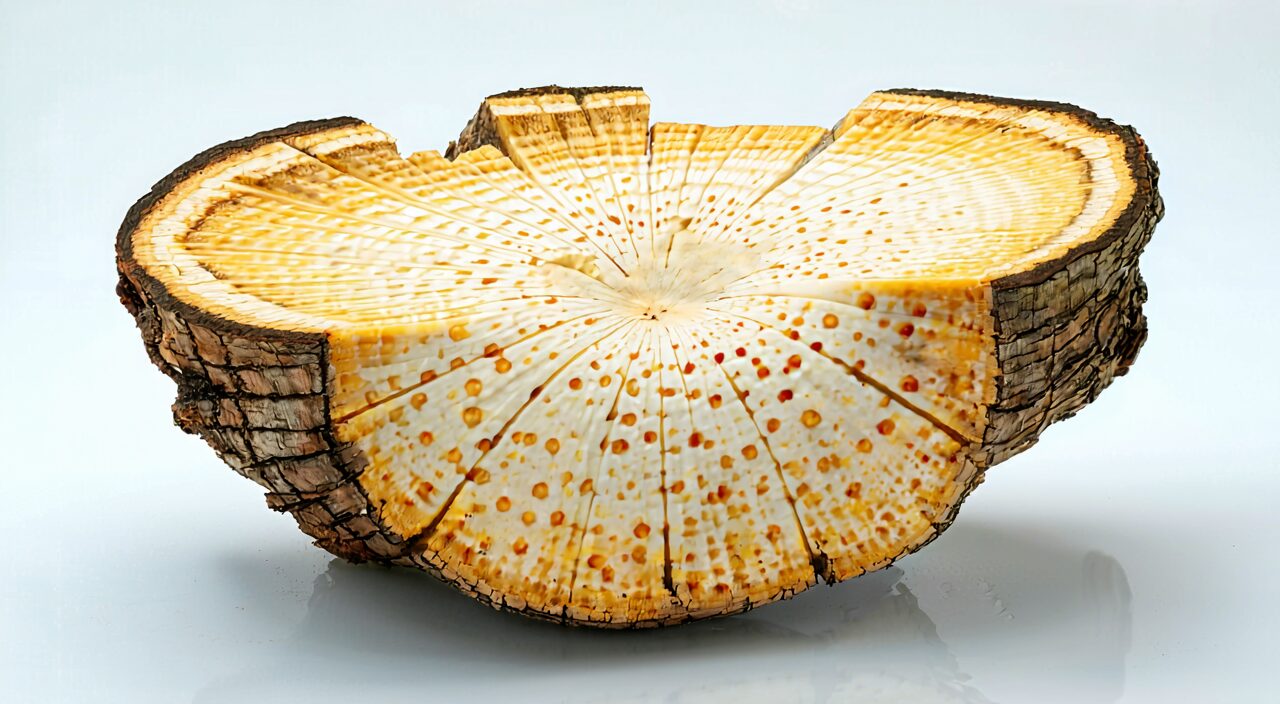
The dried root of Atractylodes usually appears as irregular, thick, lumpy or fist-shaped pieces, varying in size. The surface is grayish-yellow or grayish-brown, with fine longitudinal wrinkles and tumor-like protrusions. It feels firm and is not easily broken.
When cut, the cross-section is often pale yellowish-white to light brown, with scattered brownish-yellow oil spots, which are traces of volatile oils. One of the most typical features is that the cross-section sometimes shows cracks or a radial pattern resembling a “chrysanthemum heart,” especially noticeable in unprocessed Atractylodes slices.
These features can help with preliminary identification when purchasing or handling the herb:
- Shape: irregular thick lumps or fist-shaped
- Surface: grayish-yellow or grayish-brown, with longitudinal wrinkles and tumor-like protrusions
- Texture: firm, not easily broken
- Cross-section: pale yellowish-white to light brown, scattered brownish-yellow oil spots, often with cracks or a “chrysanthemum heart” radial pattern
- Prepared slices: mostly horizontally or obliquely sliced thick pieces, with grayish-yellow edges and yellowish-white cut surface, also showing oil spots and chrysanthemum heart structure
- Processed product identification: after stir-frying with bran or earth, the color deepens, the surface has slight burnt spots, and the aroma is stronger
What is the medicinal part of Atractylodes?
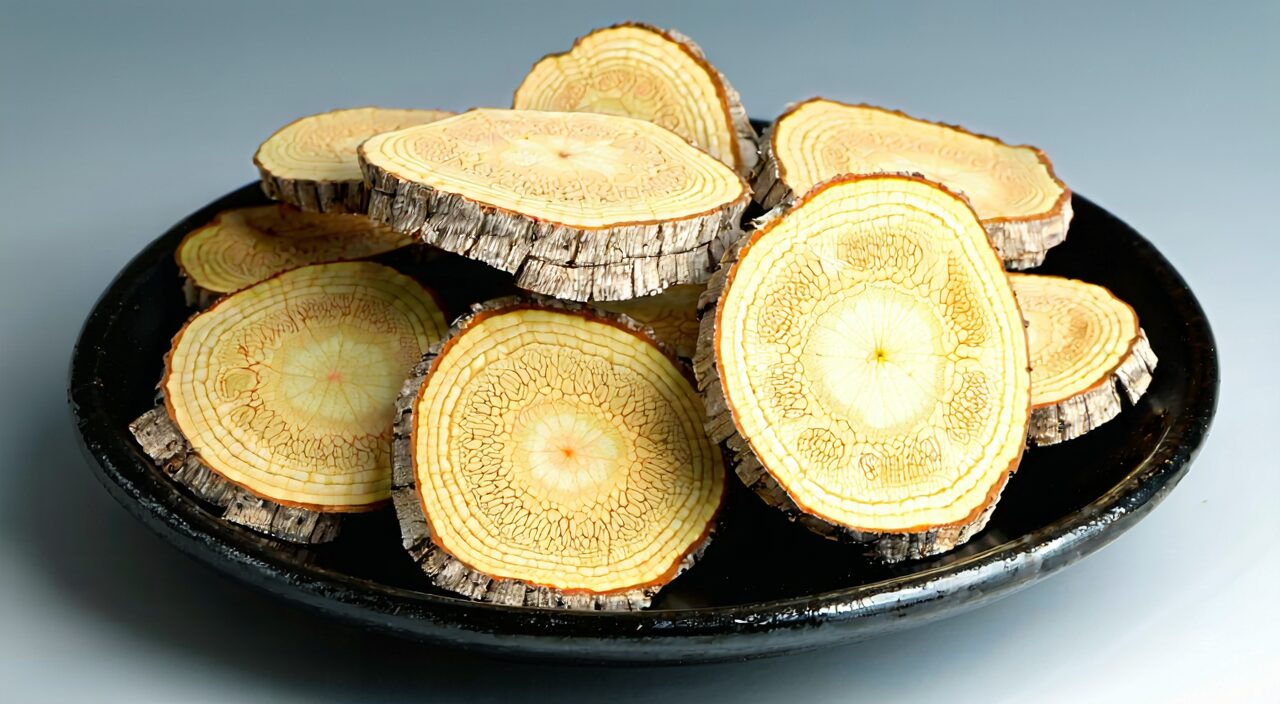
The medicinal part of Atractylodes is its dried rhizome. It is usually harvested after the Frost Descent, when the stems and leaves wither, then cleaned of soil and fibrous roots, and sun-dried or oven-dried to become raw Atractylodes (Sheng Bai Zhu). During processing, it can be further sliced or prepared as needed.
Common commercial forms and their characteristics:
- Raw Atractylodes slices: particularly effective at drying dampness and promoting urination
- Bran-fried Atractylodes (Fu Chao Bai Zhu): after frying, its nature becomes milder, and its spleen-strengthening effect is enhanced
- Earth-fried Atractylodes (Tu Chao Bai Zhu): focuses on tonifying the spleen and stopping diarrhea
Understanding the medicinal parts and the characteristics of different processed products helps in gaining a better grasp of Atractylodes from the perspective of traditional usage.
How does traditional Chinese medicine understand Atractylodes?
Traditional Chinese medicine’s understanding of Atractylodes is mainly based on its nature, taste, and meridian tropism. Atractylodes is sweet and bitter in taste, warm in nature, and enters the spleen and stomach meridians. Ancient texts often describe it as a “key herb for strengthening the spleen and boosting qi.”
Based on this understanding, Atractylodes is traditionally considered effective at invigorating the spleen and stomach, helping to improve symptoms such as poor appetite, fatigue, and abdominal distension caused by spleen qi deficiency. It also dries dampness and promotes urination, and is often used for edema, phlegm-fluid retention, or diarrhea due to spleen deficiency with un-transformed dampness. In addition, Atractylodes is used to stop sweating and calm the fetus; for conditions such as spontaneous sweating due to exterior deficiency or threatened miscarriage due to qi deficiency, it may be considered in certain formula combinations.
These traditional views summarize Atractylodes’ therapeutic direction, but actual use should still be based on an individual’s constitution and overall condition.
What components and effects of Atractylodes are the focus of modern research?
From a modern analytical perspective, Atractylodes contains volatile oils, atractylenolides, atractylone, polysaccharides, and other constituents, with volatile oils and atractylenolides being the more extensively studied components.
In cell and animal studies, some observations suggest that Atractylodes extracts may have certain effects on the following areas:
- Digestive tract function, such as promoting gastrointestinal motility
- Inflammatory responses, e.g., inhibiting certain inflammatory factors
- Immune modulation
- Regulation of signaling pathways related to water metabolism
It is worth noting that these findings are primarily at the basic experimental level, and high-quality human clinical evidence remains limited. Therefore, such studies can serve as a modern reference for understanding the actions of Atractylodes, but they cannot be directly equated with confirmed effects in humans. In practice, traditional pattern differentiation and safety considerations should guide its use.
How does Atractylodes differ from similar herbs?
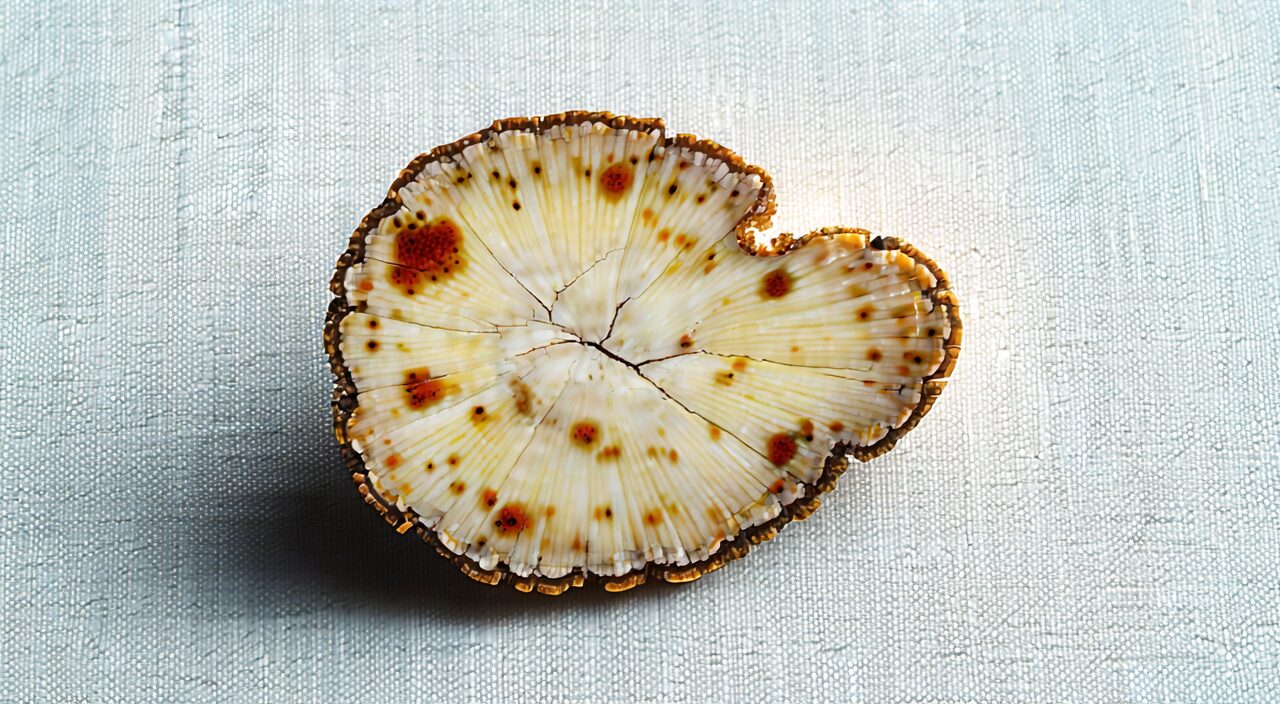
The herb most easily confused with Atractylodes due to overlapping appearance and effects is Cang Zhu (Atractylodes lancea). Both come from plants of the Atractylodes genus in the Asteraceae family, but the specific differences are as follows:
| Comparison item | Atractylodes (Bai Zhu) | Cang Zhu (Atractylodes lancea) |
|---|---|---|
| Origin | Dried rhizome of Atractylodes macrocephala | Rhizome of Atractylodes lancea or Atractylodes chinensis |
| Appearance color | Surface grayish-yellow or grayish-brown | Surface tends to be dark brown or grayish-brown |
| Texture | Firm, not easily broken | More loose and brittle |
| Cross-section features | Scattered brownish-yellow oil spots, visible chrysanthemum-heart pattern | Yellowish-brown oil spots are denser, known as “cinnabar spots”; white hair-like crystals may appear after storage |
| Traditional primary action | Tends to tonify the spleen, boost qi, secure the exterior, and stop sweating; it strengthens the spleen and anchors | Tends to dry dampness, strengthen the spleen, dispel wind and cold; it moves and does not anchor |
| Applicable conditions | Spleen deficiency with dampness, exterior deficiency spontaneous sweating, etc. | Dampness obstructing the middle burner, wind-dampness painful obstruction, etc. |
Because their actions differ in focus, they cannot be casually substituted in specific formulas. For example, in Shen Ling Bai Zhu San, Bai Zhu is used to strengthen the spleen, percolate dampness, and stop diarrhea; if replaced by Cang Zhu, its dampness-drying action would be too strong while its tonifying effect would be weak, potentially deviating from the original intent of the formula.
Which formulas use Atractylodes?
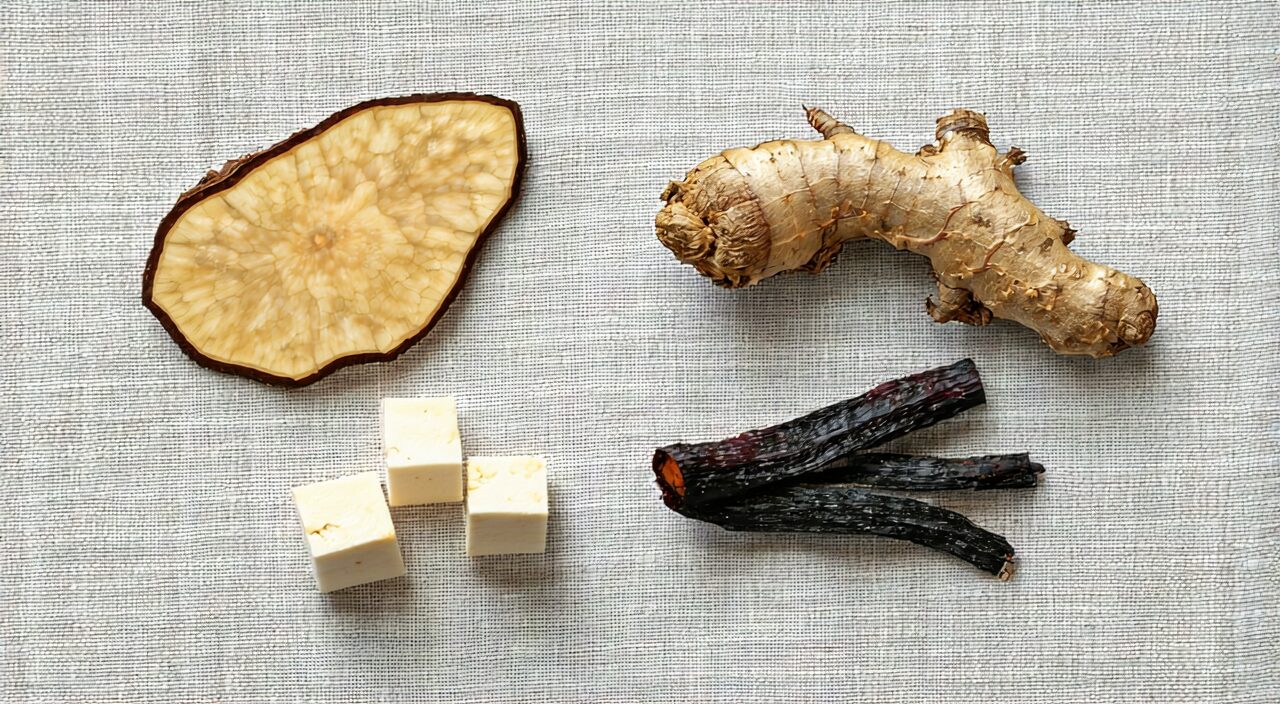
Atractylodes appears as an important ingredient in many classic formulas, often working synergistically with other herbs according to the desired therapeutic direction. Below are several common formulas and the traditional role of Atractylodes within them:
- Si Jun Zi Tang (Four Gentlemen Decoction): Composed of ginseng, Atractylodes, Poria, and licorice. Atractylodes takes the role of strengthening the spleen and drying dampness, working together with ginseng to boost qi and Poria to percolate dampness; it is the basic formula for tonifying qi and strengthening the spleen. It is traditionally used for spleen and stomach qi deficiency, sallow complexion, low and weak voice, and fatigue of the limbs.
- Shen Ling Bai Zhu San: Here, Atractylodes is combined with Codonopsis, Poria, Chinese yam, and white hyacinth bean, emphasizing spleen-tonifying, dampness-percolating, and anti-diarrheal effects. It is commonly used for poor appetite, loose stools, or diarrhea due to spleen deficiency with excessive dampness.
- Yu Ping Feng San (Jade Screen Decoction): Atractylodes is paired with Astragalus and Saposhnikovia to strengthen the spleen, boost qi, and secure the exterior, helping to improve conditions of exterior deficiency with spontaneous sweating, aversion to wind, and susceptibility to colds.
- Ling Gui Zhu Gan Tang: Atractylodes works with Poria, Cinnamon Twig, and licorice to strengthen the spleen, promote urination, warm and transform phlegm-fluid retention. It is often used for manifestations of phlegm-fluid retention, palpitations, and dizziness due to insufficient middle yang.
In each formula, the role of Atractylodes has a specific emphasis. Whether it suits an individual’s situation needs to be judged based on specific symptoms and constitution, in combination with professional advice or product instructions.
What precautions should be taken when using Atractylodes?
Atractylodes is warm in nature and has a drying effect on dampness. For those with insufficient body fluids and yin deficiency with dryness and thirst, using large amounts of Atractylodes alone may worsen symptoms such as dry mouth and irritability.
For those with marked qi stagnation and fullness, presenting with abdominal distension, belching, and inability to pass gas, where the distension is not caused by qi deficiency and lack of propelling force, using Atractylodes alone may be inappropriate; it should be combined with qi-regulating herbs or managed by a professional.
Pregnant women using Atractylodes for calming the fetus should also base it on pattern differentiation and should not take it casually on their own.
Furthermore, if severe or long-term indigestion, unexplained abdominal pain, black stool, or significant weight loss occurs, one should not rely solely on Atractylodes or related health products, but should seek medical attention to determine the cause.
The information provided in this article is for educational purposes only and cannot replace professional diagnosis and treatment advice.
Summary
As a commonly used Chinese herb, Atractylodes is primarily applied in traditional medicine to strengthen the spleen, boost qi, dry dampness, promote urination, stop sweating, and calm the fetus. Its rhizome’s chrysanthemum-heart cross-section and oil spots are key identification features, and it clearly differs from Cang Zhu in both origin and therapeutic focus. Through classic formulas like Si Jun Zi Tang and Shen Ling Bai Zhu San, one can see the versatility of Atractylodes in combination. It is important to emphasize that although Atractylodes has a wide range of applications, it must be used cautiously based on individual constitution and specific symptoms, and professional guidance should be sought when necessary.