
What Is Goji Berry? Medicinal Parts, Identification & Common Formulas
Many households are familiar with goji berries as a food ingredient, but when people ask “what is goji berry”, they often want more than just its name. Overseas readers are particularly interested in how to identify high-quality goji berries, exactly which part is used medicinally, how to distinguish it from similar herbs, and what role goji berry plays in traditional formulas such as Qi Ju Di Huang Wan and Zuo Gui Wan. This article addresses these common questions and offers a relatively systematic introduction to the basics of goji berry.
What does goji berry look like? How to identify it?
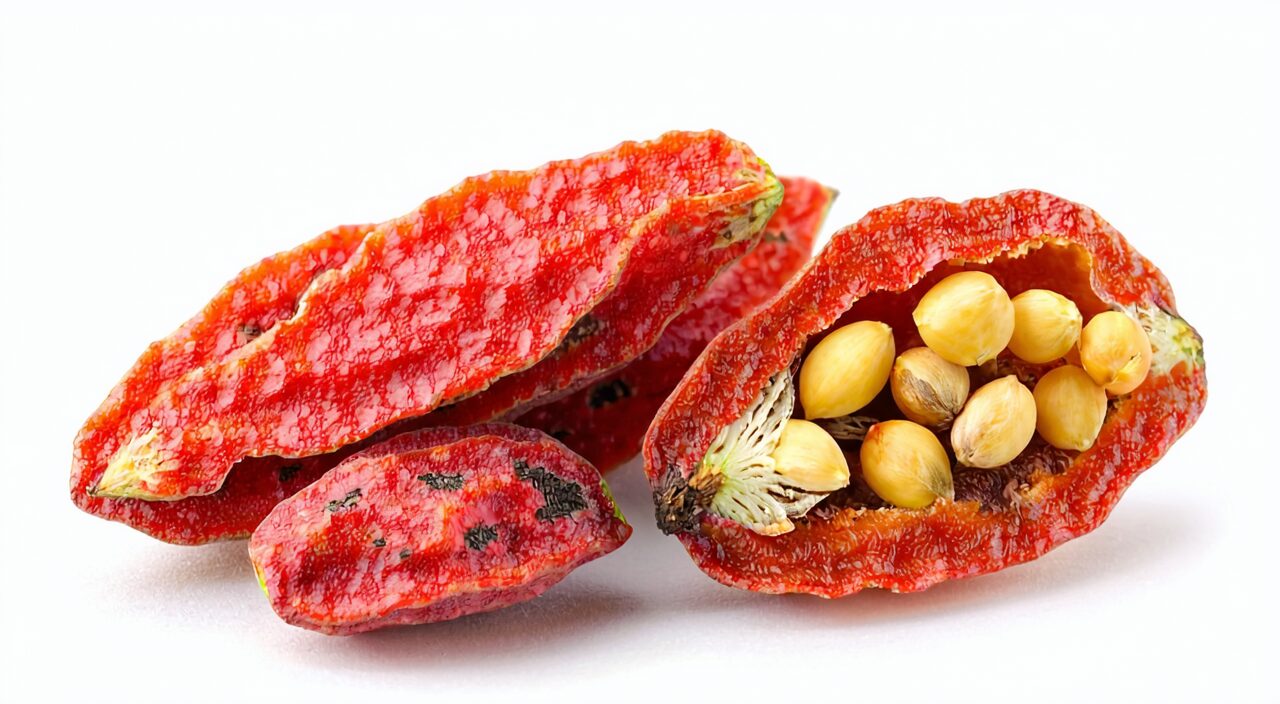
Goji berry is the dried ripe fruit of the Solanaceae plant Lycium barbarum. Whole dried goji berries are spindle-shaped or nearly spindle-shaped, slightly flattened, with a bright red to dark red surface covered by irregular wrinkled textures. One end of the fruit bears a white scar left by the detached fruit stalk, while the other end is slightly raised.
The pericarp is pliable and wrinkled. When peeled open, many small, yellow, flat kidney-shaped seeds are visible. The odour is slight, and the taste is sweet with a slightly sour note; chewing will stain the saliva light reddish-yellow. Generally, goji berries that are large, deeply red, fleshy, sweet, and contain fewer seeds are considered better in quality, although this may also vary with the region of origin and harvesting and processing methods.
Occasionally, goji berries with unusually vivid colour may appear on the market, possibly treated with sulphur fumigation. When choosing, it is advisable to pay extra attention and not pursue a single external indicator blindly.
Which part of goji berry is used medicinally?
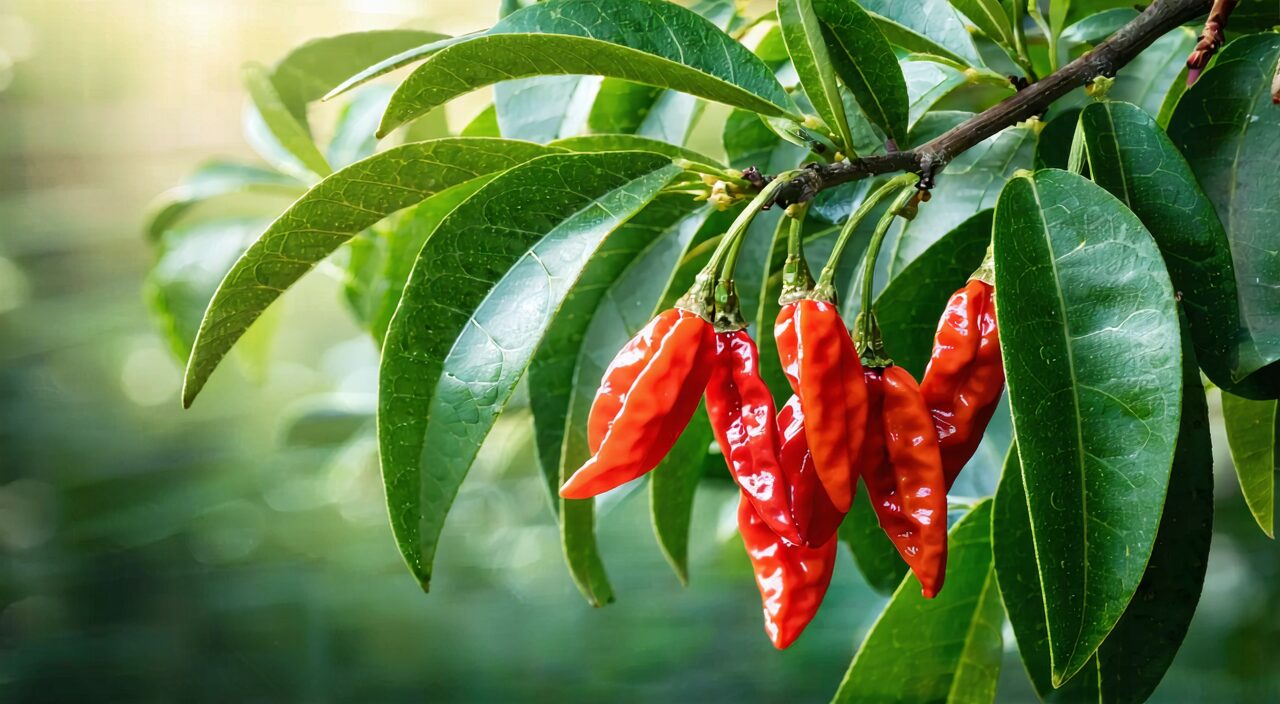
The medicinal part of goji berry is the ripe fruit. Traditional harvesting is mostly carried out in summer and autumn after the fruit turns red and fully ripens. Impurities such as fruit stalks are removed, and the fruit is dried in the shade, in the sun, or at low temperature. Modern processing also includes freeze-dried products, which better retain components such as carotenoids.
When used as a decoction piece, the common form is the dried whole goji berry; some may be slightly flattened or vacuum-packed for storage. Certain prepared herbal slices may be labelled “Ningxia goji berry” to indicate the source. Traditional applications focus on its tonic effects, and after simple processing it can be included in formulas or used daily.
It is important to note that although goji leaves and Digupi (the root bark) come from the same plant, they are different medicinal parts and are classified as distinct Chinese herbs. They cannot substitute for the fruit.
How is goji berry understood in traditional Chinese medicine?
Traditional Chinese medicine recognises goji berry mainly through its nature, flavour, meridian tropism, and tonic action. It is sweet in flavour and neutral in nature, entering the Liver and Kidney meridians. Its fundamental functions can be summarised as “nourishing the liver and kidney, replenishing essence, and improving vision.”
In traditional usage, goji berry is often applied for patterns related to liver and kidney yin-blood deficiency, such as dizziness, blurred vision, dry eyes, astringent eyes, and soreness and weakness of the lower back and knees. It is also commonly seen in approaches for wasting and thirsting disorders. It is considered a relatively gentle tonic, but this does not mean it can be used without limit; its use still needs to be assessed based on one’s own constitution.
Many classical formulas include goji berry precisely because it is effective at tonifying without being overly warm or drying. It can be decocted alone as a tea or combined with other yin-nourishing and blood-supplementing herbs. It is used in a variety of traditional pattern differentiation approaches where liver-kidney yin vacuity is the core concern.
What components and actions of goji berry are highlighted by modern research?
Modern research mainly focuses on components such as Lycium barbarum polysaccharides, betaine, carotenoids, flavonoids, and various vitamins in goji berries. Many experimental studies suggest that Lycium barbarum polysaccharides may play certain roles in immunomodulation, antioxidation, and protecting retinal cells.
However, it is important to distinguish that most of these studies are based on in vitro experiments or animal models; more high-quality clinical evidence is needed before drawing specific conclusions for the human body. At present, these laboratory data should not be directly equated with clear health benefits or therapeutic effects. For general consumers, they can be regarded as a reference direction for understanding goji berry, but they cannot replace a balanced diet and a regular lifestyle.
How does goji berry differ from similar herbs?
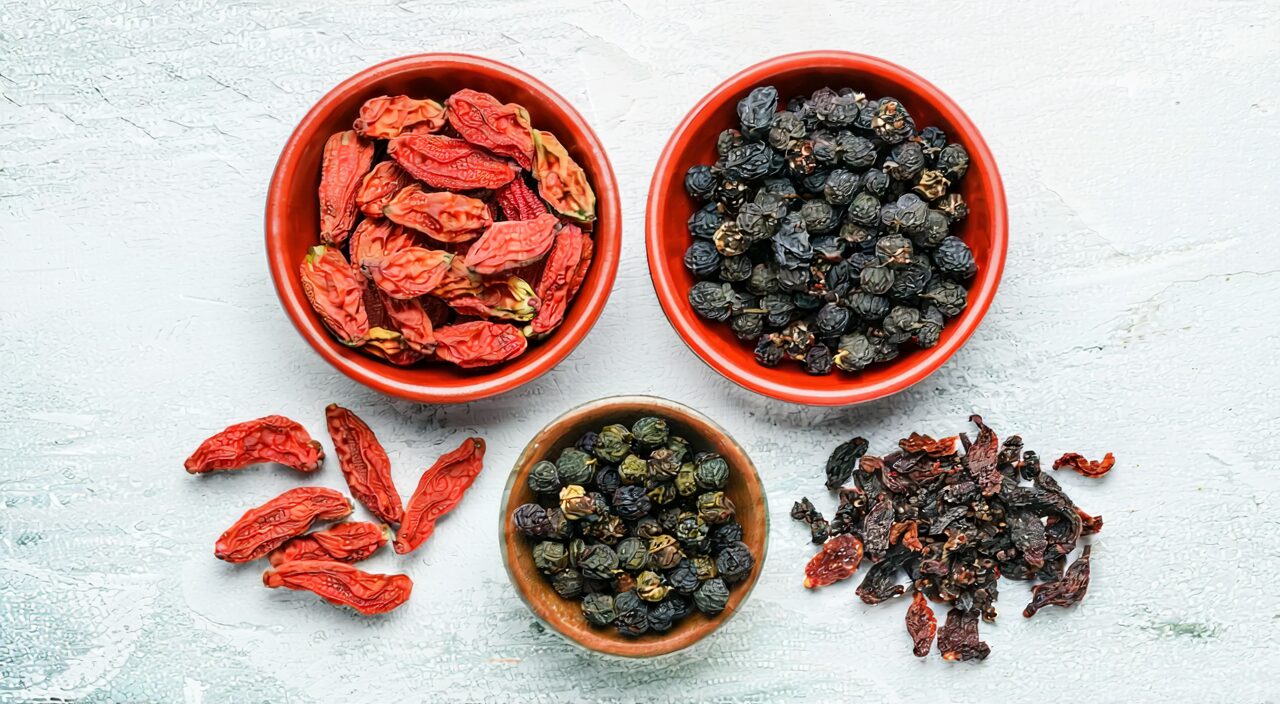
Nu Zhen Zi (glossy privet fruit) and Hei Gou Qi (black goji berry) are two herbs often compared with goji berry.
Nu Zhen Zi comes from the dried ripe fruit of the Oleaceae plant Ligustrum lucidum. It is kidney-shaped or ovoid, with a black-purple or grey-black wrinkled surface, light in weight, and has a sweet taste with a slightly bitter aftertaste. Traditionally, it tends to nourish liver and kidney yin, darken hair, and brighten the eyes, with a mild effect of clearing deficiency heat. Compared with goji berry, Nu Zhen Zi has a stronger clearing and descending tendency within its tonic action. Its nature, flavour, and properties are acrid, bitter, sweet, and cool, rather than purely neutral.
Hei Gou Qi comes from the dried fruit of the Solanaceae plant Lycium ruthenicum. It is spherical or slightly flattened, with thin peel and purple-black colour when ripe, containing high levels of anthocyanins. Traditionally, its use does not have as long a history as that of goji berry, and modern attention often focuses on its antioxidant properties. Goji berry, on the other hand, is traditionally valued for nourishing liver and kidney yin-blood, replenishing essence, and improving vision. The two are from closely related sources but their functional emphases differ.
In traditional formulas, Nu Zhen Zi is often used together with goji berry and Han Lian Cao (Eclipta), but they are not simply interchangeable. In daily use, if differentiation is needed, one can first look at the colour, shape, and fruit size, and then understand them in combination with their respective traditional functional directions.
Which formulas include goji berry?
Goji berry appears as an important ingredient in several classical formulas. Below are a few common examples with an explanation of the traditional role of goji berry in them.
- Qi Ju Di Huang Wan: Composed of goji berry, chrysanthemum flower, prepared rehmannia root, cornus, and other herbs. In this formula, goji berry works together with chrysanthemum to nourish the liver and kidney while simultaneously clearing the head and eyes. It is often used when the traditional pattern differentiation indicates liver-kidney yin vacuity with dry, astringent, or blurred eyes.
- Zuo Gui Wan: Goji berry is combined with prepared rehmannia, Chinese yam, cornus, and others, focusing on replenishing true yin. It is suitable for conditions of pure vacuity without evil pathogens, where yin essence deficiency is more prominent, and it does not emphasise draining fire.
- Yi Guan Jian: In this formula, goji berry is used together with glehnia root, ophiopogon, and Chinese angelica to mainly address the combined state of liver-kidney yin deficiency and liver qi constraint. It nourishes yin while simultaneously coursing the liver.
- Wu Zi Yan Zong Wan: A collection of goji berry, cuscuta seed, raspberry, and other seeds. It is traditionally used for kidney essence insufficiency and insecurity of the lower origin, with these seed-type herbs used to supplement essence qi.
It is important to note that the application of these formulas needs to be determined based on the user’s constitution, severity of symptoms, and any combined issues. The same formula is not suitable for all situations, and it is not recommended to choose and take a medicine based solely on its formula name.
What precautions should be taken when using goji berry?
Although goji berry has a gentle nature, several points are still worth noting.
Firstly, for people who need to manage their blood glucose metabolism, goji berry contains a significant amount of sugar. Consuming large quantities may not be conducive to stabilising blood sugar, so it is not advisable to steep it in water or chew it without restraint. Secondly, individuals with a constitution marked by heavy damp-heat, a tendency to diarrhoea, or weak digestive function may find that goji berry aggravates their discomfort, so caution is needed. In addition, those taking medications (including anticoagulants, antihypertensives, etc.) should consult a doctor or pharmacist to avoid potential interactions.
During special times such as colds and fevers, or when there is un-resolved excess evil in the body, it is traditionally not advised to rush into tonics. In summary, whether it is suitable to include goji berry in daily health maintenance should be determined based on one’s actual situation, product instructions, and advice from professionals.
Summary
As a traditional fruit used for both food and medicine, goji berry involves many noteworthy details regarding identification, medicinal parts, formula combinations, and differentiation from similar herbs. Understanding its appearance characteristics, harvesting, and processing can help reduce confusion when purchasing overseas. Comprehending the traditional understanding of nourishing liver and kidney, replenishing essence, and brightening the eyes helps clarify its position in formulas such as Qi Ju Di Huang Wan. Clarifying precautions in use can lower the risk of improper consumption. The above content serves only as popular science reference and cannot substitute for professional diagnosis or treatment advice. If persistent discomfort or chronic health issues exist, consultation with a physician or qualified professional is still necessary.