
What Is Teasel Root? Medicinal Parts, Identification & Common Formulas
Teasel root (Xu Duan) is a commonly used traditional Chinese medicine derived from the dried root of Dipsacus asper. Historically used for traumatic injuries, fractures, and disorders of the muscles and bones, it was vividly named “Xu Duan” (meaning “mending what is broken”). For those interested in traditional herbs, understanding the appearance, medicinal parts, and traditional applications of teasel root can help better appreciate this type of liver- and kidney-tonifying herb.
What Does Teasel Root Look Like? How to Identify It

The dried root is long cylindrical, slightly flattened, sometimes slightly curved, mostly 5–15 cm long and 0.5–2 cm in diameter. The surface is grayish-brown or yellowish-brown with prominent longitudinal wrinkles and transversely distributed lenticel-like protrusions, occasionally with traces of fine rootlets. The texture is firm and not easily broken, but when snapped the fracture surface is uneven. The bark is usually dark brown or dark green, while the xylem is yellowish-brown with a radial pattern extending outward from the center; some sliced pieces have a pith or hollow center. The sliced pieces are typically cut into thick slices, where the two layers can be clearly identified. Traditionally, thick, soft roots with a dark green cross-section are considered of better quality.
What Is the Medicinal Part of Teasel Root?

The medicinal part is the root. It is typically harvested in autumn after the aerial parts have withered, when the roots are rich in nutrients. After harvesting, the root ends, rootlets, and soil are removed. The roots are first dried slightly over a low fire until half-dry, then piled and covered to “sweat,” allowing the internal color to gradually turn dark green, and finally completely dried by baking or sun-drying. The common forms on the market are directly sliced pieces, as well as processed products stir-fried with wine or salt. Wine-fried teasel root has slight scorch spots on the surface and a mild wine aroma, traditionally believed to enhance its blood-invigorating and channel-unblocking effects. Salt-fried teasel root is darker in color, slightly salty in taste, and focuses more on tonifying the liver and kidney. These differences in prepared slices reflect variations in traditional processing methods.
How Is Teasel Root Understood in Traditional Chinese Medicine?
In TCM, teasel root is classified as a tonic and trauma medicine. It is slightly warm in nature, bitter and acrid in flavor, and mainly enters the liver and kidney meridians. Its traditional actions center on “tonifying liver and kidney, strengthening sinews and bones, mending fractures, and stopping uterine bleeding.” For lower back and knee soreness and weakness due to liver-kidney depletion, teasel root is often used to support and stabilize the lower constitution. For traumatic injuries, closed fractures, sprains, and other bone and sinew traumas, it is considered a common herb for promoting the healing of bones and sinews. In gynecology, teasel root frequently appears in formulas for regulating menstruation, stopping vaginal discharge, and calming the fetus, especially for symptoms like back soreness, abdominal bearing-down sensation, and abnormal uterine bleeding. Of course, these understandings are based on ancient clinical experience and do not equate to functions in the modern medical sense.
What Compounds and Effects Are Studied in Teasel Root?
Modern phytochemical studies have isolated various saponin components from teasel root, with dipsacus saponin VI drawing considerable attention as a marker compound. Some in vitro and animal experiments suggest that these constituents may influence osteoblast and osteoclast activity, indicating potential bone-protective effects. Additionally, studies have explored its anti-inflammatory and neuroprotective directions. However, these findings remain at the laboratory stage, and there is insufficient human clinical research to confirm efficacy. Therefore, they should be regarded as reference points for scientific exploration and not overinterpreted.
How Does Teasel Root Differ from Similar Herbs?
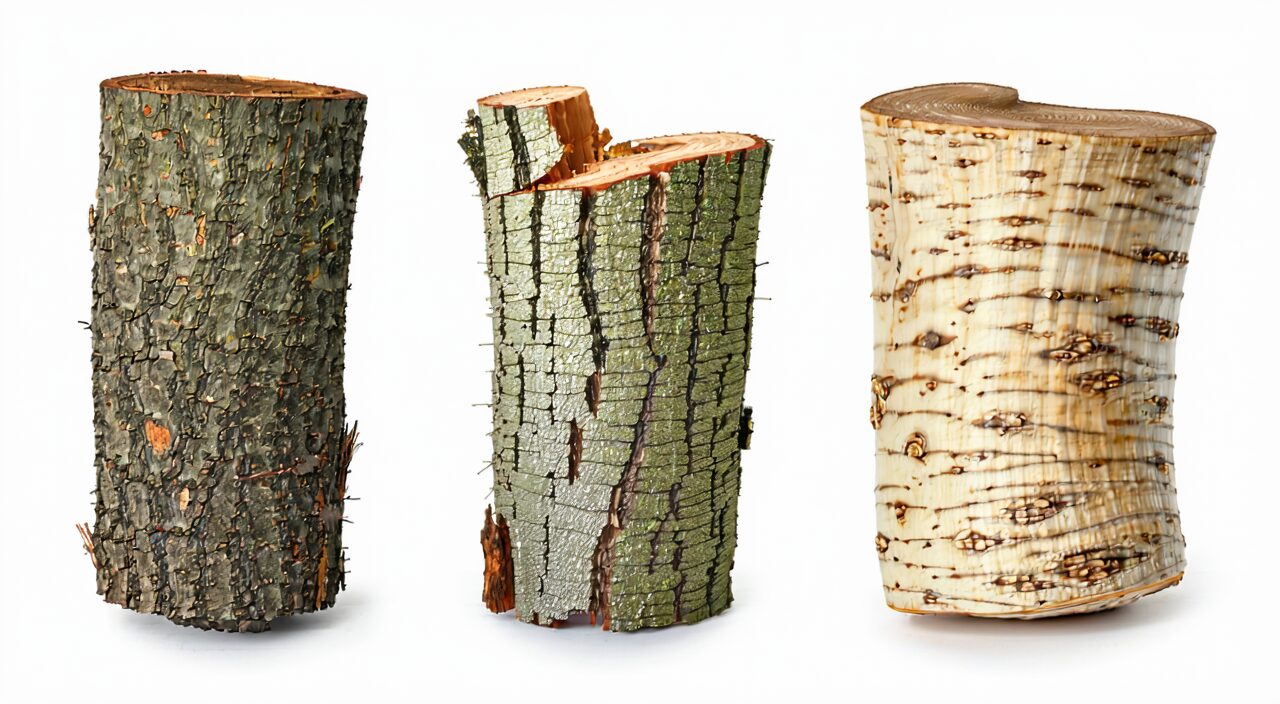
Teasel root, eucommia bark (Du Zhong), and drynaria rhizome (Gu Sui Bu) are often mentioned together because they all relate to bone and sinew issues, but their origins are completely different. Eucommia bark comes from the dried bark of Eucommia ulmoides; when broken, it reveals fine, silvery-white elastic threads—a distinctive feature. Eucommia is well known for tonifying liver and kidney, strengthening the lower back and knees, and calming the fetus. Teasel root, being a root, tends more toward invigorating blood circulation and mending bones and sinews; although it also calms the fetus, its emphasis differs. Drynaria rhizome is derived from the rhizome of Drynaria fortunei (a fern), which appears as a flattened, elongated strip covered with brown scales—starkly different from the cylindrical teasel root. Traditionally, drynaria is more often used for kidney-deficiency toothache, loosening teeth, and traumatic injuries, tonifying kidney and strengthening bone with a focus on securing the teeth. To distinguish these three, first identify whether the medicinal part is bark, root, or rhizome, and then observe its specific characteristics and traditional use emphasis.
Which Formulas Contain Teasel Root?
Teasel root plays an important role in many formulas. Shou Tai Wan combines it with Chinese taxillus herb and dodder seed to tonify liver and kidney and stabilize the fetus, suitable for managing back soreness, abdominal bearing-down sensation, and threatened miscarriage during pregnancy. Tai Shan Pan Shi San pairs teasel root with astragalus and white atractylodes to fortify the spleen and boost qi, jointly securing the fetus; traditionally used for pregnant individuals with qi and blood deficiency and fetal instability. Xu Duan Wan features teasel root as the principal ingredient, along with Chinese angelica and pyrite, often used to assist recovery from slow-healing fractures or chronic injuries. Da Huo Luo Wan is a formula for extremity numbness, cramps, and pain caused by wind, cold, dampness, and stasis; here, teasel root tonifies liver and kidney and strengthens sinews and bones, cooperating with wind-dispelling and channel-unblocking herbs to address both root and branch. All these formulas have clear traditional indications and should never be used arbitrarily without proper pattern differentiation.
What Precautions Should Be Taken When Using Teasel Root?
Because teasel root is warming in nature, it should be avoided in cases presenting signs of damp-heat or excess heat, such as dry mouth and bitter taste, constipation, dark urine, and a red tongue with yellow greasy coating. Bleeding caused by yin deficiency with fire hyperactivity, especially when accompanied by tidal fever, night sweats, red tongue with scanty coating, should not be treated with teasel root for hemostasis. For recurrent lower back pain, if it radiates to the lower limb with numbness, or is accompanied by unexplained weight loss, one must prioritize obtaining a clear medical diagnosis rather than self-treating with teasel root. Moreover, pregnant individuals should use teasel root only under the guidance of a healthcare professional. Although it has traditional records of calming the fetus, individual conditions vary greatly, and for safety’s sake, it should not be taken without professional advice.
Summary
Teasel root is a distinctive root medicine that can be initially identified by its grayish-brown surface, dark green bark and yellowish-brown xylem with radial patterns on the cross-section. Its traditional functions of tonifying liver and kidney, strengthening sinews and bones, and mending fractures make it common in traumatology and gynecological regulation. Becoming familiar with its differences from eucommia bark and drynaria rhizome, and understanding the background of formulas like Shou Tai Wan and Xu Duan Wan, can enrich one’s knowledge of bone- and sinew-related herbs in Chinese medicine. Ultimately, whether teasel root is suitable for an individual depends on personal constitution and a comprehensive assessment by a qualified professional; this article is for informational and educational purposes only.