
What Is Radix Adenophorae? Identification, Medicinal Parts, and Common Formulas
When encountering traditional Chinese medicine formulas or herbs, many people notice the name “Radix Adenophorae” (Nan Sha Shen) yet easily confuse it with Radix Glehniae (Bei Sha Shen), Codonopsis, or Panax quinquefolius. Radix Adenophorae is not uncommon in classical formulas, but its origin, appearance, and usage are not as widely known as those of more familiar ginseng-type herbs. This article clarifies Radix Adenophorae from perspectives of plant source, identification, medicinal part, traditional understanding, and differences from Radix Glehniae.
What Does Radix Adenophorae Look Like? How to Identify It
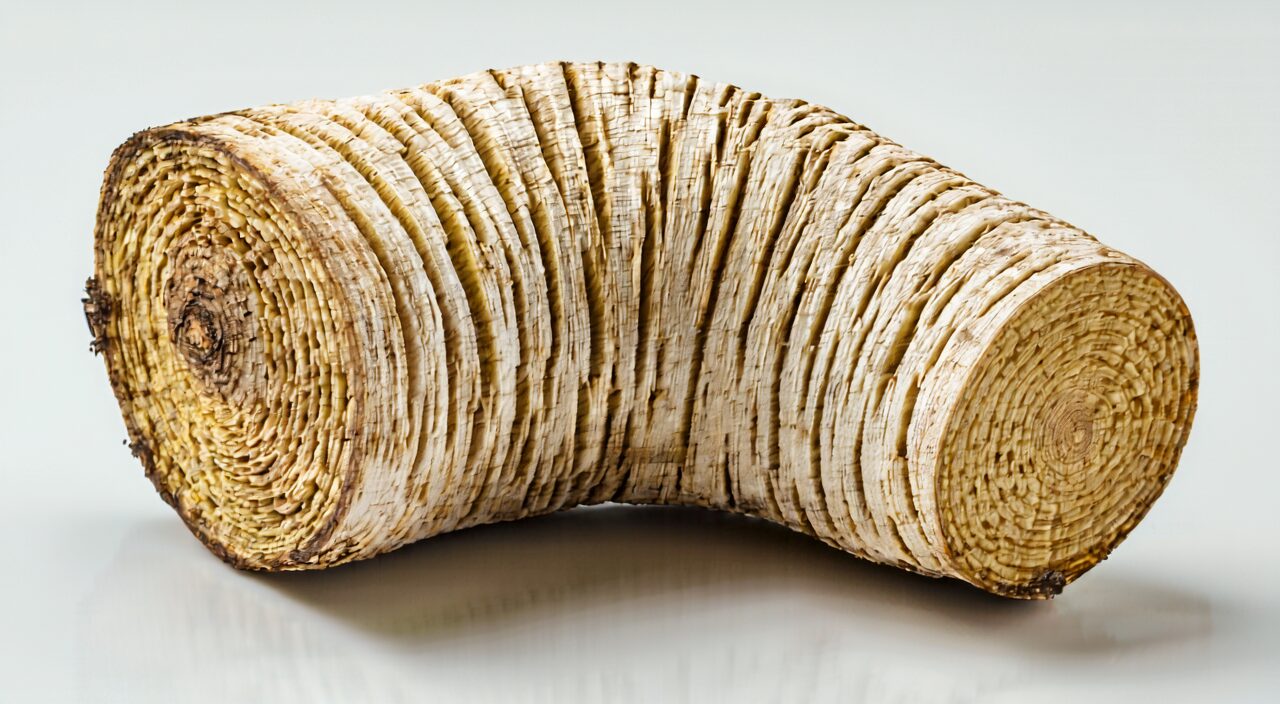
Radix Adenophorae comes from the dried root of plants in the Campanulaceae family, namely Adenophora tetraphylla or Adenophora stricta. In terms of the herb’s appearance, it commonly shows a conical or cylindrical root that may be slightly curved.
The overall length is generally 7–15 cm, with a diameter of about 0.8–3 cm. The surface color is mostly yellowish-white to light brownish-yellow. The upper part often bears fine transverse wrinkles, while the lower part features longitudinal grooves and wrinkles. What is quite distinctive is that Radix Adenophorae is light in weight, loose in texture, and easily broken. Its fractured surface is uneven, often showing fissures or interwoven yellowish-white and brownish-yellow textures. This “fissured” and spongy feel is one of the key features for visual identification.
If you see cut preparations, they are often sub-round or irregularly shaped slices with a loose cut surface, sometimes with slightly curled edges. Compared to rhizome-type herbs that are hard in texture and dense on the fractured surface, the loose and spongy character of Radix Adenophorae is much more apparent.
When identifying Radix Adenophorae, note that it has almost no obvious main root branches; it is an independent root as a whole. The top end sometimes retains the rhizome remnant, looking like a short “reed head.” It has a mild odor and a slightly sweet taste when chewed, without obvious bitterness or irritating flavor.
What Is the Medicinal Part of Radix Adenophorae?
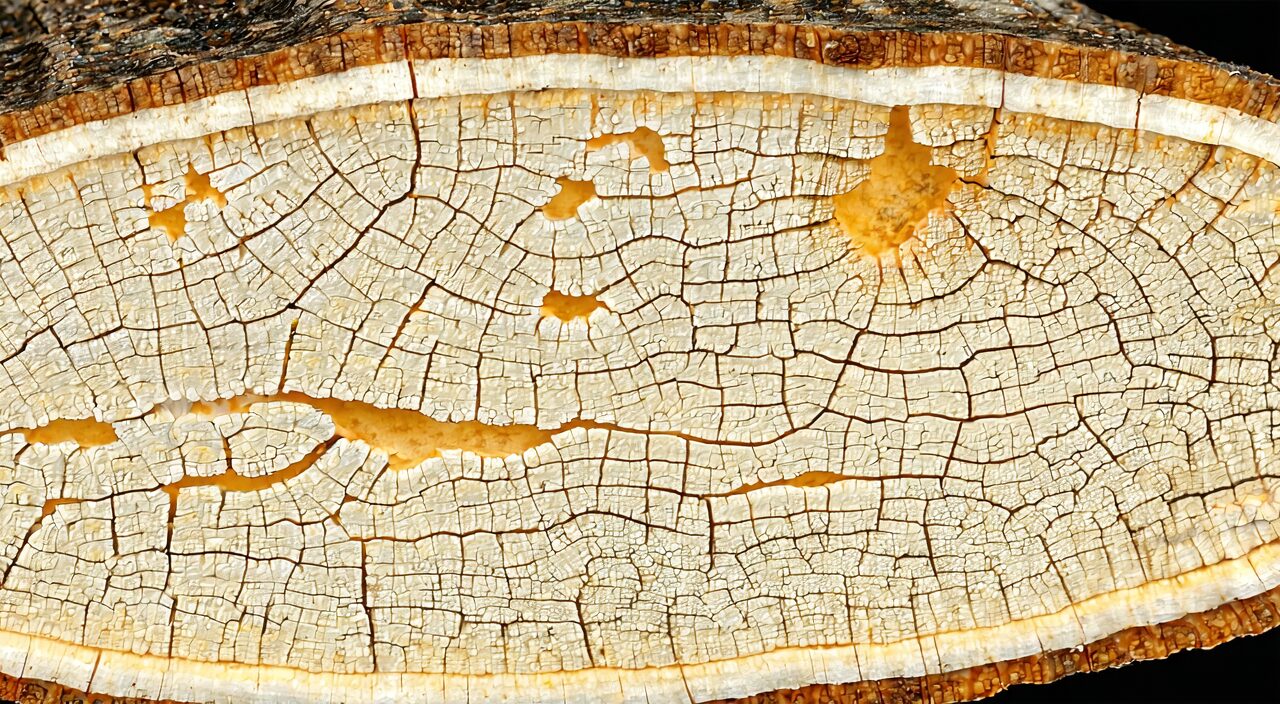
The medicinal part of Radix Adenophorae is the root. It is generally harvested in autumn after the stems and leaves have withered or in early spring before the plant sprouts. After harvesting, the fibrous roots and soil must be removed, the outer coarse bark scraped away, and the root washed and dried. It is sometimes cut into thick slices for use.
In herbal markets or prescriptions, Radix Adenophorae often appears in two forms: the entire dried root, maintaining its complete conical or cylindrical shape, and thick-cut slices that are more convenient for formulation and decoction. No matter which form, its characteristics of being light, loose in texture, and having many fissures on the fractured surface remain relatively stable.
It should be noted that Radix Adenophorae easily absorbs moisture and is prone to insect infestation. For home storage, it is best kept sealed in a cool, dry place. If the herb feels soft to the touch, has noticeably deepened in color, or shows mold spots, it indicates that it has become damp and spoiled and is no longer suitable for use.
How Does Traditional Chinese Medicine Understand Radix Adenophorae?
In classical traditional Chinese medical texts, Radix Adenophorae is commonly described as sweet in flavor and slightly cold in nature, entering the Lung and Stomach meridians. Generations of medical practitioners have summarized its functions as: nourishing yin and clearing the lungs, benefiting the stomach and generating fluids, resolving phlegm, and supplementing qi.
In terms of its direction of action, Radix Adenophorae is often used for dry cough, dry throat, and hoarseness arising from deficiency of Lung and Stomach yin-fluid, or for dry mouth and decreased appetite due to consumption of stomach fluids. Unlike some yin-nourishing herbs that tend to be cloying, it nourishes the yin of the Lungs and Stomach while also showing a tendency to “resolve phlegm.” Thus, for problems like dry cough with scanty sputum or sticky sputum difficult to expectorate, it is traditionally considered as a possible option.
In addition, Radix Adenophorae also demonstrates “qi-supplementing” properties in some formulas, making it a candidate for conditions involving both qi and yin deficiency. Overall, the traditional understanding does not view Radix Adenophorae merely as a yin supplement but values its dual characteristic of “clearing-nourishing” and “mild supplementation.”
What Aspects of Radix Adenophorae Are Modern Researchers Focusing On?
Modern scientific attention to Radix Adenophorae primarily centers on chemical composition and laboratory-stage research. It is known to contain saponins, polysaccharides, phytosterols, and other constituents. These components have shown activity in vitro or in animal experiments in areas such as immune modulation, antioxidation, antitussive, and expectorant effects.
However, these studies are mainly foundational explorations, and there is still considerable distance before reaching definitive conclusions for human application. For general users, it is enough to be aware of such research trends. Laboratory findings should not be directly equated with effects for everyday use, nor should one blindly use Radix Adenophorae based on any single study.
What Are the Differences Between Radix Adenophorae and Radix Glehniae?
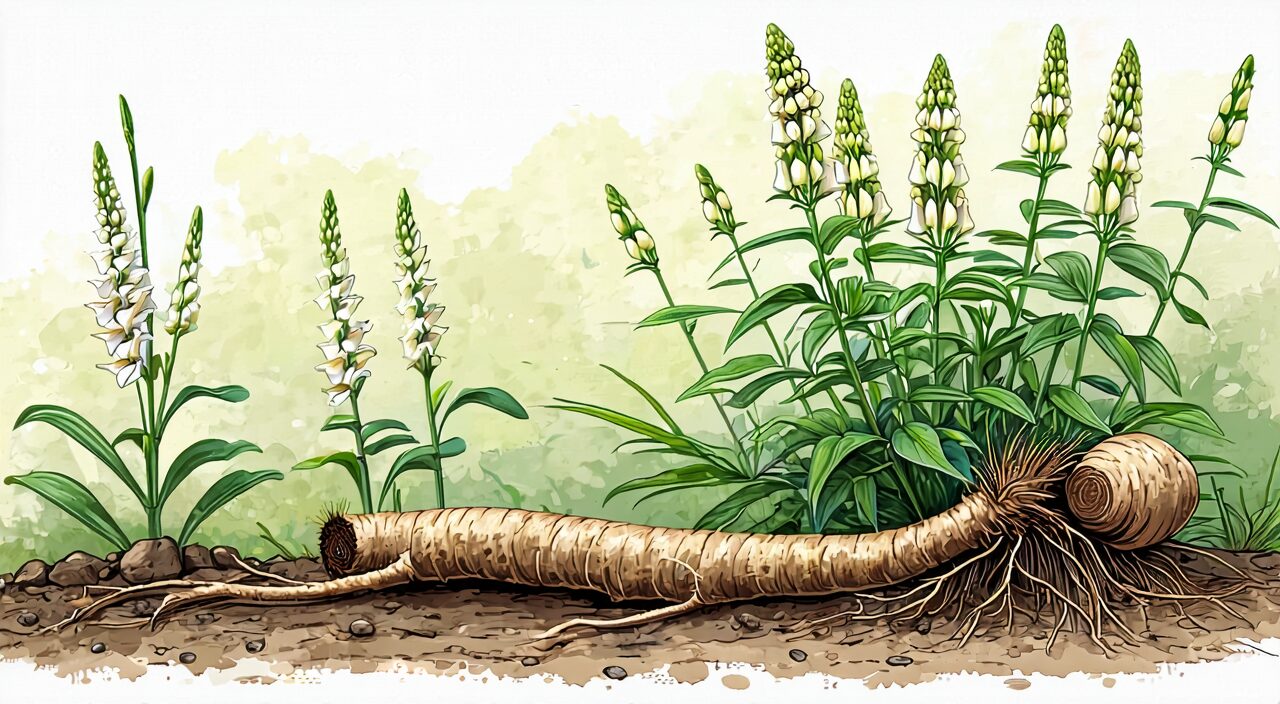
Radix Adenophorae and Radix Glehniae are two completely different herbs. Although their names sound similar, they differ significantly in source, appearance, and traditional application emphasis.
In terms of plant source, Radix Adenophorae is the root of various Adenophora species in the Campanulaceae family, while Radix Glehniae is the root of Glehnia littoralis in the Apiaceae family. They are botanically unrelated.
Concerning appearance, the root of Radix Glehniae is usually more slender and longer, with a light yellowish-white surface. It is firm in texture, with a dense, horny fractured surface and very few fissures. Radix Adenophorae, on the other hand, is comparatively thicker and shorter, light in weight and loose in texture, with many fissures on the fractured surface and a prominent spongy feel. If placed side by side, the contrasting tightness and looseness in texture is very obvious.
In traditional application, Radix Adenophorae tends to nourish yin, clear the lungs, resolve phlegm, and supplement qi. It may be more readily considered for conditions where Lung and Stomach yin is impaired with concurrent phlegm or qi deficiency tendencies. Radix Glehniae is more focused on nourishing yin, clearing the lungs, benefiting the stomach, and generating fluids, with a more moistening nature. Traditionally, it is used more for patterns of lung-heat dry cough and yin deficiency with fluid depletion that lean toward “pure yin deficiency.” The two Shen cannot be used interchangeably. The choice of which to use should be analyzed based on specific presentations and constitutional factors.
Which Formulas Use Radix Adenophorae?
In traditional formulas, Radix Adenophorae frequently appears as a formulation component, primarily playing roles in nourishing yin, clearing the lungs, supplementing qi, and generating fluids. Here are a few relatively well-known formula directions for understanding and reference.
Shashen Maidong Decoction is a commonly used formula for nourishing yin and moistening dryness, with Radix Adenophorae and Ophiopogonis Tuber as main herbs. It is traditionally often used for dry throat, dry mouth, and dry cough with scanty sputum caused by Lung and Stomach yin impairment or dryness-heat consuming fluids. In this formula, Radix Adenophorae serves to nourish lung yin and clear the lungs while also offering a mild supplementing quality.
Radix Adenophorae Pill is a pill preparation in some ancient texts that features this herb as a main ingredient, often oriented toward supplementing qi, nourishing yin, moistening the lungs, and resolving phlegm.
In addition, formulas in the category of nourishing yin and clearing the lungs may also combine Radix Adenophorae to work synergistically with ingredients such as Scrophulariae Radix, Ophiopogonis Tuber, and Rehmanniae Radix to moisten lung yin. The traditional rationale targets problems such as yin-deficiency lung-dryness and throat discomfort.
It should be noted that these formulas are all summaries of traditional usage experience and do not imply that they can be directly applied without differentiation. Each person’s constitution and symptom combination differ. Whether a formula containing Radix Adenophorae is suitable or not must be determined through a comprehensive judgment based on individual circumstances, preferably under professional guidance.
What Precautions Should Be Taken When Using Radix Adenophorae?
Although Radix Adenophorae is relatively mild in nature, it is not suitable for all situations.
First, wind-cold cough—meaning a cough accompanied by aversion to cold, clear thin nasal discharge, and white thin sputum—is traditionally not an indication for Radix Adenophorae. Because its nature is cooling and moistening, it may worsen the state of wind-cold fettering the exterior.
Second, those with spleen deficiency with dampness exuberance, manifesting as frequent abdominal distension, loose stools, thick greasy tongue coating, and a sensation of bodily heaviness, should also use this herb with caution. Radix Adenophorae has certain potential to assist dampness. Using it when the spleen is deficient and dampness is stagnating may hinder the transformation of pathogenic dampness.
Additionally, the problem of source confusion deserves attention. Occasionally, roots of other plants may be passed off as Radix Adenophorae in the market, or the names of Radix Adenophorae and Radix Glehniae may be used interchangeably. It is difficult for an average user to make a complete judgment based solely on appearance. If the herb is to be used for a specific pattern, choosing a legitimate channel and confirming the herb’s identity is very important.
Finally, if symptoms such as cough, dry throat, and dry mouth persist for a long time, or are accompanied by fever, chest pain, shortness of breath, or markedly worsened mental state, one should not rely on personal experience to select herbs. A doctor should be consulted promptly to rule out other more complex health issues.
Summary
Radix Adenophorae is a commonly used yin-nourishing herb in traditional Chinese medicine. Entering as medicine the root of Campanulaceae plants, it is characterized by its lightweight, loose texture and numerous fissures on the fractured surface, making it easily distinguishable from the firm-textured Radix Glehniae. Its traditional understanding focuses on nourishing yin and clearing the lungs, benefiting the stomach and generating fluids, and resolving phlegm while supplementing qi. It commonly appears in formulas such as Shashen Maidong Decoction. However, all current modern research still remains at a fundamental stage and cannot yet serve as evidence for clinical efficacy. When using Radix Adenophorae, attention must be paid to issues such as wind-cold cough, spleen deficiency with dampness exuberance, and herb source reliability to avoid indiscriminate application. This article is for informational reference only and cannot replace professional diagnosis or treatment advice.