
What Is Ci Wu Jia (Siberian Ginseng)? Medicinal Parts, Identification, and Common Formulas
Among those interested in TCM wellness and natural herbs, Ci Wu Jia is a name that appears frequently. Many have heard of it being used to address low physical stamina and mental fatigue, yet they may not be clear about what it actually looks like, which part is used, or whether it is the same as Wu Jia Pi. This article starts with identification features and progressively sorts out the medicinal parts, traditional understanding, related formulas, and safe usage approaches for Ci Wu Jia.
What Does Ci Wu Jia Look Like? How to Identify It
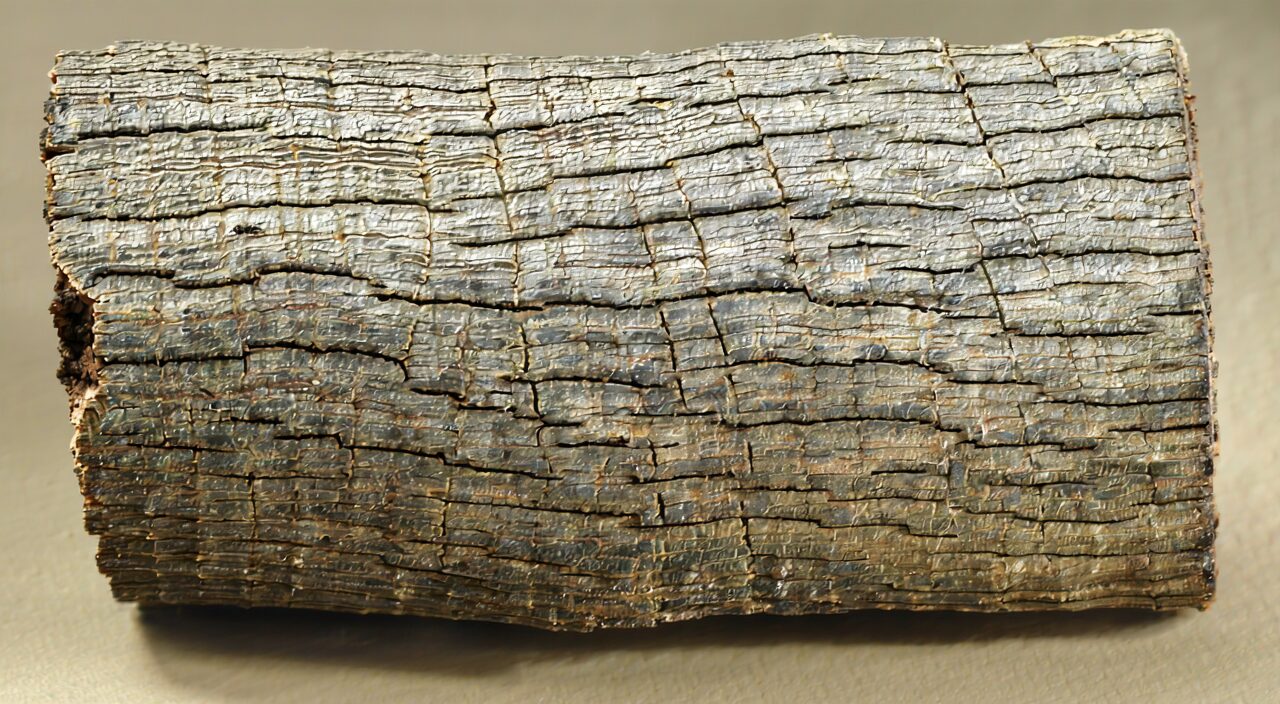
In herbal markets or as prepared slices, Ci Wu Jia mostly appears in the form of its root and rhizome or stem. Grasping a few key appearance features is helpful for forming a basic judgment when purchasing or consulting references.
The whole herb often presents as a knotty, irregular cylindrical shape, slightly curved, with the root and rhizome commonly connected. The surface color tends toward grayish-brown or blackish-brown, with relatively distinct longitudinal wrinkles, transverse elongated lenticels, and small scars left by detached fibrous roots. The texture is hard and does not break easily.
After breaking, the cross-section appears yellowish-white or with a faint brownish tone, strongly fibrous and capable of producing fine thread-like fibers; the bark portion of the section is relatively thin, while the wood portion is broad, with faintly visible fine pores (vessels). The odor is mild, and the taste carries a slight acridness and bitterness—one of the clues experienced individuals use to distinguish genuine products.
Rapid identification tips: note the grayish-brown to blackish-brown surface, prominent longitudinal wrinkles, and a yellowish-white, markedly fibrous cross-section. Combining these three features helps differentiate it preliminarily from other herbs with a similar appearance.
What Are the Medicinal Parts of Ci Wu Jia?
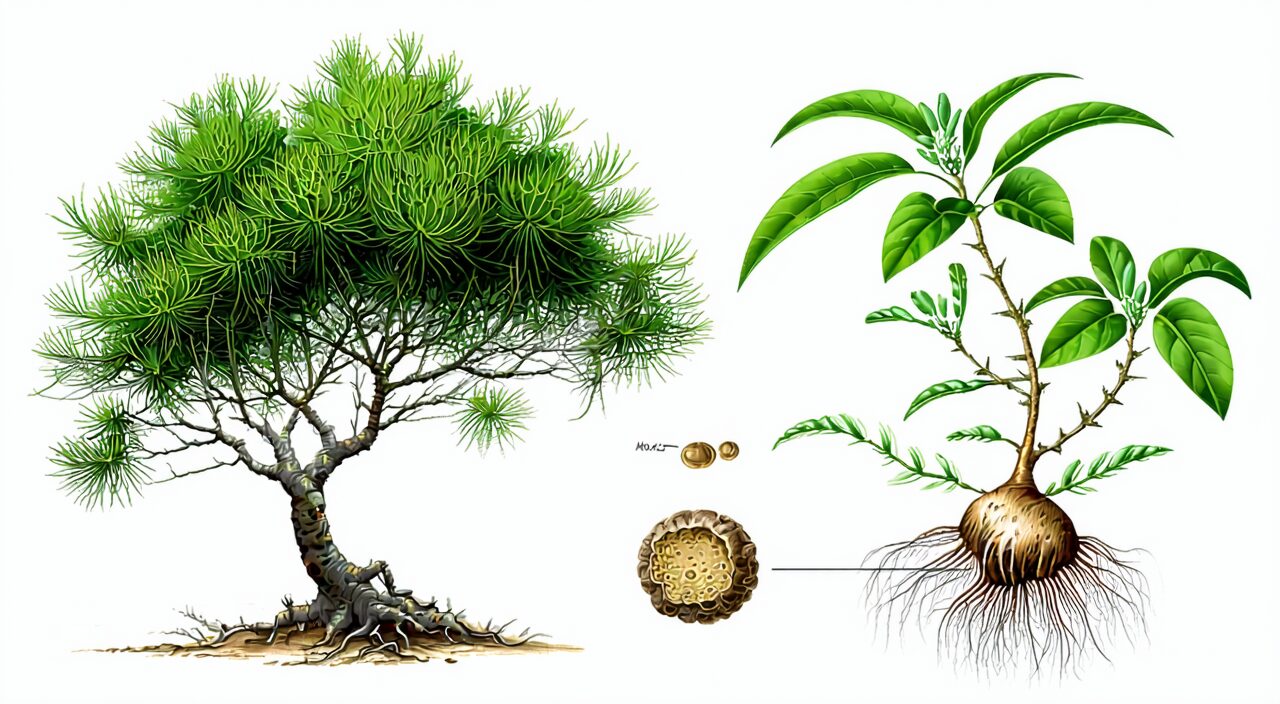
In Chinese medicine, what is referred to as Ci Wu Jia has traditionally used the root and rhizome or stem as the main medicinal parts. Harvested from the Araliaceae plant Acanthopanax senticosus, the roots and rhizomes are usually collected in spring or autumn. After removing soil, they may be directly sun-dried, or sometimes cut while fresh into thick slices or short segments before drying, which facilitates subsequent decoction or preparation.
In the pharmacy drawer, Ci Wu Jia is commonly seen as irregular oblique slices or segments, with the cut surface likewise displaying a color contrast between the grayish-brown outer bark and the yellowish-white wood. In addition to these traditional sliced forms, modern prepared products such as Ci Wu Jia tablets, granules, and capsules are now available. These are typically based on Ci Wu Jia extracts or powder, offering diverse choices for different usage scenarios.
Traditional use mainly involves decoction or alcohol maceration. The dosage and decoction methods for the sliced herb often need to be flexibly adjusted according to individual constitution and specific purposes and should not be arbitrarily taken in large amounts by oneself.
How Does TCM Understand Ci Wu Jia?
Traditional Chinese medicine’s understanding of Ci Wu Jia primarily revolves around its nature, flavor, and meridian tropism, as well as visceral regulation. Its property is mostly recorded as acrid, slightly bitter, and warm, entering the spleen, kidney, and heart meridians. This meridian tropism means it is often understood from the perspectives of the spleen, kidney, and heart in terms of its inclination in action.
In terms of functional direction, Ci Wu Jia tends to boost qi and fortify the spleen, supplement the kidney, and calm the spirit. Therefore, it is commonly applied in regulating conditions marked by weakness of spleen-kidney yang qi, physical debility, reduced appetite, lack of vigor, soreness and weakness of the lower back and knees, and restless sleep. Traditionally, it is combined with other herbs based on specific presentations; for example, when there is qi deficiency and fatigue, it may be paired with Huang Qi (Astragalus) and Dang Shen (Codonopsis); when sleep is shallow and the mind is unsettled, it may be used together with Suan Zao Ren (Ziziphus Spinosa) and Yuan Zhi (Polygala).
It should be noted that these approaches originate from the logic of TCM pattern differentiation and herb selection. Whether they suit a particular individual still needs to be judged in light of the tongue appearance, pulse condition, and the person’s overall circumstances.
What Components and Effects of Ci Wu Jia Are the Focus of Modern Research?
Modern scientific attention on Ci Wu Jia mainly concentrates on its chemical constituents and some experimental observations, which helps understand its traditional uses from another angle but cannot be directly equated with clinical treatment conclusions.
In terms of components, Ci Wu Jia contains eleutherosides (such as syringin), polysaccharides, flavonoids, and other substances that are the more studied subjects. In cell and animal experiments, researchers have observed certain signs; for instance, Ci Wu Jia extracts may exhibit trends of anti-fatigue, influencing immune function, and modulating central nervous system activity.
However, the gap between laboratory research and real human application must be distinguished. At present, human evidence regarding insomnia, physical recovery, or blood pressure regulation still awaits further accumulation. It is therefore advisable to regard modern research as background understanding rather than directly extrapolating experimental data into actual benefits for everyone.
How Does Ci Wu Jia Differ from Similar Herbs?
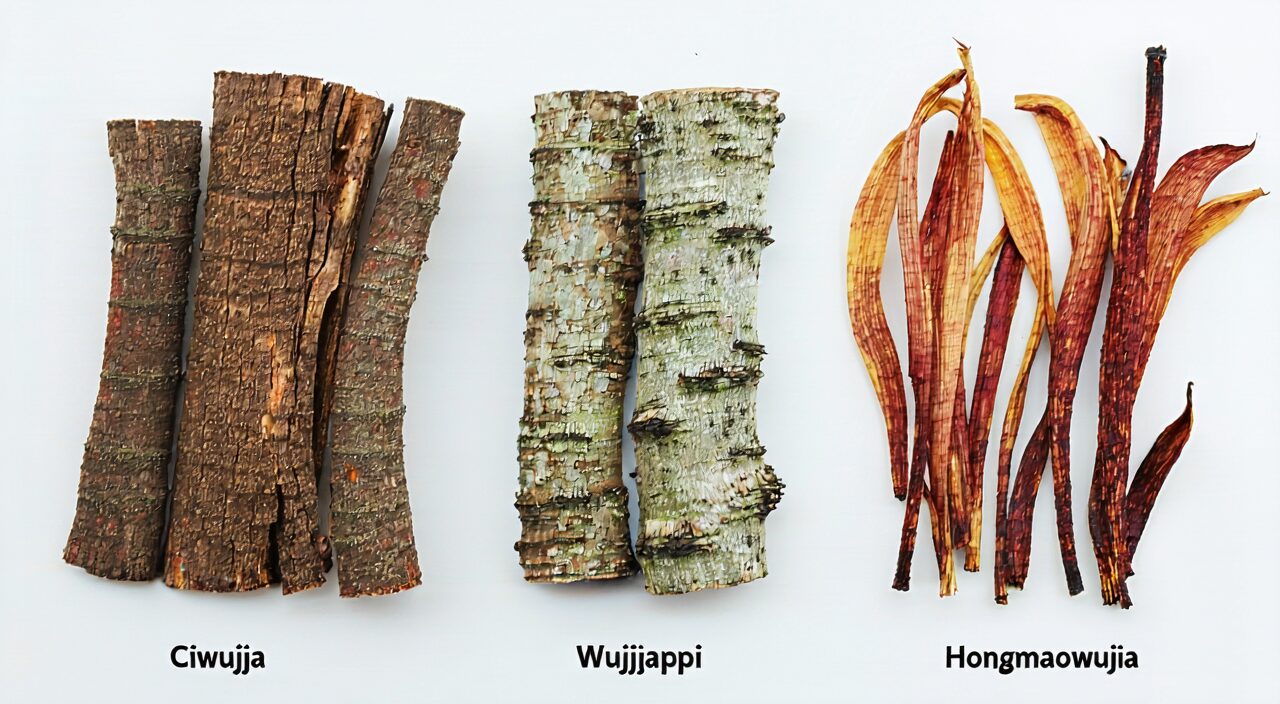
Herbs easily confused with Ci Wu Jia mainly include Wu Jia Pi (the root bark of Acanthopanax gracilistylus) and Hong Mao Wu Jia (the stem bark of Acanthopanax giraldii). Although all three belong to the Araliaceae family, there are clear differences in source, medicinal part, and traditional application.
Regarding source and part: Ci Wu Jia uses the root and rhizome or stem; Wu Jia Pi uses the relatively thin root bark after removing the woody portion; Hong Mao Wu Jia uses the stem bark covered with reddish-brown hairs.
In terms of appearance: Ci Wu Jia slices or segments are irregularly cylindrical, with a grayish-brown to blackish-brown outer skin and a fibrous cross-section; Wu Jia Pi herbs often appear in a tube-like or trough-like shape, with a grayish-brown outer surface and a yellowish-white inner surface, and a relatively brittle texture; Hong Mao Wu Jia is densely covered on the surface with brownish-red or pale reddish fine prickly hairs—this is the most striking distinguishing point.
Traditional applications differ in emphasis. Ci Wu Jia mainly revolves around boosting qi, supplementing the kidney, calming the spirit, and improving physical stamina; Wu Jia Pi leans toward dispelling wind-dampness and strengthening sinew and bone, commonly used for wind-cold-damp impediment, weakness of the lower limbs, and sinew and bone soreness; Hong Mao Wu Jia has also been traditionally used to dispel wind-dampness and invigorate blood and free the collaterals. Therefore, although the names are similar, clarifying the category based on one’s own situation is very important.
Which Formulas Utilize Ci Wu Jia?
As an herb that was highlighted individually somewhat later, Ci Wu Jia does not appear in many ancient classic formulas directly named after it. However, it often appears in modern preparations as a single herb or in small combinations, such as Ci Wu Jia tablets, Ci Wu Jia granules, and Ci Wu Jia capsules. These products center on Ci Wu Jia and embody the traditional application thoughts of boosting qi, supplementing the kidney, and calming the spirit.
In clinical experience, Ci Wu Jia is also frequently included in compound prescriptions. For qi deficiency with bodily fatigue and reduced appetite, it is traditionally used together with Huang Qi, Dang Shen, Bai Zhu, and the like; for unsettled mind and shallow sleep, it may be combined with Suan Zao Ren, Fu Shen, Dang Gui, and others. However, these combinations need to be adjusted according to individual constitution and pattern characteristics and are not fixed formulas.
When considering these products, whether single-herb Ci Wu Jia tablets or compound formulas containing Ci Wu Jia, they should be viewed as a reference to traditional regulatory approaches and should be used only after fully integrating product instructions with professional advice.
What Precautions Should Be Noted When Using Ci Wu Jia?
Although Ci Wu Jia is a commonly used herb, several situations deserve special attention before use.
First, regarding insomnia. Ci Wu Jia is traditionally used to calm the spirit, but if insomnia is long-standing, recurrent, or accompanied by marked anxiety, depression, palpitations, or chest tightness, it is not advisable to rely solely on Ci Wu Jia to deal with it; instead, one should prioritize a medical consultation to clarify the cause.
Second, individuals with abnormal blood pressure need to be cautious. There are observations suggesting that Ci Wu Jia may exert a certain influence on blood pressure, so those with significantly high or low blood pressure need a comprehensive assessment before use.
Third, drug interactions should not be overlooked. Ci Wu Jia may affect the metabolism or effects of hypoglycemic drugs, sedatives, anticoagulants, and others. If you are taking medications in the above categories, you should first consult a doctor or pharmacist.
Moreover, names such as Ci Wu Jia, Wu Jia Pi, and Xiang Jia Pi available on the market are similar, and there is a risk of source confusion. Xiang Jia Pi even has some toxicity, and misuse could cause harm, so the source of the herb must be clearly identified.
Finally, pregnant and breastfeeding women, as well as children, generally lack sufficient safety data, and self-administration is not recommended.
Summary
Ci Wu Jia is a commonly used herb employing the root and rhizome or stem as its medicinal parts. When identifying it, one can pay attention to the grayish-brown to blackish-brown outer bark, longitudinal wrinkles, and the fibrous characteristics of the cross-section. Traditional Chinese medicine largely understands it from the perspective of boosting qi and fortifying the spleen, supplementing the kidney, and calming the spirit, while modern preparations such as Ci Wu Jia tablets, granules, and capsules are but different carriers of these lines of thinking. In actual use, considering individual differences, possible effects on blood pressure, and drug interactions, one needs to integrate personal circumstances and seek professional guidance in order to more safely incorporate it into one’s personal health plan.