
What Is Gui Zhi? Medicinal Parts, Identification, and Common Formulas
Among Chinese medicinal materials, Gui Zhi is a frequently mentioned herb, but for many people, “what exactly is Gui Zhi” may be the first question that springs to mind. In short, Gui Zhi comes from the dried young branches of the camphor family plant Cinnamomum cassia. Because the tender branches are used, ancient practitioners simply called it “Gui Zhi” (cinnamon twig). It often appears in strategies for addressing external invasions and is also the core of many formulas that communicate yang and transform qi. The following sections cover identification features, medicinal parts, understanding from Chinese medicine, modern research interests, differences from Rou Gui (cinnamon bark), common formulas, and usage precautions, aiming to build a relatively complete picture for readers interested in Gui Zhi.
What does Gui Zhi look like? How to identify it
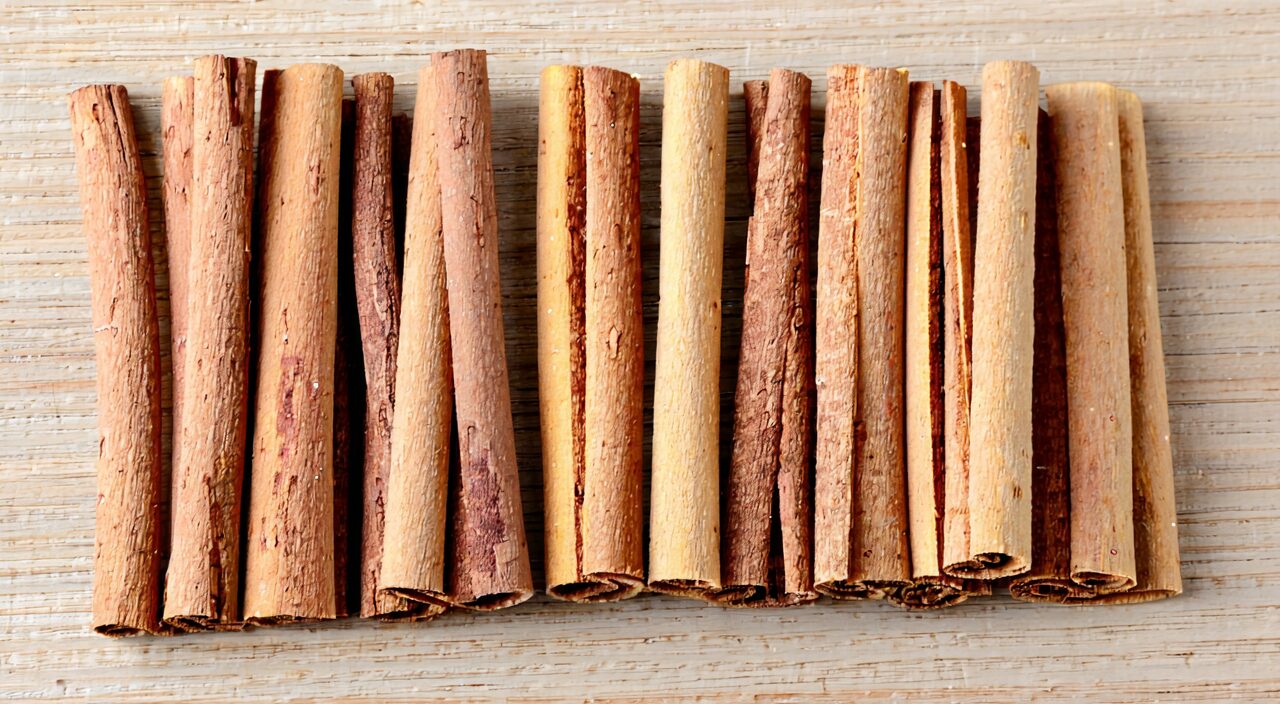
Understanding the form of Gui Zhi is a direct way to distinguish authentic, high-quality material from inferior or counterfeit products. The medicinal Gui Zhi usually appears as a slender, cylindrical twig, commonly between ten and several tens of centimeters in length, with a diameter generally around 0.3–1 cm. The surface is reddish-brown to brownish-brown, sometimes leaning towards a darker red. On close observation, relatively distinct longitudinal ridges can be seen, running along the direction of the branch. Small branch scars and leaf scars often remain on the surface; these marks are slightly raised, resembling tiny dots or short lines, which are important features for identification.
In terms of texture, Gui Zhi is hard and brittle and breaks easily. The fractured surface shows clear layering: the outer bark is relatively thin and reddish-brown; the inner wood portion is broad, mostly yellowish-white or light yellowish-brown. When brought close to the nose, Gui Zhi has a distinctive aromatic fragrance, and the taste is slightly sweet with a hint of pungency. These color, texture, and scent characteristics together form the basis for distinguishing Gui Zhi from other twig-type medicinal materials.
What is the medicinal part of Gui Zhi?
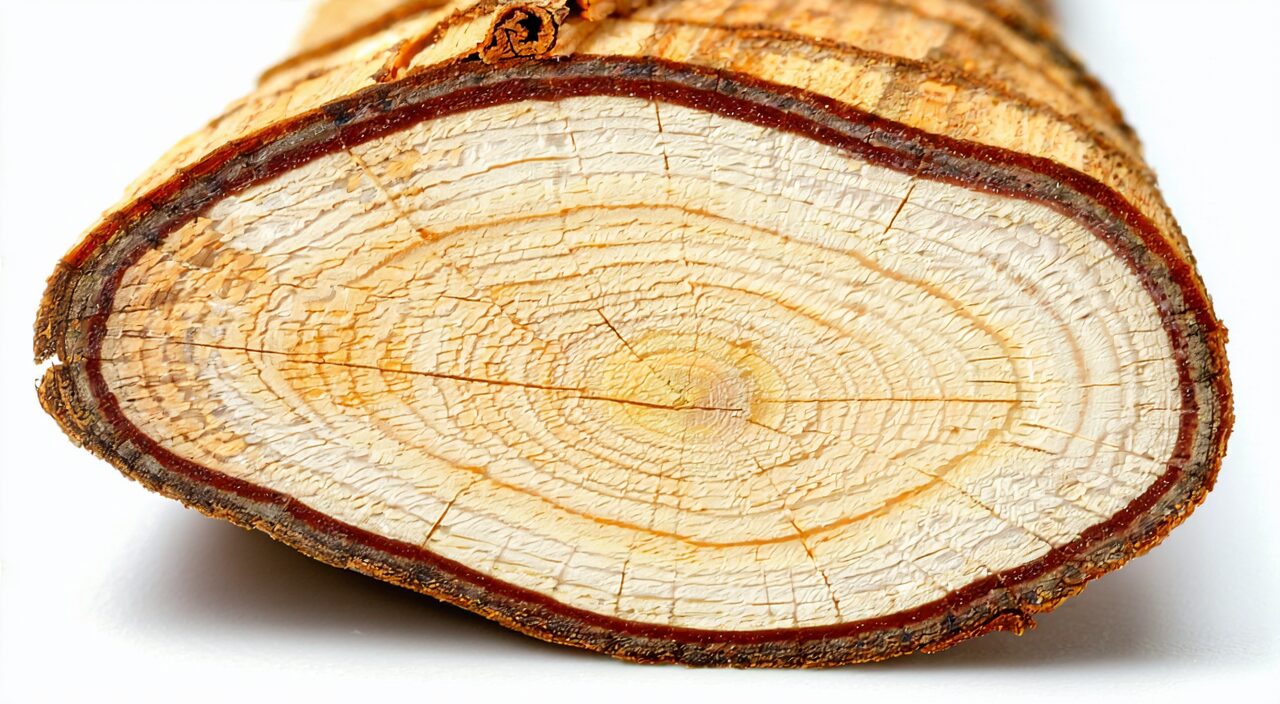
The medicinal part of Gui Zhi is exactly as mentioned above: the dried young branch of the camphor family plant Cinnamomum cassia. Harvesting generally takes place in spring and summer when the young branches are growing vigorously. The branches are cut, the leaves are removed, and they are dried directly in the sun, or they may be sliced into sections or pieces while fresh and then dried, becoming the common Gui Zhi decoction pieces.
Gui Zhi decoction pieces on the market are mostly roundish or oblique slices, usually around 2–4 mm thick, and sometimes short columnar segments are also seen. Whether sliced or segmented, the bark retains its thin reddish-brown layer, the wood area is relatively large, and the cross-sectional features are consistent with the original branches. Such processing not only makes storage and dispensing convenient but also helps the volatile components to be released more readily during subsequent use.
How does Chinese medicine understand Gui Zhi?
In traditional Chinese medical theory, the nature, taste, meridian tropism, and functional direction of Gui Zhi are central to understanding it. Gui Zhi is acrid and sweet in taste, warm in nature, and enters the Heart, Lung, and Bladder meridians. Its acrid property can disperse and move; its sweet property can moderate, supplement, and unblock; and its warm property helps drive away cold pathogens. Therefore, physicians through the ages have often understood and used Gui Zhi from the perspectives of inducing sweating to release the exterior, warming and unblocking the channels and collaterals, and assisting yang to transform qi.
When external wind-cold causes fever, headache, and generalized pain accompanied by inhibited sweating, Gui Zhi is frequently used to “release the flesh layer” and disperse the exterior, thereby alleviating discomfort. In cases where cold pathogen stagnation leads to cold pain in the limbs and joints and cold hands and feet, its action of warming and unblocking the channels can help promote the movement of qi and blood. Moreover, Gui Zhi can promote the transformation and flow of yang qi and is used to address conditions like retained water-damp, lodged phlegm-fluid, or palpitations and shortness of breath due to heart yang insufficiency. However, its specific use is generally combined with other medicinal substances in formula form.
What components and actions of Gui Zhi attract modern research?
From a modern research perspective, interest in Gui Zhi mainly concerns its volatile oil, especially cinnamaldehyde. Many in vitro experiments and animal studies have explored the biological activities of cinnamaldehyde and Gui Zhi extracts, suggesting potential antipyretic, anti-inflammatory, analgesic, peripheral vasodilatory, and anti-platelet aggregation properties. At present, these studies mostly remain at the level of component and mechanism exploration. They can help modern people understand the material basis for the traditional applications of Gui Zhi, but laboratory findings cannot yet be directly equated with therapeutic effects in the human body. Therefore, this information is best regarded as an avenue for understanding rather than a basis for clinical decision-making.
What is the difference between Gui Zhi and Rou Gui (cinnamon bark)?
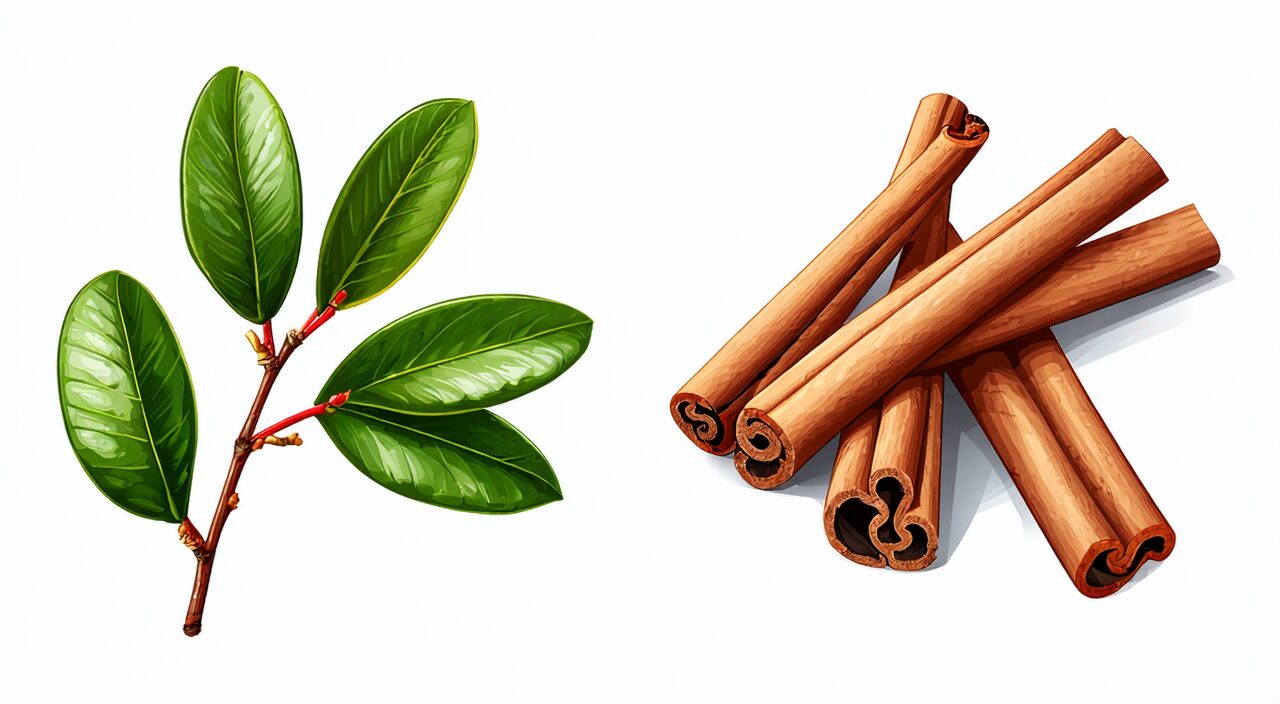
Although Gui Zhi and Rou Gui come from the same plant — Cinnamomum cassia — the parts used are completely different, which gives them distinct appearances and traditional emphases. Gui Zhi is taken from the young branches, mostly appearing as slender, cylindrical twigs with small diameters and a relatively light texture. Rou Gui, by contrast, is prepared from the tree bark and is commonly seen as trough-shaped or rolled slabs that are thicker and have a stronger oily feel.
In traditional understanding, although both are acrid and warm, their action tendencies are often summarized as: Gui Zhi tends to ascend and go to the exterior, mainly inducing sweating to release the flesh layer and warming and unblocking the channels. Rou Gui tends to go inward and downward, excelling at supplementing fire to assist yang, dispelling cold to relieve pain, and drawing floating fire back to its source. Therefore, when there is a need to vent external pathogens and dredge the channels and collaterals, Gui Zhi is often used; when addressing cold deficiency of the zang-fu organs and more pronounced interior cold, Rou Gui is often considered. Of course, specific choices must fit the overall therapeutic plan and should not be self-substituted.
Which formulas use Gui Zhi?
Gui Zhi appears with high frequency in classic formulas, and many therapeutic directions rely on it. One representative formula is Gui Zhi Tang, which combines Gui Zhi with Bai Shao (white peony root), one dispersing and the other consolidating, to harmonize the ying and wei; it is traditionally used as a basic formula for wind-cold exterior deficiency patterns. In Ma Huang Tang, Gui Zhi is paired with Ma Huang (ephedra) to enhance sweating and exterior-releasing power, and is mostly used for exterior excess patterns. Ling Gui Zhu Gan Tang combines Gui Zhi with Fu Ling (poria), Bai Zhu (white atractylodes), and Gan Cao (licorice) to warm yang and transform fluid retention, strengthen the spleen, and drain dampness; it is traditionally indicated for dizziness, palpitations, and chest oppression due to internal fluid retention. Xiao Jian Zhong Tang is a modification of Gui Zhi Tang that doubles the dosage of Bai Shao and adds Yi Tang (malt sugar), turning its focus towards warming the middle jiao, supplementing deficiency, and relaxing spasms to relieve pain, often used for abdominal pain due to central jiao cold deficiency that likes warmth and pressure. The roles of Gui Zhi in these formula combinations each have different emphases. Whether a particular formula suits a given body state must be determined based on specific presentations and professional judgment, and one should not simply pick a formula by its name for self-use.
What should one pay attention to when using Gui Zhi?
Although Gui Zhi has a wide range of uses, several points require special attention during its use. Because Gui Zhi is warm in nature, individuals with a warm-heat constitution or yin deficiency with effulgent fire — for example, those who commonly experience dry mouth, heat sensation in the palms and soles, tidal fever, or night sweating — should use it cautiously to avoid aggravating internal heat. For those with bleeding tendencies, heavy menstrual bleeding, or who are taking anticoagulant medications, evaluation under professional guidance is also necessary, as Gui Zhi’s warming and unblocking effect can influence blood circulation. Pregnancy is a special period, and whether and how Gui Zhi can be used must follow professional advice.
Moreover, when external presentations are complex — for instance, mixed states of sweating and absence of sweating, or mixed cold and heat, deficiency and excess — the dosage and combination of Gui Zhi in a formula can vary greatly, making self-judgment inappropriate. Any severe or persistent symptoms, such as recurrent high fever, severe coughing, intense headache, or chest oppression, should first be clearly diagnosed rather than relying on a single medicinal substance.
Summary
Gui Zhi, the young branch of Cinnamomum cassia, is easily identified by its reddish-brown, slender twigs, distinct bark–wood fracture surface, and special aroma. In traditional use, it primarily acts to release the flesh layer and the exterior, warm and unblock the channels, and assist yang to transform qi. It clearly differs from Rou Gui, a product of the same plant, in terms of plant part and functional emphasis. The combinations found in classic formulas such as Gui Zhi Tang, Ma Huang Tang, Ling Gui Zhu Gan Tang, and Xiao Jian Zhong Tang also reflect its usage directions from different angles. The above information is provided only as knowledge reference. In actual application, it should be combined with individual constitution and specific presentations, and a prudent decision should be made after thorough understanding or after consulting a professional.