
What Is Cinnamon Bark? Medicinal Parts, Identification, and Common Formulas
As a traditional interior-warming herb, cinnamon bark commonly appears in Chinese herbal formulas and home cooking. But how exactly does medicinal cinnamon bark differ from the cassia bark used in the kitchen? And how is it related to cinnamon twig (gui zhi)? This article systematically introduces cinnamon bark from the perspectives of traditional Chinese medicine and herbal materials, covering its appearance, medicinal parts, TCM understanding, common formulas, and safety precautions, so you can build a clearer understanding of this herb.
What Does Cinnamon Bark Look Like? How to Identify It?
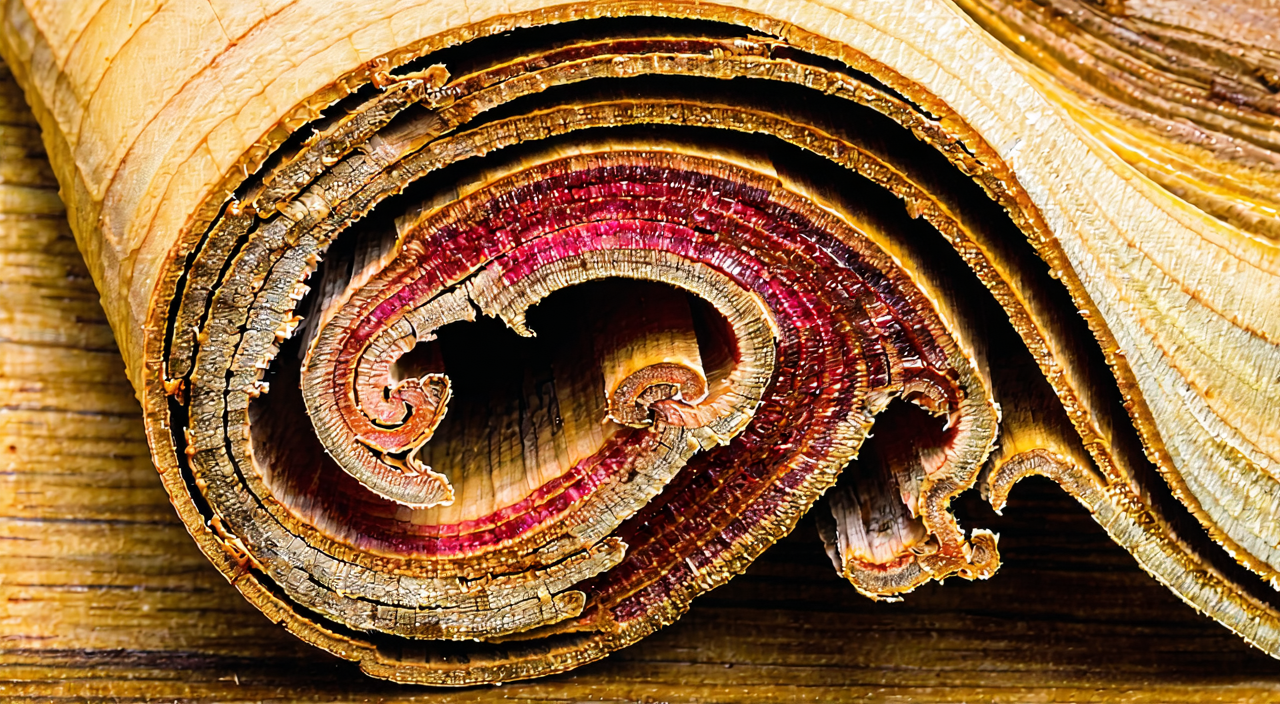
The medicinal part of cinnamon bark is the dried bark. In the market, it is often seen in grooved or rolled forms, commonly called ‘tube cinnamon.’ High-quality cinnamon bark has a grayish-brown to grayish-brown outer surface that is slightly rough, with grayish-white patches visible; the inner surface is reddish-brown or brownish-red, smooth, and oily. The most typical identification feature is the dense, shiny oil lines on the cross-section and inner surface, which are where cinnamon volatile oil is concentrated and serve as a key criterion for quality.
In terms of aroma, cinnamon bark emits a strong, lasting sweet-pungent fragrance that is richer and warmer than ordinary cassia bark. When tasted, it initially has a slight sweetness, followed by a spicy sensation that spreads through the mouth, with a marked increase in saliva. Regarding thickness, cinnamon bark is usually thinner, hard and brittle, and easy to break; when oil-rich, oil stains can be seen at the fracture. These characteristics all help distinguish it from miscellaneous cassia barks.
What Is the Medicinal Part of Cinnamon Bark?

Cinnamon bark comes from the dried bark of Cinnamomum cassia, a plant in the laurel family. Harvesting mostly occurs in autumn when the bark’s oil content is at its peak. According to different processing methods, traditional commercial grades mainly include qi bian gui (border-trimmed cinnamon) and ban gui (slab cinnamon): bark rolled into double or single tubes with both ends trimmed and pressed into shape is called qi bian gui; bark peeled and pressed flat is called ban gui. In addition, there is unpressed original bark cinnamon. Regarding production areas, cinnamon bark from Guangxi, Guangdong, and Yunnan is often regarded as superior due to its thick oil layer and mellow aroma.
During harvest, trunk bark from trees of appropriate age is selected, the outermost coarse bark is removed, and the phloem containing the oil layer is retained, then sun-dried or air-dried. It must be emphasized that although medicinal cinnamon bark and the raw material for essential oil extraction are the same, cinnamon essential oil is highly concentrated, and its usage is entirely different from internal decoction; the two must be clearly distinguished.
How Does TCM Understand Cinnamon Bark?
In traditional theory, cinnamon bark is pungent and sweet in flavor, very hot in nature, and enters the Kidney, Spleen, Heart, and Liver meridians. Medical scholars throughout history have emphasized its characteristic of ‘supplementing fire and assisting yang,’ believing that cinnamon bark can warm and tonify the fire of the life gate. For manifestations caused by kidney yang deficiency, such as aversion to cold, cold limbs, soreness and weakness of the lower back and knees, frequent nighttime urination, and mental fatigue, it is often used as a fundamental warming yang ingredient in combinations.
In addition, cinnamon bark has a special application concept—’guiding fire back to its source.’ When the lower burner is deficient and cold, and excessive yin forces yang to float upward, appearing as mouth ulcers, facial redness, and restlessness, this is not true heat. Cinnamon bark, through its warming and guiding force, can draw the vacuous yang back to the life gate. However, this requires relatively precise pattern differentiation; misapplication in cases of true heat syndrome will instead worsen the discomfort.
In terms of dispersing cold and relieving pain, cinnamon bark is often used together with dried ginger, aconite, and Chinese angelica for cold-type discomforts caused by congealing cold, such as cold abdominal pain and cold, bearing-down pain during menstruation. Its efficacy of warming and unblocking the channels helps alleviate cold-damp bi pain or cold hands and feet and cold lower back pain due to yang deficiency; the approach is to promote the flow of qi and blood rather than direct pain relief.
A Glimpse of Modern Research
Modern research indicates that cinnamon bark mainly contains cinnamaldehyde, cinnamic acid, eugenol, and other constituents. Some in vitro and animal experiments have observed antioxidant, anti-inflammatory, insulin resistance-improving, and blood circulation-promoting activities. A few small human trials have found that cinnamon extracts may help maintain healthy blood sugar levels, but the doses used were large and significantly different from everyday culinary use. Overall, these studies provide certain perspectives for traditional use but are not yet sufficient to serve as a basis for medical claims.
What Are the Differences Between Cinnamon Bark, Cinnamon Twig, and Common Cassia Bark?
Cinnamon bark, cinnamon twig, and cassia bark all come from the cinnamon tree, but their effects differ because of the different parts used. Cinnamon bark, being the bark, acts internally and specializes in warming and tonifying kidney yang and guiding fire back to its source. Cinnamon twig is the dried young branch; its action tends toward the exterior and excels at unblocking yang, transforming qi, and releasing the muscle layer, as seen in classic formulas like Cinnamon Twig Decoction (Gui Zhi Tang) and Ephedra Decoction (Ma Huang Tang), which both use cinnamon twig. One is bark, the other a twig, and their action directions are completely different; they must not be used interchangeably.
Common cassia bark, used as a spice, may come from the bark of multiple species of the same genus. Its volatile oil cinnamaldehyde content is often lower than that of medicinal cinnamon bark, and it often contains more coarse bark, resulting in a thinner aroma that does not withstand prolonged decoction. Using it in daily cooking is fine, but if you intend to regulate your constitution according to TCM principles, you should use cinnamon bark that meets pharmaceutical standards with a rich oil layer, and do so under the guidance of an experienced TCM practitioner or professional, avoiding substituting it with culinary cassia bark.
Which Formulas Use Cinnamon Bark?
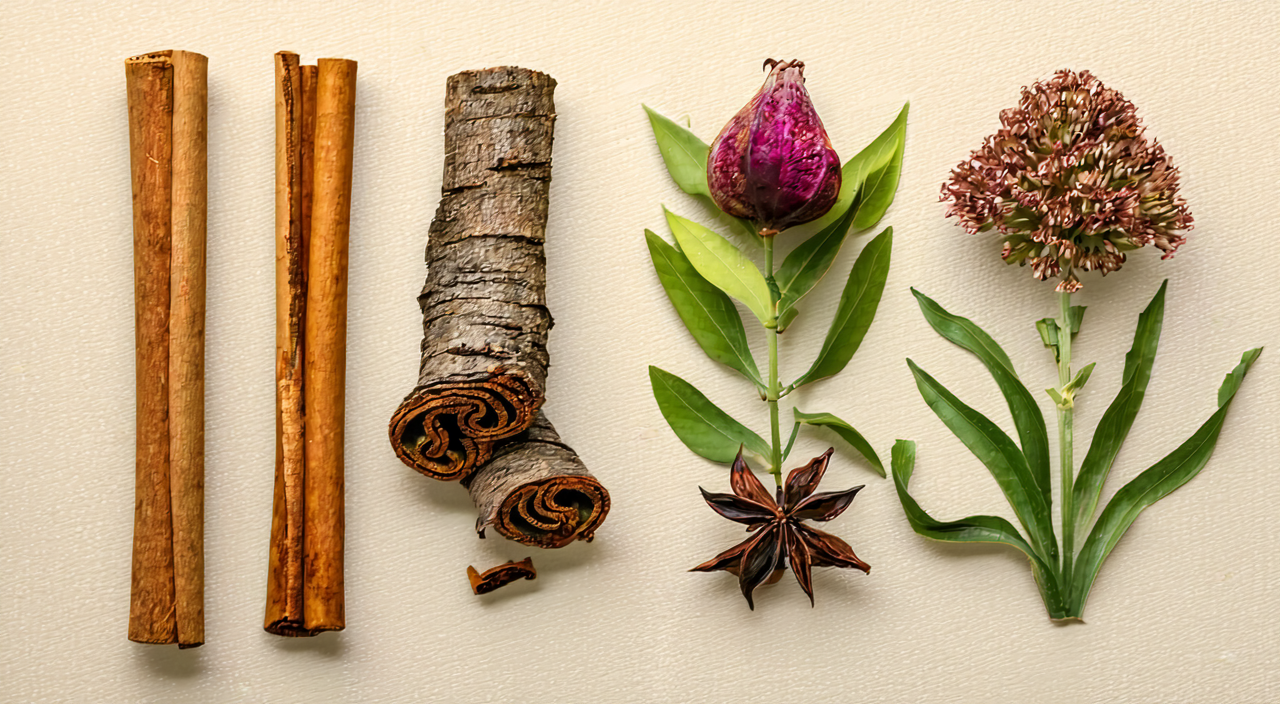
Cinnamon bark appears in many classic formulas. Although the original formula of Golden Cabinet Kidney Qi Pill contains cinnamon twig, later versions using cinnamon bark strengthen the power to warm the kidney and assist yang, and it is often used for soreness and cold in the lower back and knees, difficult urination, or frequent urination due to kidney yang deficiency. Right-Restoring Pill (You Gui Wan) pairs cinnamon bark with aconite, deer horn glue, and eucommia to warm and tonify the life gate, addressing pronounced mental fatigue, aversion to cold, and cold pain in the lower back and spine caused by more significant kidney yang deficiency. All-Fulfilling Great Tonifying Decoction (Shi Quan Da Bu Tang) adds cinnamon bark and astragalus to the Eight-Treasure Decoction to boost qi and blood; by leveraging cinnamon bark’s warming and unblocking force, it promotes qi and blood generation and is traditionally used for chronic disease and weakness, non-healing sores accompanied by cold signs. Perilla Fruit Qi-Descending Decoction (Su Zi Jiang Qi Tang) exploits cinnamon bark’s ability to warm the kidney and grasp qi to relieve shortness of breath and wheezing caused by the kidney failing to grasp qi. It must be reminded that all these formulas have specific pattern differentiation requirements. Whether an individual is suitable must be determined by a professional based on their constitution and manifestations; self-prescribing is not recommended. If reference to related products is needed, one should read the instructions thoroughly and listen to advice.
What Should You Pay Attention to When Using Cinnamon Bark?
Cinnamon bark is very hot in nature. People with a constitution of yin deficiency with fire effulgence, dry mouth and throat, tidal fever and night sweats, or heat in the palms and soles should generally avoid its use or use it only in minimal combination. Patients with bleeding disorders and those taking anticoagulant medications should be cautious about the possible effects of cinnamon bark on blood clotting. During pregnancy, it is not recommended to self-administer cinnamon bark or concentrated supplements; only when used occasionally in extremely small amounts as a seasoning is it generally not considered a risk, but you should still consult a doctor.
Cinnamon essential oil available on the market is highly concentrated and strictly prohibited for oral consumption; it is for external use or aromatherapy only. Even when taking cinnamon powder or extracts internally, one should pay attention to the coumarin content; long-term excessive intake may burden the liver and even cause damage. Those with impaired liver function should especially avoid high-dose cinnamon products. All use should follow the labeled dosage of the product; do not increase the dosage on your own. If any discomfort occurs, stop use immediately and seek medical attention.
Summary
Cinnamon bark is used medicinally in the form of grooved, oily bark. It is hot in nature and adept at warming and tonifying the lower burner. Traditionally, it is used to supplement fire and assist yang, guide fire back to its source, and disperse cold and warm the channels, playing a key role in formulas such as Golden Cabinet Kidney Qi Pill and Right-Restoring Pill. Its differences from cinnamon twig and common cassia bark require us to choose the correct type when using it. At the same time, issues such as yin deficiency, bleeding, pregnancy, and liver risks must be given full attention. This article is for general informational reference only and cannot replace professional diagnosis or treatment advice. Specific use should be based on individual circumstances and medical advice.