
What Is Schizonepeta? Medicinal Parts, Identification, and Common Formulas
If you have encountered Chinese herbs overseas, Schizonepeta (Jing Jie) is likely one of the earliest names you hear. It is often grouped with Mint and Saposhnikovia within the category of “releasing the exterior,” but its uniqueness lies in its dual application—not only for early-stage external invasions marked by chills, fever, and headache, but also for certain skin issues related to wind pathogens. Starting with visual identification, this article guides you through the medicinal parts of this herb, its traditional understanding, how it differs from Saposhnikovia (Fang Feng), and which classic formulas include it.
What Does Schizonepeta Look Like? How to Identify It
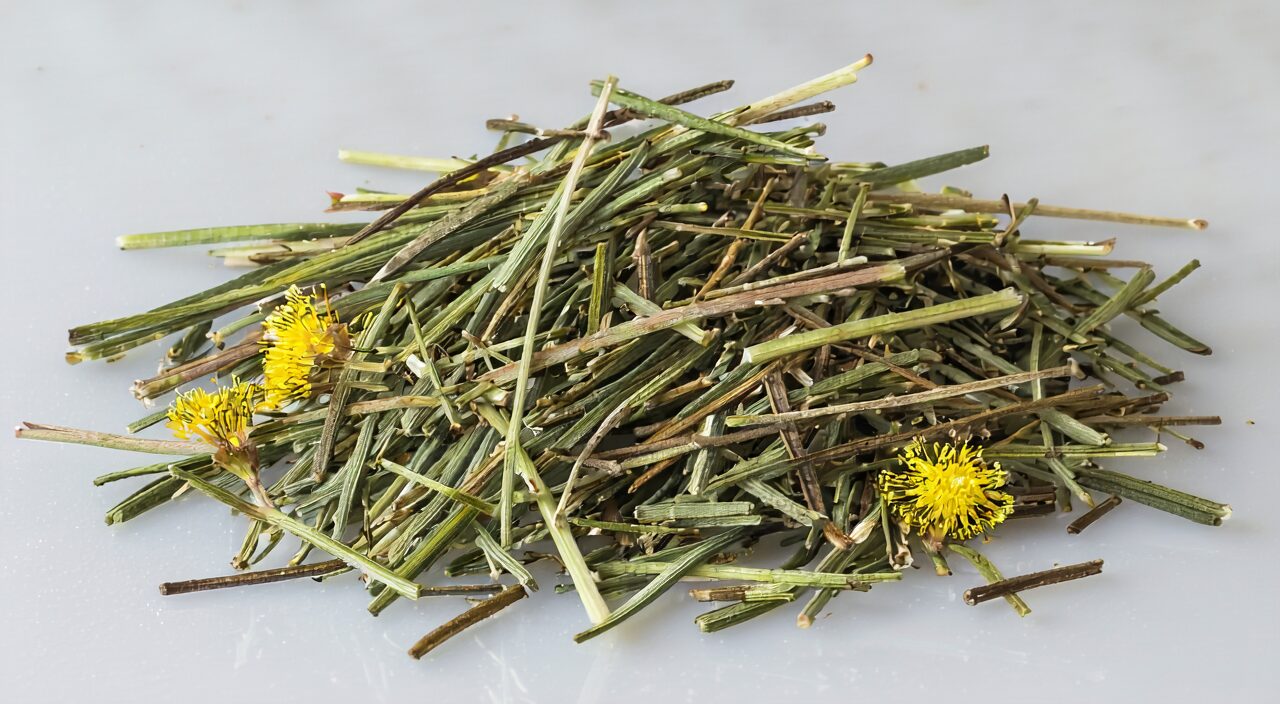
The original plant of Schizonepeta is an annual herbaceous plant of the Lamiaceae family, and the dried aerial parts are used medicinally. The prepared slices commonly seen are mostly irregular broken segments mixed with stems, leaves, and flower spikes. When identifying it, pay attention to several features: the stem is quadrangular with slightly ridged edges, a common trait of the Lamiaceae family, with a yellowish-green or pale purplish-brown surface that is brittle and easily broken; the leaves are opposite, pinnately divided, and become wrinkled and curled after drying, appearing dark green or yellowish-brown; the most distinctive part is the terminal spike-like inflorescence with tightly arranged, verticillaster small flowers, which after drying appear as short spikes of yellowish-green or slightly purplish-brown—this is often called “Schizonepeta Spikes.” When rubbed, the whole herb releases a uniquely cool and aromatic fragrance with a pungent, dispersing scent, and a slight cool sensation upon tasting. These characteristics help distinguish it from other herbs with similar appearance.
What Are the Medicinal Parts of Schizonepeta?
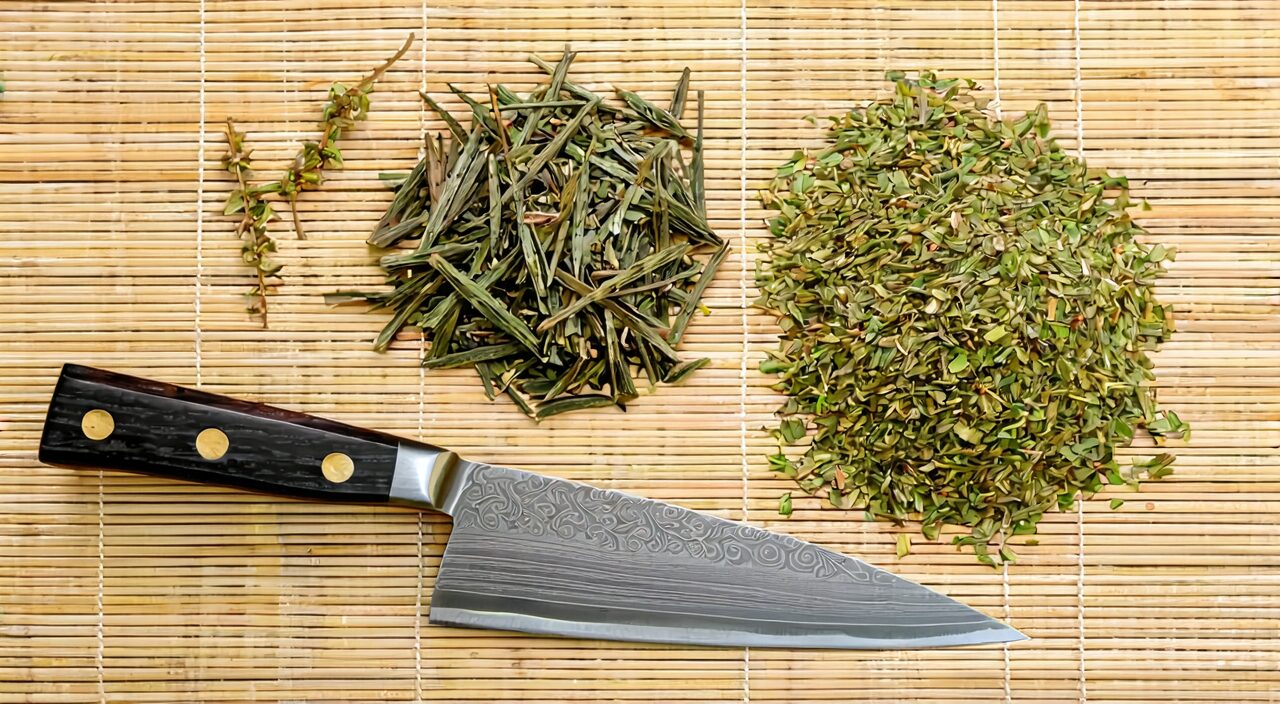
According to the Chinese Pharmacopoeia, the medicinal part of Schizonepeta is the dried aerial portion, meaning the entire above-ground plant excluding the root, including stems, leaves, and flower spikes. In commercial herbal materials, “Schizonepeta Spikes” may be separately selected or only the upper spikes are harvested when cutting. Traditional Chinese medicine holds that Schizonepeta with spikes has a stronger dispersing action tending toward the upper body and head, so formulas targeting wind evil in the head and face, such as Chuan Xiong Cha Tiao San, pay more attention to using the spikes; the stem and leaf parts are more often used for generalized exterior pathogens or promoting eruption. Understanding the choice of medicinal parts therefore helps to appreciate the different emphases of the same herb across various formulas.
How Does Chinese Medicine Understand Schizonepeta?
In traditional Chinese medicine theory, Schizonepeta is acrid in flavor and slightly warm in nature, entering the Lung and Liver meridians. Its core action is “dispersing wind and releasing the exterior.” Releasing the exterior means that when external pathogens attack the body surface, causing exterior signs such as aversion to cold, fever, headache, and nasal congestion, Schizonepeta can assist the body in driving out the external evil. However, its strength is relatively gentle, so it can be used in combination for the early stages of both wind-cold and wind-heat, especially when the cold-heat tendency is not distinctly clear.
Schizonepeta is also used to promote eruption: in conditions like measles or rubella where the rash is slow to surface and the skin is itchy, its acrid, dispersing, and out-thrusting nature helps vent the rash toxin outward. In traditional external medicine, Schizonepeta is combined with other herbs to “resolve sores,” mostly applied at the early stage of sores and boils to disperse swelling and reduce redness and heat.
Additionally, when Schizonepeta is charred (carbonized), its nature and flavor change, becoming bitter and astringent and acquiring a new ability to astringe and stop bleeding. Schizonepeta Charcoal (Jing Jie Tan) is often used for bleeding tendencies such as bloody stools or uterine bleeding, where the strategy shifts from dispersing to astringing and arresting bleeding. This distinction must be clearly made when preparing formulas or using patent medicines.
What Does Modern Research Say About Schizonepeta?
Modern pharmacological research mainly revolves around Schizonepeta volatile oil. Studies have found that the volatile oil contains components such as menthol and pulegone, with antipyretic, anti-inflammatory, antiviral, and mild sedative effects. Some studies suggest it has inhibitory effects on certain influenza virus strains or Staphylococcus aureus, but differences in concentration and in vivo environments mean that such research is more a reference for explaining traditional usage rather than equating to clinical therapeutic efficacy.
What Is the Difference Between Schizonepeta and Saposhnikovia?
Schizonepeta and Saposhnikovia (Fang Feng) are often paired together, yet they have clear differences. Botanically, Schizonepeta belongs to the Lamiaceae family, with a square stem, opposite leaves, and spike-like inflorescences; Saposhnikovia belongs to the Apiaceae family, using the root as medicine, which is long cylindrical with a grayish-brown surface and a characteristic “earthworm head” feature. Regarding the medicinal part, Schizonepeta uses the entire aerial portion or the spikes, while Saposhnikovia uses the root.
In traditional application focus, Schizonepeta is acrid, dispersing, and out-thrusting, excelling at releasing the exterior, promoting eruption, and resolving sores, and when charred, it can stop bleeding; Saposhnikovia is sweet and moderate without being drying, excelling at dispelling wind, overcoming dampness, and stopping spasms, and is more commonly considered for problems where wind evil moves erratically, such as joint pain, muscle stiffness, and vertigo. They often work synergistically when combined, but when used alone their emphases differ, and the choice must be based on specific constitution and symptoms.
Which Formulas Contain Schizonepeta?
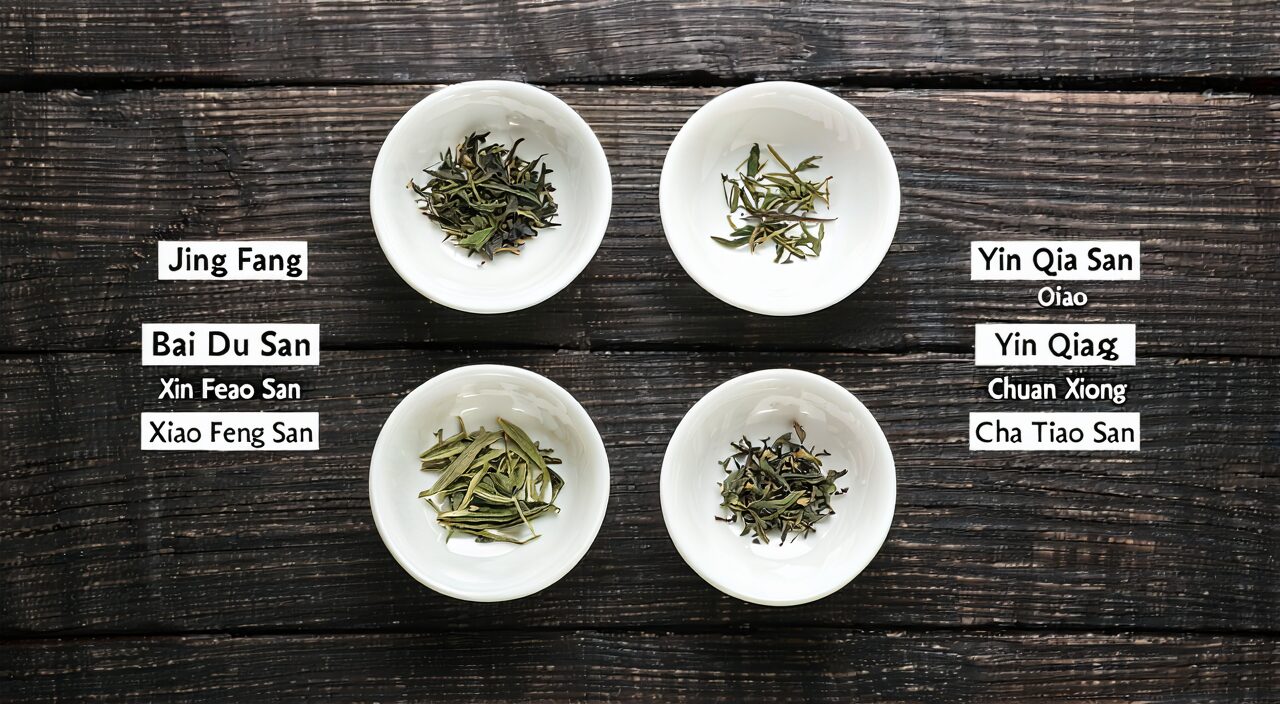
Many classic formulas contain Schizonepeta. Here are a few common directions for understanding:
- Jing Fang Bai Du San (Schizonepeta and Saposhnikovia Powder to Overcome Pathogenic Influences): This formula features Schizonepeta and Saposhnikovia as chief herbs, combined with Notopterygium, Angelica Pubescens, Bupleurum, and others. It is often referenced for external contraction of wind-cold-dampness with pronounced symptoms such as chills and fever, headache, generalized body aches, and heavy limbs. Traditionally it suits a constitution with exterior cold complicated by dampness, but pattern differentiation is required.
- Yin Qiao San (Lonicera and Forsythia Powder): Yin Qiao San is a representative formula for acrid-cool exterior release. It contains Schizonepeta Spikes along with honeysuckle flower, forsythia fruit, mint, and others. It is commonly used for the early stages of wind-heat with fever, headache, sore throat, and dry mouth. In this formula, Schizonepeta helps disperse exterior pathogens, but one should still assess whether the constitution leans toward cold or heat before use.
- Xiao Feng San (Eliminate Wind Powder): Xiao Feng San is used for skin itching, rubella, eczema, and similar issues. Main herbs include Schizonepeta, Saposhnikovia, Periostracum Cicadae, and Arctium Fruit. The traditional rationale is to soothe wind, clear heat, eliminate dampness, and stop itching. It is more targeted at itching manifestations caused by wind-heat-dampness in the skin, and significant infection or severe skin damage must be ruled out.
- Chuan Xiong Cha Tiao San (Ligusticum and Tea Blend Powder): This formula is often used for migraine, head wind, and headache. The primary herb is Chuan Xiong (Ligusticum wallichii), supported by Schizonepeta, Mint, Notopterygium, and others, traditionally aimed at wind evil attacking upward causing headache. Schizonepeta clears the head and eyes and disperses wind evil, with the spike form offering a more pronounced effect.
The above formulas are all complex combinations and are provided only for understanding traditional application directions of Schizonepeta. They should not be self-prescribed. Whether a formula is suitable depends on individual constitution and the mixed presentation of symptoms, requiring professional pattern differentiation and product instructions.
What Precautions Should Be Taken When Using Schizonepeta?
When learning about Schizonepeta and using products that contain it, several points deserve attention. First, distinguish between raw Schizonepeta and Schizonepeta Charcoal. Raw Schizonepeta tends to disperse, while the charred product has an astringing and hemostatic nature—using the wrong form may be counterproductive. Second, individuals with exterior deficiency and spontaneous sweating—those who sweat easily and are sensitive to wind—should avoid dispersing herbs. If the bleeding direction is unclear, or if accompanied by persistent weight loss, black stools, severe anemia, and other conditions, do not self-administer Schizonepeta Charcoal or preparations containing it, and seek medical attention promptly. Additionally, those allergic to Lamiaceae plants should exercise caution.
Pregnant and breastfeeding women, as well as individuals with chronic diseases or those on long-term medication, should consult a qualified health professional before using any product containing Schizonepeta. No medicinal herb is suitable for casual daily long-term consumption as a dietary supplement.
Summary
Schizonepeta is a gentle and flexibly applied exterior-releasing medicinal herb. Its appearance, the choice of different medicinal parts, and the distinction between raw and charred use form the basic traditional Chinese medicine understanding of it. Although often paired with Saposhnikovia, they differ in source and therapeutic focus. Classic formulas containing Schizonepeta provide direction for understanding its use, yet specific selection must be based on individualized pattern differentiation and professional advice. This article is for general reference only and cannot replace professional diagnosis or treatment recommendations.