
What Is Fang Feng? Medicinal Parts, Identification Methods, and Common Formula Introductions
Many people who encounter traditional Chinese medicine (TCM) or health preservation topics often hear the name “Fang Feng” (Saposhnikovia divaricata). It is both a common Chinese herbal material and plays an important role in many formulas. For those just beginning to learn about traditional herbs, what Fang Feng is, what it looks like, which part is used, and how it differs from herbs like Notopterygium (Qiang Huo) and Schizonepeta (Jing Jie) are often the first questions that need to be clarified. This article will explore Fang Feng from these perspectives, guiding you step by step through its identification and introducing several classic traditional formula directions.
What Does Fang Feng Look Like? How to Identify It?
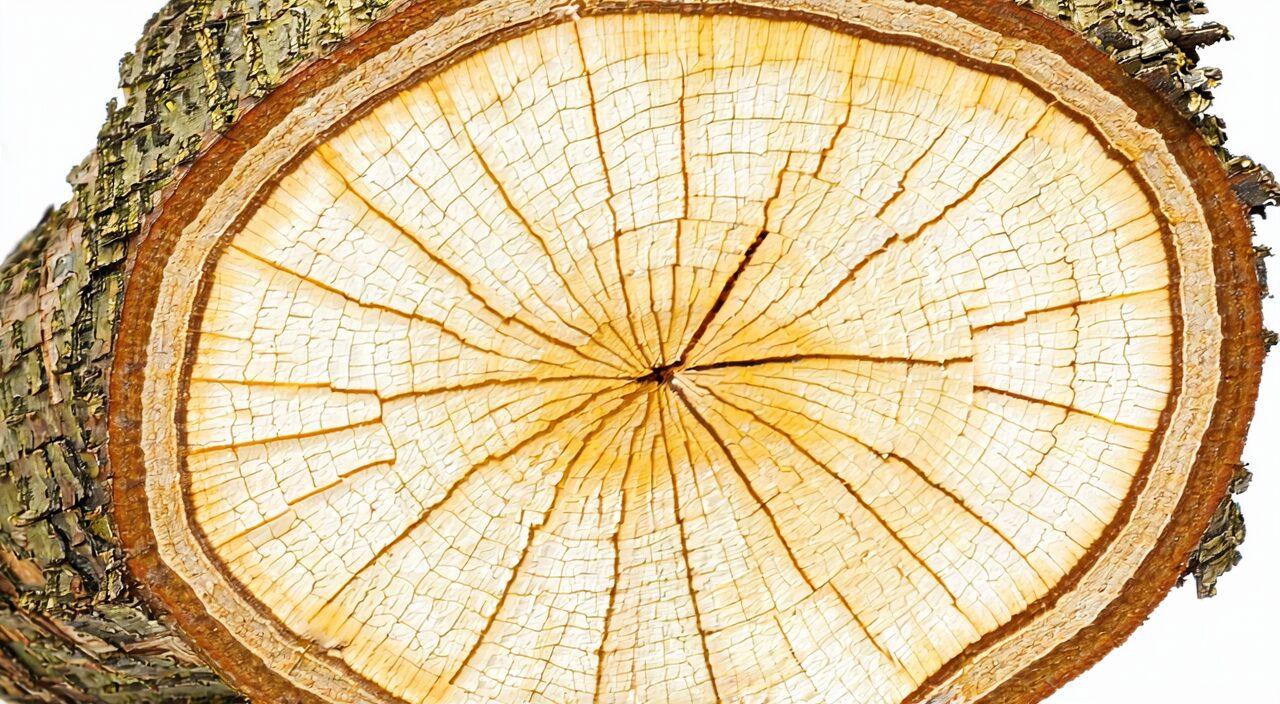
The medicinal part of Fang Feng is mainly from the plant’s root. Its overall appearance is long conical or long cylindrical, slightly curved, typically about 15–30 cm in length and about 0.5–2 cm in diameter. The root surface is grayish-brown or grayish-brown, feels relatively rough, and shows longitudinal wrinkles, transverse lenticels, and some elongated wart-like protrusions.
When identifying Fang Feng, the most frequently mentioned feature is the root head. The root head often has dense annular rings that resemble the head of an earthworm, traditionally called “earthworm head.” These rings are traces of petiole bases and have some reference value for assessing the quality of Fang Feng. The lower part of the root gradually tapers and sometimes branches.
When cut crosswise, the surface is not flat; the cortex appears light brown or light yellowish-white, and the xylem is lighter, usually pale yellow, with a brown ring between them. Near the edge of the cut surface, radial fissures can sometimes be seen, which is also a common characteristic of Fang Feng medicinal material. In terms of odor, Fang Feng has a slight, distinctive aroma and a slightly sweet taste, with a slightly gritty sensation when chewed.
What Is the Medicinal Part of Fang Feng?
The medicinal part of Fang Feng is its dried root. Traditionally, harvesting is usually done in spring and autumn; it is more common to harvest before sprouting in spring or after the aerial parts wither in autumn, when the root is relatively plump. After harvesting, the fibrous roots and soil are removed, the remaining stem is discarded, and then the root is dried in the sun or at low temperature.
In the processing of decoction pieces, Fang Feng is usually cut into thick slices or short segments, appearing as irregular round or sub-round thick slices. The cut surface shows fissures in the cortex and radial striations in the xylem, and overall it looks relatively loose. Sometimes it is processed by stir-frying with honey or dry-frying, but clinically it is more often used raw. When purchasing or evaluating, you can check whether the outer skin is intact, whether the fissures on the cut surface are distinct, and whether the odor is normal; these are reference indicators for quality assessment.
How Does TCM Understand Fang Feng?
Traditional Chinese medicine often understands Fang Feng from the perspectives of dispelling wind and releasing the exterior, overcoming dampness and relieving pain, and stopping spasms.
First, Fang Feng is particularly adept at dispelling wind. For exterior patterns caused by external wind, such as aversion to wind, headache, and nasal congestion, regardless of cold or heat, it can often be combined with other herbs accordingly. For example, in wind-cold common cold, it may be used with Schizonepeta and Notopterygium; in wind-heat common cold, it can be paired with Mint (Bo He) and Forsythia (Lian Qiao).
Second, Fang Feng is believed to overcome dampness and relieve pain. For bodily joint heaviness and soreness caused by wind-dampness pathogens, especially a dull pain in the upper body and head, traditionally Fang Feng may be used together with Notopterygium, Angelica pubescens (Du Huo), and Chuanxiong (Ligusticum wallichii) as one of the approaches for dispelling wind and eliminating dampness.
Third, Fang Feng also serves to stop spasms. For muscle spasms, convulsions, or tetanus caused by wind pathogens, ancient literature pairs Fang Feng with Arisaema (Tian Nan Xing) and Typhonium (Bai Fu Zi). However, this type of application is quite specialized and usually requires professional judgement; it is not advisable for the general public to try on their own.
Additionally, Fang Feng is also commonly used to regulate skin issues related to wind pathogens, such as wheals and itching, by leveraging its wind-dispelling and outward-penetrating action.
What Are the Differences Between Fang Feng, Notopterygium, and Schizonepeta?
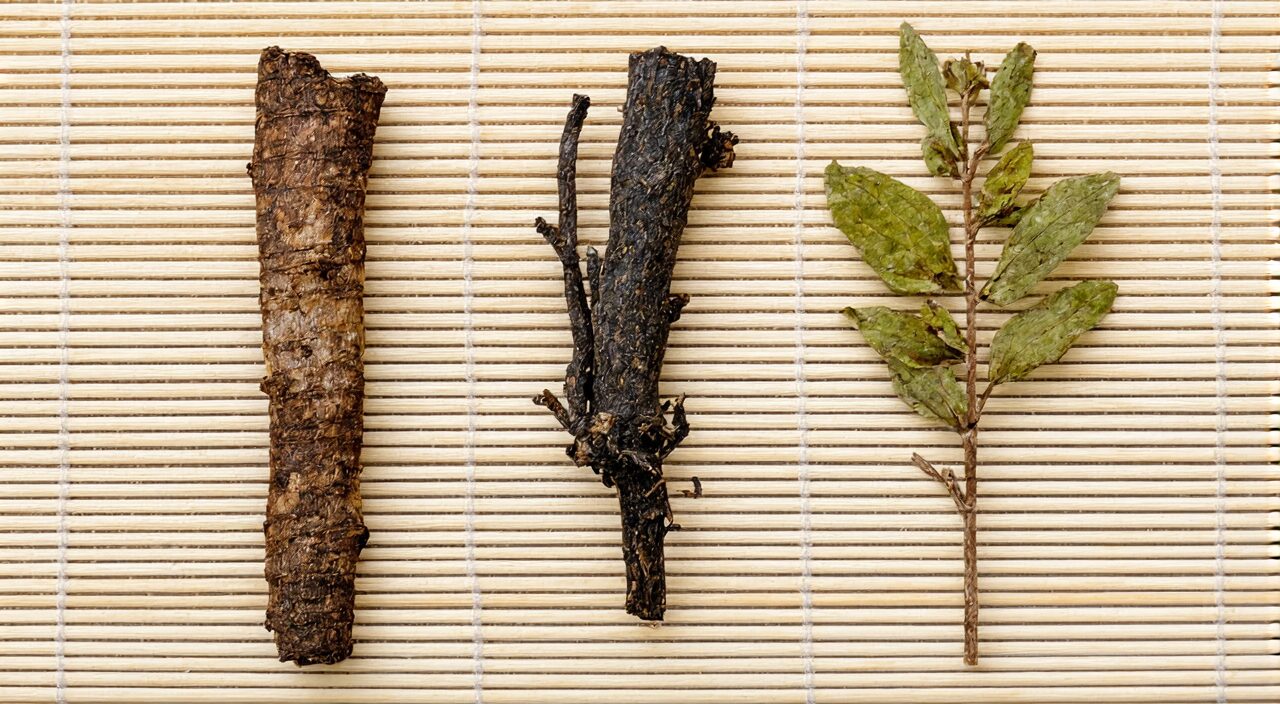
Fang Feng, Notopterygium, and Schizonepeta are all commonly used acrid-warm herbs that release the exterior; traditionally they are used for conditions related to wind pathogens, but their specific origins and application emphases differ.
In terms of botanical origin, Fang Feng is the root of Saposhnikovia divaricata (Apiaceae); Notopterygium is the rhizome and root of Notopterygium incisum or Notopterygium franchetii (Apiaceae); Schizonepeta is the aerial part or flower spike of Schizonepeta tenuifolia (Lamiaceae). Essentially, they are different plants.
In appearance, Fang Feng root is long conical with an “earthworm head” pattern at the crown; Notopterygium rhizome is cylindrical with a brownish-yellow surface, close nodes, and cinnabar dots on the cut surface; Schizonepeta usually consists of stems, leaves, and flower spikes, with square stems and opposite leaves, and has an aromatic odor. These three are quite different in appearance.
In terms of application emphasis, traditionally Fang Feng is considered relatively moistening and is commonly used for wind pathogens complicated by dampness, especially adept at dispelling wind in the upper and exterior levels. Notopterygium is acrid, warm, dry, and intense, excels at dispersing wind-cold-dampness, and is more suitable for conditions with obvious cold-dampness and pain, especially heavy pain in the upper body and occipital region. Schizonepeta tends to release the exterior and promote eruptions, and is more often used for skin surface issues and throat discomfort caused by wind pathogens; charred Schizonepeta also has a hemostatic direction. Therefore, although Fang Feng, Notopterygium, and Schizonepeta are all related to wind, their specific applications differ, and suitability must be judged based on individual conditions.
Which Formulas Use Fang Feng?
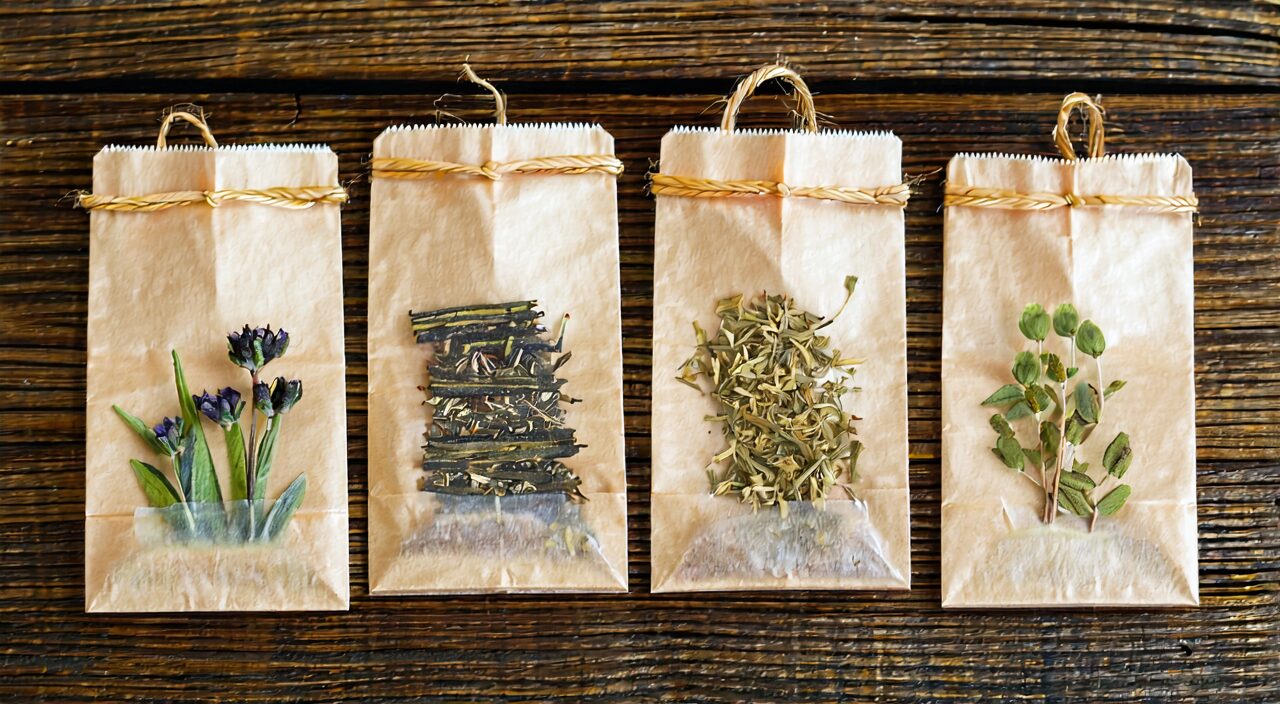
Fang Feng appears in many classic traditional formulas. Here we introduce four common directions.
Yupingfeng San (Jade Wind-Barrier Powder) consists of Astragalus (Huang Qi), Atractylodes macrocephala (Bai Zhu), and Fang Feng. This formula is traditionally often used for individuals with exterior deficiency and insecurity who easily and repeatedly contract wind pathogens. It aims to use Astragalus to boost qi and consolidate the exterior, Atractylodes to strengthen the spleen, and Fang Feng to dispel wind, thereby acting like a “wind barrier.” However, this is only a reference for regulating principles; whether it is suitable depends on individual constitution.
Fangfeng Tongsheng San (Saposhnikovia Sage-Inspired Powder) is one of the representative formulas for simultaneously releasing both exterior and interior. Its composition is relatively complex, containing Fang Feng, Schizonepeta, Forsythia, Ephedra (Ma Huang), Mint, Rhubarb (Da Huang), Mirabilite (Mang Xiao), and others. Traditionally it is used for cases with exterior pathogen and interior excess heat, manifesting as simultaneous chills and fever, red eyes, dry mouth, constipation, and scanty dark urine. When using it, it is especially necessary to differentiate patterns of cold, heat, deficiency, and excess; self-judgement is not recommended.
Chuanxiong Chatiao San (Ligusticum Tea-Blend Powder) mainly consists of Chuanxiong, Angelica dahurica (Bai Zhi), Notopterygium, Fang Feng, and Mint. Traditionally it is often used for persistent headache caused by external wind, especially migraines or vertex headaches that worsen after exposure to wind. In the formula, Fang Feng assists Notopterygium and Angelica dahurica in dispelling wind and relieving pain. However, headaches have many causes; if recurrent or severe, professional diagnosis should be sought first.
Tongxie Yaofang (Important Formula for Painful Diarrhea) is composed of Atractylodes, White Peony (Bai Shao), Tangerine Peel (Chen Pi), and Fang Feng. This formula is commonly used in TCM to regulate patterns of liver hyperactivity and spleen deficiency characterized by abdominal pain followed immediately by diarrhea, with pain reduced after bowel movement. The inclusion of Fang Feng is believed to spread the liver, soothe the spleen, raise the clear yang, and stop diarrhea. However, long-term or recurrent abdominal pain and diarrhea require ruling out other intestinal issues; one should not rely solely on the formula.
All these formulas should be used under the guidance of a professional; self-application is not recommended.
What Precautions Should Be Taken When Using Fang Feng?
Although Fang Feng is a widely used herb, it is not suitable for everyone. In traditional experience, those with yin deficiency and fire exuberance need to be especially cautious. If one often has dry mouth and throat, feverish palms and soles, night sweats, a red tongue with little coating, using the acrid-warm Fang Feng may further deplete yin fluids. Similarly, for spasms or convulsions caused by blood deficiency without external wind, using Fang Feng alone may not be appropriate, because Fang Feng mainly dispels wind and has a relatively weak blood-nourishing action.
Additionally, some individuals may experience allergic reactions to Fang Feng, manifesting as skin rashes, itching, respiratory discomfort, etc. When using related products for the first time, pay attention to body reactions; if discomfort occurs, discontinue promptly and consult a professional. If you are already taking other medications or are in a special physiological stage, it is even more important to seek professional advice first.
Fang Feng commonly appears in various formulas and health regulation concepts, but whether it is specifically suitable must be judged based on individual constitution, symptom presentation, and product instructions; do not use it blindly over a long period.
Summary
As a traditional Chinese medicinal material, Fang Feng uses the dried root. Because of its unique appearance and its actions of dispelling wind, overcoming dampness, and relieving pain, it is used in many formulas. Although Fang Feng, Notopterygium, and Schizonepeta are all related to wind pathogens, they differ in origin, characteristics, and emphasis. Understanding these differences helps to better comprehend traditional medication principles. Due to the acrid-warm nature of Fang Feng, special attention should be paid to whether one’s constitution tends toward yin deficiency or blood deficiency, and professional advice should be sought when necessary. This article is for scientific reference only and cannot replace professional pattern differentiation and treatment.