
What is Astragalus? Medicinal Parts, Identification, and Common Formulas
Astragalus (Huang Qi) is a medicinal herb that appears very frequently in traditional Chinese medicine (TCM) formulas, and anyone who has come across Eastern traditional medicine would notice its name. It is not some mysterious, rare plant; rather, it comes from the dried root of the legume plants Astragalus mongholicus or Astragalus membranaceus. Because its root is yellow, there is an old saying: “Qi means senior; Huang Qi is yellow and is the chief of tonic herbs,” hence the name Huang Qi (meaning “yellow leader” in Chinese).
For those who wish to understand Chinese herbs from a fundamental level, getting clear on what astragalus looks like, which part is used, how its actions are traditionally understood, and how it differs from the easily confused codonopsis (Dang Shen) will be a very helpful starting point.
What Does Astragalus Look Like? How to Identify It?
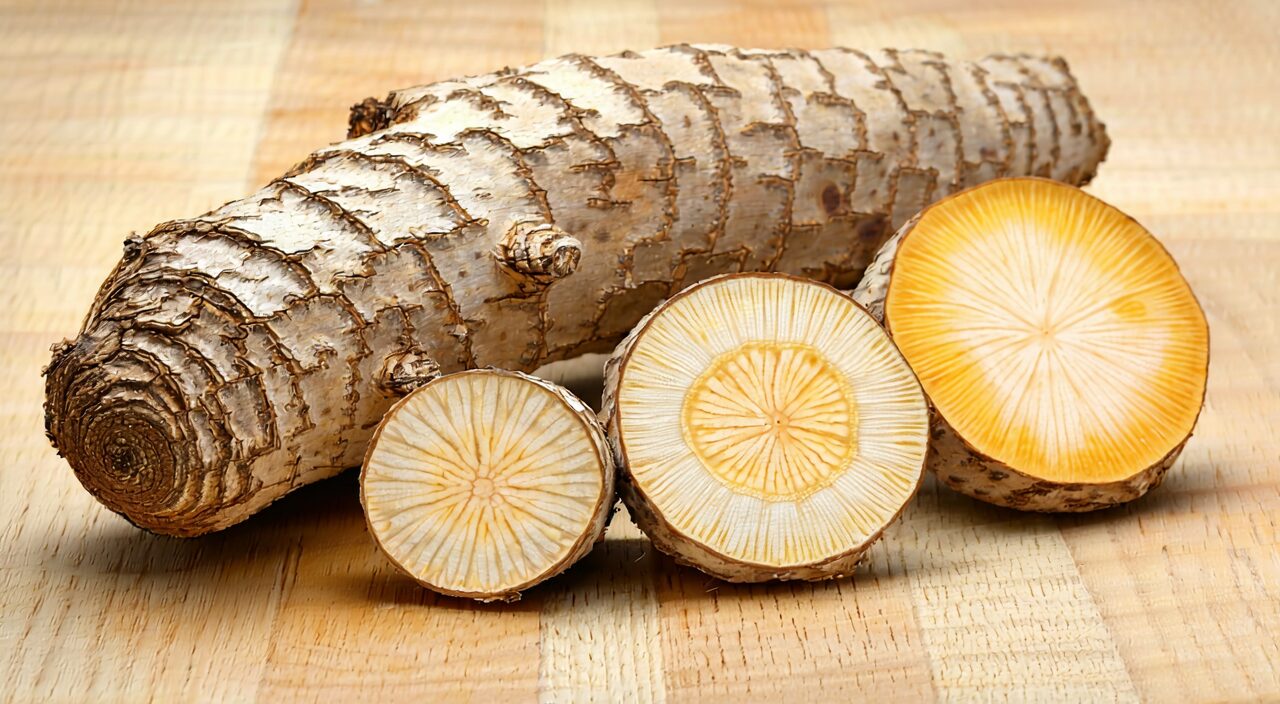
Whether you encounter astragalus at a herbal market or through compliant channels, mastering some basic identification points can help reduce the chance of misidentification.
Overall Appearance of the Root
- Astragalus root is cylindrical, sometimes with slightly visible branches on the surface, generally 30–90 cm in length and 1–3.5 cm in diameter.
- The surface is mostly pale brownish-yellow or pale brownish-brown, with irregular longitudinal wrinkles, transverse lenticels, and traces of broken rootlets.
- According to traditional experience, good-quality astragalus roots tend to be relatively thick and long, with fewer wrinkles, a firm texture, and ample powdery quality.
Cross-Section Texture and Quality
Astragalus has a hard and tough texture that is not easily broken; this is one of the characteristics that distinguish it from some root herbs that snap readily.
After breaking, the fracture surface is highly fibrous; the bark is yellowish-white, while the wood is pale yellow, and radial striations and cracks can be seen. In cut decoction pieces, the surface is smooth, with a slightly darker cambium ring at the center. Sometimes a yellow-white alternating pattern resembling a “golden cup and silver plate” is visible, a detail often noted in traditional identification.
Aroma and Taste Characteristics
Astragalus has a relatively mild smell and does not give off a strong aroma. When chewed, it has a slight sweetness accompanied by a bean-like, leguminous odor. This distinctive bean-like smell is one of the more recognizable sensory features of astragalus.
What Is the Medicinal Part of Astragalus?
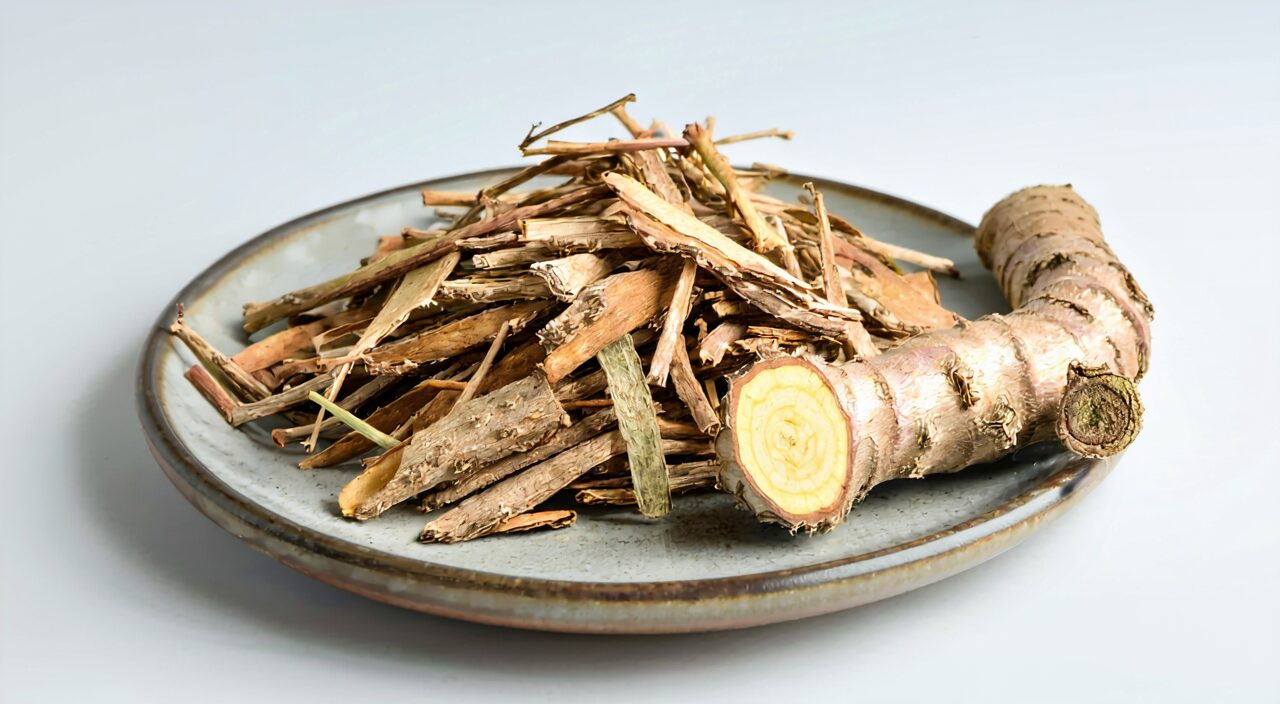
The medicinal part of astragalus is its root; there is no dispute about this.
The harvesting and processing steps are roughly as follows:
- Harvesting is generally done in spring and autumn, with autumn-harvested roots being of better quality.
- After digging, soil, fibrous roots, and the root head are removed.
- The roots are then sun-dried or cut into thick slices and dried, yielding the common astragalus decoction pieces.
Depending on the intended use, it can also be stir-fried with honey to prepare honey-fried astragalus (Mi Zhi Huang Qi), which is traditionally considered to be more inclined toward supplementing the center and boosting Qi.
How Is Astragalus Understood in Traditional Chinese Medicine?
In the framework of traditional Chinese medicine, astragalus is categorized as a “Qi-tonifying herb.” Its nature and flavor are mostly recorded as sweet and slightly warm, and it primarily enters the Spleen and Lung meridians. Centered around this core function of tonifying Qi, several important application directions have been developed, but these are summaries of ancient understanding, not a promise of treatment.
Tonifying Qi and Raising Yang
Traditionally, it is used for fatigue, lack of appetite, and loose stools caused by Spleen Qi deficiency. It is also often used in the management of prolonged diarrhea with rectal prolapse, gastropoptosis, and other conditions related to sinking of middle Qi. However, this does not mean that astragalus alone can resolve these conditions; it is simply a common choice in ancient formula composition.
Stabilizing the Exterior and Arresting Sweating
For those with deficient exterior instability who tend to sweat spontaneously, ancient practitioners often added astragalus to formulas, hoping that by supplementing the Qi of the Lungs and Spleen, the exterior would be fortified. Yu Ping Feng San (Jade Wind-Barrier Powder) is a classic example.
Promoting Urination to Reduce Edema and Expelling Toxins to Generate Flesh
For edema caused by Qi deficiency failing to promote fluid metabolism, or for sores and ulcers that are slow to rupture or close, certain traditional formulas use astragalus as an adjuvant. These approaches are based on holistic pattern differentiation and do not equate to astragalus alone being able to produce such effects.
What Components and Effects of Astragalus Are Modern Research Focusing On?
Modern scientific research on astragalus mostly focuses on astragalus polysaccharides, astragaloside IV (astragalus saponin IV), and various flavonoids.
Some laboratory studies and preliminary animal experiments suggest that astragalus polysaccharides may have some effect on immune regulation, and explorations of astragaloside IV in cardiovascular protection and anti-fatigue have also been reported from time to time. However, it is necessary to view this soberly: most of these studies are still at the experimental stage, and there is a considerable gap between these findings and actual effects in the human body.
Therefore, many current discussions about astragalus’s components are better suited as general popular science knowledge and should not be directly equated with clinical evidence, nor should they be interpreted as “astragalus has a certain proven efficacy.”
What Are the Differences Between Astragalus and Codonopsis (Dang Shen)?
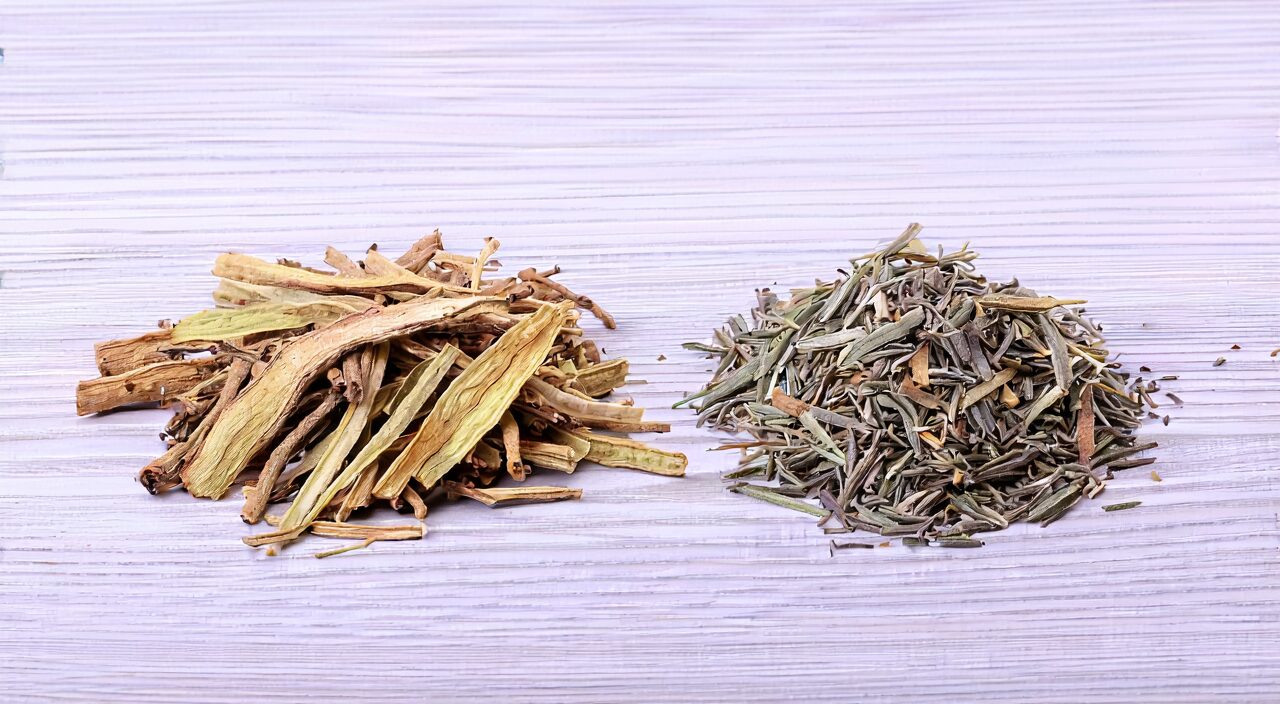
Because astragalus and codonopsis are often mentioned together when talking about “tonifying Qi,” many newcomers to Chinese herbs easily confuse the two. In fact, they differ markedly in plant origin, appearance, and traditional usage emphasis.
| Comparison Dimension | Astragalus (Huang Qi) | Codonopsis (Dang Shen) |
|---|---|---|
| Plant Source | Root of the legume plants Astragalus mongholicus or Astragalus membranaceus | Root of the Campanulaceae plants Codonopsis pilosula, Codonopsis pilosula var. modesta, or Codonopsis tangshen |
| Appearance | Roots are relatively long and thick; surface pale brownish-yellow; fracture surface highly fibrous | Roots relatively short and small; surface yellowish-brown to grayish-brown; root head has wart-like protrusions resembling a “lion’s head”; fracture texture relatively moist and smooth |
| Smell and Taste | Slightly sweet taste with a distinct bean-like odor | Sweeter taste when chewed, generally without bean-like odor |
| Traditional Application Focus | Leans toward tonifying Qi and raising Yang, stabilizing the exterior, and promoting urination | Focuses on supplementing the center and boosting Qi, strengthening the Spleen and Lung; its nature is more gentle |
In ancient formulas, astragalus and codonopsis are sometimes used together, and sometimes they are substituted for each other, but the prerequisite is always to weigh the decision based on individual constitution and specific syndrome patterns. Direct self-substitution is not appropriate.
Which Formulas Use Astragalus?
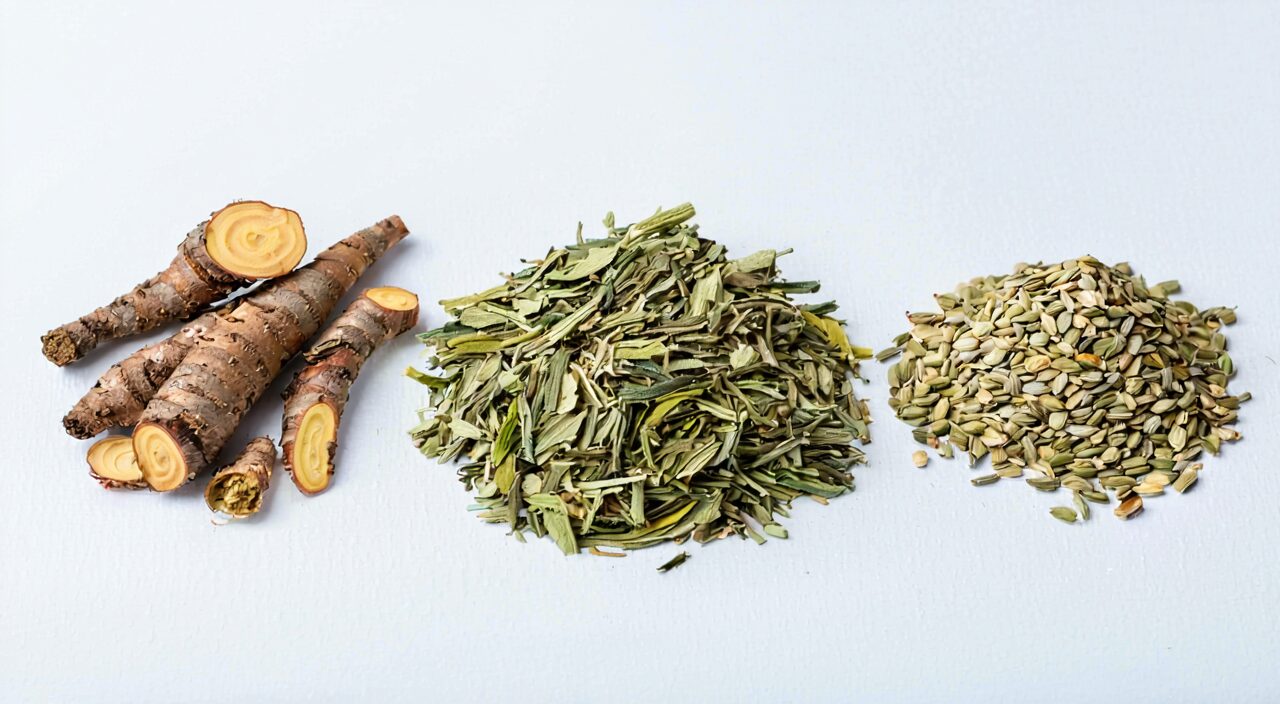
Astragalus plays an important role in many classic formulas. The following are a few common examples, not intended as a recommendation for use, but to help understand the possible thinking behind its inclusion in formulas.
Yu Ping Feng San (Jade Wind-Barrier Powder)
This formula consists of astragalus, atractylodes (Bai Zhu), and saposhnikovia (Fang Feng). Traditionally, astragalus here serves as the chief herb to boost Qi and stabilize the exterior, atractylodes assists in strengthening the Spleen, and saposhnikovia disperses wind from the exterior. Together, the three herbs construct an approach that addresses both tonifying Qi and guarding against wind pathogens.
People who are prone to recurrent colds and sweat easily on exertion are sometimes advised to explore the direction of Yu Ping Feng San, but whether it is specifically suitable must be determined in light of individual conditions and professional advice.
Bu Zhong Yi Qi Tang (Center-Supplementing and Qi-Boosting Decoction)
In Bu Zhong Yi Qi Tang, astragalus is used together with ginseng (or codonopsis), atractylodes, cimicifuga (Sheng Ma), bupleurum (Chai Hu), and others, making it one of the representative formulas for the “tonify Qi and raise Yang” approach. Astragalus is used in a relatively large dosage here, aiming to supplement the Qi of the Spleen and Lungs. Combined with the ascending and lifting actions of cimicifuga and bupleurum, it addresses patterns of sinking of middle Qi and Qi-deficiency fever.
Traditionally, this formula is often discussed for conditions such as fatigue and organ prolapse, but it absolutely must not be self-prescribed.
Dang Gui Bu Xue Tang (Angelica Blood-Supplementing Decoction)
This formula is somewhat special: the ratio of astragalus to Chinese angelica (Dang Gui) is typically 5:1, with the dosage of astragalus far exceeding that of angelica. Its conceptual basis is to generate blood by greatly tonifying Spleen Qi, rather than relying solely on blood-tonifying herbs themselves.
Within the traditional understanding of dual deficiency of Qi and blood, sallow complexion, and fatigue, Dang Gui Bu Xue Tang serves as a formula example for reference, but strict pattern differentiation is required in practical application.
Fang Ji Huang Qi Tang (Stephania and Astragalus Decoction)
Fang Ji Huang Qi Tang contains astragalus, stephania (Fang Ji), atractylodes, licorice, and others, with fresh ginger and jujube often added as adjuvants during decoction. The formula’s approach is to boost Qi, dispel wind, strengthen the Spleen, and promote urination. Traditionally, it is used for wind-water or wind-dampness patterns with concurrent Qi deficiency, manifesting as heaviness of the limbs, sweating with aversion to wind, and inhibited urination.
Its focus differs from the formulas above, showing that astragalus’s role in a formula can be flexibly adjusted according to the combination of herbs.
What Precautions Should Be Taken When Using Astragalus?
Although astragalus is a commonly used herb, it does not mean that anyone can use it casually without any consideration. From the perspective of traditional experience, special attention should be paid to the following situations.
- Yin deficiency with hyperactive Yang constitution: For those who commonly have heat in the palms and soles, dry mouth and throat, tidal fever, and night sweats, using astragalus alone may not be suitable, because its sweet and warm nature can sometimes aggravate internal heat.
- Exterior excess with exuberant pathogens stage: At the early stage of a cold with pronounced aversion to cold, fever, absence of sweating, and generalized aches, tradition does not recommend using astragalus alone, fearing it may “trap the pathogen inside,” preventing the external evil from being expelled.
- Internal accumulation or intense heat toxin: Abdominal distension and pain that worsens with pressure, or early-stage abscesses with redness, swelling, heat, and pain, are not within the routine indication range for astragalus.
- Dosage and adverse reactions: For personal home conditioning, the dosage is usually not large, but if used for special purposes, it must be determined by an experienced practitioner. If persistent discomfort occurs, especially with chest tightness, palpitations, abnormal breathing, severe abdominal pain, black stools, or unexplained weight loss, one should not merely remain at the level of self-administering astragalus products but should promptly consult a doctor or a professional.
Summary
As a traditional Chinese medicinal material used for its root, astragalus has relatively clear identifiable characteristics in appearance, texture, and smell. TCM generally understands its traditional uses from the perspectives of tonifying Qi and raising Yang, stabilizing the exterior to stop sweating, and promoting urination to reduce edema, while modern research explores its components, with a gap remaining before its clinical effects can be fully substantiated.
Although both astragalus and codonopsis are common herbs used in a Qi-tonifying direction, they differ in source, appearance, and emphasis of use. In classic formulas such as Yu Ping Feng San, Bu Zhong Yi Qi Tang, Dang Gui Bu Xue Tang, and Fang Ji Huang Qi Tang, astragalus plays different roles in the formula, demonstrating the versatility of this herb in traditional formula design.
Understanding this information is solely to help readers establish a relatively comprehensive basic understanding of astragalus. Whether it is suitable as a direction for adjustment in practice must be determined through a combination of individual constitution, symptoms, and professional advice. This article cannot substitute any form of diagnosis or treatment recommendation.