
What is Chrysanthemum? Medicinal Parts, Identification Methods and Common Formula Introductions
Chrysanthemum is very common in daily health preservation, but terms like “Hang Ju,” “Gong Ju,” and “Tai Ju” on the market often cause confusion. This article will discuss its visual identification, medicinal parts, traditional Chinese medicine understanding, differences between commercial specifications, and common formulas that include chrysanthemum, helping you gain a more comprehensive understanding of this traditional herb.
What Does Chrysanthemum Look Like? How to Identify It?
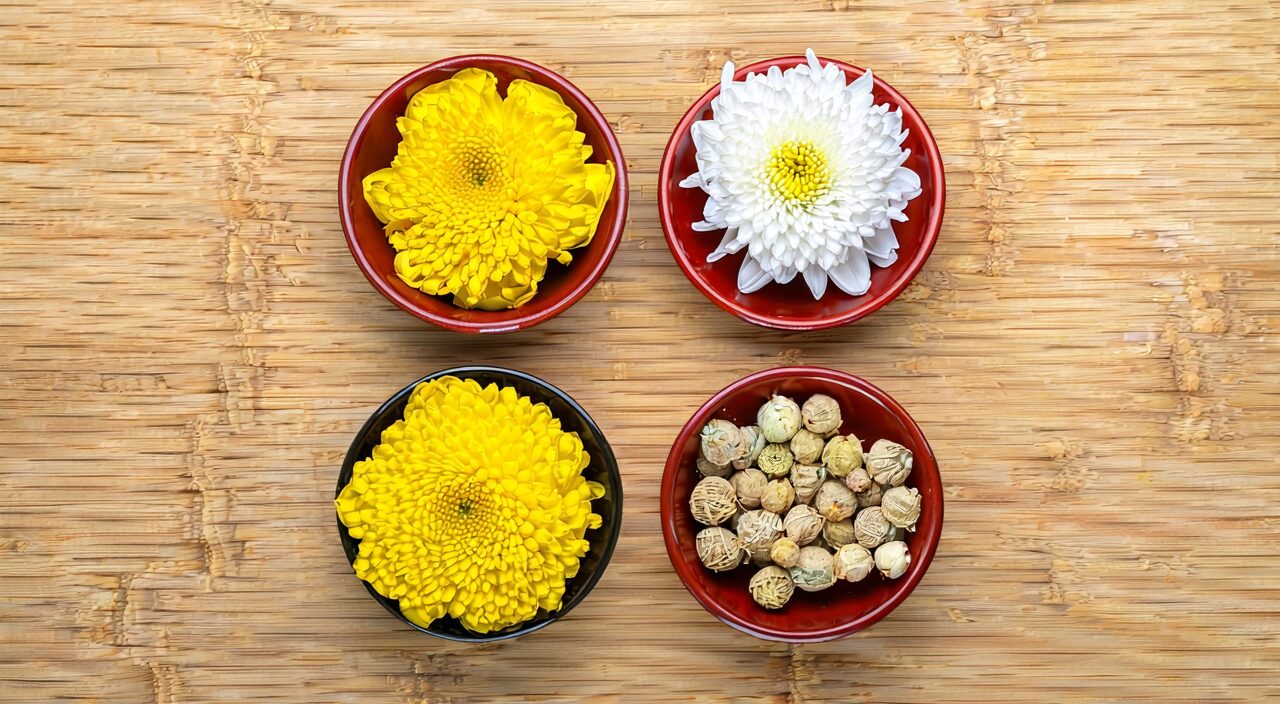
Medicinal chrysanthemum comes from the dried capitulum of Chrysanthemum morifolium, a plant in the Asteraceae family. Its appearance shows typical Asteraceae characteristics. The whole inflorescence is flattened globular, disc-shaped, or irregularly globular, generally 1.5–4 cm in diameter. The involucre consists of several layers of bracts, green or yellowish-green and covered with soft hairs. The outer part is made up of numerous ray florets; the ligules are mostly flat, spreading, or slightly curled, commonly white, pale yellow, or yellow, varying slightly by cultivar and processing method. The center is densely packed with disk florets; the corolla is yellow and has five small teeth at the apex.
Different commercial specifications have their own morphological and color characteristics. For example, Hang Ju is mostly disc-shaped or flattened globular, with wider ray florets that tend to be yellow or white; Gong Ju is often flattened globular, with thinner, longer ray florets that are mostly white; Tai Ju is harvested and dried while still in the bud stage, so the shape is more compact, the color tends to be yellowish-green or pale yellow, and the aroma is fresher and stronger. Based on traditional experience, specimens with a clear fragrance and a sweet, slightly bitter taste are generally considered good quality. Noticeable moldy or sour odors, or a darkened color, may indicate storage or quality issues.
What Is the Medicinal Part of Chrysanthemum?
The part used in medicine is precisely the dried capitulum. Harvesting generally takes place in late autumn when the flowers have reached a certain degree of opening, and it is done in batches to ensure proper maturity. After harvesting, the capitulum needs to be dried promptly. Common methods include shade drying, sun drying, gentle fire drying, or steaming followed by sun drying. Different processing methods affect the color, aroma, and taste of the finished product.
Among them, Tai Ju is harvested when the buds have not yet fully opened and is processed by baking or other methods, resulting in a more compact shape with petals held tightly together. Traditionally, it is considered to have a stronger qi and taste. Regardless of the commercial form, knowing its origin and harvesting and processing methods helps in making more rational selection and use.
How Does Traditional Chinese Medicine Understand Chrysanthemum?
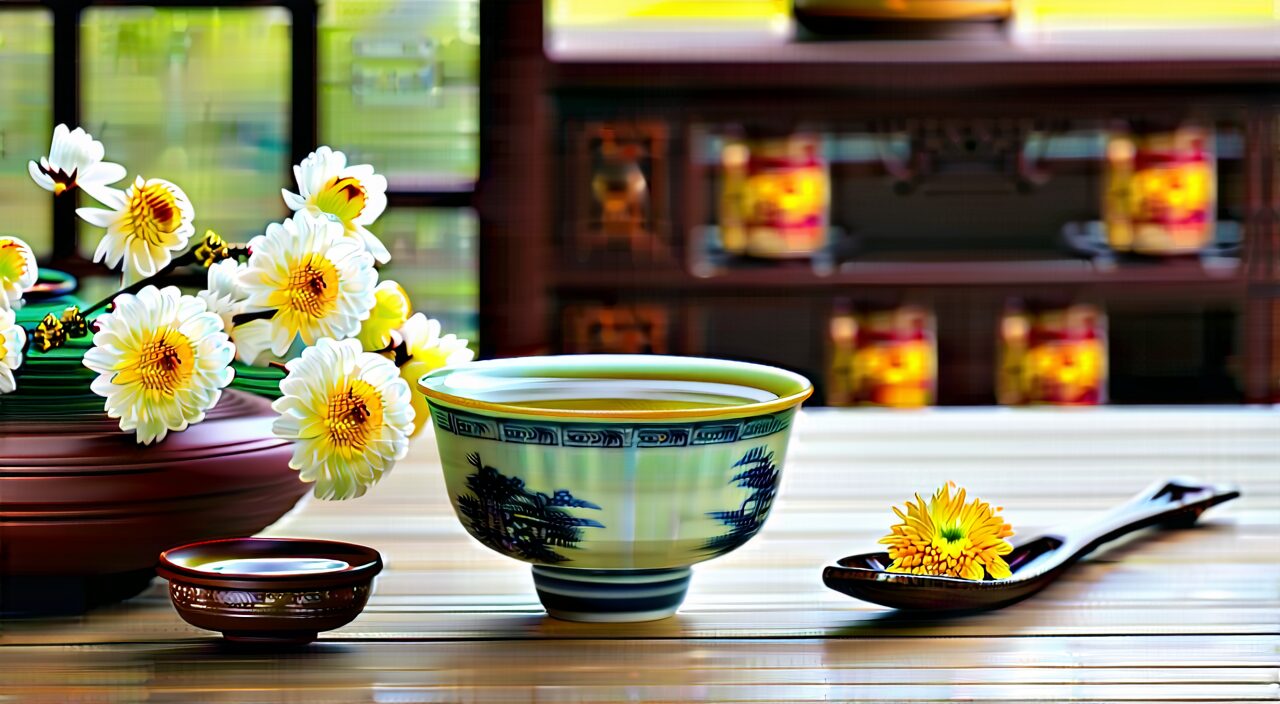
In traditional Chinese medicine theory, chrysanthemum is sweet and bitter in flavor, slightly cold in nature, and mainly enters the Lung and Liver meridians. Its actions are generally understood from the following perspectives:
- Disperses wind-heat: For the mild fever, dry throat, and cough often seen in the early stages of externally contracted wind-heat, chrysanthemum is traditionally considered, with the yellow variety used more often in this context.
- Subdues liver yang: When there is distending headache, dizziness, or facial flushing due to hyperactivity of liver yang, chrysanthemum is often included as one of the herbs in the management strategy, and the white variety is used more for this purpose.
- Clears the liver and brightens the eyes: Chrysanthemum has a long history of use for various eye discomforts, especially for redness, dryness, and blurred vision caused by liver fire flaring up or liver-kidney yin deficiency. It often appears in combinations.
- Clears heat and resolves toxicity: Chrysanthemum is also commonly used for skin problems caused by heat toxins such as sores and swellings. Wild chrysanthemum leans more toward this direction and is often used externally or for short-term use.
It should be noted that this understanding comes from accumulated classical experience and theoretical synthesis. In real-world application, it must be tailored to individual constitution and specific symptoms, and cannot be generalized simplistically.
Preliminary Modern Research on Chrysanthemum
Modern compositional studies show that chrysanthemum contains flavonoids, volatile oils, organic acids, polysaccharides, and other constituents. Some in vitro or animal studies suggest that certain flavonoids in chrysanthemum may have antioxidant activities and reduce the release of inflammatory mediators, while the volatile oil fraction has shown some effect in experiments inhibiting certain bacteria or fungi. However, these basic studies cannot be directly equated with clinical effects in humans and can only serve as a supplementary reference for understanding traditional uses.
What Are the Differences Between Hang Ju, Gong Ju, and Wild Chrysanthemum?
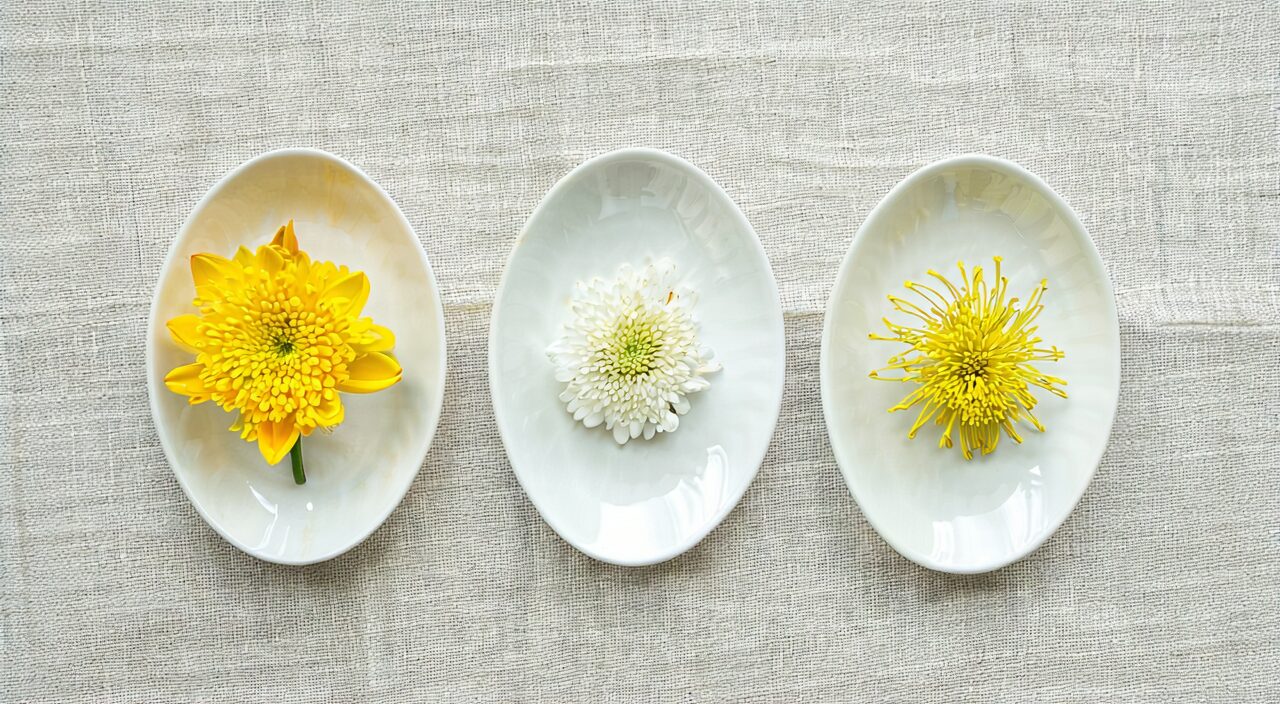
Hang Ju, Gong Ju, and wild chrysanthemum are several common chrysanthemum products, differing in plant origin, appearance, and traditional use emphasis.
- Hang Ju: Mainly produced in the Tongxiang area of Zhejiang. There are yellow and white types based on color. The yellow type is often used to disperse wind-heat, while the white type tends to subdue liver yang and brighten the eyes, and is also widely used in daily tea.
- Gong Ju: Named from its historical tribute background, the main production area is around Huangshan in Anhui. The ray florets are mostly white, and the taste is relatively sweet and mild. Traditionally, it is often used for eye care and combined with goji berries.
- Wild chrysanthemum: Derived from Chrysanthemum indicum, with the dried capitulum also used medicinally, but the flowers are smaller, mostly yellow, with a more bitter and acrid taste and a colder nature. Its heat-clearing and toxin-resolving action is stronger, and it is generally used for skin boils or sore, swollen throat. When taken internally, the dosage is smaller, and it is not suitable for long-term use.
Understanding these differences helps in choosing a suitable direction based on one’s own circumstances, but individual variation is considerable; consulting a professional when necessary is recommended.
Which Formulas Use Chrysanthemum?
Throughout history, chrysanthemum has often been used in combination with other medicinals in formulas to address different bodily conditions. Below are a few common traditional formulas, shared only as knowledge and not implying they are suitable for everyone. Professional pattern differentiation is required before use.
- Sang Ju Yin: Originating from Wen Bing Tiao Bian, this formula mainly consists of mulberry leaf, chrysanthemum, apricot kernel, and forsythia. It is commonly used for early-stage externally contracted wind-heat, cough, and slight fever, with chrysanthemum primarily acting to disperse wind-heat.
- Qi Ju Di Huang Wan: Composed of Liu Wei Di Huang Wan plus goji berries and chrysanthemum, it is traditionally used for patterns of liver-kidney yin deficiency with blurred vision, dry eyes, and photophobia. It is a classic combination that both nourishes and gently clears.
- Ling Jiao Gou Teng Tang: Contains antelope horn, gambir stem, chrysanthemum, and rehmannia root, among others. It is often used for more severe conditions like headache, dizziness, or even convulsions due to exuberant heat in the liver meridian stirring liver wind. Chrysanthemum in this formula aims to subdue liver heat.
- Ju Hua Cha Tiao San: Mainly includes chrysanthemum, ligusticum wallichii, angelica dahurica, and asarum. Traditionally used in strategies for wind-induced headache and migraine, employing a combination method of dispelling wind and stopping pain.
The above formulas each have their own directions of application and contraindicated populations. Do not prepare these formulas on your own based on the list. If you have similar health concerns, it is advisable to first obtain an accurate assessment from a Chinese medicine practitioner before deciding whether to use them.
What Should Be Noted When Using Chrysanthemum?
Although chrysanthemum is common, it is not suitable for everyone. The following points are worth noting:
- Allergy: Some people may be allergic to Asteraceae plants. When using for the first time, try a small amount. If a rash, itching, or other discomfort occurs, discontinue use.
- Spleen-stomach deficiency cold: Chrysanthemum is slightly cold in nature. For those who usually have loose stools, cold abdominal pain, poor appetite, and aversion to cold, large doses or long-term single use is not advisable, as it may worsen the discomfort.
- Avoid long-term strong steeping: Long-term excessive consumption of very hot, strongly steeped chrysanthemum tea may cause persistent irritation to the esophageal mucosa. It is advisable to use moderate amounts and not to use strong chrysanthemum tea as the sole daily fluid source.
- Special notes for wild chrysanthemum: Wild chrysanthemum has a stronger bitter-cold nature and is generally not used as a routine health supplement for the long term. It is even less suitable for those with spleen-stomach deficiency to try on their own.
- Source and contamination: When choosing chrysanthemum, pay attention to products with clear origin, free of mold and pesticide residues. Be especially cautious with loose chrysanthemum sold through informal channels.
If discomfort occurs during use, or if the original symptoms persist without relief, promptly consult a doctor or healthcare professional without delay.
Summary
Chrysanthemum is a traditional herb with a long history of use. Its medicinal parts, visual identification, and commercial specifications all follow relatively clear clues. Traditional Chinese medicine mainly understands chrysanthemum’s actions in terms of dispersing wind-heat, subduing liver yang, and brightening the eyes, and it is often used in combinations matched to different constitutions and presentations. Hang Ju, Gong Ju, and wild chrysanthemum each have their own emphasis in origin and traditional use. Understanding these differences helps in making more reasonable choices, but individual suitability, dosage, and source quality still need attention. This article is for knowledge reference only and cannot replace professional TCM pattern differentiation or medical advice. If persistent discomfort occurs, be sure to seek formal medical help.