
What Is Gentian Root? Medicinal Parts, Identification, and Common Formulas
Gentian root is a very common heat-clearing medicinal in Chinese medicine, but for those unfamiliar with the appearance of herbs, it can be confusing at first: which part of the plant does it come from, and how to distinguish it from similar medicinal materials like Qin Jiao or Huang Lian? This article focuses on the origin, visual identification, medicinal parts, traditional understanding, and common formulas containing gentian root, aiming to establish a basic framework for understanding.
What Does Gentian Root Look Like? How to Identify It?
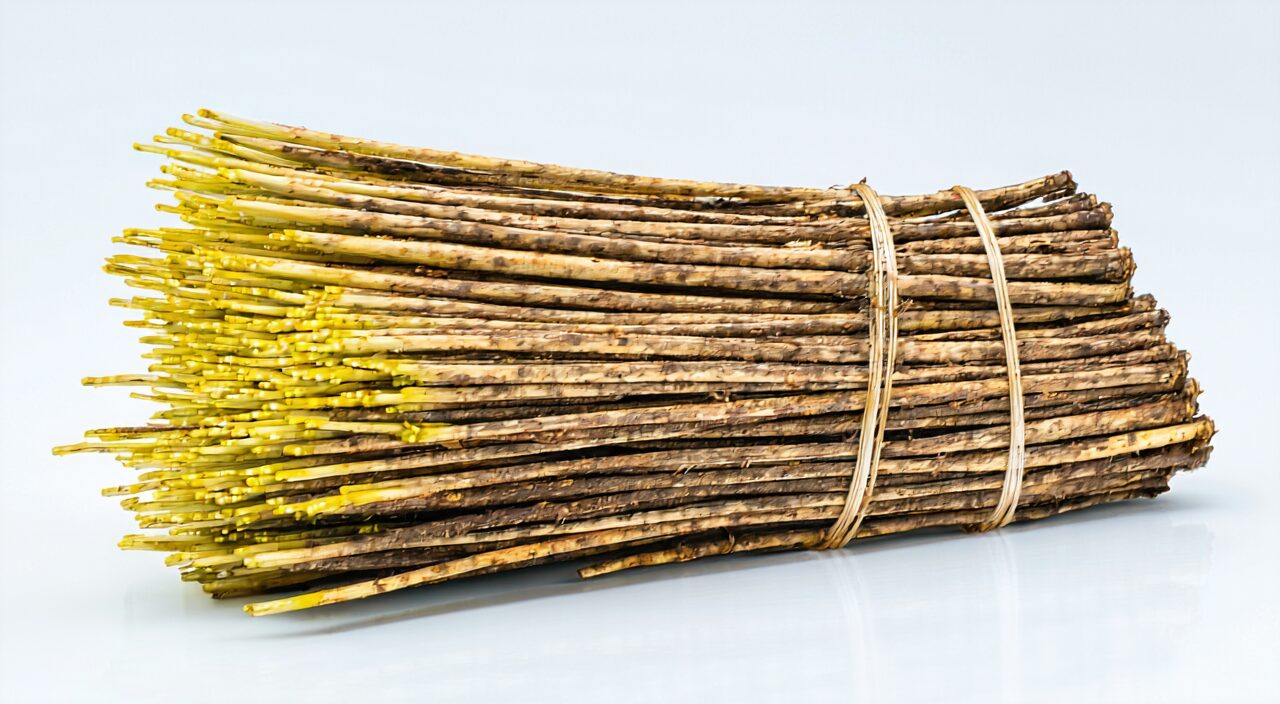
The typical feature of the medicinal gentian root is a short rhizome in an irregular nodular shape, with dozens of slender roots clustered below. These roots are mostly cylindrical, slightly curved, and some can reach over ten centimeters in length. The surface is yellowish-brown or grayish-brown with relatively distinct longitudinal wrinkles. The texture is brittle; when broken, the cross-section is fairly flat, the bark part yellowish-white or light yellowish-brown, and the wood part slightly lighter in color.
The most prominent distinguishing point is the taste. Take a small piece of the dried root or sliced preparation and chew it in the mouth; an intensely bitter taste spreads rapidly and lingers for a long time. This strong bitterness is highly valued in empirical identification and is often used to distinguish it from other root medicines with similar shapes. Additionally, gentian root tends to absorb moisture and become soft, so it should be kept dry during storage.
What Is the Medicinal Part of Gentian Root?
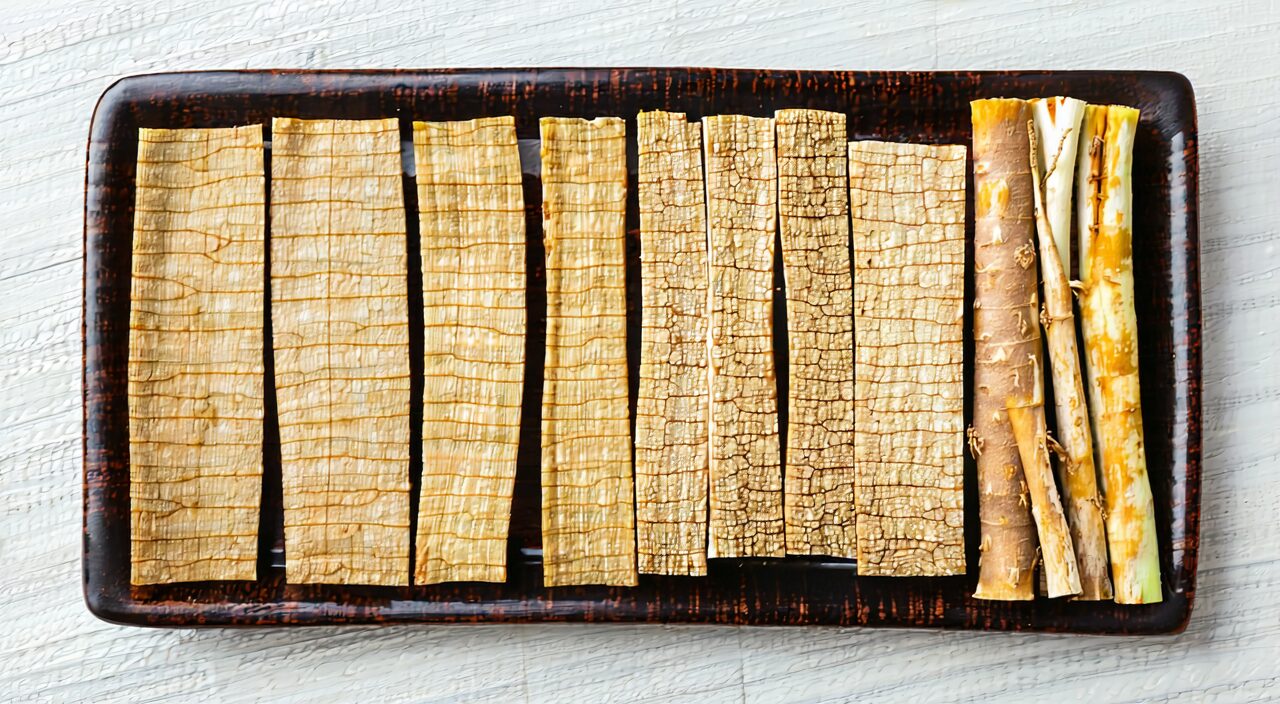
The medicinal part of gentian root is clearly defined: it is the dried root and rhizome of Gentianaceae plants, specifically Gentiana scabra, Gentiana manshurica, Gentiana triflora, or Gentiana rigescens. The first three are customarily collectively referred to as “Long Dan” (gentian), and the latter is habitually called “Jian Long Dan” (rigescent gentian). The aerial parts—stems and leaves—are not used as gentian root.
Harvesting is mostly done in autumn when the above-ground parts have largely withered, and the root and rhizome have accumulated relatively sufficient substances. After harvesting, the stems, leaves, and mud are removed, and the roots are dried directly in the sun or cut into sections while fresh before drying, forming the common sliced preparation. When processing and purchasing, paying attention to whether the part is root and rhizome helps obtain a medicinal material that conforms to traditional usage habits.
How Does Traditional Chinese Medicine Understand Gentian Root?
Traditional Chinese medicine generally considers gentian root to be bitter in flavor and cold in nature, entering the liver and gallbladder meridians. Its actions are mainly understood around clearing heat, drying dampness, and draining liver and gallbladder fire.
In historical usage, it has been more often considered for conditions caused by excess fire in the liver and gallbladder or predominant liver and gallbladder damp-heat. Examples include distending headache, red eyes, bitter taste in the mouth, and distension and pain in the hypochondriac region caused by liver fire flaring upward, as well as jaundice, eczema with itching, thick yellowish vaginal discharge, and painful turbid urination caused by damp-heat pouring downward or damp-heat accumulation. However, gentian root is rarely used alone; clinically it is usually combined with other medicinal herbs, playing a role of clearing, draining, and guiding within compound formulas. Whether to use it and how much requires first distinguishing deficiency from excess and cold from heat. Situations like yin deficiency with vigorous fire or deficiency fire floating upward are usually not suitable for such intensely bitter and cold herbs like gentian root.
What Has Modern Research Discovered?
Modern research on gentian root mainly focuses on iridoid compounds such as gentiopicroside and swertiamarin. Some in vitro experiments and animal studies suggest that these components may possess certain hepatoprotective, anti-inflammatory, and antioxidant activities, and studies have also explored their effects on the secretion of digestive fluids.
However, such research is currently mostly at the laboratory stage and still has a long way to go before reflecting the complex internal environment of the human body; it cannot yet be directly equated with clinical efficacy. Therefore, these findings can serve as one direction for understanding gentian root, but they are not recommended as a guide for self-medication.
What Are the Differences Between Gentian Root, Qin Jiao, and Huang Lian?
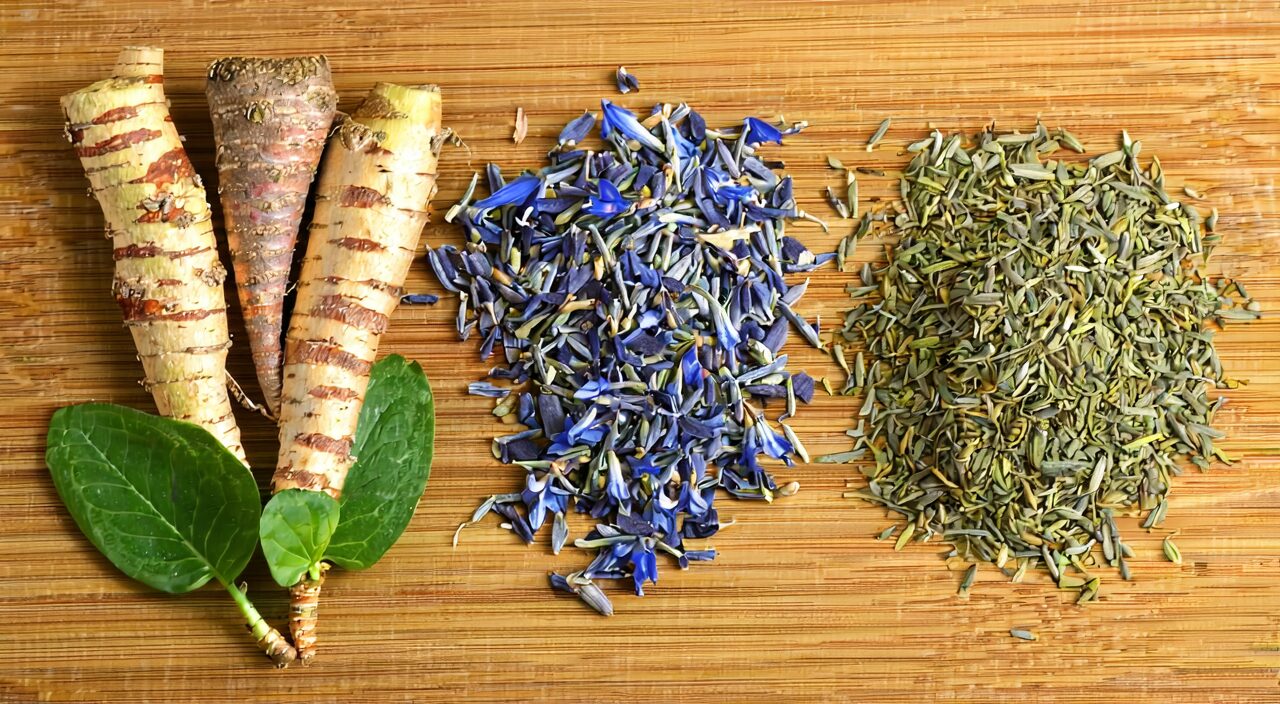
Although all three are bitter and cold in nature and commonly used in directions related to clearing heat and drying dampness, their origins, appearances, and traditional application emphases differ markedly.
Qin Jiao (Gentiana macrophylla root) also comes from the Gentianaceae family, and its medicinal part is also the root, but the surface is mostly yellowish-brown or grayish-yellow with obvious leftward-twisting longitudinal grooves. Traditionally, it leans more toward dispelling wind-dampness, relieving painful obstruction, and abating deficiency heat, often used for wind-damp painful obstruction and bone-steaming tidal fever. Huang Lian (Coptis rhizome) comes from plants of the Ranunculaceae family; its medicinal part is the rhizome. The bark part of the cut surface is orange-yellow or reddish-yellow, the odor is slight, and the taste is extremely bitter. Its emphasis is on clearing heart and stomach fire, drying dampness, and resolving toxins, often used for stomach-fire toothache, damp-heat diarrhea, and dysentery. Gentian root specifically enters the liver and gallbladder; draining liver and gallbladder excess fire and damp-heat is its outstanding distinguishing point.
In terms of medicinal material appearance, gentian root is mostly slender, fibrous root-like strips; Qin Jiao has thicker, longer, and distinctly twisted roots; Huang Lian appears as irregular rhizome chunks, all easily distinguishable. These differences can help in making preliminary judgments when choosing and learning about them.
Which Formulas Use Gentian Root?
Most classic formulas containing gentian root are designed around clearing and draining liver and gallbladder excess fire or damp-heat.
Long Dan Xie Gan Tang (Gentian Liver-Draining Decoction) is the most representative one, commonly including ingredients such as gentian root, Huang Qin (Scutellaria root), Zhi Zi (Gardenia fruit), Ze Xie (Alisma rhizome), Mu Tong (Akebia stem), Che Qian Zi (Plantain seed), Dang Gui (Angelica root), Sheng Di Huang (Rehmannia root), Chai Hu (Bupleurum root), and Gan Cao (Licorice root). It is traditionally used for conditions of liver and gallbladder excess fire flaring upward or liver and gallbladder damp-heat pouring downward. Dang Gui Long Hui Wan (Angelica and Gentian Pill) adds ingredients such as Huang Lian, Huang Bai, and Da Huang to the gentian root base, making the heat-clearing effect stronger, and was historically used for conditions like excess heat accumulation, constipation, and restlessness. Xie Qing Wan (Green-Draining Pill) emphasizes clearing and draining liver fire internal depression, documented for irritability, red eyes, and swelling and pain. Chai Hu Qing Gan Tang (Bupleurum Liver-Clearing Decoction) simultaneously attends to dispersing wind-heat while clearing the liver and gallbladder, often used for liver and gallbladder wind-heat-related manifestations.
Although these formulas have rich historical records, they are not suitable for everyone. Different formulas correspond to different patterns of deficiency, excess, cold, and heat, as well as specific presentations. In actual use, they must be applied based on pattern differentiation in accordance with constitution and symptoms, under the guidance of a professional physician or pharmacist. Self-application can very likely lead to unwanted reactions.
What Precautions Should Be Taken When Using Gentian Root?
The bitter-cold nature of gentian root is quite pronounced and can readily burden the spleen and stomach. People with spleen-stomach deficiency-cold, who are prone to bloating, diarrhea, and poor appetite, should carefully consider it after evaluation; generally, it is not suitable for long-term or single-use.
Long-term, relatively high-dose self-use of gentian root may affect digestive function, leading to changes such as cold pain in the stomach and loose stools. If there are chronic liver or kidney conditions, consulting a doctor thoroughly before use is even more necessary. Additionally, pregnant and breastfeeding women, and children require professional guidance to decide whether to use it.
In traditional use, gentian root is mostly used as a short-term ingredient within compound formulas and is rarely taken as a single herb for extended periods. If discomfort such as marked appetite decline or cold abdominal pain occurs during use, it should be discontinued, and professional advice should be sought. If the original discomfort continues to worsen or recurs repeatedly, timely medical attention should be sought; one should not rely solely on medicinal herbs to cope.
Summary
As a bitter-cold herb for clearing heat and drying dampness, gentian root is used in its dried root and rhizome form. The intensely bitter taste and rhizome-root morphology are key pieces of identification information. Its traditional application mainly revolves around clearing and draining liver and gallbladder excess fire and damp-heat, but its nature is drastic and can easily damage the spleen and stomach. Although classic formulas like Long Dan Xie Gan Tang are often mentioned, they should be viewed with caution under pattern differentiation and professional guidance. This article serves only as popular science reference and cannot replace professional diagnosis or treatment advice. If you have related symptoms, please consult a qualified professional in a timely manner.