
What Is She Gan? Medicinal Part, Identification Methods, and Common Formulas
When experiencing throat discomfort, excessive phlegm, and coughing, many people turn to traditional Chinese medicine for relief, and She Gan is an herb that frequently appears in related formulas. However, for those unfamiliar with it, the appearance, medicinal part, and how it differs from similar herbs can often become points of confusion. This article explores these aspects to give you a systematic understanding of She Gan.
What Does She Gan Look Like? How to Identify It?
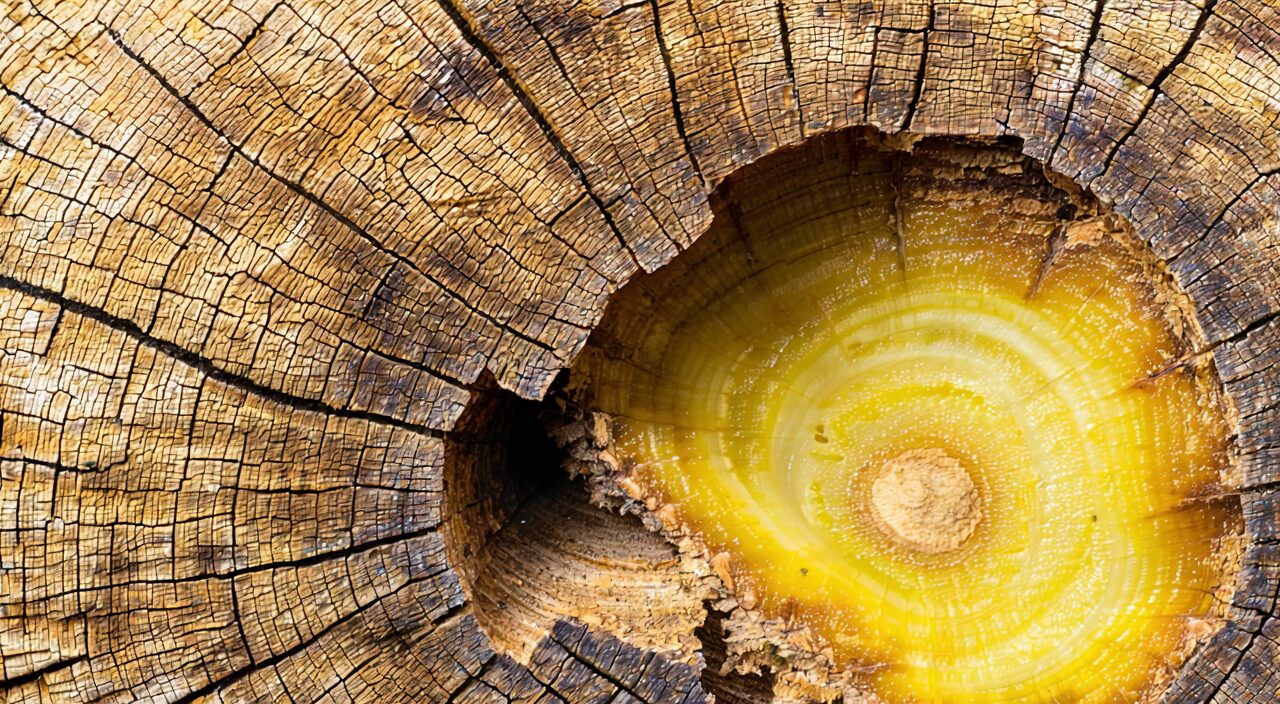
The medicinal part of She Gan has a distinctive appearance, and several key features should be noted when identifying it.
Common She Gan medicinal material is irregularly nodular, somewhat like a rootstock composed of small lumps, often slightly curved or twisted. The surface color is mainly yellowish-brown, brownish-brown, or dark brown, rough and uneven, with remnants of fibrous root scars or tiny root scar points sometimes visible. When you break the rhizome and observe the cross-section, you will see a distinct yellow or orange-yellow color, which is one of the typical characteristics of She Gan. Additionally, several raised ring-like markings are often visible on the surface; these are scars left by shed stems and leaves, similar to nodes on bamboo, and serve as important identification clues.
When actually purchasing or examining the dry herb, you can smell it closely. She Gan has a mild odor; tasting it reveals a slightly bitter taste at first, followed by a slight pungent sensation and some irritation. Combining these sensory characteristics with the color of the cross-section can help distinguish it from herbs with a similar appearance.
What Is the Medicinal Part of She Gan?
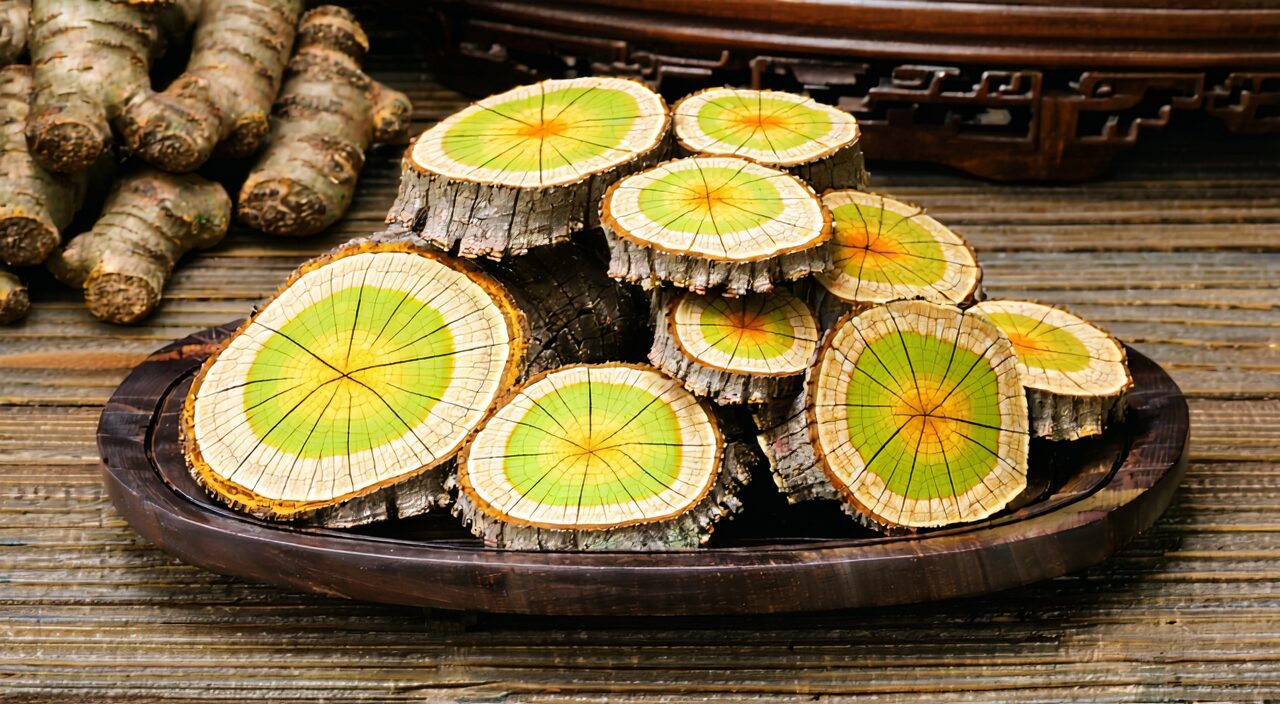
The medicinal part used is its dried rhizome, not the whole plant or aerial parts.
Traditional harvesting usually takes place in early spring when sprouts first appear or in late autumn when the stems and leaves wither. After digging up the rhizomes, the fibrous roots and soil are removed, and they are washed. While still fresh, they are cut into thick slices and dried in the sun or at low temperatures, becoming the common She Gan decoction pieces. The slices are typically irregularly thick, with a yellow or yellowish-green cut surface, sometimes with small vascular spots, and uneven edges. If stored for a long time, the surface color may darken, but the yellow cross-section can still aid in identification.
She Gan slices sold in pharmacies or markets are generally dry and hard, becoming slightly pliable when exposed to moisture. It is important to note that rhizomes of other Iris species with similar shapes may sometimes be used mistakenly, so understanding the cross-section color and nodular characteristics helps in making a more accurate selection.
How Does Traditional Chinese Medicine View She Gan?
Within the theoretical framework of Chinese medicine, She Gan is classified as a heat-clearing and detoxifying herb among the heat-clearing medicinals. Its actions are understood from the perspectives of clearing heat, removing toxicity, resolving phlegm, and benefiting the throat.
According to traditional views, She Gan is bitter and pungent in flavor, cold in nature, and primarily enters the Lung meridian. Since the Lungs are closely connected to the throat and airways, many conditions presenting with sore throat, abundant tracheal phlegm, cough, and shortness of breath may be considered by traditional practitioners from the perspective of ‘phlegm-heat obstructing the Lung’ or ‘heat-toxicity attacking the throat.’ In such cases, She Gan may be a valuable herb to incorporate into a formula.
Looking at specific actions, She Gan’s ‘phlegm-resolving’ is not simply about reducing phlegm volume; rather, it leans toward dissolving thick, yellow, sticky heat-phlegm. Its ‘throat-benefiting’ action more specifically targets redness, swelling, pain, and hoarseness associated with stagnation of heat pathogens. Therefore, if these conditions are accompanied by traditional diagnostic signs such as a red tongue, yellow coating, and rapid pulse, She Gan may be considered as a suitable ingredient in a formula.
What Has Modern Research Discovered?
Modern research on She Gan focuses primarily on its chemical constituents and some pharmacological activities, serving as a supplementary reference to traditional knowledge.
Compounds isolated from She Gan include isoflavonoids such as tectoridin and iridin, as well as some volatile oils and triterpenoids. Some in vitro experiments and animal studies suggest that these constituents may exhibit certain anti-inflammatory, antioxidant, and immunomodulatory tendencies. Additionally, research has explored its effects on the respiratory tract, such as observing its influence on airway mucus secretion and inflammatory mediators, but these remain largely at the experimental stage.
It should be noted that these research findings cannot yet be directly equated with clinical efficacy, nor should they be used as a basis for disease treatment. The use of She Gan should still rely on traditional Chinese medicine’s approach to formula composition and be assessed based on individual constitution and overall condition.
What Are the Differences Between She Gan, Shan Dou Gen, and Iris Roots?
She Gan is relatively easy to confuse with Shan Dou Gen and the rhizomes of certain Iris species, so it is necessary to distinguish them based on source, appearance, and traditional application focus.
Different sources: She Gan comes from the Iris family plant Belamcanda chinensis; Shan Dou Gen comes from the dried roots and rhizomes of Sophora tonkinensis, a legume family plant; while common Iris roots mostly come from the rhizomes of other species in the Iris genus of the Iris family. There are taxonomic differences among the three.
Appearance differences: She Gan is irregularly nodular, with a yellowish-brown to dark brown surface and a prominently yellow cross-section. Shan Dou Gen often has multiple stem base remnants at the root head, with a brown to dark brown surface, hard texture; the cross-section shows a light brown bark and pale yellow xylem, and a distinct bean-like odor. Some Iris rhizomes have a cross-section color that tends to be whitish or grayish, without obvious nodes, and a relatively mild bitter taste.
Traditional application focus: She Gan is traditionally used for resolving phlegm, benefiting the throat, clearing heat, and detoxifying. Although Shan Dou Gen is also commonly used for sore throats, due to its stronger toxicity, its heat-clearing and detoxifying effects are considered more drastic, and it must be used with greater caution. Rhizomes of other Iris species are often used as local substitutes, with some traditional uses focusing on invigorating blood and resolving stasis, and others on dispelling wind and draining dampness; they rarely appear in classical formulas.
Because of the potential for confusion with these herbs, it is advisable to source She Gan from reliable channels and consult a professional when you are not entirely certain.
Which Formulas Use She Gan?
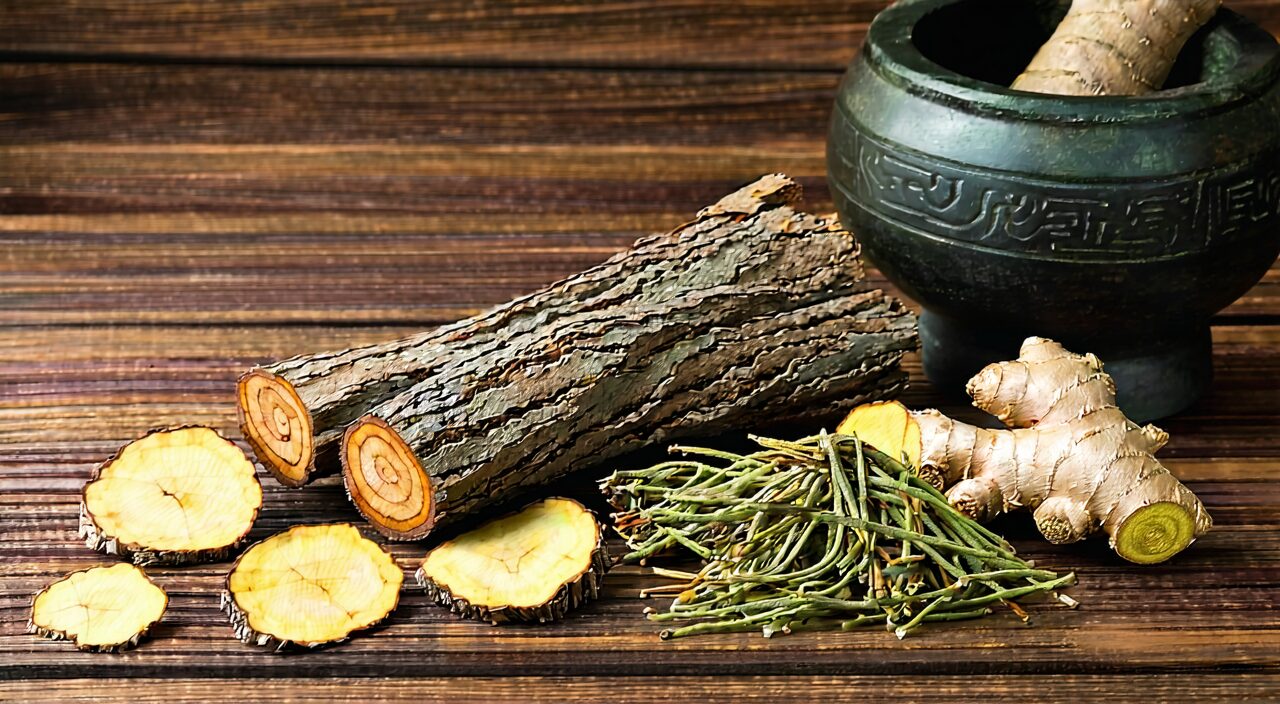
In historical formulas, She Gan is often combined with herbs that diffuse the Lung, transform phlegm, and redirect rebellious qi. Here we introduce several common traditional formulas to help understand its combining principles.
She Gan Mahuang Tang (Belamcanda and Ephedra Decoction): This formula originates from the ‘Essential Prescriptions of the Golden Coffer’ and is a classic formula for diffusing the Lung and transforming thin mucus. In the original formula, She Gan is combined with Ma Huang (Ephedra), Xi Xin (Asarum), Sheng Jiang (Fresh Ginger), Zi Wan (Aster), Kuan Dong Hua (Coltsfoot), etc. It is often used for conditions such as cough, asthma, and a sound of water in the throat caused by external cold and internal thin mucus with intertwined phlegm and qi. She Gan primarily acts to resolve phlegm, benefit the throat, redirect rebellious qi, and dissipate masses. This formula remains one of the frequently referenced bases for clinical modification based on pattern differentiation today.
She Gan San (Belamcanda Powder): There are several formulas named She Gan San throughout history with varying compositions, but most combine She Gan with Huang Qin (Scutellaria), Gan Cao (Licorice), Jie Geng (Platycodon), and other herbs. It is traditionally used in the management approach for presentations such as exuberant Lung heat, sore throat, and cough with yellow phlegm. Different versions have slightly different emphases, some leaning more toward clearing heat and benefiting the throat, and others toward resolving phlegm and stopping cough.
She Gan Li Yan Koufuye (Belamcanda Throat-Benefiting Oral Liquid): This is one of the proprietary Chinese medicine preparations with She Gan as a key ingredient, often aligned with Chinese medicine concepts for red, swollen, dry, and uncomfortable throat. Its liquid form is convenient and easily accessible. However, whether it is suitable should still be assessed by combining the product instructions, individual symptoms, and constitutional characteristics.
A reminder: the above formulas and proprietary medicines are for reference only and do not represent direct recommendations for treating any condition. Every individual’s situation is different, and formula composition and dosage must be determined based on traditional pattern differentiation.
What Precautions Should Be Taken When Using She Gan?
Although She Gan is common, it does not mean it can be used casually. The following situations require particular attention.
Caution for those with spleen-stomach deficiency cold: She Gan is cold in nature and can easily damage the yang qi of the spleen and stomach. If you are prone to abdominal coldness and pain, loose stools, poor appetite, or experience abdominal discomfort after taking it, exercise caution and avoid long-term use of this single herb.
Not to be used casually during pregnancy: Traditional herbal texts often list She Gan as a herb to be used with caution during pregnancy, as its pungent, dispersing, bitter, and cold nature may have some impact on gestation. Regardless of the situation during pregnancy, consult a professional physician or TCM practitioner and never choose it on your own.
Avoid during diarrhea: She Gan itself may irritate the intestines. Using it while experiencing diarrhea or when the intestines are sensitive may worsen discomfort.
Pay attention to dosage and irritant properties: She Gan has some irritant properties, especially when fresh or in excessive doses, which may cause throat or gastrointestinal discomfort. Traditional use typically employs the dried herb in decoctions that are cooked to reduce irritation. If you are unsure of the dosage, do not chew or take excessively on your own.
If throat discomfort, cough, or other symptoms persist or recur, or are accompanied by difficulty breathing, chest pain, persistent fever, weight loss, etc., seek medical attention promptly rather than relying solely on a single herb for regulation.
Summary
She Gan is a traditional Chinese medicinal that uses the dried rhizome. It can be identified externally by its nodular shape, yellowish-brown surface, and yellow cross-section. In Chinese medicine, it is mainly recognized for clearing heat, detoxifying, resolving phlegm, and benefiting the throat, and is commonly used in classic formulas such as She Gan Mahuang Tang. When using it, pay attention to its bitter, cold nature; it is not suitable for casual use in those with spleen-stomach deficiency cold, during pregnancy, or when experiencing diarrhea. We hope this article provides you with a systematic scientific reference on She Gan, but its specific use should be combined with individual constitution and professional advice, and cannot replace disease diagnosis and treatment.