
What Is Talc? Medicinal Part, Identification, and Common Formulas
Many people hearing the name “talc” for the first time may associate it with industrial talcum powder, but they are curious about its role in traditional Chinese medicine. Talc is actually the massive form of the silicate mineral talc. After purification, grinding and other processing steps, it becomes medicinal talc powder. Medicinal talc powder and industrial talc powder differ significantly in source purity, processing standards, and intended use; industrial-grade products must never be used directly as medicine. This article will help overseas Chinese readers build a clear foundational understanding of this mineral medicine, covering identification features, medicinal part, traditional Chinese medicine perspective, common formulas, and usage precautions.
What Does Talc Look Like? How to Identify It?
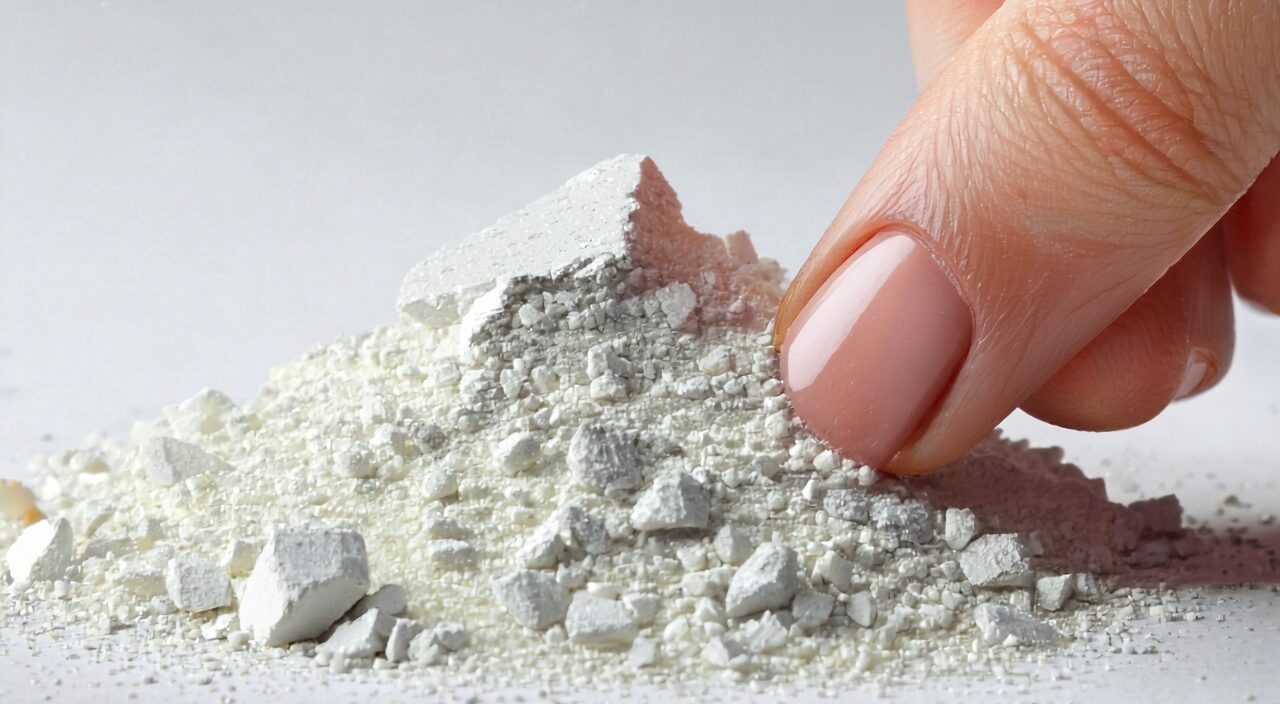
In its mineral state, talc mostly appears as irregular masses. The color is mainly white or grayish-white, sometimes with pale green, pale yellow, or pale brown tones. Its hallmark appearance is a waxy luster or pearly luster. The texture is very soft; you can scratch the surface with a fingernail. When rubbed between fingers, it gives a distinct slippery, greasy feel, which is where the name “talc” (from “greasy” in Chinese) originates. If you gently scratch a piece of talc against a hard object, fine powder easily scrapes off—a point often used for preliminary identification in the field or in medicinal markets.
In addition, the fracture surface of talc is often uneven, showing conchoidal or hackly fractures, with a white streak. It is dense in texture but brittle and easily breaks into small pieces. When distinguishing it from similar-looking minerals, the key identification points are talc’s low hardness, slippery/greasy feel, and waxy luster. It’s worth noting that some ores also appear grayish-white but lack the greasy feel or have higher hardness, so they are likely not talc.
What Is the Medicinal Part of Talc?
As a mineral medicine, the medicinal part of talc is the massive form of the silicate mineral talc itself. After collection, impurities and soil must be removed. Generally, the talc is first cleaned, then ground into extremely fine powder using the water-grinding method or fine grinding method before it can be used medicinally. The water-grinding method is a traditional processing technique: through repeated grinding with water, settling, and precipitation, impurities are removed and a fine, uniform texture is achieved. Unprocessed massive talc directly excavated is not suitable for direct internal use, as it may contain associated minerals or other insoluble impurities.
In clinical traditional Chinese medicine and classical formulas, talc powder is used almost exclusively. Some external preparations use calcined talc, which is talc processed at high temperatures; its astringent action is enhanced, but for internal use, raw talc powder remains the primary form. Understanding this helps clarify why talc supplied in pharmacies is always in powder form rather than mineral chunks.
How Does Traditional Chinese Medicine Understand Talc?
Traditional Chinese medicine’s understanding of talc mainly revolves around its nature, flavor, channel tropism, and actions. Talc is sweet and bland in flavor, cold in nature, and enters the Bladder, Lung, and Stomach channels. Because sweet and bland can drain dampness, cold can clear heat, and its heavy, slippery nature facilitates movement, talc is often used when damp-heat needs to be expelled through the urine. Based on the ancient analogical thinking, it was believed that “slipperiness can unblock the orifices,” making talc adept at dredging the water passages.
Specifically, talc’s traditional uses fall into three main categories. First, it promotes urination and relieves strangury. For symptoms such as difficult urination, dribbling, and painful urination caused by damp-heat accumulating in the lower burner, talc is often combined with other heat-clearing and dampness-draining herbs to help restore smooth urination. Second, it clears heat and relieves summerheat. During the summer-heat season, if symptoms such as fever, irritability, thirst, and scanty dark urine appear, the classic combination of talc with licorice, known as Liu Yi San (Six-to-One Powder), is a very traditional application. Third, for external use, it absorbs dampness and heals sores. Fine talc powder sprinkled on the skin is frequently used for damp sores, eczema, miliaria, and other moist, eroded skin conditions, helping to absorb moisture and protect the affected area. These understandings are based on long-term empirical summaries; practical application requires comprehensive assessment of individual constitution and specific symptoms.
What Has Modern Research Discovered?
Modern research on talc has focused more on its mineral composition and physical properties. Talc’s main component is hydrous magnesium silicate, often containing small amounts of aluminum, iron, calcium, and other elements. Because talc has a large specific surface area and good adsorption capacity, external application of the powder can adsorb moisture, mucus, and some irritants on the skin surface, which may relate to its traditional experience of “absorbing dampness.”
Regarding internal use, talc powder is not absorbed in the gastrointestinal tract; after oral administration, it can coat the surface of the intestinal mucosa, providing a certain protective effect. Magnesium ions and other components it contains may, to some extent, influence bladder smooth muscle, but the specific mechanisms still require more research. It is important to note that if talc is contaminated with asbestos impurities, it may pose health risks, which are now strictly regulated in many countries. Therefore, medicinal talc must be guaranteed asbestos-free and comply with relevant quality standards. These modern insights remind us that selecting high-purity, asbestos-free talc is very important and provide a reference for understanding the safety boundaries of talc.
What Are the Differences Between Talc, Gypsum, and Calamine?
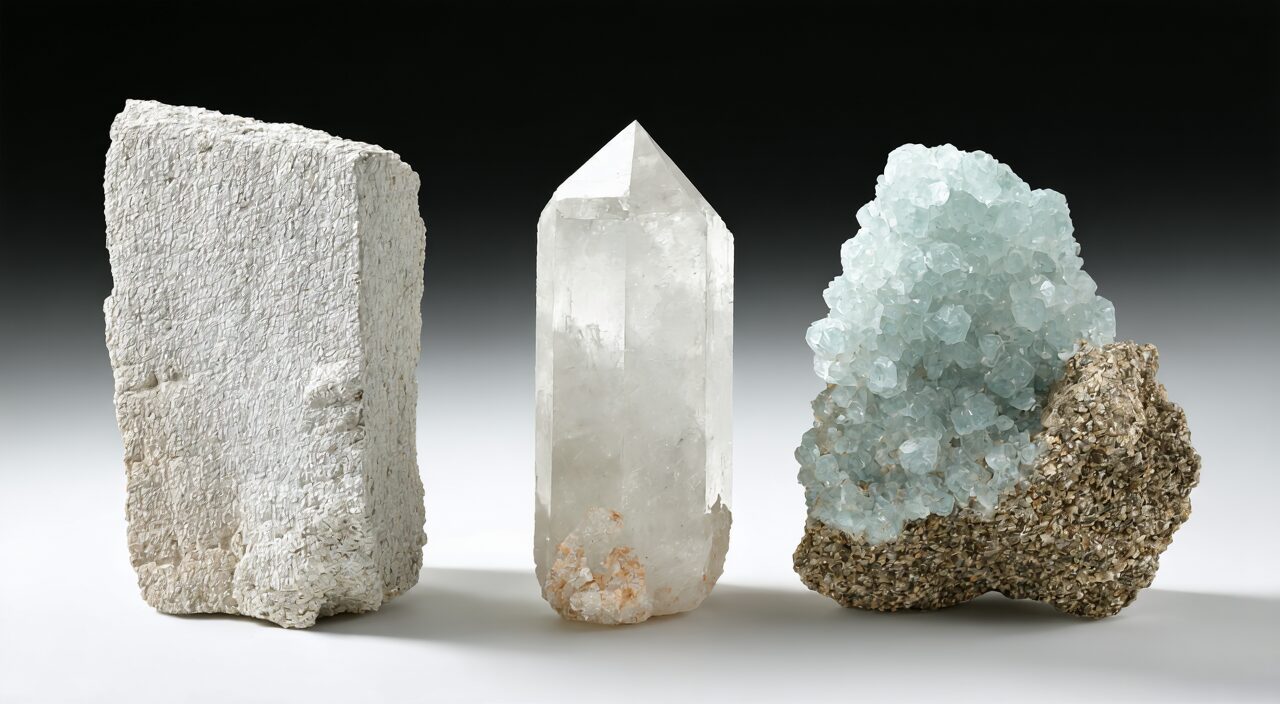
Although talc, gypsum, and calamine are all mineral-based Chinese medicines, they differ markedly in source, hardness, and application. From the perspective of mineral composition, talc is the massive form of the silicate mineral talc, mainly composed of hydrous magnesium silicate; gypsum is the sulfate mineral anhydrite or gypsum, mainly composed of hydrous calcium sulfate; calamine is the carbonate mineral smithsonite or hydrozincite, mainly containing zinc carbonate. The three are entirely different in composition.
In terms of appearance and hardness, talc is the softest, with a Mohs hardness of about 1. It feels slippery and greasy and can be scratched with a fingernail. Gypsum has a hardness of about 2; a fingernail can still scratch it, but the greasy feel is not obvious. It is mostly fibrous or tabular, with a silky luster or vitreous luster. Calamine has a hardness between 4 and 5, so it is difficult to scratch with a fingernail, its fracture is uneven, and it often appears as porous masses. In TCM applications, talc primarily promotes urination and relieves strangury, clears heat and relieves summerheat, and absorbs dampness to heal sores. Gypsum primarily clears heat, drains fire, relieves irritability, and quenches thirst, often used for intense heat in the qi aspect. Calamine is almost never taken internally; it is mainly used externally to detoxify, brighten the eyes, remove nebula, absorb dampness, and stop itching. Thus, even though all three can be white or grayish-white minerals, they are easy to distinguish by hardness, feel, and use.
Which Formulas Commonly Use Talc?
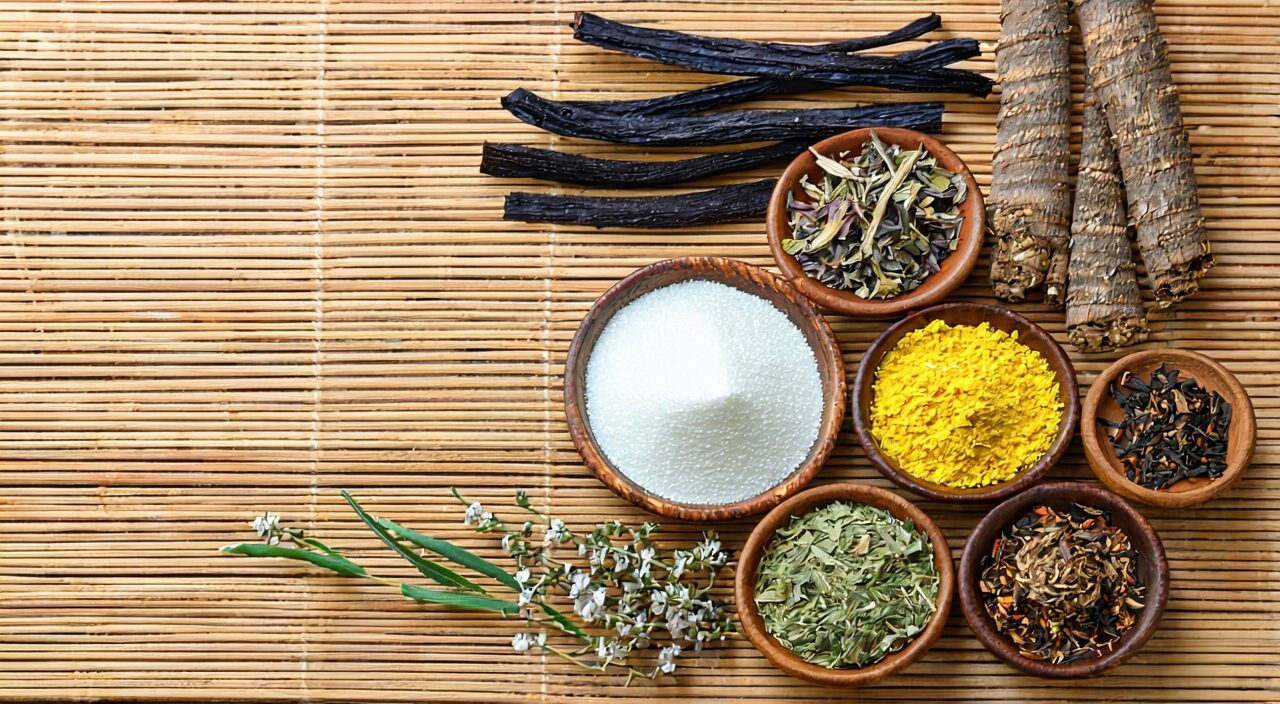
Among formulas throughout history, talc is not exceptionally common, but several classical formulas are frequently mentioned and can serve as references for understanding talc’s traditional applications.
Liu Yi San (Six-to-One Powder) consists of talc and licorice in a 6:1 ratio. It is a commonly used formula during the summer-heat season to clear heat, dispel summerheat, and drain dampness, suitable for fever, thirst, and scanty dark urine caused by summerheat-dampness. Traditionally it was used as a basic formula to prevent summerheat-damp discomfort, but whether it is applicable still depends on individual damp-heat severity and constitution.
Ba Zheng San (Eight Corrections Powder) is a formula that clears and drains damp-heat and relieves strangury and pain. In this formula, talc is combined with plantain seed, dianthus, knotgrass, and others to address symptoms such as frequent, urgent, dribbling, painful urination and lower abdominal distension caused by damp-heat pouring into the bladder. Clinically, Ba Zheng San is mostly used for damp-heat strangury patterns, but serious infections or other underlying causes must be ruled out; self-judgment is not advisable.
San Ren Tang (Three Kernels Decoction), originating from Systematic Differentiation of Warm Diseases, uses apricot kernel, cardamom fruit, and coix seed as principals, combined with talc, rush pith, and others. It is used for early-stage damp-warm disease or summerheat-warm disease complicated by dampness, when the pathogen is in the qi aspect, presenting with heavy body sensation, chest oppression, and difficult urination. Here, talc primarily assists in clearing and draining damp-heat and promoting urination.
Zhu Ling Tang (Polyporus Decoction) is a formula from Treatise on Cold Damage that promotes urination and nourishes yin. It combines polyporus, poria, oriental water plantain, talc, and donkey-hide gelatin. It addresses water and heat binding together with concurrent yin injury, presenting as difficult urination, thirst with desire to drink, and irritability with insomnia. In this formula, talc both promotes urination and clears heat with its sweet, cold nature without damaging yin fluids. These formulas each have their emphasis and should be used under professional guidance, selected according to specific pattern and constitution. It is not advisable to take them solely based on symptoms.
What Precautions Should Be Taken When Using Talc?
Although talc is a mineral medicine, several aspects still warrant special attention. First is the issue of dust inhalation. Talc powder is extremely fine; if airborne dust is inhaled during handling, it may irritate the respiratory tract. Long-term, heavy inhalation of talc dust containing asbestos impurities is linked to the risk of lung diseases. Therefore, when preparing or applying it externally, avoid creating airborne dust as much as possible, and wear a mask if necessary.
Second is source purity. Medicinal talc must meet pharmacopoeia standards and be guaranteed free of asbestos. Industrial talc powder may contain asbestos or other contaminants and can never substitute for medicinal talc, nor should it be used for body care or internal consumption. When choosing talc products, pay attention to source and quality information to avoid mistakenly using industrial-grade products.
The third point concerns special populations. During pregnancy, lactation, and for those with severe renal dysfunction, oral use of talc requires extra caution and should generally be decided only after evaluation by a professional practitioner; self-administration is not recommended. TCM holds that talc is cold in nature, so people with spleen-stomach deficiency-cold or loose stools are also not advised to use it long-term or in large amounts. Additionally, if using talc powder externally for conditions like eczema or miliaria and the skin shows deep ulceration or infection, discontinue use and promptly consult a professional. In summary, understanding the safety boundaries of talc is more important than memorizing its effects—a point especially worth emphasizing for mineral medicine use.
Summary
Talc, as a natural mineral-origin Chinese medicine, has been traditionally applied mainly around its slippery, dampness-draining, heat-clearing, summerheat-relieving, dampness-absorbing, and sore-healing properties. To identify it, one needs to recognize its white or grayish-white massive form, waxy luster, soft and greasy texture, and ease of being scraped into powder, while distinguishing it from mineral medicines like gypsum and calamine. Classical formulas such as Liu Yi San, Ba Zheng San, San Ren Tang, and Zhu Ling Tang reflect talc’s combination strategies for different indications, but specific use must emphasize purity, dust protection, and individual differences. Industrial-grade talc must never be used as medicine. This article is for general informational reference only and cannot replace professional diagnosis or treatment advice. For related concerns, please consult a qualified professional.