
What Is Zhu Ling? Medicinal Parts, Identification Methods, and Common Formulas
Many people who first encounter Chinese medicinal materials may find the name Zhu Ling both familiar and unfamiliar. Zhu Ling is a medicinal substance commonly found in rainy and humid regions and traditionally used in Chinese medicine for promoting urination and draining dampness. It comes from the dried sclerotium of the fungus Polyporus umbellatus. Growing underground, its appearance is unremarkable, yet it frequently appears in formulas for addressing conditions related to water-dampness stagnation. If you are learning about the morphological characteristics of Zhu Ling, its medicinal part, how it differs from Fu Ling, and which classic formulas include it, the following content will provide a relatively systematic reference.
What Does Zhu Ling Look Like? How to Identify It?
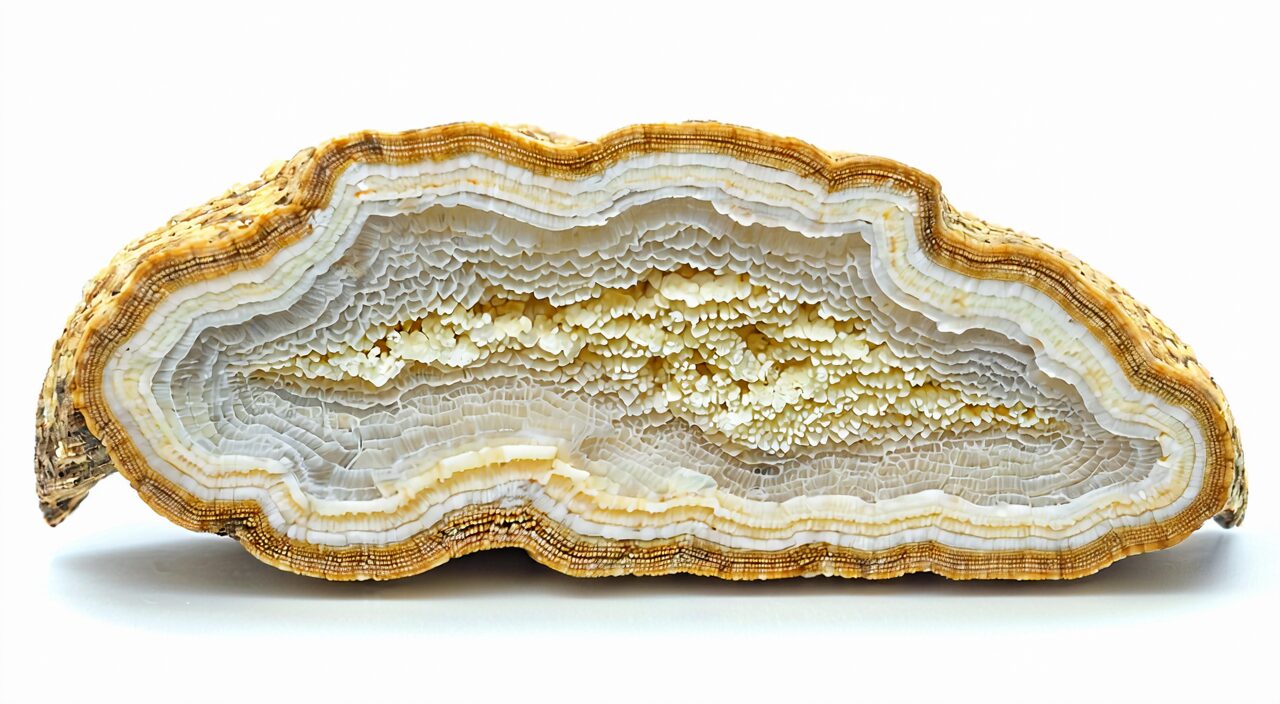
The medicinal part of Zhu Ling is the sclerotium, not the fruiting body. The sclerotium is usually irregularly bar-shaped, flat-block-shaped, or nodular, sometimes slightly curved, and varies in size, with length and width often ranging from a few centimeters to over ten centimeters.
In terms of external appearance, the surface of the Zhu Ling sclerotium is black-brown or brownish-black, with obvious wrinkled textures and nodular protrusions, and feels relatively rough. Larger pieces of Zhu Ling may have some residual mycelium or fine sand grains on the surface.
When cut open, the internal cross-section is white or pale yellowish-white, relatively light in texture, and can be scratched with a fingernail. The cross-section shows a fine granular structure visible to the naked eye, with a slightly starchy quality. Dried Zhu Ling has a very light odor, a mild taste, and is slightly sticky.
Many people confuse Zhu Ling with Fu Ling, but in fact, careful observation of the cross-section color, surface texture, and weight can reveal quite a few differences.
What Is the Medicinal Part of Zhu Ling?
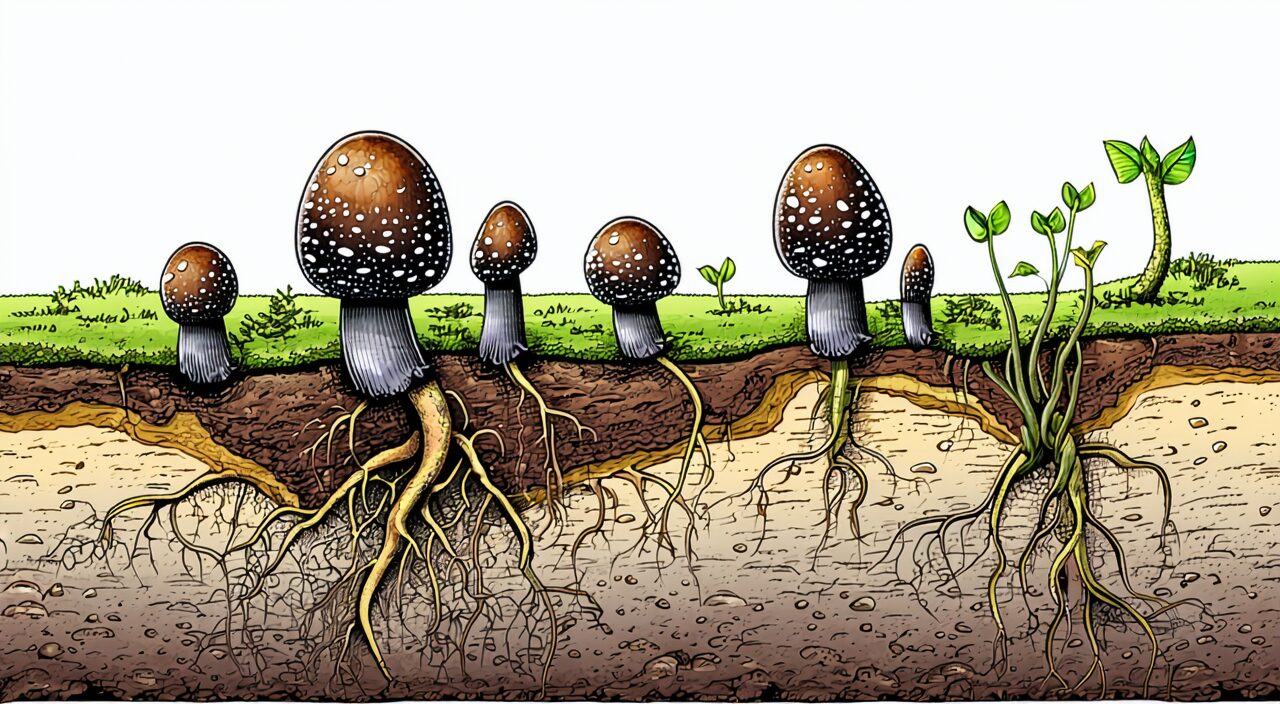
The medicinal part of Zhu Ling is the sclerotium that grows underground. A sclerotium is a dormant structure formed by fungi to survive unfavorable conditions, accumulating a large amount of nutrients. Zhu Ling sclerotia generally grow as parasites around the roots of trees such as birch, oak, and maple. They are harvested in spring and autumn, cleaned of sediment, and then dried to become the medicinal material.
During processing, after harvesting, they are washed, the fibrous roots are removed, and they are sliced while still fresh or dried directly in the sun. The finished Zhu Ling is considered best when the pieces are large, the exterior is black and moist, the cross-section is white and clean, and the texture is fine. Traditional experience holds that the lighter the cross-section color and the more firm and plump the texture, the better the quality tends to be.
Records in Chinese medical classics state that Zhu Ling is sweet, bland, and neutral in nature, entering the Kidney and Bladder meridians, and is adept at promoting urination and draining dampness. Because it primarily acts on the Kidney and Bladder, it is often used in traditional pattern differentiation approaches for symptoms such as internal water-dampness retention, inhibited urination, edema with distension and fullness, diarrhea, and strangury with turbid discharge.
How Does Chinese Medicine Understand Zhu Ling?
In traditional Chinese medicine theory, the core action of Zhu Ling is “promoting urination and draining dampness.” In simple terms, promoting urination and draining dampness means facilitating the elimination of excess water-dampness from the body through urination, thereby alleviating discomfort caused by water-dampness retention. Zhu Ling, with its sweet and bland nature, tends to descend, guiding water-dampness out through the Bladder.
It is for this reason that Zhu Ling is often included in formulas designed to address patterns such as scanty urine, limb edema, diarrhea, vaginal discharge, or painful, hesitant urination. However, although Zhu Ling has relatively strong diuretic power, it is traditionally considered not to have a significant tonic effect. Therefore, it is often used in combination with other herbs such as Fu Ling, Ze Xie, and Bai Zhu to protect the Spleen and Stomach Qi while promoting urination.
It is important to note that the appropriate use of Zhu Ling must be determined based on individual constitution and specific manifestations through comprehensive pattern differentiation. It is not suitable for everyone experiencing edema or changes in urination. Traditional Chinese medicine often evaluates it from the perspective of “promoting urination without damaging yin.” If a person already has obvious yin-fluid depletion—such as dry mouth and throat, emaciation, and scanty, yellow urine—using Zhu Ling may not be appropriate.
Modern Research References on Zhu Ling
Modern researchers have conducted some explorations into the components of Zhu Ling, discovering that its sclerotium contains polyporus polysaccharides, ergosterol, biotin, and various trace elements. Some laboratory studies suggest that polyporus polysaccharides may have a certain regulatory potential for immune function, and some preliminary studies have also focused on its effects on mechanisms related to fluid metabolism. However, these studies are mostly at a basic research stage and are still a considerable distance from establishing clear clinical application conclusions.
Therefore, this information should only be viewed as a supplementary perspective for understanding Zhu Ling, not as a direct basis for choosing to use Zhu Ling. Readers should not attempt self-treatment with Zhu Ling based on seeing these studies.
What Are the Differences Between Zhu Ling, Fu Ling, and Lei Wan?
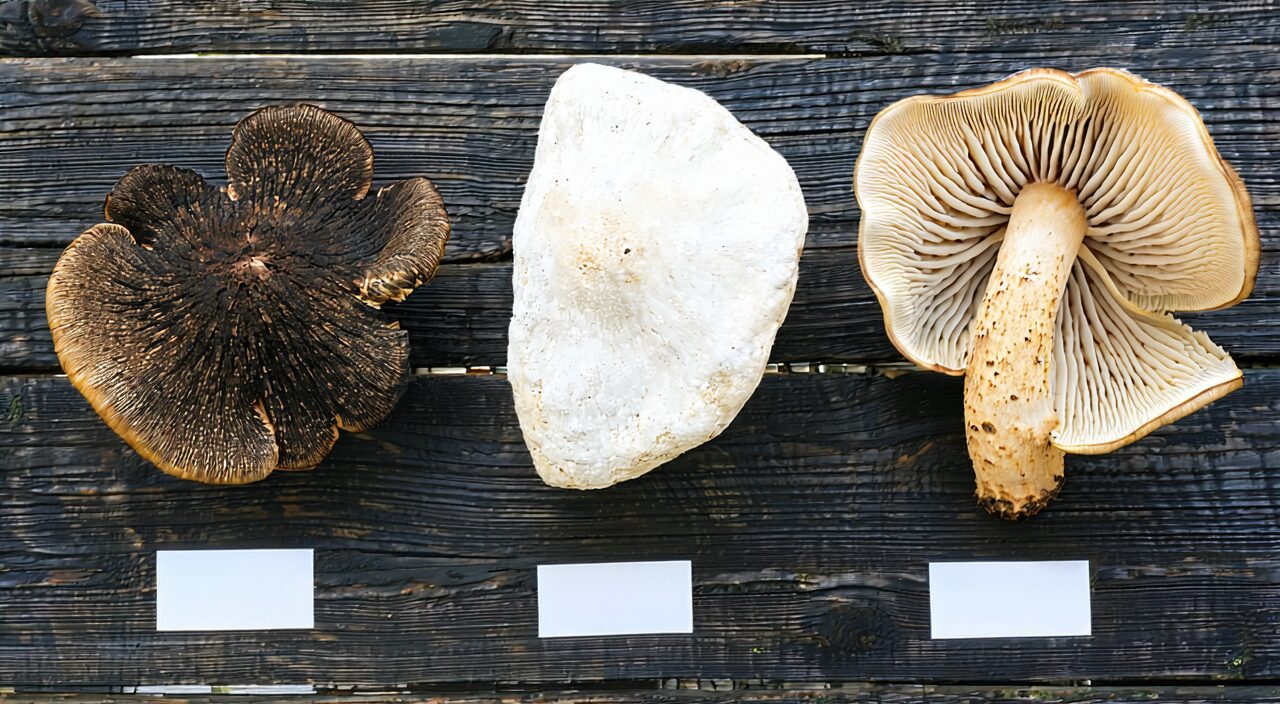
Although Zhu Ling, Fu Ling, and Lei Wan are all fungal medicinal materials, they have obvious differences in their source, external form, and key points of traditional application.
In terms of sclerotium appearance: Zhu Ling is an irregular bar-shaped or flat-block-shaped mass with a black-brown, wrinkled surface and a white or pale yellow cross-section, light in texture and starchy. Fu Ling sclerotium is mostly spherical, oval, or irregularly lumpy, with a brown or black-brown outer skin, white or pinkish internal tissue, heavier in texture, and sticky when chewed. Lei Wan sclerotium appears as irregular small pieces or spherical shapes, usually smaller in diameter, with a brownish or black-brown surface, a hard texture, and a white to grayish-white, horn-like cross-section.
From a traditional application perspective: Zhu Ling mainly promotes urination and drains dampness, focusing on clearing and disinhibiting the lower jiao’s water-dampness. Fu Ling, besides promoting urination and draining dampness, also emphasizes fortifying the Spleen and calming the Heart, offering auxiliary tonifying potential for spleen deficiency, palpitations, and insomnia. Lei Wan is primarily used as an anthelmintic (parasite-expelling) and accumulation-resolving medicinal, traditionally used for intestinal parasites such as tapeworms and hookworms, not for promoting urination. Among the three, although both Zhu Ling and Fu Ling promote urination, Fu Ling also has the effects of fortifying the Spleen and calming the Mind, whereas Zhu Ling has stronger diuretic power but weaker tonic action, leading to distinctly different application directions.
Which Formulas Include Zhu Ling?
Zhu Ling appears as an important member for promoting urination and draining dampness in some classic formulas. Below are several common traditional formulas containing Zhu Ling to help understand the formula design principles; however, this does not mean you should use them yourself. The suitability of any formula still needs to be assessed based on personal constitution, symptoms, and professional judgment.
Wu Ling San (Five-Ingredient Powder with Poria): Composed of Zhu Ling, Fu Ling, Ze Xie, Bai Zhu, and Gui Zhi. It is traditionally used for inhibited urination, edema, vexing thirst, and throbbing below the umbilicus caused by impaired qi transformation in the Taiyang meridian and internal water-dampness retention. Wu Ling San combines warming yang to promote qi transformation with promoting urination and draining dampness, and is one of the commonly used formulas for water-dampness issues.
Zhu Ling Tang (Polyporus Decoction): Composed of Zhu Ling, Fu Ling, Ze Xie, E Jiao (donkey-hide gelatin), and Hua Shi (talcum). Compared to Wu Ling San, Zhu Ling Tang adds Hua Shi and E Jiao, emphasizing nourishing yin, clearing heat, and promoting urination. It is traditionally used for inhibited urination, thirst, and vexation with insomnia caused by the binding of yin deficiency and water-heat.
Yin Chen Wu Ling San (Artemisia and Five-Ingredient Powder with Poria): This is Wu Ling San with the addition of Yin Chen (Artemisia). It is traditionally used for damp-heat jaundice and inhibited urination, such as in jaundice patterns where dampness outweighs heat, combining promoting urination to expel dampness with clearing heat to abate jaundice.
Wei Ling Tang (Stomach-Calming Poria Decoction): Derived from combining Ping Wei San (Stomach-Calming Powder) and Wu Ling San, it contains Cang Zhu, Hou Po, Chen Pi, Gan Cao, Zhu Ling, Fu Ling, Bai Zhu, Ze Xie, and Gui Zhi, among others. Traditionally used for diarrhea, abdominal distension, and inhibited urination caused by dampness stagnating in the Spleen and Stomach with internal water-dampness retention, it acts to dry dampness and strengthen the Spleen, promote urination, and drain dampness.
These formulas need to be modified and adjusted under professional guidance according to the actual situation. Do not apply them arbitrarily on your own.
What Precautions Should Be Taken When Using Zhu Ling?
Zhu Ling has a relatively strong diuretic effect, and the following situations require special attention:
First, traditional Chinese medicine emphasizes that it should be used with caution in cases of yin deficiency with fluid depletion. If you usually have dry mouth and throat, heat in the palms and soles, night sweats, and a red tongue with little coating, your yin fluids are already insufficient. Using Zhu Ling alone in large amounts to promote urination may further consume body fluids and worsen existing discomfort.
Second, if there is already excessive urination, enuresis, or a constitution weakened with a tendency toward sinking of middle qi, large amounts or long-term use of Zhu Ling are also unsuitable. The direction of promoting urination should be weighed by a professional based on comprehensive pattern differentiation.
Third, it is not recommended to use Zhu Ling long-term on your own for the purposes of “promoting urination to detoxify” or “losing weight and reducing swelling.” Fluid metabolism is a complex process, and long-term misuse of diuretic herbs can disrupt electrolyte and body fluid balance. If edema or abnormal urination occurs, priority should be given to identifying the cause rather than solely relying on a single herb.
Additionally, the source of Zhu Ling material is worth noting. Wild Zhu Ling resources are decreasing year by year, and artificial cultivation has been initiated in some regions, but there may still be materials of unclear origin or poor quality on the market. When purchasing, choose reliable channels and pay attention to identifying the cross-section and texture.
Finally, if edema is accompanied by obvious difficulty breathing, a sharp decrease in urine output, altered consciousness, or if chronic diarrhea is accompanied by weight loss and bloody stools, seek medical attention promptly. Do not rely on self-use of Zhu Ling or related formulas.
Summary
Zhu Ling is a Chinese medicinal material with a long history of use in promoting urination and draining dampness, using its fungal sclerotium. Understanding its appearance characteristics, cross-section color, and differences from Fu Ling and Lei Wan helps in making clearer judgments during purchase and use. Zhu Ling is often an important component in formulas such as Wu Ling San and Zhu Ling Tang, but its application direction differs from Fu Ling—it emphasizes diuresis over tonification, and it should be used with extra caution in cases of yin deficiency with fluid depletion or excessive urination. The selection of any medicinal should be made after fully understanding one’s constitution, specific manifestations, and consulting a professional. This article is for educational reference only and cannot replace professional advice.