
What Is Qu Mai? Medicinal Parts, Identification, and Common Formulas
For many people interested in traditional herbal medicine, Qu Mai is not an unfamiliar name. However, those who can accurately describe its appearance, identify the medicinal part used, and explain how it differs from Bian Xu are relatively few. This article focuses on the fundamental knowledge of Qu Mai, aiming to help overseas Chinese readers interested in Chinese herbal medicine build a relatively clear cognitive framework.
What Does Qu Mai Look Like? How to Identify It Quickly?
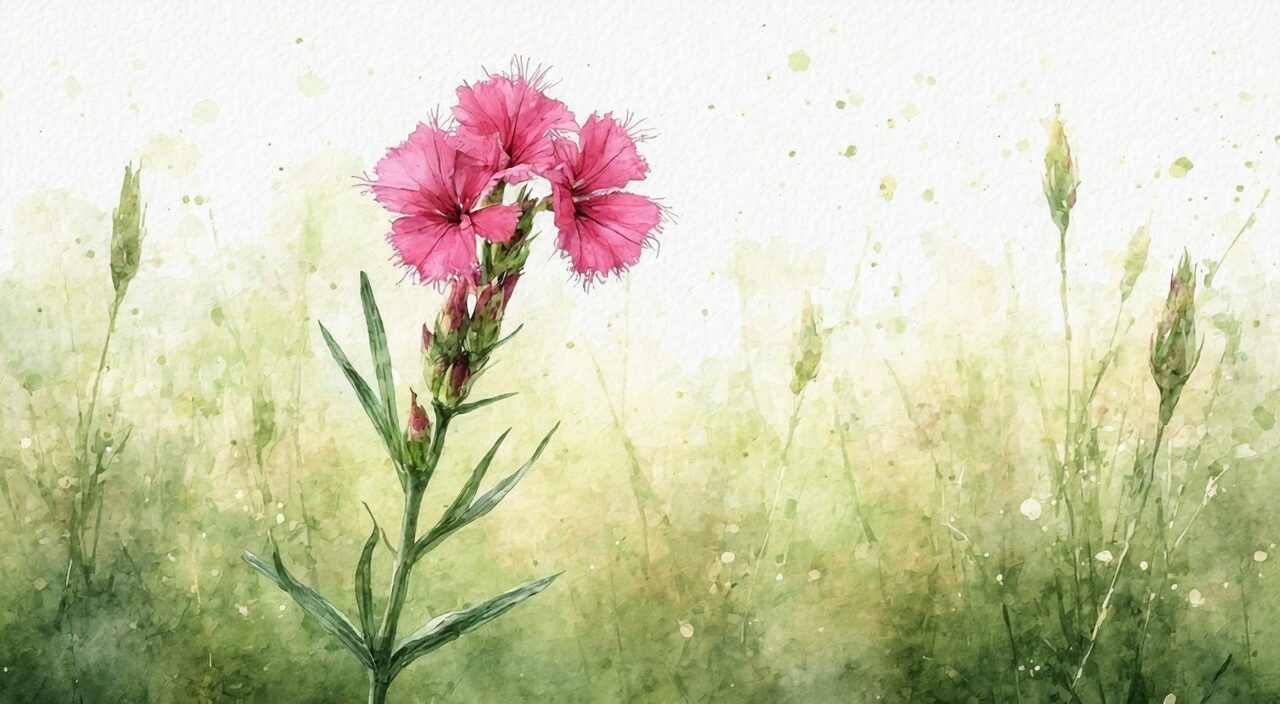
Qu Mai is a perennial herb in the Caryophyllaceae family. The medicinal sources include both Dianthus superbus and Dianthus chinensis. In appearance, its stem is slender and cylindrical, often branched in the upper part. The surface is light green or yellowish-green, smooth and hairless, with distinctly swollen nodes, a typical characteristic of the Caryophyllaceae family. The leaves are opposite, linear or linear-lanceolate. When fully spread, the intact leaf blades closely resemble narrow bamboo leaves. They clasp the stem at the base and have parallel veins.
During the flowering period, the flowers of Qu Mai grow singly at the branch tips or in a few-flowered cyme. There are five petals, deeply lobed into thread-like segments at the apex. The colors are mostly pale red, purplish red, or white. The calyx tube is slender and cylindrical, with shorter bracts beneath the calyx. After flowering, it produces an oblong capsule that splits into four parts at the top when mature, containing numerous black, flat seeds. The whole plant is about 30 to 60 cm tall, without coarse hairs, and feels rather soft to the touch.
If observing in the wild or at a herbal market, you can focus on three key points: swollen stem nodes, linear opposite leaves, and a slender calyx tube with petal tips split like torn threads. These features can distinguish Qu Mai from many plants with similar morphology. Prepared herbal slices are often cut into short segments, showing cylindrical stems with slightly swollen nodes, opposite and often crumpled leaves, and sometimes persistent calyxes. When distinguishing, those with slender stems, yellowish-green color, and abundant leaves are considered better quality.
What Is the Medicinal Part of Qu Mai?
The medicinal part of Qu Mai is the dried aerial part, not the root or seeds. Harvesting mostly takes place during the flowering and fruiting period in summer and autumn. The aerial parts are cut, impurities are removed, and they are dried directly in the sun or cut into sections and then sun-dried. Processing emphasizes removing the roots and old stems, preserving the aerial whole herb with flowers and fruits. Therefore, fragments of stems, leaves, calyxes, and a small number of capsules are often visible in the prepared slices.
Based on traditional experience, Qu Mai is considered best when it is bluish-green, has many leaves, and the flowers have not all fallen. It should be stored in a ventilated and dry place to avoid dampness and mold. Since the whole herb is used, its cleanliness and dryness can affect subsequent use. When purchasing, pay attention to the color of the cut surface and the smell. A yellowish-white cut surface with a mild odor is considered normal.
How Does Traditional Chinese Medicine Understand Qu Mai?
In traditional Chinese medicine thinking, Qu Mai is bitter in taste and cold in nature. It enters the Heart, Small Intestine, and Bladder meridians, mainly acting in two directions: promoting urination and relieving stranguria, and invigorating blood and promoting menstruation. “Relieving stranguria” refers to addressing problems in the lower energizer caused by damp-heat pouring downward, such as painful, difficult, and astringent urination, frequent and urgent urination, and related issues. It is often used to regulate difficult urination, heat stranguria, and blood stranguria. Ancient practitioners believed that Qu Mai’s bitter-cold nature could descend and drain, clearing heat from the Small Intestine and Bladder and guiding damp-heat out through the urine.
Regarding invigorating blood and promoting menstruation, Qu Mai is considered to have some reference value for conditions caused by blood stasis, such as irregular menstruation, amenorrhea, and dysmenorrhea. Traditionally, for inhibited menstrual flow due to stagnation, it may be chosen as one of the compatible herbs based on pattern differentiation. However, it should be noted that its action of moving blood and promoting menstruation also implies that it may not be suitable for those with qi and blood deficiency or those without stasis manifestations. The specific direction still needs to be assessed based on individual circumstances.
What Have Modern Studies Found?
Modern research mainly focuses on the chemical constituents and related activities of Qu Mai. It contains flavonoids, saponins, alkaloids, volatile oils, and other components, among which flavonoids are often detected as marker compounds. Some experimental studies have shown that Qu Mai extracts demonstrate certain activities in diuretic, antibacterial, and uterine smooth muscle stimulation. However, most of these results come from animal experiments or in vitro experiments. Their specific effects in the human body and their influence on different constitutions still require further research.
These research findings can serve as a modern perspective for understanding the traditional uses of Qu Mai, but they do not equate to directly derivable clinical effects. For ordinary users, understanding the direction of modern research helps deepen cognitive breadth, but it should not be used as a basis for self-determining medication methods.
What Are the Differences Between Qu Mai, Bian Xu, and Shi Wei?
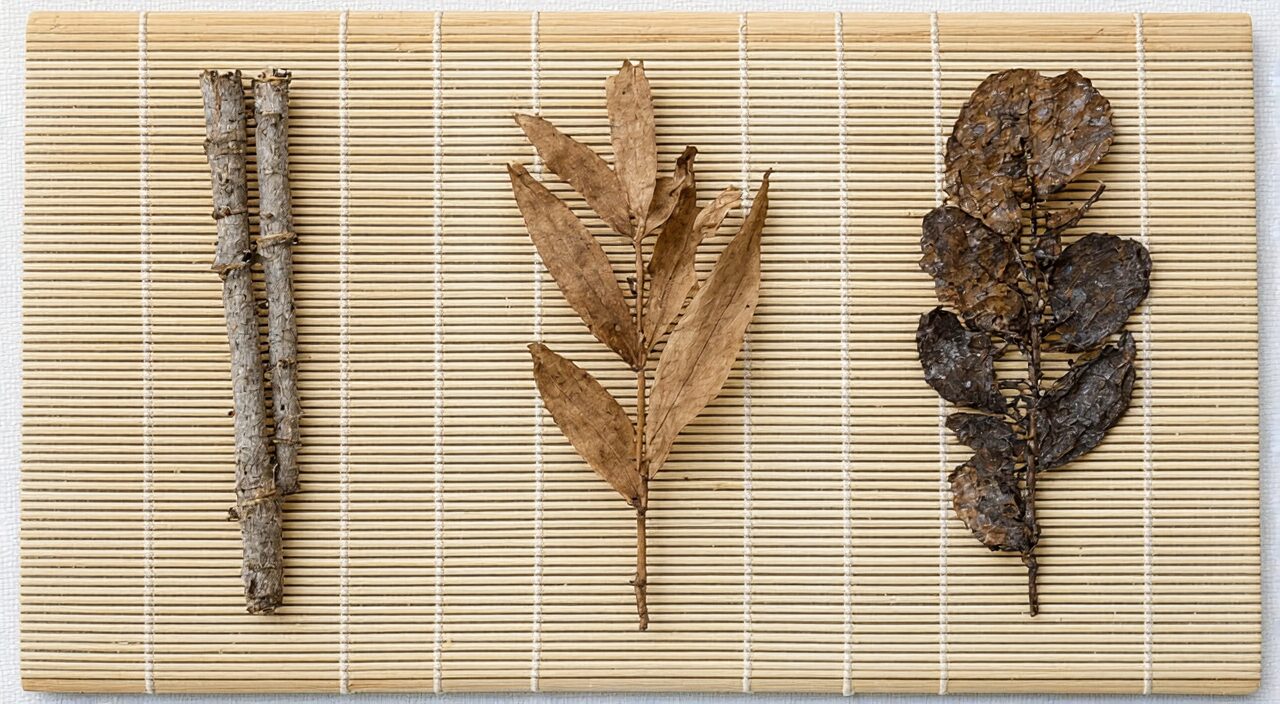
Qu Mai, Bian Xu, and Shi Wei are all commonly used herbs for promoting urination and relieving stranguria. There are overlaps yet clear differences in their appearance and traditional applications. Bian Xu is the dried aerial part of Polygonum aviculare, a plant in the Polygonaceae family. Its stem is prostrate or ascending, and its nodes are also swollen, but its leaves are broader than those of Qu Mai, being oblong-elliptic or lanceolate. It has membranous stipule sheaths (ochreae) that are torn at the top, a characteristic feature of the Polygonaceae family. This differs greatly from the linear opposite leaves of Qu Mai. Shi Wei, on the other hand, is the dried leaf of plants in the Polypodiaceae family. Its leaves are leathery, with dense yellow sporangial clusters on the back, completely different in form from the whole aerial parts of the other two.
Looking at the emphasis in traditional applications, Qu Mai is more inclined to clear damp-heat and guide heat downward, while also invigorating blood and promoting menstruation. Bian Xu is also adept at clearing heat, promoting urination, and killing parasites to relieve itching, but it is more involved in skin eczema and genital itching. Shi Wei is applied both in the upper body to clear the lungs and relieve cough and in the lower body to promote urination and relieve stranguria, with its hemostatic effect receiving more attention than the former two. When looking only at prepared herbal slices, Qu Mai has stem nodes and linear leaves, Bian Xu often has remnants of membranous stipule sheaths, and Shi Wei is a flattened leaf; the three are not difficult to distinguish.
Which Classic Formulas Include Qu Mai?
Several traditional formulas include Qu Mai, which are introduced here only for general understanding. Ba Zheng San is a relatively common formula composed of Qu Mai, Bian Xu, Che Qian Zi (Plantago seed), Hua Shi (talcum), Mu Tong (Akebia stem), Zhi Zi (Gardenia fruit), Da Huang (rhubarb), and Gan Cao (licorice). Traditionally, it is used for manifestations such as heat stranguria, stone stranguria, and painful urination caused by damp-heat pouring downward. In this formula, Qu Mai mainly plays the role of clearing heat and promoting urination.
Xiao Ji Yin Zi contains Xiao Ji (field thistle), Sheng Di Huang (rehmannia root), Hua Shi, Mu Tong, Pu Huang (cattail pollen), Ou Jie (lotus node), Dan Zhu Ye (lophatherum leaf), Dang Gui (Chinese angelica), Zhi Zi, and Gan Cao, along with Qu Mai. It is traditionally used for blood stranguria and blood in the urine, where heat damages the blood vessels. Qu Mai assists in clearing heat and relieving stranguria, allowing heat to be eliminated through urination. Additionally, there is Qu Mai San, a formula named purely after Qu Mai, documented in various classical texts with slightly different compositions, but mostly centered around the approach of clearing heat, promoting urination, expelling stone stranguria, or promoting menstruation.
These formulas belong to traditional empirical combinations. Whether they suit an individual’s condition must be assessed based on constitution, symptoms, and professional judgment. They should not be used as a basis for self-selection.
What Precautions Should Be Noted When Using Qu Mai?
When using Qu Mai, several situations require attention. First, it is generally not recommended during pregnancy or for those with excessive menstrual bleeding, as its action of invigorating blood and promoting menstruation could potentially affect pregnancy or menstrual flow. Second, people with deficient-cold constitution, clear and profuse urination, or without damp-heat or stasis manifestations are traditionally considered less suitable for using the bitter-cold Qu Mai.
More critically, if symptoms such as gross hematuria (visible blood in urine), severe pain during urination, dribbling difficulty, recurrent urinary discomfort, or accompanying blood in the stool, black stools, unexplained weight loss, or anemia occur, one should not self-treat with Qu Mai or other herbs. Instead, consult a doctor promptly to investigate whether there are underlying causes requiring professional management, such as stones, infections, or tumors.
Summary
Qu Mai is a traditional Chinese medicinal herb prepared from the aerial parts. It can be identified by its swollen stem nodes, opposite linear leaves, and slender calyx tube. It is traditionally used for clearing heat, promoting urination, invigorating blood, and promoting menstruation, differing from Bian Xu and Shi Wei in both origin and focus. Due to significant individual constitutional differences, any direction of use should be assessed in combination with actual circumstances and professional advice. One should never self-treat unexplained hematuria or urination difficulties.