
What Is Bing Lang? Medicinal Parts, Identification, and Common Formulas
When people think of betel nut, many associate it with the stimulating snack chewed repeatedly on the streets. However, in traditional Chinese medicine, Bing Lang refers to something quite different — the processed, dried mature seed. Medicinal Bing Lang has a unique appearance and range of applications, completely distinct from the areca nut products chewed daily. For overseas Chinese readers, understanding the identification, uses, and safety boundaries of medicinal Bing Lang is an essential foundation for knowing this herb.
What Does Bing Lang Look Like? How to Identify It?
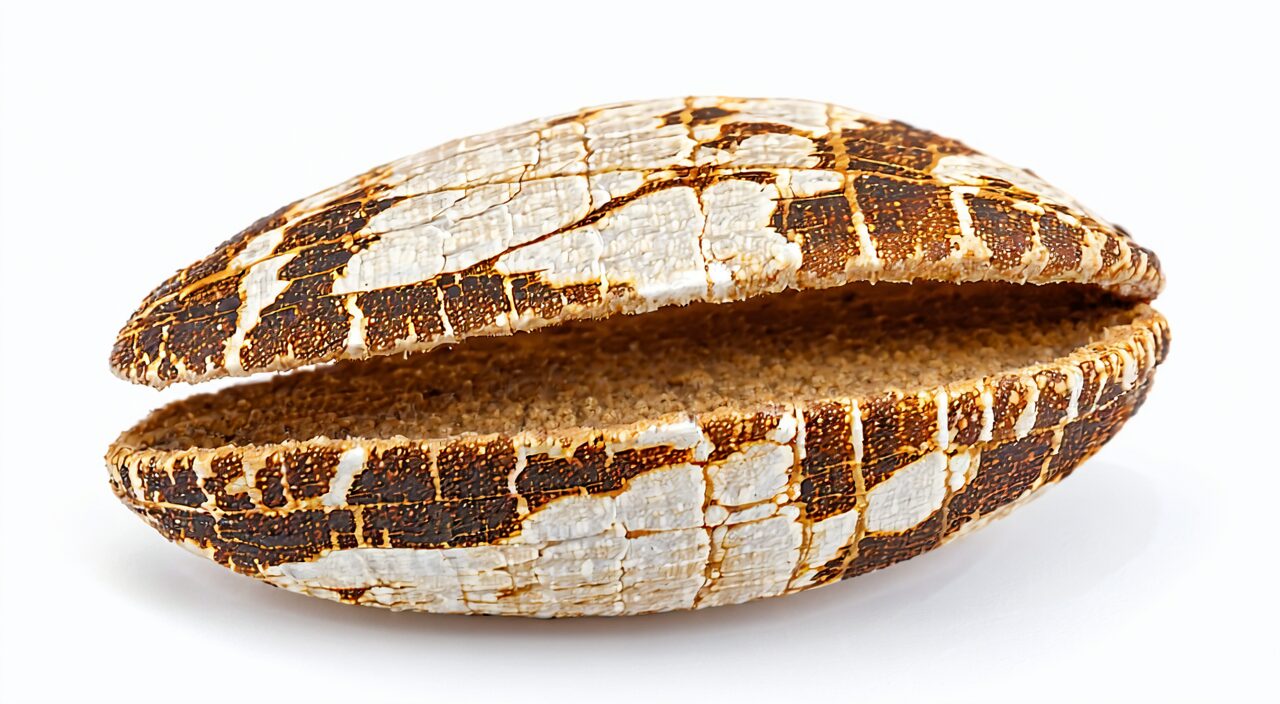
Medicinal Bing Lang decoction pieces are mostly flattened spherical or conical, about 1.5 to 3 cm in height and 2 to 3 cm in diameter at the base. The surface is yellowish-brown or light brown, with fine longitudinal wrinkles and faint net-like textures, and the texture is hard. The most distinctive feature is the cross-section: the seed coat and endosperm interweave to form a marbled pattern of brown and white, commonly known as “Bing Lang pattern.” The commonly available sliced Bing Lang pieces display clear patterns, have a faint odor, and taste astringent when chewed. These visual characteristics are key to identifying medicinal Bing Lang.
What Are the Medicinal Parts of Bing Lang?
Medicinal Bing Lang is derived from the dried mature seeds of the Areca catechu plant of the palm family. After the fruit ripens, it is harvested, the peel is removed, and the seeds are taken out, then boiled, dried, or sun-dried. In clinical use, besides raw Bing Lang, charred Bing Lang is also commonly used. Clean Bing Lang slices are dry-fried over low heat until they turn a burnt yellow color, which makes its action of moving qi and relieving stagnation gentler and less irritating to the stomach. Whether raw or processed, the medicinal part used is always the mature seed, not the fresh fruit with the peel, which is entirely different from the processed parts used for chewing.
How Does TCM Understand Bing Lang?
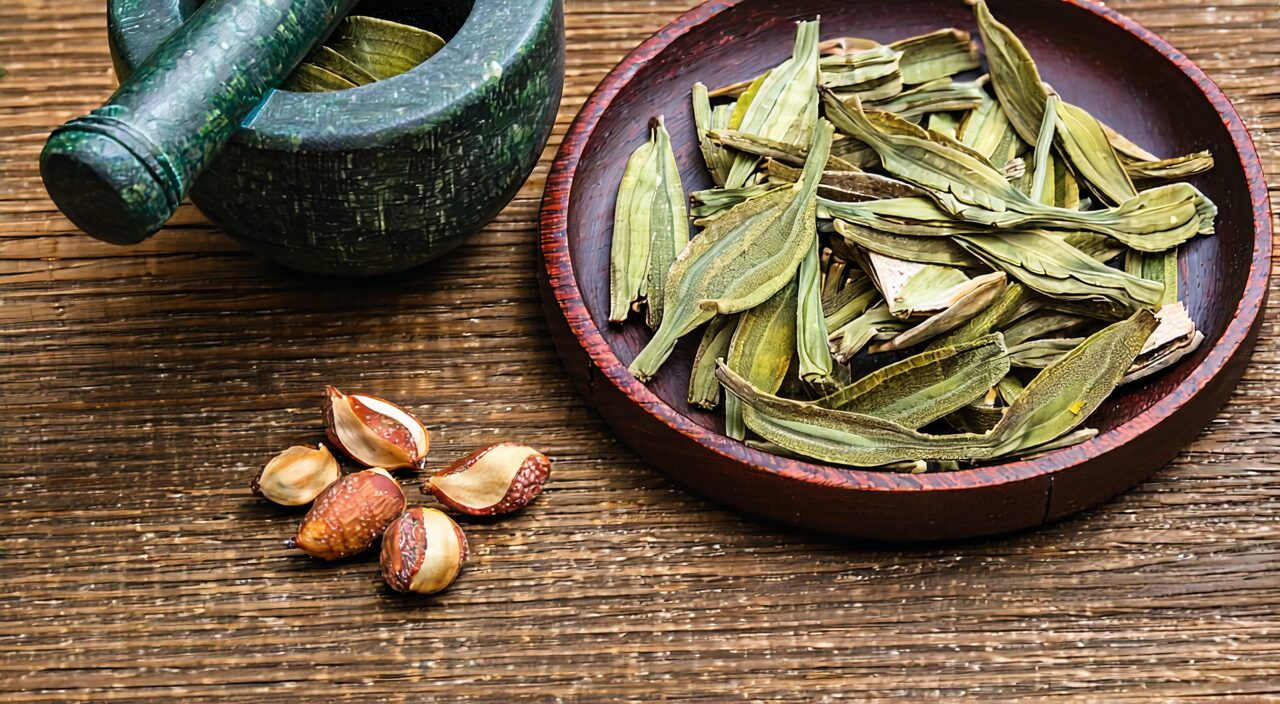
In TCM, Bing Lang is considered bitter and acrid in taste, warm in nature, and it enters the Stomach and Large Intestine meridians. It excels at “breaking stagnation” and “descending.” Traditionally, it is often used for conditions related to qi stagnation, food retention, and dampness. For example, when there is food stagnation, abdominal distension, constipation, or diarrhea with tenesmus, certain formulas utilize Bing Lang to move qi and resolve food stagnation, thereby promoting intestinal peristalsis. Bing Lang has also been used to expel intestinal parasites such as tapeworms and roundworms, and in the past, it was used in the south to “stop malaria” and relieve alternating chills and fever. These understandings are based on traditional experience; whether it is suitable for an individual must be determined by pattern differentiation and modern medical evaluation.
Modern Research: Alkaloids and Safety
Modern research indicates that Bing Lang contains alkaloids such as arecoline and arecaidine, which can stimulate M-cholinergic receptors, promote digestive juice secretion, and enhance intestinal peristalsis. This is somewhat correlated with its traditional qi-moving effect and also provides anthelmintic action. However, arecoline has certain toxic potential; long-term, high-level exposure may affect the cardiovascular and digestive systems. It is crucial to understand that Bing Lang used in Chinese herbal formulas is typically short-term, in small doses, processed, and combined with other herbs. This is entirely different from the carcinogenic risk associated with long-term betel nut chewing. The World Health Organization has classified chewing areca nut as a Group 1 carcinogen, primarily related to long-term physical and chemical irritation of the oral cavity; there is no evidence of equivalent risk from decocting Bing Lang for internal use in TCM, but it still should not be abused casually.
What Is the Difference Between Medicinal Bing Lang and Chewing Betel Nut?
The differences are significant. In terms of processing, medicinal Bing Lang is the dried mature seed, made into hard decoction pieces; chewing betel nut uses fresh areca fruit, typically combined with betel leaf, lime, and spices for chewing, and is a recreational habit. In usage, medicinal Bing Lang is administered short-term under TCM guidance with strict dosage; chewing betel nut involves daily, long-term, repeated chewing. Regarding health risks, no serious safety incidents have been reported with the proper use of medicinal Bing Lang, while long-term betel nut chewing is definitively linked to oral submucous fibrosis and oral cancer. Therefore, medicinal Bing Lang must never be considered a snack to chew at will, nor should the habit of chewing betel nut be taken as a health practice.
Which Herbal Formulas Include Bing Lang?
Bing Lang plays a role in moving qi and resolving food stagnation in many traditional formulas, often combined with herbs that regulate qi and promote digestion. Here are a few common examples:
- Mu Xiang Bing Lang Wan (Aucklandia and Areca Seed Pill): A traditional formula for promoting digestion, used for food stagnation and qi stagnation with epigastric and abdominal distension. Bing Lang assists in moving qi and relieving stagnation.
- Si Mo Tang (Four Milled Herbs Decoction): Moves qi and directs rebellious qi downward, commonly used for chest tightness and abdominal distension. Bing Lang breaks stagnation and descends.
- Bing Lang Si Xiao Wan (Betel Nut Four-Eliminating Pill): Promotes digestion and relieves stagnation, targeting retained food and constipation.
- Jie Nüe Qi Bao Yin (Seven Treasures Malaria-Stopping Decoction): An ancient empirical formula for stopping malaria, used with Chang Shan (Dichroa root) for malaria attacks.
Whether these formulas are suitable must be determined by pattern differentiation based on constitution and symptoms. When experiencing similar discomfort, one should consult a TCM professional first and not self-prescribe.
What Precautions Should Be Taken When Using Bing Lang?
Although Bing Lang has clear indications in TCM, it is not suitable for everyone:
- Contraindicated during pregnancy: Bing Lang moves qi and relieves stagnation; pregnant women should avoid it.
- Use with caution in cardiovascular disease: It may cause increased heart rate and blood pressure fluctuations. Those with tachycardia, hypertension, or coronary heart disease must be evaluated by a physician.
- Caution in those with weak stomach or ulcers: It can irritate the gastrointestinal mucosa. Those with stomach pain, excessive stomach acid, or peptic ulcers should not use it casually.
- Do not use long-term or exceed dosage: Discontinue once symptoms improve; it should not be taken daily as a supplement.
- Do not confuse with chewing betel nut: Those with a habit of chewing betel nut should understand its cancer risk rather than turning to medicinal Bing Lang as a substitute.
If you experience significant nausea, abdominal pain, palpitations, or other discomfort after using formulas containing Bing Lang, discontinue use and consult a doctor promptly. For long-term recurrent digestive issues or accompanied by significant weight loss, chest tightness, etc., priority should be given to investigating other diseases.
Summary
Properly understanding Bing Lang focuses on distinguishing the fundamental difference between medicinal Bing Lang and chewing betel nut, recognizing its visual characteristics and medicinal parts, and understanding the traditional TCM view of its ability to move qi and resolve food stagnation. Although formulas containing Bing Lang such as Mu Xiang Bing Lang Wan and Si Mo Tang are applied clinically, they must be used short-term under pattern differentiation guidance and should not be taken arbitrarily without proper direction. This article is for informational purposes only; any specific health concerns should still be addressed by professional medical advice. # What Is Bing Lang? Medicinal Parts, Identification, and Common Formulas
When people think of betel nut, many associate it with the stimulating snack chewed repeatedly on the streets. However, in traditional Chinese medicine, Bing Lang refers to something quite different — the processed, dried mature seed. Medicinal Bing Lang has a unique appearance and range of applications, completely distinct from the areca nut products chewed daily. For overseas Chinese readers, understanding the identification, uses, and safety boundaries of medicinal Bing Lang is an essential foundation for knowing this herb.