
What Is Qian Hu? Medicinal Parts, Identification, and Common Formulas
When hearing the name “Qian Hu,” many overseas friends may find it unfamiliar, but in the world of traditional Chinese medicine, it is an herb with a rather distinct character. Qian Hu mainly comes from the dried root of the umbelliferous plant Peucedanum praeruptorum and is often used in folk traditions and certain classical formulas. For those interested in learning about Chinese medicinal herbs—especially in the context of respiratory discomfort—understanding what Qian Hu looks like, which part is used, and how it differs from easily confused herbs is a very practical starting point.
What Does Qian Hu Look Like? How to Identify It
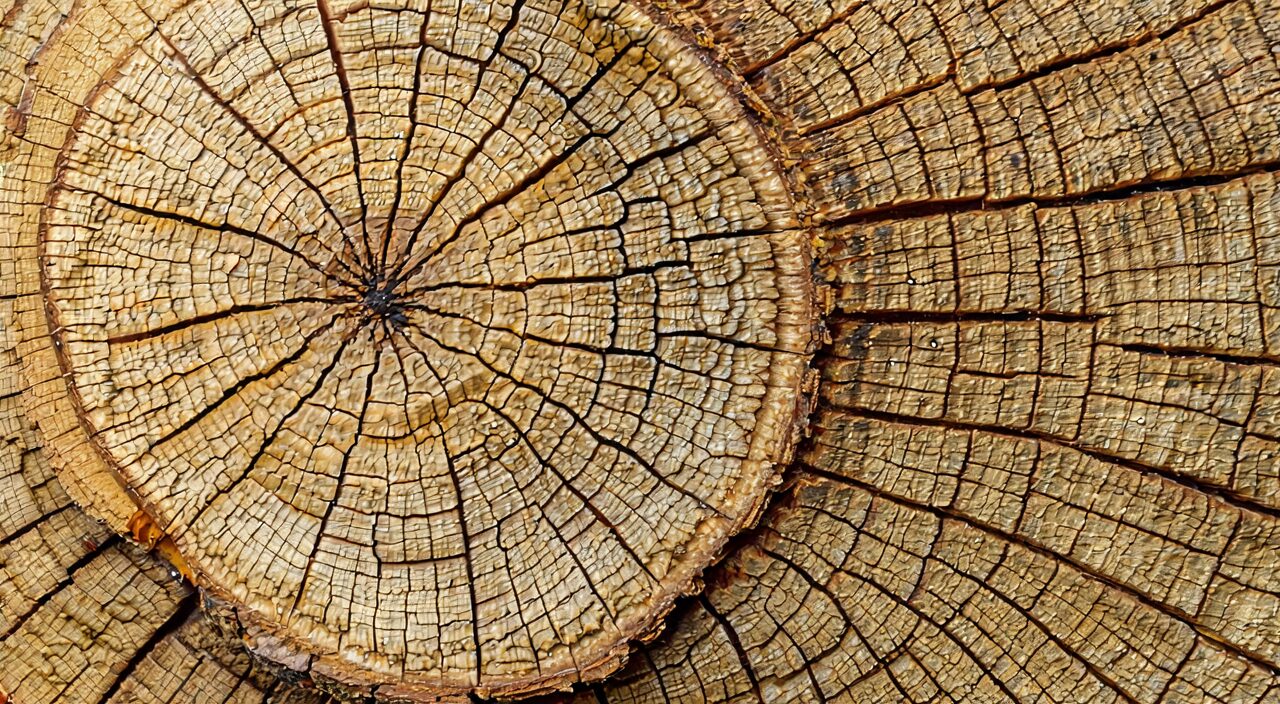
The physical form of Qian Hu is not difficult to recognize once you grasp a few key characteristics. Most Qian Hu roots are irregularly cylindrical, conical, or spindle-shaped, with a grayish-brown to blackish-brown surface. On close observation, you can often see horizontal raised lenticels and fine longitudinal wrinkles or root scars. Scraping the outer skin with a fingernail sometimes reveals a pale yellowish cortex. After cutting, the cross-section is generally somewhat loose and may contain fissures, often showing radiating texture—this is an important distinguishing feature. The aroma is distinctive and strong, a blend resembling certain herbs and woods. When tasted, it is slightly bitter, acrid, and prolonged chewing produces a numbing sensation on the tongue.
Commonly seen decoction pieces on the market are mostly transverse or oblique thin slices with wrinkled edges and a yellowish-white cut surface. If a sample appears overly bright in color or has a very weak odor, factors such as storage time or processing methods should be considered. Overall, the appearance and odor profile of this root are the core clues that set it apart from other root-based herbs with similar looks.
What Is the Medicinal Part of Qian Hu?
The medicinal part of Qian Hu is very clear: its dried root. Harvesting typically occurs in winter when the above-ground parts have begun to wither, or in the following spring before the stems shoot up. At these times, the root is traditionally believed to have accumulated ample nutrients, making it the preferred harvesting window. After digging, the stems, leaves, fibrous roots, and soil are removed, and the roots are dried using different processing methods—some dried directly in the sun and others dried at low temperatures to preserve their color and aroma.
Knowing the medicinal part also helps distinguish Qian Hu from herbs with similar names. For example, “Bai Qian” uses the rhizome and roots, and its shape and texture differ significantly from the dried root of Qian Hu. Many common questions about Qian Hu actually start from “which part is used?” Clarifying this point first allows a better understanding of its functional position in formulas before moving on to traditional perspectives.
How Does TCM Understand Qian Hu?
In the traditional Chinese medicine framework, Qian Hu is not considered a “tonic” herb, but is more inclined toward “dispersing and descending.” It is slightly cold in nature, bitter and acrid in taste, and mainly enters the Lung meridian. The commonly summarized functions are “downbearing qi and transforming phlegm” and “dispersing wind and clearing heat.” Putting these eight words into specific bodily sensations, it roughly means that when a person experiences cough with copious sticky phlegm, chest oppression, and difficult breathing due to external invasion or internal phlegm-dampness, traditional practitioners may consider Qian Hu from the aspect of “dispersing and downbearing lung qi” to help restore the lung’s normal functions of diffusion and depurative downbearing.
Because of its slightly cold nature, Qian Hu has traditionally been more likely considered for coughs with yellow, sticky phlegm and some heat signs. However, this does not mean it suits all types of coughs—for example, cold-type coughs or coughs mainly due to deficiency require holistic assessment and cannot be generalized. In classical texts, Qian Hu is often combined with herbs like Xing Ren (Apricot Seed), Ban Xia (Pinellia Rhizome), and Zi Su Zi (Perilla Fruit) to strengthen effects on transforming phlegm, downbearing qi, and relieving chest fullness. This is just one traditional usage pattern, not a definitive treatment model.
What Directions Does Modern Research Focus On?
Modern phytochemical studies have found that Qian Hu mainly contains coumarins, volatile oils, and organic acids. In some experimental research, Qian Hu extracts have shown preliminary anti-inflammatory, expectorant, and trachea-relaxing effects related to the respiratory tract, though most of these come from cell and animal studies. Such research helps explain some of the experiential observations in traditional use, but at present one cannot directly equate experimental results with confirmed effects in humans. For ordinary consumers, modern research can serve as a supplementary lens for understanding the herb, but should not be used as a basis for self-medication.
How Does Qian Hu Differ from Bai Qian and Chai Hu?
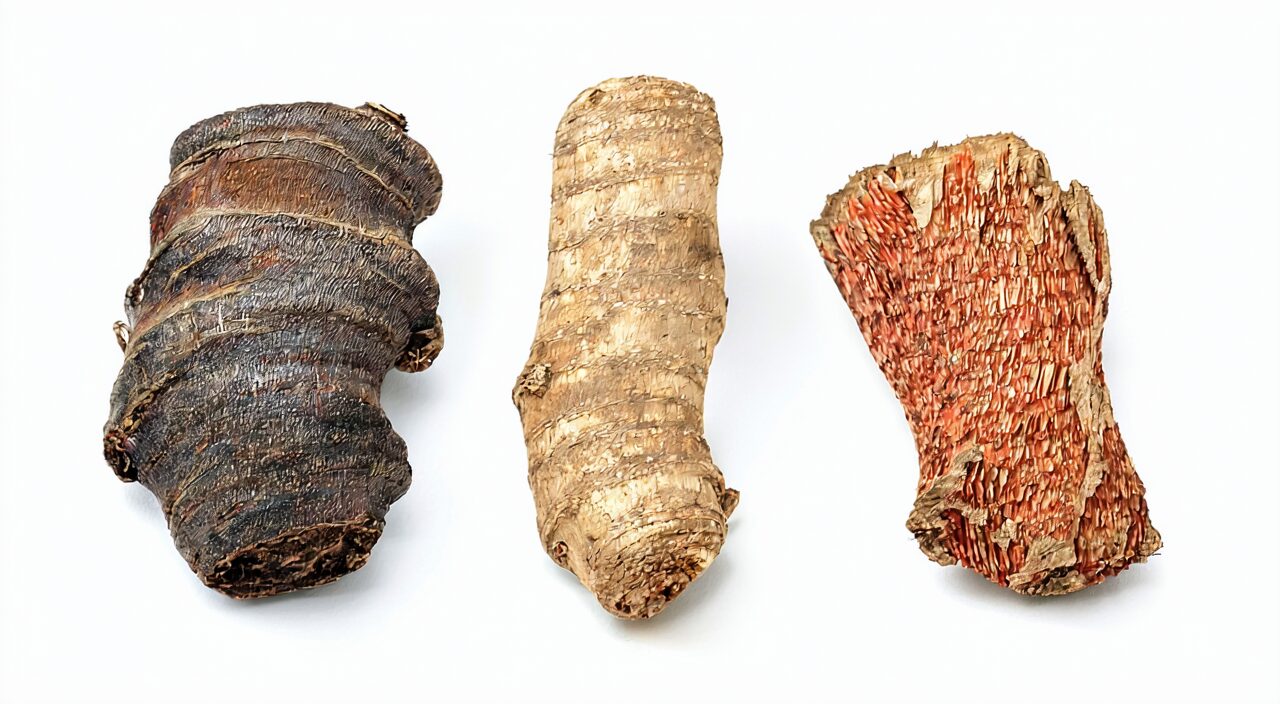
The names Qian Hu, Bai Qian, and Chai Hu are often compared, especially Qian Hu and Bai Qian, which not only sound similar but also overlap in traditional functional directions, making them easy to confuse. From the source perspective, Qian Hu is the root of Peucedanum praeruptorum, Bai Qian is the rhizome and root of Cynanchum stauntonii or Cynanchum glaucescens, and Chai Hu is the root of Bupleurum chinense or Bupleurum scorzonerifolium. Although all three may be associated with respiratory discomfort, their traditional positioning is not the same.
In terms of appearance, Qian Hu roots are robust and irregular, with radiating texture on the cut surface and a strong aroma. Bai Qian rhizomes are long, slender tubes or nodular, with a hollow or pith-filled cross-section and a mild odor. Chai Hu roots often have many branches, a reddish-brown or blackish-brown surface, a hard texture, and a fibrous cross-section. By combining appearance and odor, one can usually make a preliminary distinction.
In traditional application, Qian Hu is more inclined to downbear qi, transform phlegm, disperse wind, and clear heat, commonly used for phlegm-heat coughs and wind-heat coughs. Bai Qian focuses more on downbearing qi and eliminating phlegm, addressing cough with copious phlegm caused by qi counterflow. Chai Hu, on the other hand, mainly acts to soothe the liver and relieve depression, raise yang qi, and reduce fever; even though it sometimes appears alongside cough formulas, the underlying pathogenesis it targets is different. Therefore, even if several of these herbs appear in similar formulas, it does not mean they can substitute for one another.
Which Formulas Use Qian Hu?
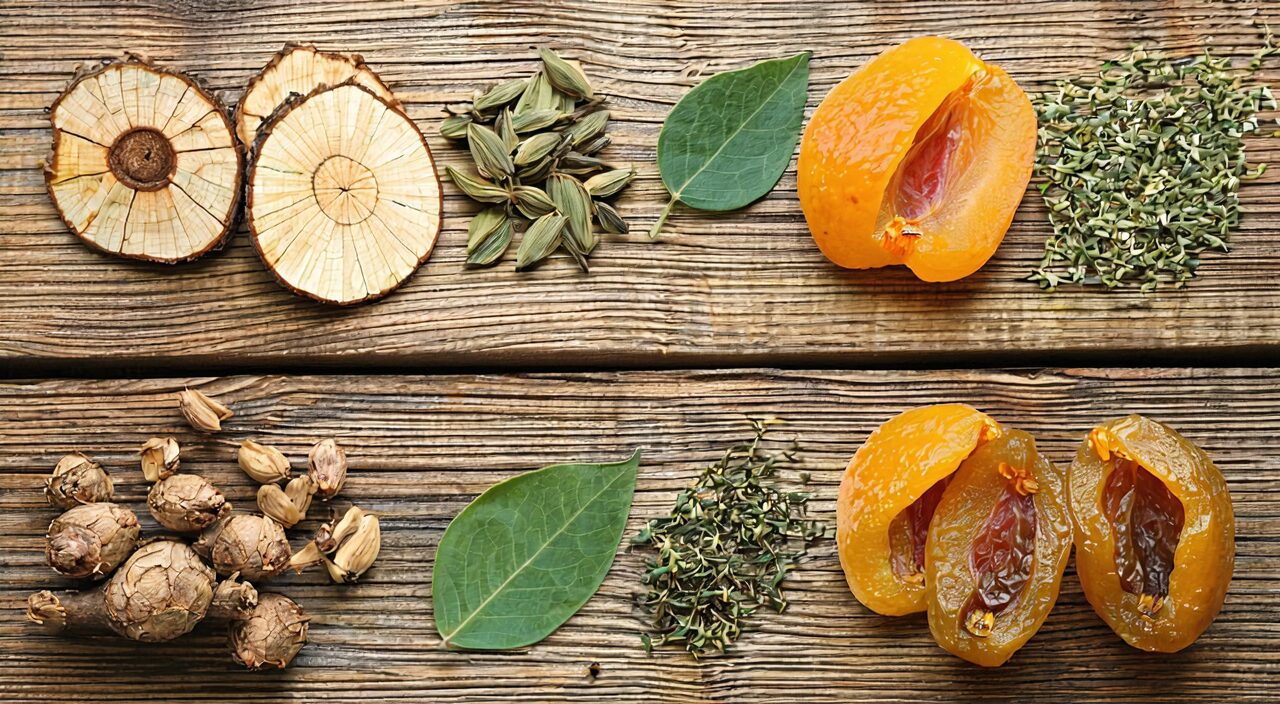
Qian Hu plays an important role in many traditional formulas, most of which center on lung qi failing to descend, copious phlegm, and cough. Below are several representative examples.
Xing Su San is suited for a pattern of “cool dryness” external invasion, typically presenting with mild aversion to cold, nasal congestion, and cough with thin, white phlegm. In this formula, Qian Hu is combined with Xing Ren, Su Ye, etc., aiming to both mildly release the superficial cool dryness and downbear lung qi, helping restore normal diffusion and descending function.
Su Zi Jiang Qi Tang is traditionally used for “excess above and deficiency below” type wheezing and cough, characterized by copious phlegm, chest oppression, and rapid breathing, possibly accompanied by weakness and soreness of the lower back and knees or coldness in the lower limbs. Here, Qian Hu is used together with Su Zi, Ban Xia, Hou Po, etc., designed to downbear qi, transform phlegm, and calm panting, with the addition of Dang Gui and Rou Gui to take care of the lower body. This formula has a distinct structure and reflects the TCM principle of “treating the upper and lower simultaneously.”
Shen Su Yin is more inclined toward qi deficiency with external invasion. If a person tends to fatigue and shortness of breath and then contracts an external pathogen, presenting with aversion to cold, cough, and copious phlegm that is difficult to expectorate, traditional practice might consider Shen Su Yin. The formula includes Dang Shen (Codonopsis) to supplement qi, along with Qian Hu, Jie Geng, and Zhi Qiao to disperse and downbear lung qi, creating a combination of supporting upright qi and dispelling pathogens.
Ren Shen Bai Du San has an even longer history and is often used for qi deficiency accompanied by invasion of wind, cold, and dampness. Typical manifestations include aversion to cold, fever, headache with stiffness of the neck, generalized body aches, and cough with phlegm. In this formula, Qian Hu works together with Qiang Huo, Du Huo, Chai Hu, Chuan Xiong, and others to discharge wind, diffuse the lungs, regulate qi, and stop cough.
These formulas are all summaries of traditional experience and address different specific situations. Whether they are suitable must be determined by combining an individual’s constitution, symptom characteristics, and the pattern differentiation of a professional.
What Precautions Should Be Taken When Using Qian Hu?
Although Qian Hu is widely used, it is not suitable for everyone. Traditional experience holds that people with yin deficiency and dry cough—characterized by dry cough with little phlegm, hoarseness, and pronounced dryness of the mouth and throat—may not be well-suited for using Qian Hu alone, because its bitter, acrid, and slightly cold characteristics could further consume yin fluids. Those with marked qi deficiency, especially individuals with chronic cough, weak coughing ability, shortness of breath, and spontaneous sweating, also require caution if not combined with qi-supplementing herbs.
Some people may experience stomach discomfort with Qian Hu, which may relate to its volatile oil components; therefore, it is generally recommended to take it after meals or start with a small amount. Additionally, due to the confusion between Qian Hu and Bai Qian in the market, attention should be paid to source and physical characteristics when purchasing on your own, and you may ask an experienced individual to help with identification. If coughing persists for a long time, recurs frequently, or is accompanied by other symptoms such as chest pain, abnormal breathing, or weight loss, consulting a doctor should be the priority rather than merely relying on a single herb.
Summary
Qian Hu is a traditional Chinese medicinal herb whose dried root is used. It can be identified by its irregular root shape, horizontal lenticels, radiating cut surface, and strong aroma. TCM often understands its action as downbearing qi, transforming phlegm, dispersing wind, and clearing heat. In classic formulas such as Xing Su San and Su Zi Jiang Qi Tang, it is typically employed around the idea of lung qi failing to descend, copious phlegm, and cough. However, Qian Hu is not universally applicable to all cough types; before use, one must consider one’s own constitution and specific manifestations, seek professional advice when necessary, and avoid the risks of self-diagnosis.