
What Is Bai Guo? Medicinal Parts, Identification, and Common Formulas
Bai Guo is the mature seed of the ginkgo tree. In daily life, people more commonly call it “ginkgo nut” (yin xing guo). Every autumn, fallen seeds with fleshy outer coats can often be seen beneath ginkgo trees. After cleaning, they become the Bai Guo we are familiar with. However, there are clear differences between consuming ginkgo nuts as food and using Bai Guo medicinally in terms of usage methods and safety considerations. This article will help overseas readers build a clear understanding of Bai Guo from the perspectives of appearance identification, medicinal parts, understanding in traditional Chinese medicine, common formulas, and safety in use.
What Does Bai Guo Look Like? How to Identify It?
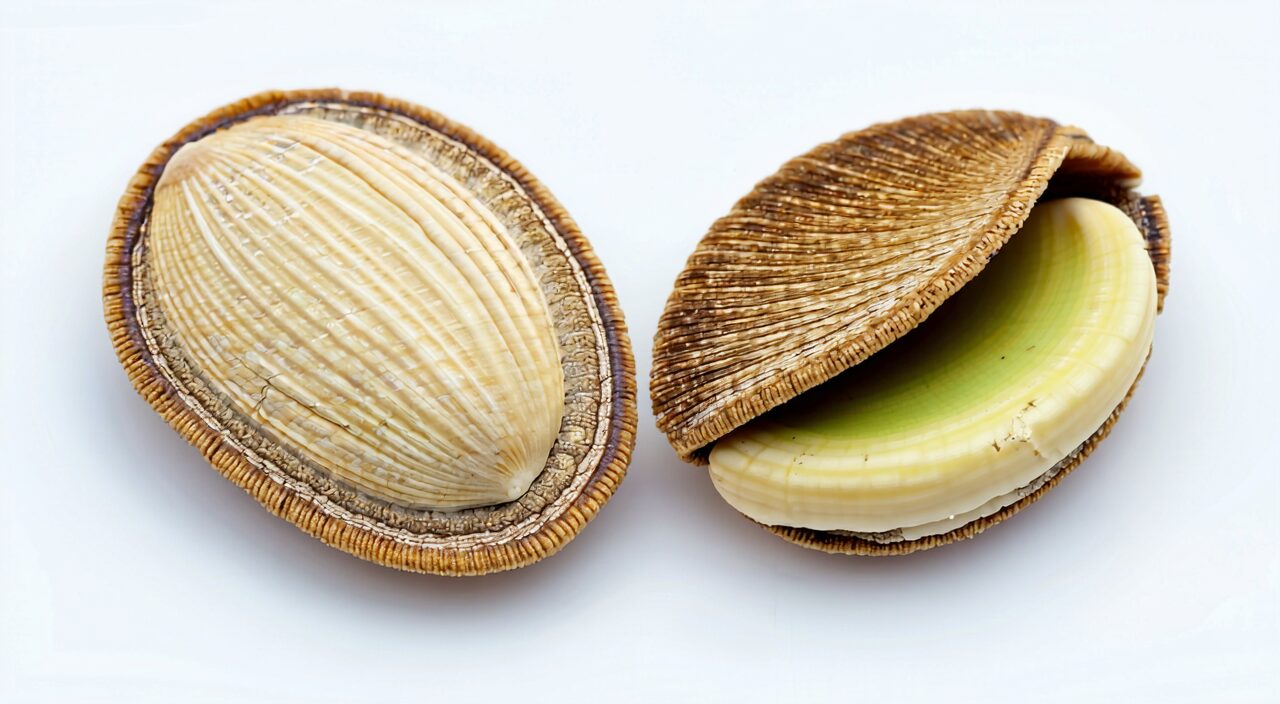
The intact fresh ginkgo seed is elliptical or ovoid. When mature, the fleshy outer seed coat (sarcotesta) is orange-yellow with a white powdery bloom. The Bai Guo crude drug and edible ginkgo nuts commonly seen on the market have usually had this outer coat removed, revealing the hard, stony middle seed coat (sclerotesta) inside. Dried Bai Guo is elliptical, about 1.5 to 2.5 cm long, with a bony shell. The surface is yellowish-white or pale brownish-yellow, smooth and glossy, slightly pointed at one end, and at the other end there is a raised ridge, often with hypha-like traces at the base. After cracking open the shell, there is a thin, semi-transparent, reddish-brown inner seed coat (endotesta) tightly adhering to the kernel. After removing the inner seed coat, the yellowish-green, fleshy, nearly round kernel becomes visible. It is rich in oil, pliable, and the cut surface is often pale yellow or nearly white. The fresh Bai Guo kernel is crisp and tender, becoming hard upon drying. These characteristics enable relatively easy identification of Bai Guo.
What Is the Medicinal Part of Bai Guo?
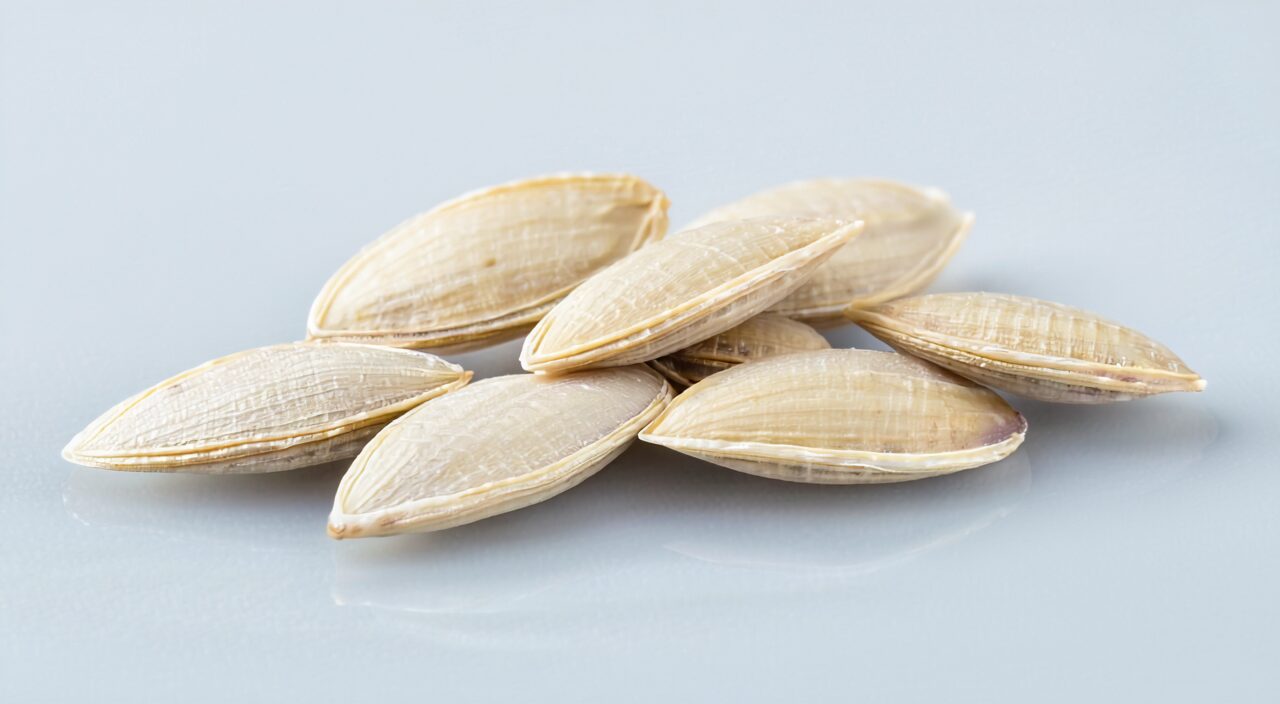
According to pharmacopoeia specifications, the medicinal part of Bai Guo is the mature seed of Ginkgo biloba after removal of the fleshy outer seed coat. The whole fruit with its pulp is not used medicinally; instead, the seeds are piled and macerated, rubbed and washed to remove the outer coat, and then sun-dried or oven-dried to obtain the bony seed. Bai Guo crude drug is mostly elliptical, with a yellowish-white, hard, and smooth shell. After cracking it open, the membranous inner seed coat and the kernel can be seen. Some processed forms use the shelled Bai Guo kernel directly. As a traditional Chinese medicinal, the Bai Guo kernel is more prominent for its cough-suppressing and astringent actions, while the shell is generally not used. Therefore, understanding that the medicinal part of Bai Guo is the “mature seed,” and not the whole fleshy ginkgo fruit, helps avoid incorrect harvesting and misuse.
How Does Traditional Chinese Medicine Understand Bai Guo?
In traditional Chinese medicine theory, Bai Guo is neutral in nature, sweet, bitter, and astringent in flavor, and enters the lung and kidney meridians. Its primary actions are to astringe the lung to relieve wheezing, and to stop vaginal discharge and reduce urination. When lung qi fails to astringe properly, leading to chronic cough and deficiency-type wheezing, or when weakness of the lower origin causes increased vaginal discharge, frequent urination, or enuresis, Bai Guo is often included in corresponding therapeutic strategies. For example, in patterns characterized by coughing, rapid breathing, profuse sputum that is difficult to expectorate, and chest and epigastric fullness, Bai Guo may traditionally be combined with herbs such as ma huang (Ephedra) and sang bai pi (Morus alba root bark) in formulas; for excessive leukorrhea with yellow or white discharge due to spleen-kidney deficiency and downward pouring of damp-turbidity, Bai Guo is also commonly seen in astringent formulas for arresting vaginal discharge. However, whether to use raw or processed Bai Guo and the dosage must be determined based on individual constitution and pattern presentation, and should not be generalized.
Modern Research Findings on Bai Guo’s Components and Safety Risks
Modern research has isolated a variety of chemical constituents from Bai Guo. Among them, the ginkgo toxin (primarily 4′-O-methylpyridoxine) has drawn the most attention. This substance is neurotoxic and can interfere with the metabolism of vitamin B6 in the body, thereby affecting nervous system function. The toxin content is relatively high in raw Bai Guo. Consuming it raw or in excessive amounts at one time can easily lead to gastrointestinal reactions such as nausea, vomiting, abdominal pain, and diarrhea; in severe cases, restlessness, convulsions, respiratory difficulty, and even loss of consciousness may occur. Heating can reduce some of the toxicity, but it cannot eliminate it completely. In addition, Bai Guo also contains small amounts of potentially allergenic compounds such as ginkgolic acids. Therefore, the safe use of Bai Guo must be based on moderate consumption and thorough cooking; it should not be eaten raw or consumed in large quantities as a snack.
What Is the Difference Between Bai Guo and Ginkgo Leaf?
Both Bai Guo and ginkgo leaf come from the ginkgo tree, but their medicinal parts, chemical composition, and uses differ greatly. Ginkgo leaf uses the leaves as medicine and is often processed into ginkgo leaf extract in modern times. It contains components such as ginkgo flavonoids and ginkgolides, and is commonly used in health products aimed at improving cerebral and peripheral circulation and protecting nerves. In contrast, Bai Guo, as the seed, traditionally focuses on astringing the lung, stopping vaginal discharge, and reducing urination. Ginkgo leaves should not be casually steeped in water like ordinary leaves, because the ginkgolic acids they contain may cause adverse reactions; only standardized extracts from which ginkgolic acids have been removed are relatively safe. Bai Guo must be processed or thoroughly cooked, and the dosage must be strictly controlled. The two cannot be used interchangeably. Understanding this is crucial for the safe use of ginkgo resources.
Which Herbal Formulas Contain Bai Guo?
Bai Guo is not a particularly frequently used ingredient in historical formulas, but several representative formulas have been developed around its actions of astringing the lung to relieve wheezing and astringing to stop vaginal discharge.
Ding Chuan Tang (Arrest Wheezing Decoction) originates from She Sheng Zhong Miao Fang (A Marvelous Book for Health Preservation) of the Ming Dynasty. In this formula, Bai Guo is combined with ma huang (Ephedra), kuan dong hua (Tussilago farfara flower), sang bai pi (Morus alba root bark), huang qin (Scutellaria baicalensis root), and other herbs. It is traditionally used as an adjunctive approach for patterns involving phlegm-heat obstructing the interior and failure of lung qi to descend, presenting with cough, wheezing, profuse yellow sputum, and chest and epigastric distension. When used, it should be modified by a qualified professional according to the specific pattern.
Yi Huang Tang (Change Yellow Discharge Decoction) originates from Fu Qing Zhu Nü Ke (Fu Qingzhu’s Obstetrics and Gynecology). It consists of shan yao (Dioscorea opposita rhizome), qian shi (Euryale ferox seed), huang bai (Phellodendron amurense bark), che qian zi (Plantago asiatica seed), and Bai Guo. It is often used as an adjunctive approach for excessive yellow, thick, sticky vaginal discharge, lower back soreness, and fatigue caused by spleen-kidney deficiency with damp-heat pouring downward. It is a commonly used formula in TCM gynecology.
In addition, there are folk empirical formulas such as Bai Guo Tang (Ginkgo Seed Decoction), often combined with xing ren (Apricot kernel) and su zi (Perilla fruit), used as adjunctive approaches for some chronic coughs with phlegm and wheezing. In modern times, Bai Guo has also been incorporated into proprietary Chinese medicines for settling wheezing, with indications usually labeled for cough, wheezing, and profuse sputum. Different formulas or preparations have their own emphasis. Whether a specific formula suits an individual must be determined based on constitution, clinical manifestations, and by consulting product instructions or professional advice. It is inadvisable to blindly select a formula on one’s own.
What Precautions Should Be Taken When Using Bai Guo?
Although Bai Guo is commonly used in dietary therapy and medicinal cuisine, its safety risks cannot be ignored. The most important point is that it must not be eaten raw or consumed in large quantities. In general, for adults, the daily medicinal dose of dried Bai Guo should not exceed 10 grams, and when consuming fresh Bai Guo, the amount should be further reduced and it must be thoroughly cooked. Children are more sensitive to ginkgo toxin, and infants and young children are not recommended to casually consume it. During pregnancy and breastfeeding, it is best to avoid Bai Guo and related products unless specifically advised by a healthcare professional. If symptoms such as nausea, vomiting, dizziness, restlessness, limb twitching, or unusual fatigue occur while taking formulas or proprietary Chinese medicines containing Bai Guo, stop use immediately and seek medical help as soon as possible, because these may be early signs of acute poisoning requiring urgent management. Additionally, since Bai Guo may affect blood coagulation, people taking anticoagulant medications or those scheduled for surgery should consult relevant professionals in advance to avoid adverse interactions.
Summary
Bai Guo is a distinctive traditional medicinal substance. Its common name, “ginkgo nut,” and the medicinal Bai Guo share the same origin, but the purposes of use and safety considerations are markedly different. Understanding the seed morphology of Bai Guo, its traditional actions of astringing the lung and stopping discharge, and a general direction of classic formulas such as Ding Chuan Tang and Yi Huang Tang can provide foundational knowledge for those interested in this medicinal. The most critical point is to remember that Bai Guo contains toxic compounds; consuming it raw or in excessive amounts is very likely to cause poisoning. Whether used in cuisine or as medicine, it must be used cautiously with a full understanding of personal conditions and professional advice. This article is for health education reference only and cannot replace professional diagnosis or individualized treatment recommendations.