
What Is Qing Meng Shi? Its Medicinal Parts, Identification, and Common Formulas
In traditional Chinese medicine, there is a special category of mineral-based remedies, and Qing Meng Shi (chlorite schist) is one of them. It is neither a plant root nor an animal part, but a type of metamorphic rock. Due to the similarity in name, many people confuse Qing Meng Shi with “Jin Meng Shi” (mica schist). This article will guide you through a systematic understanding of Qing Meng Shi from the perspectives of appearance identification, medicinal parts, TCM understanding, common formulas, and usage precautions, providing a relatively clear reference for overseas enthusiasts of Chinese medicine.
What Does Qing Meng Shi Look Like? How to Identify It?
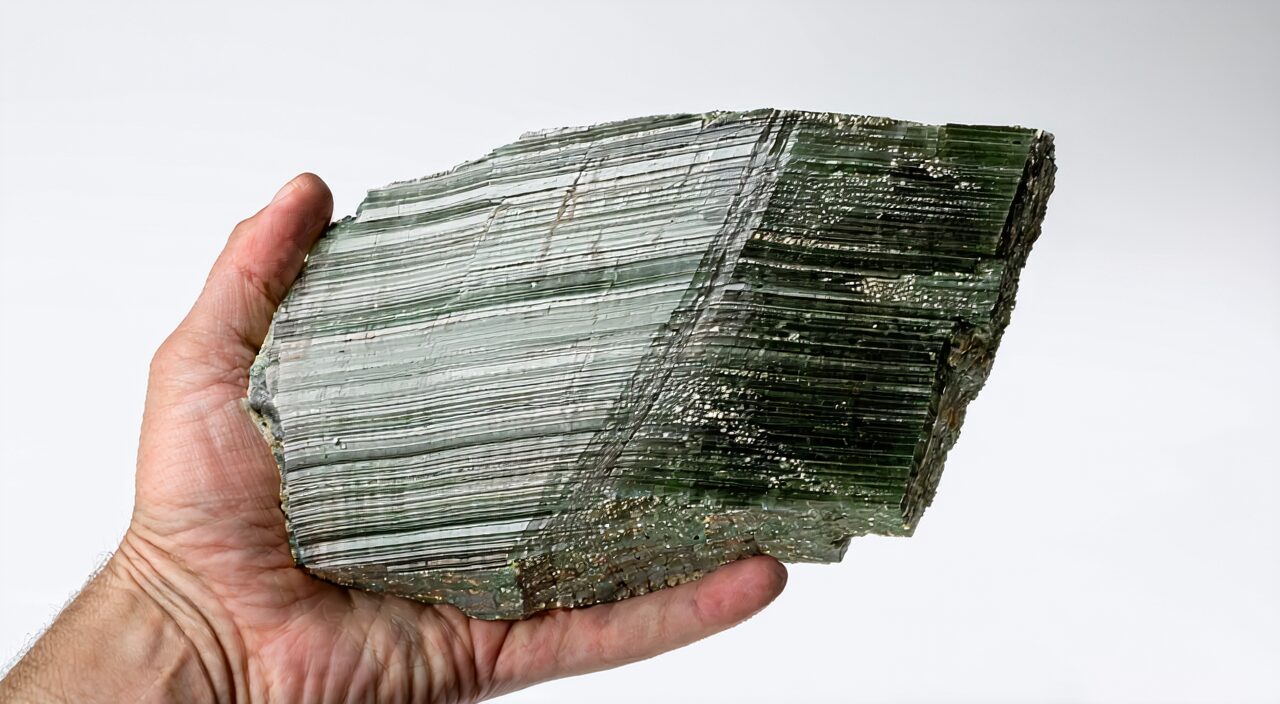
Qing Meng Shi is a metamorphic mineral mainly derived from chlorite schist. The crude drug typically appears as irregular lumps or granular fragments of varying sizes. Its external color is predominantly bluish-gray or grayish-green, and it has a brittle texture that flakes easily. The most distinctive feature is its layered, flaky cross-section, which displays glittering metallic specks under light—this is due to the presence of mica and other mineral components. Under a magnifying glass, you can see fine scale-like structures. Some lower-quality Qing Meng Shi may contain yellowish-brown spots, but the overall tone remains grayish-green. For identification, you can rely on the color, layered cross-section, and metallic luster to distinguish it from other minerals. Traditional identification experience also includes hand-weighing: Qing Meng Shi is relatively light, which serves as another reference indicator.
What Is the Medicinal Part of Qing Meng Shi?
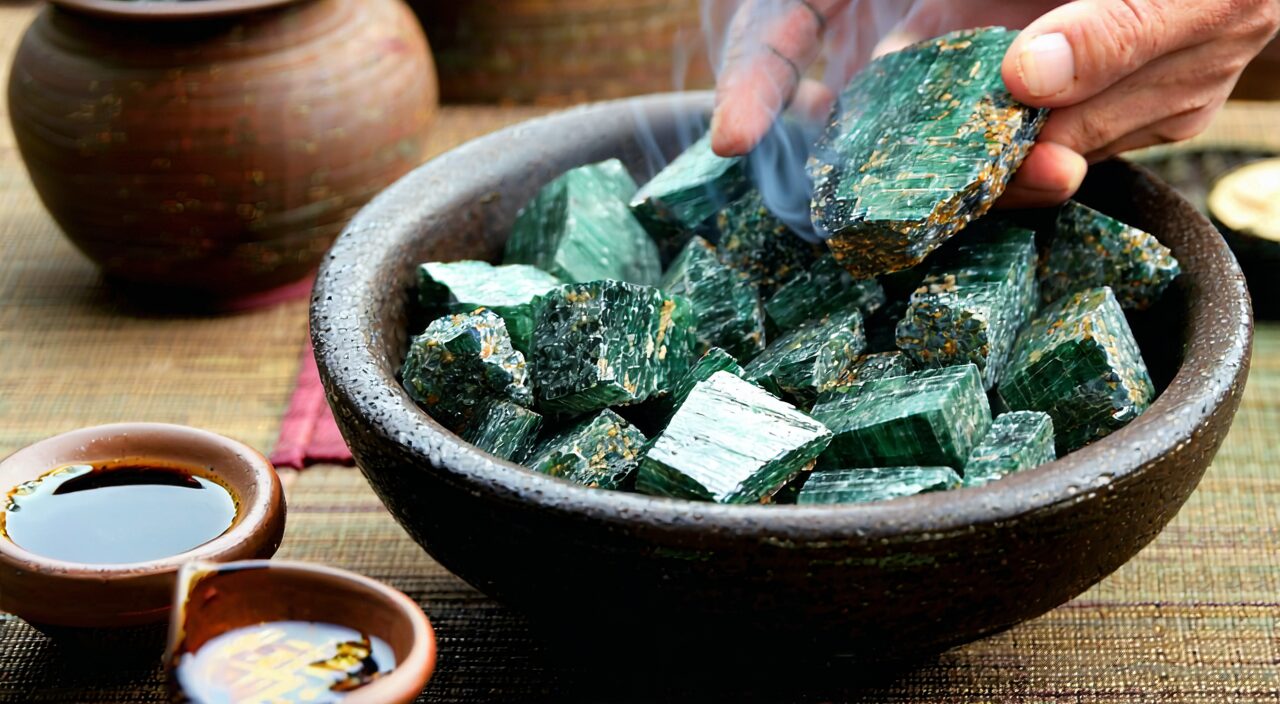
As a mineral medicine, the medicinal part of Qing Meng Shi is the metamorphic rock itself. Before use, it must undergo cleaning and processing. Cleaning mainly involves removing impurities such as soil and stones, rinsing with clean water, and then sun-drying or low-temperature drying. In clinical practice, calcined Qing Meng Shi is most commonly used. The processing method involves placing cleaned Qing Meng Shi in a refractory container and calcining it over strong fire until it turns red-hot, then removing it to cool. Sometimes it is further quenched in vinegar to enhance its action of directing qi downward and dispelling phlegm. After calcination, the color of Qing Meng Shi changes; the surface may appear brownish or iron-gray, and its texture becomes crisp and brittle, making it easier to pulverize and release active components. Understanding its medicinal origin and processing helps us appreciate why prepared products, rather than raw ore, are used in Chinese medicine.
How Does TCM Understand Qing Meng Shi?
In traditional Chinese medicine theory, Qing Meng Shi is salty and neutral in nature, and it enters the Lung and Liver meridians. Its traditional actions can be summarized as “directing downward to expel phlegm and descending qi, calming the liver and relieving convulsions.” The idea of “expelling phlegm and descending qi” refers to its ability to guide downward and help eliminate sticky, stubborn phlegm that congests the chest and diaphragm, causing coughing, wheezing, and chest tightness. “Calming the liver and relieving convulsions” means it pacifies conditions caused by liver qi rising counterflow, such as irritability, palpitations, and even convulsions. In classic texts, Qing Meng Shi is often used for patterns like phlegm-heat convulsive seizures and stubborn phlegm-induced cough and dyspnea. It is important to emphasize that these understandings are based on the traditional pattern differentiation system and not on modern pharmacological concepts. Suitability must be assessed according to individual constitution and symptoms under professional guidance. Qing Meng Shi is mainly prepared into pills and powders rather than decocted alone, because its heavy, sinking nature makes it difficult to fully extract in a water decoction.
What Does Modern Research Say About Qing Meng Shi?
Modern research mainly focuses on the mineral composition and safety of Qing Meng Shi. It primarily contains silicates, including iron, magnesium, and aluminum silicates, along with small amounts of mica. The hydrated magnesium aluminum silicates in its composition are thought to be related to adsorptive and settling effects. In recent years, quality control of mineral drugs has been strengthened, with a particular emphasis on testing for heavy metals and harmful elements, because mineral sources may carry risks of excessive lead, arsenic, or mercury. Qualified Chinese medicinal materials require strict sourcing and testing reports. However, current modern research is mostly concentrated on compositional analysis and safety assessment, while direct clinical pharmacological data remain limited. Therefore, the understanding of Qing Meng Shi is still mainly based on traditional usage experience, and its modern effects should not be exaggerated. For overseas users, if you encounter products containing Qing Meng Shi, it is important to pay attention to the quality testing information of the raw materials.
What Are the Differences Between Qing Meng Shi, Jin Meng Shi, and Magnetite?
Qing Meng Shi and Jin Meng Shi are two different mineral drugs that are easily confused. Qing Meng Shi comes from chlorite schist; its color is bluish-gray or grayish-green, with a layered, flaky cross-section and a metallic luster. Jin Meng Shi, on the other hand, originates from mica schist or vermiculite schist, typically appearing brownish-yellow or yellowish-brown with a golden sheen, lighter weight, and more distinct scales. Although their traditional functions overlap—both are used to expel phlegm and calm convulsions—Jin Meng Shi is said to act more on the Liver meridian, while Qing Meng Shi focuses more on stubborn phlegm and food stagnation. Magnetite (Ci Shi) is completely different; it is an oxide mineral, black and magnetic, used mainly for calming convulsions, anchoring the mind, and aiding the kidneys in grasping qi to relieve dyspnea. Its downward-directing action differs considerably from the phlegm-descending effect of the “Meng Shi” type minerals. Understanding these differences helps avoid confusion when selecting and learning about related traditional formulas.
Which Formulas Use Qing Meng Shi?
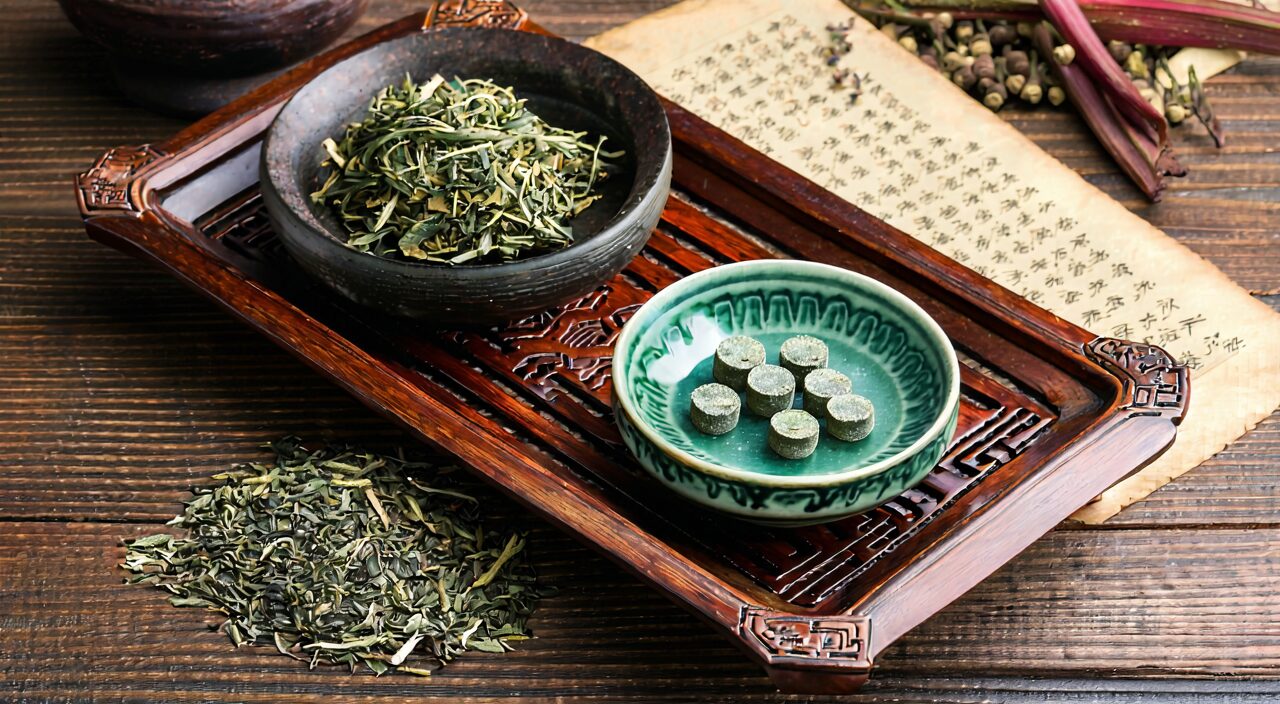
Classical formulas containing Qing Meng Shi mainly include Meng Shi Gun Tan Wan (Chlorite Schist Phlegm-Rolling Pill), Gun Tan Wan (Phlegm-Rolling Pill), and Qing Meng Shi San (Chlorite Schist Powder). Meng Shi Gun Tan Wan is the representative formula for treating excess-heat and stubborn phlegm patterns; it is composed of Qing Meng Shi, Rhei Radix et Rhizoma (Da Huang), Scutellariae Radix (Huang Qin), Aquilariae Lignum Resinatum (Chen Xiang), and others, traditionally used for symptoms such as intense phlegm-heat, constipation, and mental agitation. Gun Tan Wan follows a similar approach, pairing Qing Meng Shi with Da Huang to purge heat-phlegm. Qing Meng Shi San takes Qing Meng Shi as the main ingredient, combined with a small amount of other herbs, for conditions like pediatric phlegm-heat convulsive disorders. These formulas are mostly prepared as pills or powders. Their use should be determined by the degree of phlegm-heat and the individual’s constitution and deficiency-excess patterns; they are not suitable for cold-deficiency patterns or those with spleen-stomach weakness. It is important to note that these formulas should only be understood as options within traditional regulatory thinking. In practice, they must be prescribed by a TCM professional based on pattern differentiation and individual conditions, combined with product instructions—self-medication is not advisable.
What Precautions Should Be Taken When Using Qing Meng Shi?
As a mineral medicine, Qing Meng Shi must be used with extra caution. First, pregnant women should absolutely avoid it, because its strong downward-directing and phlegm-descending actions may affect pregnancy. Second, people with spleen-stomach cold deficiency, loose stools, or a weak constitution are not suitable candidates, as it may further burden the spleen and stomach. The quality of the mineral source is critically important; Qing Meng Shi obtained from irregular channels may contain excessive heavy metals or be mixed with other harmful minerals. Moreover, Qing Meng Shi should not be taken over a long term without professional guidance. Even when the pattern seems appropriate, it should be discontinued or adjusted once symptoms improve, as prolonged use may place unnecessary strain on digestive function or liver and kidney function. If severe, persistent, or recurrent symptoms such as coughing with phlegm, chest tightness, palpitations appear, or are accompanied by marked anxiety or weight loss, it is essential to consult a doctor or healthcare professional and not rely solely on self-treatment with this mineral medicine.
Summary
As a unique mineral medicine, Qing Meng Shi is traditionally recognized for its actions of expelling phlegm, descending qi, calming the liver, and relieving convulsions. Representative formulas such as Meng Shi Gun Tan Wan are used in managing excess-heat stubborn-phlegm patterns, but all uses require professional guidance and consideration of individual conditions. Correctly identifying its appearance and distinguishing it from Jin Meng Shi is helpful for safe selection. Quality and safety of the mineral source are prerequisites for use, and long-term self-medication should be avoided. This article is for informational reference only and cannot replace professional diagnosis or treatment advice. For specific health concerns, please consult a licensed healthcare practitioner.