
What Is Shou Wu Teng? Medicinal Parts, Identification, and Common Formulas
For overseas friends who follow traditional Chinese medicine, the name “Shou Wu Teng” may be both familiar and unfamiliar. It comes from the same source as the well-known tonic herb He Shou Wu, but differs significantly in the medicinal part used and the direction of use. This article will cover the visual identification, medicinal part, traditional understanding, common formulas, and precautions for Shou Wu Teng, helping readers objectively understand this stem herb commonly used in calming and spirit-quieting approaches.
What Does Shou Wu Teng Look Like? How to Identify It?
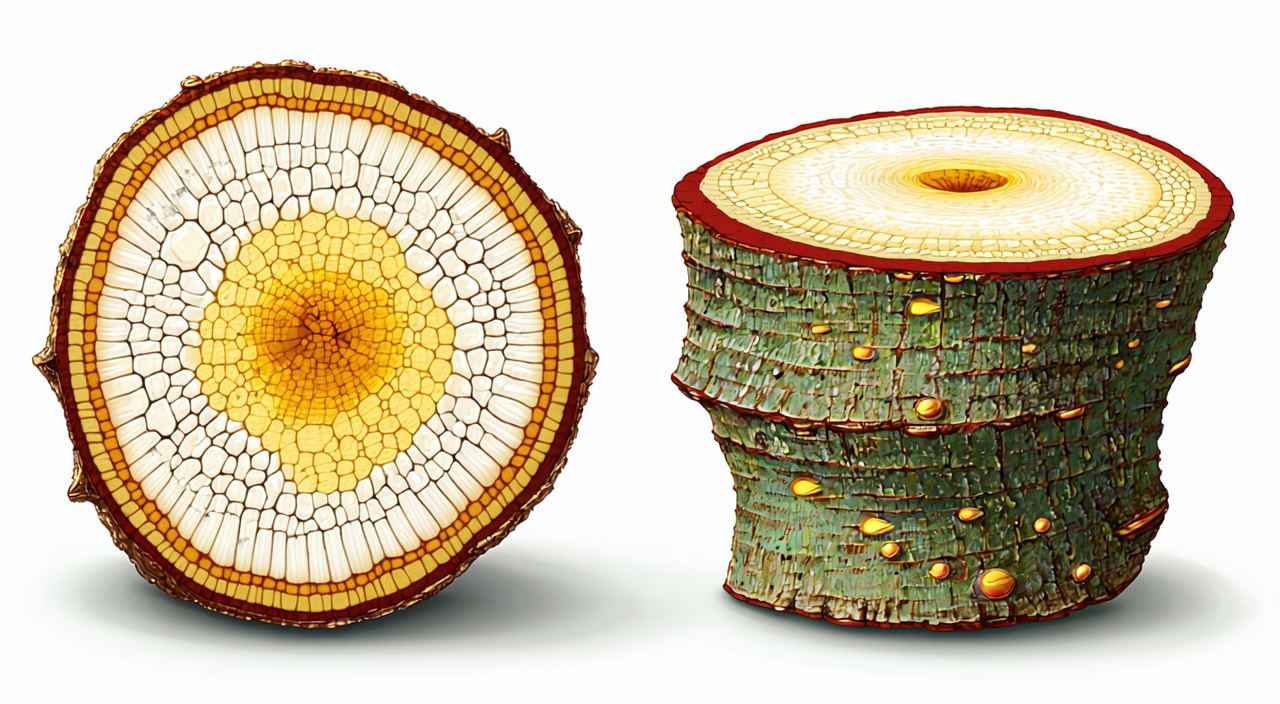
Shou Wu Teng is the dried stem of the knotweed plant He Shou Wu (Polygonum multiflorum). It usually appears as a slender, long, cylindrical form. Whole stems are often curved, with a diameter generally ranging from a few millimeters to a little over one centimeter, and varying lengths. The surface shows distinct nodes and internodes. The outer bark is reddish-brown or purplish-brown, with older stem sections darker in color, often bearing longitudinal wrinkles and small lenticels. These lenticels are grayish-white or light brown, slightly raised, and fairly noticeable upon observation.
If you break a Shou Wu Teng stem, the cut surface is relatively flat. The wood portion appears yellowish-white or light yellowish-brown, occupying a large proportion of the diameter, with a small pith in the center. The bark is thinner and brownish-red. The overall texture is tough and not easily broken, but after cutting, the cross-section shows obvious fibrous characteristics. These features help distinguish Shou Wu Teng from other vine/stem herbs. Traditionally, superior quality Shou Wu Teng is considered to have even strips, intact outer bark, yellowish-white cross-section, and minimal overly old stems. These details can be noted when purchasing or learning about the herb.
What Is the Medicinal Part of Shou Wu Teng?
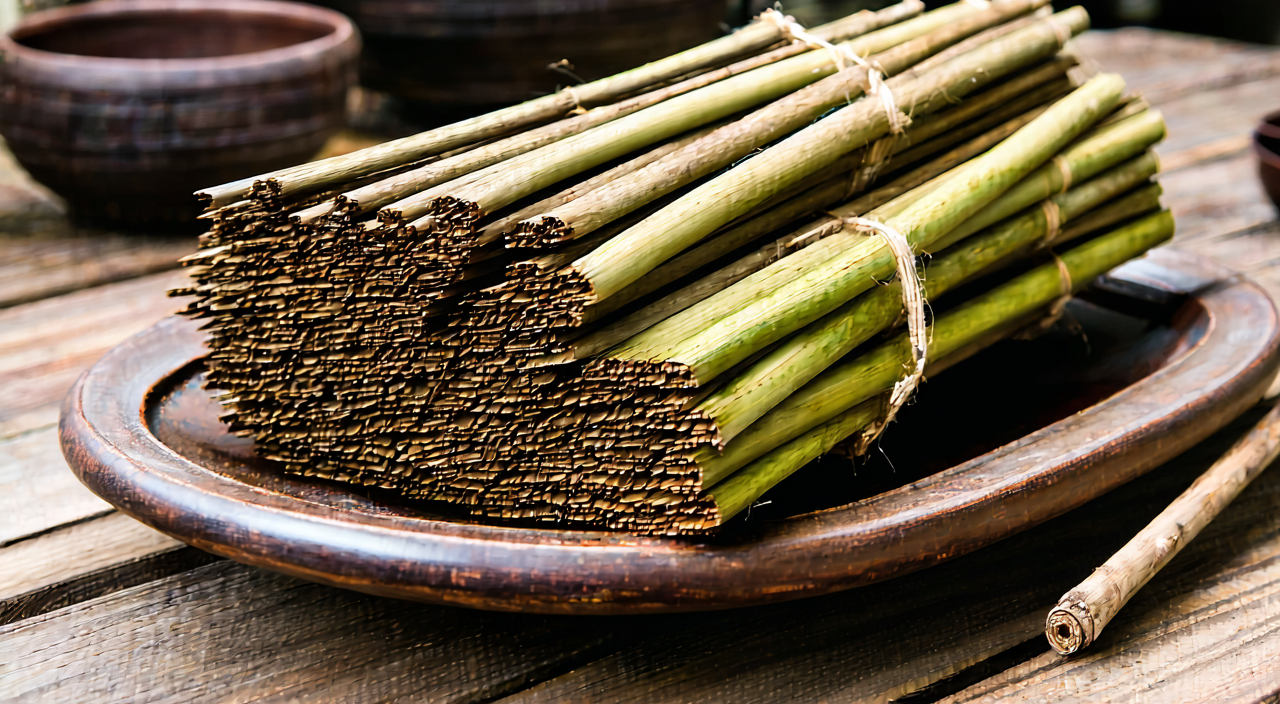
The medicinal part of Shou Wu Teng is its dried stem. That means the aerial stem of He Shou Wu is used, not the root. This is completely different from the well-known “He Shou Wu” that is used in the form of tuberous roots. Shou Wu Teng is harvested in autumn or winter when the vines and leaves wither. After removing residual leaves and fine branches, the stems are tied into small bundles or directly cut into sections, then dried in the sun or at low temperature for use as medicine. Its processing method is relatively simple, aimed at preserving the active components of the stem while facilitating long-term storage.
Because the medicinal part is the stem, Shou Wu Teng is also traditionally called “Ye Jiao Teng” (Night-Twining Vine), a name derived from the growth characteristic of its vines intertwining with each other at night. This alternate name also helps people remember that it comes from a vine plant. Understanding the medicinal part is fundamental for identifying and using Shou Wu Teng, especially when also dealing with He Shou Wu root tubers, effectively avoiding confusion.
How Does Traditional Chinese Medicine Understand Shou Wu Teng?
From the perspective of traditional Chinese medicine theory, the uses of Shou Wu Teng mainly focus on two aspects: “nourishing” and “unblocking.” On one hand, it is believed to enter the Heart and Liver meridians and has the action of nourishing the blood and calming the spirit. It is often used for conditions where blood deficiency causes restlessness, difficulty falling asleep, or excessive dreaming. In this approach, Shou Wu Teng does not directly “induce sleep” but rather calms the mind by nourishing heart blood, making it easier for the body to enter a stable resting state. Therefore, Shou Wu Teng often appears as an important ingredient in many spirit-calming formulas or patent medicines.
On the other hand, Shou Wu Teng is traditionally used to dispel wind and unblock collaterals, suitable for symptoms such as limb soreness, numbness, or wind-damp impediment pain, especially when TCM pattern differentiation considers blood deficiency or channel blockage is involved. Then Shou Wu Teng may be used to simultaneously address blood nourishment and collateral unblocking. This dual characteristic of being able to both nourish and move makes it applicable for certain people with complex constitutions. It should be noted that these traditional understandings are based on TCM pattern differentiation thinking and do not equate to modern medical treatment effects. Whether it is suitable for an individual still needs to be determined based on constitution and professional judgment.
What Have Modern Studies Found?
Modern phytochemical research has found that Shou Wu Teng contains anthraquinone compounds, stilbene glycosides, flavonoids, and phospholipids, among other constituents. Some of these components are similar to those in He Shou Wu root tubers, but their content and proportions differ. Some experimental studies have observed that Shou Wu Teng extracts may show sedative effects, improve sleep structure, and exhibit anti-inflammatory and antioxidant actions in animal models. However, most of these are basic research and cannot yet be directly extrapolated to clinical application effects. Therefore, the value of Shou Wu Teng is still based more on traditional use experience, while modern research is still in an exploratory stage. For ordinary users, understanding this scientific background helps treat its position more rationally and avoid unrealistic expectations.
What Are the Differences Between Shou Wu Teng, He Shou Wu, and He Huan Pi?
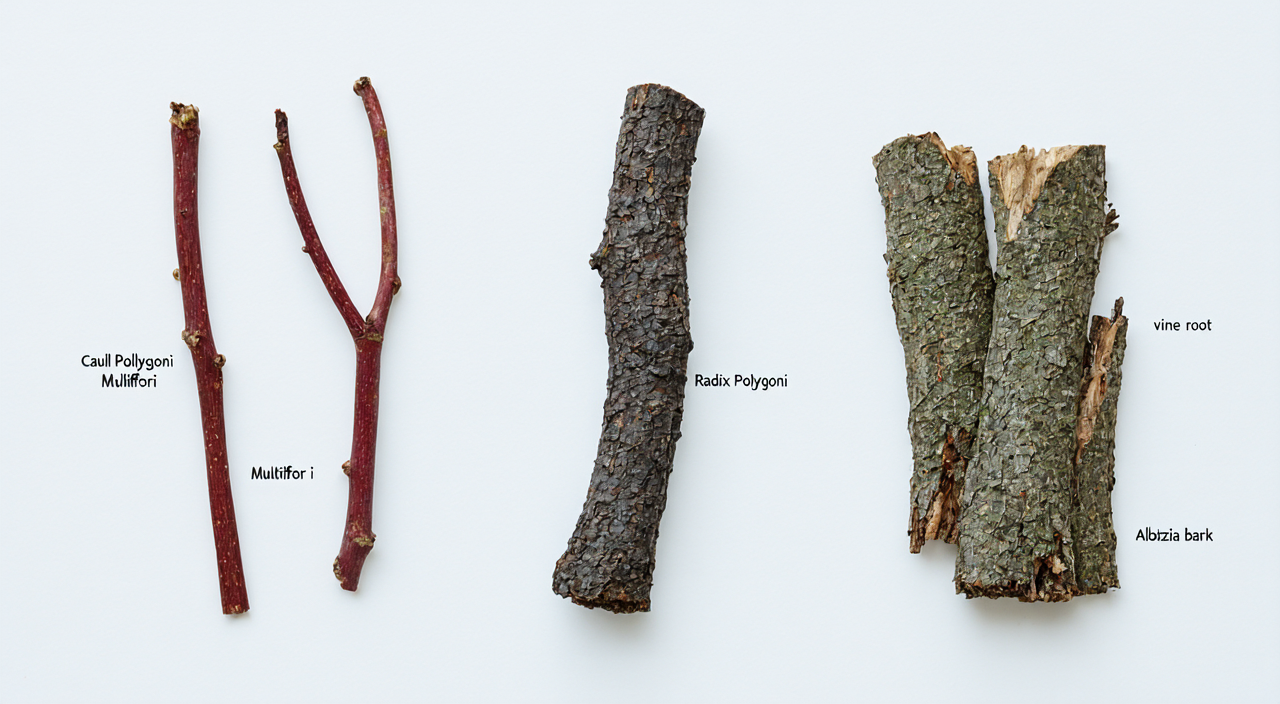
These three medicinal materials are often mentioned in the same field, but their sources, parts, and traditional application directions are distinctly different. First, Shou Wu Teng and He Shou Wu come from the same plant; Shou Wu Teng is the stem, while He Shou Wu is the root tuber. He Shou Wu is traditionally used more to tonify the liver and kidney, boost essence and blood, and is often associated with deficiency patterns such as premature graying, soreness and weakness of the lower back and knees. In contrast, Shou Wu Teng is more used for spirit-calming and meridian purposes. Although they share the same origin, the different medicinal parts lead to different emphasis in actions. Especially regarding safety, discussions about the hepatotoxicity of He Shou Wu have mainly focused on the root tuber, particularly when unprocessed or used long-term at high doses. Reports of hepatotoxicity related to Shou Wu Teng are relatively rare, but this does not mean the presence of similar constituents can be completely ignored. If there is a history of abnormal liver function or concurrent use of other drugs that may affect the liver, caution should still be exercised with materials from the same plant source.
He Huan Pi is the dried bark of the legume plant Albizia julibrissin. It is also commonly used for calming the spirit, but its traditional action tends more towards resolving constraint and calming the mind, making it more suitable for situations like irritability, restlessness, and emotional depression — following a path of soothing liver constraint and unfolding the emotions. In contrast, Shou Wu Teng leans more towards nourishing the blood to calm the spirit, targeting spirit restlessness caused by blood deficiency. The three have different emphases and cannot replace each other. When actually choosing related conditioning products, one must clearly distinguish the type of herb and one’s own condition.
Which Formulas Use Shou Wu Teng?
In traditional formulas and modern Chinese patent medicines, Shou Wu Teng often serves as an important component in the spirit-calming direction. For example, “Shou Wu Teng Decoction” is a classic formula with Shou Wu Teng as the sovereign herb, mainly used for insomnia and excessive dreaming caused by blood deficiency, with modifications possible based on individual conditions. “Yang Xue An Shen Wan” (Blood-Nourishing and Spirit-Calming Pill) is a common patent medicine that often contains Shou Wu Teng along with herbs like Shu Di Huang (prepared rehmannia root) and He Huan Pi, focusing on nourishing heart blood and calming the spirit, suitable for conditions involving excessive thinking and difficulty falling asleep. “Ye Ning Granules” is a modern preparation also containing Shou Wu Teng, frequently used for patterns such as non-interaction between heart and kidney leading to restlessness at night, but selection still needs to be combined with specific presentations and professional advice.
In addition, many spirit-calming compound formulas, such as some targeting menopausal sleep disorders or neurasthenia, also add Shou Wu Teng to enhance the calming and nourishing effect. It must be emphasized that these formulas and patent medicines only serve as examples of traditional use directions. Whether they are suitable for a specific person must be determined based on constitution, symptoms, product instructions, and professional judgment. They should not be taken casually on one’s own.
What Precautions Should Be Taken When Using Shou Wu Teng?
Shou Wu Teng is relatively gentle in use, but some points still need attention. First, it may cause drowsiness or a feeling of sleepiness, especially at larger doses or in sensitive individuals. Therefore, for those who need to drive, operate machinery, or engage in precision work, it is advisable to observe their reactions when first using or adjusting the dose. Secondly, regarding drug interactions, Shou Wu Teng may have a synergistic effect with sedative or hypnotic medications, and extra caution is needed when using them together, preferably under professional guidance. For individuals with impaired liver function or a history of liver disease, although current concerns about hepatotoxicity are mostly focused on He Shou Wu root tuber, as Shou Wu Teng is the stem of the same plant and shares some similar chemical components, it is recommended not to use it on one’s own in large amounts over a long period, especially not for supposed “liver-protecting” or “liver-nourishing” purposes, until sufficient safety data is available.
Furthermore, if problems such as insomnia, excessive dreaming, and irritability have persisted for a long time or are accompanied by significant anxiety, low mood, palpitations, chest tightness, etc., one should not simply rely on a certain herb or patent medicine to handle it but should promptly seek medical help to identify the cause and standardize the intervention.
Summary
As a traditional spirit-calming herb, Shou Wu Teng has strong identification value because it shares its source with He Shou Wu but uses a different medicinal part. Understanding the morphological characteristics of its stem, harvesting and processing methods, and differences from He Shou Wu and He Huan Pi helps properly select and recognize related products. In traditional use directions, Shou Wu Teng primarily revolves around nourishing the blood and calming the spirit, as well as dispelling wind and unblocking collaterals. However, any application must be carried out on the premise of fully understanding one’s constitution and under professional advice, and should not replace necessary medical assistance.