
What Is Albizia Bark? Medicinal Parts, Identification, and Common Formulas
When people mention “He Huan” (Albizia or mimosa tree), they often first think of its pink, pom-pom-like flowers. However, the bark of the silk tree is also a medicinal material that has been used in Traditional Chinese Medicine (TCM) for a long time. Albizia bark (He Huan Pi) is derived from the dried bark of the leguminous plant Albizia julibrissin, while Albizia flower (He Huan Hua) comes from the same tree but is a different medicinal part; the two have different emphases in traditional uses. This article will help overseas readers gain a more comprehensive understanding of Albizia bark by covering its appearance and identification, medicinal parts, TCM perspective, connection with modern research, differences from Albizia flower and Polygala root (Yuan Zhi), common formulas, and usage precautions.
What does Albizia bark look like? How to identify it?
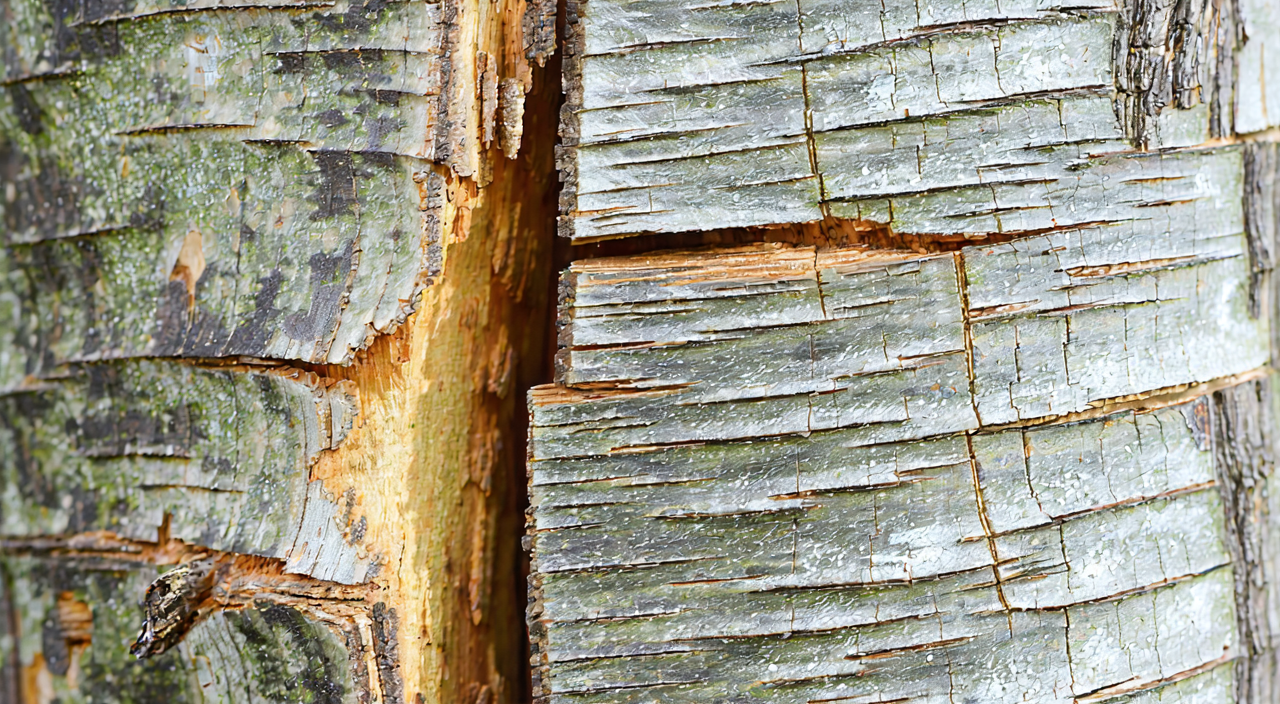
Dried Albizia bark pieces are typically curled into a tubular or trough-like shape, varying in length, width, and thickness, but the overall form is relatively easy to recognize. The outer surface is generally grayish-brown to grayish-brown, and upon close inspection, one can see transverse lenticels and fine longitudinal wrinkles, sometimes with lichen patches. The inner surface is pale yellowish-brown or pale yellow, relatively smooth, with fine longitudinal striations.
In terms of texture, Albizia bark is hard and brittle, easy to break, with a fibrous fracture that reveals a stringy appearance when split. The odor is mild; when chewed, it initially produces a slight mucilaginous sensation and later mildly irritates the throat. When selecting, thick bark with a grayish-brown outer surface, pale yellow inner surface, and yellowish-white fracture surface is traditionally preferred. Even for slices that have been cut into strips or pieces, one can roughly judge quality by these color and texture characteristics.
What is the medicinal part of Albizia bark?
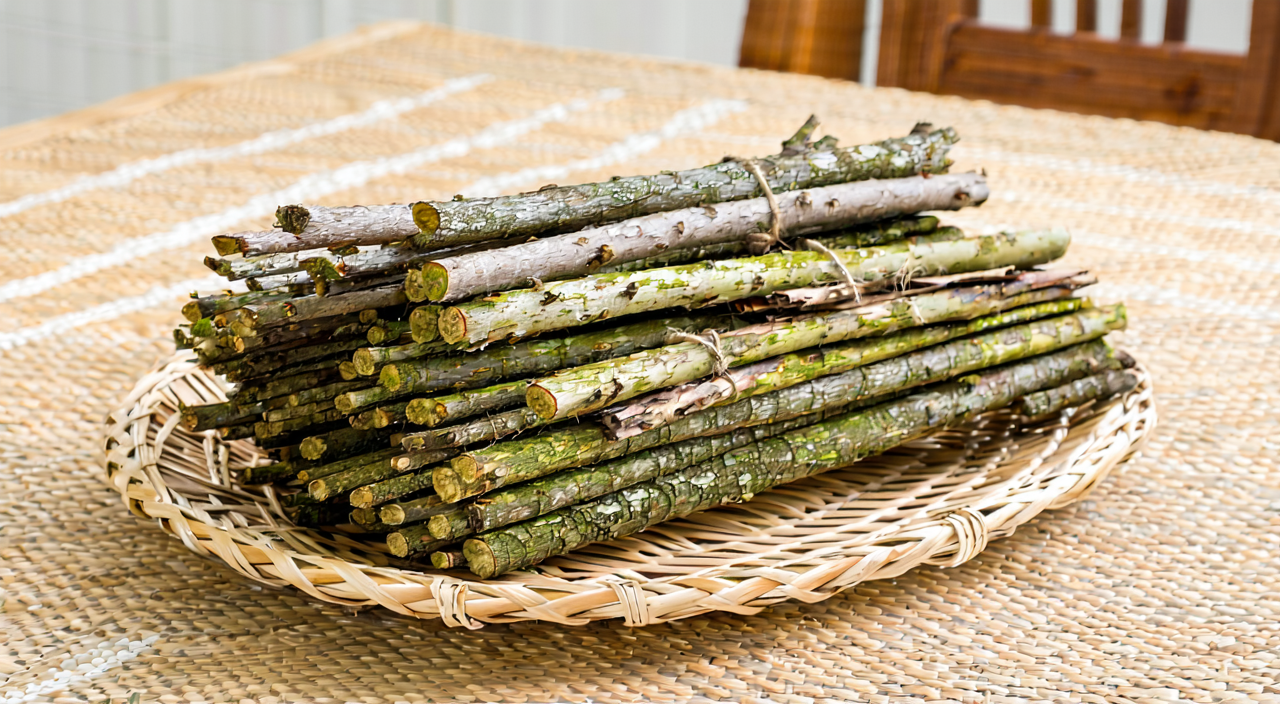
The medicinal part of Albizia bark is the dried bark of the silk tree. It is generally harvested in summer or autumn by stripping the bark, removing impurities, and then cutting into segments or strips before sun-drying. Sometimes during processing in the production area, the bark is slightly steamed or scalded to soften it before cutting into the required sizes.
When harvesting, trees of a certain age are usually selected, but the bark is not ring-barked entirely to avoid harming the tree’s survival. Commercially available Albizia bark decoction pieces are often in trough-shaped or rolled strips or chunks, convenient for decoction or formula use. For ordinary consumers, understanding its source and processing method helps comprehend differences in herb quality.
How does TCM view Albizia bark?
In traditional Chinese medicine theory, Albizia bark is often classified as a mind-calming medicinal. Its nature and flavor are mostly recorded as sweet and neutral, entering the Heart and Liver meridians. Traditionally, it is believed to excel at relieving constraint and calming the spirit—that is, when emotional distress and depression affect the mind, it may serve as a reference for regulation. It also has traditional uses for invigorating blood and reducing swelling, so it is frequently seen in approaches related to swelling, pain, and traumatic injuries.
These understandings are not diagnostic conclusions of modern medicine but rather empirical summaries from TCM’s holistic regulation perspective. For example, if a TCM pattern differentiation considers symptoms like vexation, agitation, and sleeplessness to be related to emotional constraint, Albizia bark might be considered. However, whether to use it alone or in combination with other herbs depends on individual constitution and specific presentation.
How does modern research view Albizia bark?
Modern research on Albizia bark, though not as extensive as for some common herbs, has found that it contains saponins, flavonoids, tannins, and other constituents. Some experimental studies suggest that these components may show certain activities in sedation, anti-anxiety, and anti-inflammatory effects, but these are mostly animal experiments or in vitro studies, and there is still some distance before everyday application.
For overseas readers, knowing about these studies can serve as background information, but should not be directly equated with “effectiveness.” Traditional application experience and modern scientific validation are at different levels, and caution is still needed before use.
How do Albizia bark, Albizia flower, and Polygala differ?
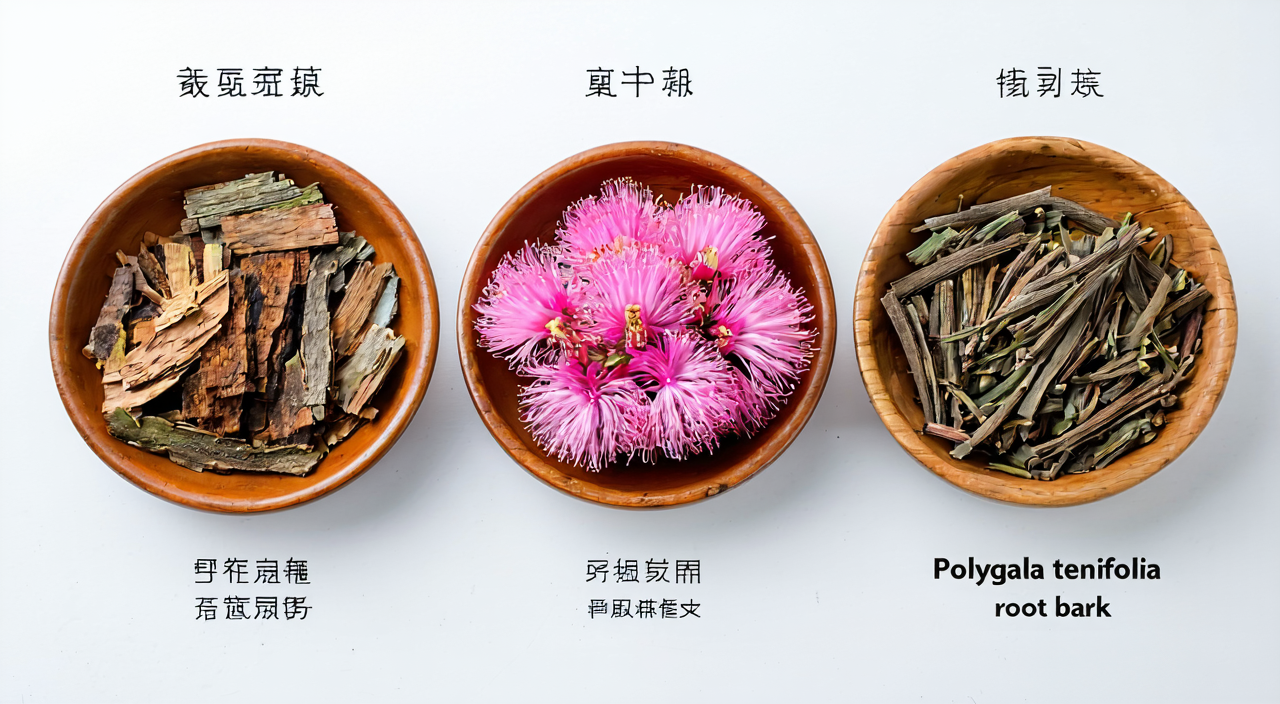
Although Albizia bark and Albizia flower come from the same plant, their medicinal parts differ, and their traditional applications have different emphases. Albizia flower is the dried inflorescence or flower bud of Albizia, traditionally used more for relieving constraint and calming the spirit, focusing on low mood, forgetfulness, and restlessness. Albizia bark, in addition to calming the spirit and relieving constraint, also tends to invigorate blood and reduce swelling, so it is more commonly seen in approaches involving swelling, pain, and traumatic injuries. Simply put, one emphasizes mind-calming, while the other also promotes blood circulation.
Polygala (Yuan Zhi) is another mind-calming herb, derived from the root bark of Polygala tenuifolia. Its nature and flavor tend to be acrid, bitter, and warm, and it is traditionally used to calm the mind, boost intelligence, expel phlegm, and open the orifices. It is often used for insomnia, forgetfulness, and palpitations caused by disharmony between the Heart and Kidney, and it also has a phlegm-resolving effect. This is distinctly different from Albizia bark, which specializes in relieving constraint and invigorating blood. Therefore, in formula combinations, Polygala and Albizia bark can sometimes be used synergistically, but their entry points are different. Which one to use depends on the individual situation.
What formulas use Albizia bark?
Albizia bark frequently appears in some classical or commonly used TCM formulas. Here are a few examples for reference.
The first is “Huanghun Tang” (Dusk Decoction), which primarily consists of Albizia bark and Fleeceflower stem (Ye Jiao Teng). The name vividly hints at its traditional application direction: addressing low mood, racing thoughts, or difficulty falling asleep around dusk. This is only a figurative analogy and does not mean that taking it at dusk will definitely improve mood; it more represents a regulatory approach.
The second is “He Huan Pi Tang” (Albizia Bark Decoction), a formula directly named after Albizia bark, often combined with Suan Zao Ren (Ziziphus seed), Fu Ling (Poria), Chuan Xiong (Ligusticum), etc., mainly formulated to relieve constraint, calm the spirit, regulate qi, and invigorate blood. Traditionally, it might be used for situations where emotional constraint is accompanied by bodily pain and discomfort, but the specific proportions need to be adjusted by a practitioner based on pattern differentiation.
Additionally, in some modern proprietary Chinese medicines or preparations for relieving constraint and calming the spirit, Albizia bark often appears as an auxiliary herb, frequently used together with Chai Hu (Bupleurum), Yu Jin (Curcuma), Bai Shao (White Peony), etc., focusing on emotional regulation and sleep quality improvement. It must be emphasized that whether for ancient formulas or modern preparations, one should fully understand one’s own constitution and symptoms, combine product instructions with professional judgment to decide applicability, and not directly apply them on one’s own.
Precautions for using Albizia bark
Although Albizia bark has a mild nature, it is not suitable for everyone. First, pregnant women should avoid it or strictly follow medical advice, as traditional experience suggests that Albizia bark has a blood-invigorating tendency. Second, individuals with bleeding tendencies, such as those with thrombocytopenia, heavy menstrual bleeding, or those taking anticoagulant drugs, should exercise extra caution and consult a physician before use.
Additionally, if Albizia bark is used concurrently with drugs that have central nervous system depressant effects, such as benzodiazepine sedatives or barbiturates, it may theoretically enhance sedation; this requires evaluation by a doctor. More importantly, if insomnia or emotional issues have persisted for a long time and are accompanied by significant anxiety, depression, palpitations, chest tightness, or severe impact on daily life, one should not rely solely on a single herb or proprietary Chinese medicine but should seek evaluation from a mental health professional or psychologist. Likewise, if any discomfort occurs during use, discontinue immediately and seek help.
Summary
As a commonly used Chinese medicinal herb, Albizia bark, with its distinctive bark morphology, traditional approaches for relieving constraint, calming the spirit, invigorating blood, and reducing swelling, and its applications in classical formulas, offers a window into traditional regulation methods. When identifying it, note the rolled tubular shape, grayish-brown outer surface, pale yellow inner surface, and fibrous fracture. Also pay attention to the differences in use compared to Albizia flower and Polygala. No herb should be used without considering an individual’s specific situation. This article is for informational reference only and cannot replace professional diagnosis or treatment advice.