
What Is Bai Shao? Medicinal Parts, Identification, and Common Formulas
Bai Shao is a highly frequently used medicinal herb in traditional Chinese medicine. It comes from the dried root of Paeonia lactiflora (family Ranunculaceae). After processing steps such as peeling and boiling in water, it exhibits a distinctive whitish or pale pink color. For many overseas readers who want to learn the basics of Chinese herbal medicine, gaining clarity on what Bai Shao looks like, which part is used, how it differs from the often-mentioned Chi Shao, and which common formulas include it is a very helpful step into the world of Chinese medicine. This article provides a relatively systematic general reference from these fundamental angles.
What Does Bai Shao Look Like? How to Identify It
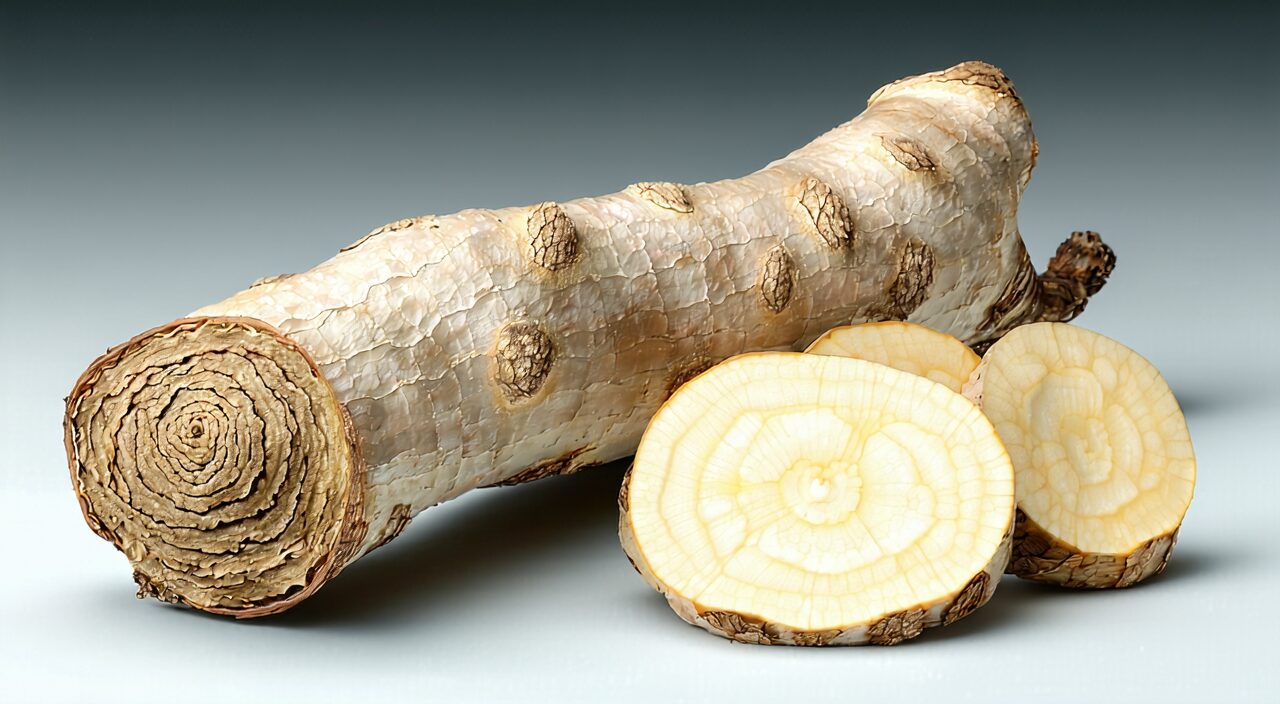
In its medicinal material or decoction piece form, Bai Shao has several relatively stable characteristics that can serve as a reference for everyday familiarity or preliminary identification.
- Overall shape: Mostly cylindrical, relatively uniform in thickness, with some pieces slightly tapering at both ends. The root is usually trimmed and does not look as rough and natural as some unpeeled root materials.
- Surface color and texture: After processing, the surface of Bai Shao is mostly whitish or pale pink-white, sometimes with a faint reddish-brown hue. On close inspection, fine longitudinal wrinkles as well as rootlet scars or transverse lenticel-like marks left during processing or drying can be seen.
- Cross-sectional features: When a Bai Shao slice is broken or cut, the cross-section is relatively flat, with a strong starchy texture and a fine, smooth quality. The cambium ring is not very prominent, the xylem portion is relatively small, and the medullary rays radiate outwards in an orderly pattern. The color is even and does not appear overly rough or full of cracks.
- Odor and taste: The smell is mild. When chewed, there is a slight sourness and bitterness, but it is not overly strong, and there is no obvious sweetness or raw astringency.
These features need to be considered together. The surface color and the fineness of the cross-section, in particular, are common points used to differentiate Bai Shao from some similar root materials that are not peeled. In actual purchase or use, the appearance of decoction pieces may vary slightly due to processing habits, but the basic color, texture, and taste are quite distinctive.
What Parts of Bai Shao Are Used? Harvesting, Processing, and Decoction Piece Forms
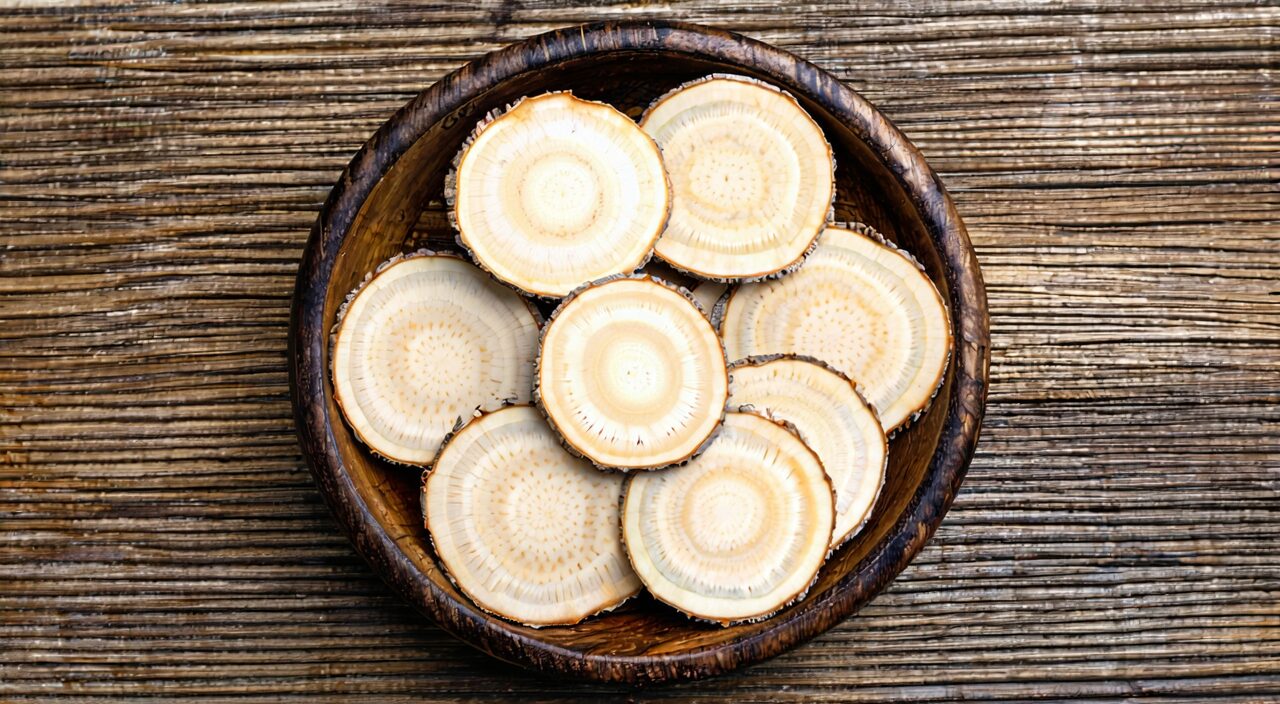
The medicinal part of Bai Shao is clearly the root. Harvesting is generally concentrated in autumn, when the aerial parts of the plant gradually wither and the active components in the root have accumulated relatively sufficiently.
After digging, root heads, fibrous roots, and sediment are removed. Depending on the origin and processing customs, the roots may be directly boiled thoroughly, then peeled or scraped and then further boiled, or they are peeled first and then boiled before finally being dried. This “boiling and peeling” processing method is the key to forming Bai Shao’s whitish appearance and is also one of the important processing differences between Bai Shao and Chi Shao.
Bai Shao decoction pieces commonly seen on the market are mostly cut into roughly round or oval thin slices of relatively even thickness. The cut surface is whitish or slightly pinkish, the texture is solid, and the starchy quality is obvious. Traditionally, there are different commercial grades such as “Hang Bai Shao” and “Bo Bai Shao”. While their appearances may differ slightly, the medicinal part used and the processing logic are basically the same. Understanding this background information can help you form a relatively clear reference when encountering Bai Shao in different forms.
How Does Traditional Chinese Medicine Understand Bai Shao?
From the perspective of taste, property, and meridian tropism in TCM, Bai Shao is usually described as bitter and sour in taste, slightly cold in property, and mainly enters the Liver and Spleen meridians. This positioning directly influences the traditional understanding of its action directions.
- Nourishing blood and regulating menstruation: In directions involving blood deficiency leading to a sallow complexion, dizziness, blurred vision, or abnormalities in the menstrual cycle or volume, Bai Shao is frequently considered. The traditional line of thinking holds that it can nourish liver blood and is often paired with Dang Gui (Angelica sinensis) and Shu Di Huang (Rehmannia glutinosa) to jointly adjust the blood aspect.
- Consolidating yin and stopping sweating: For spontaneous sweating or night sweats caused by yin deficiency or disharmony between the nutritive and defensive qi, Bai Shao is sometimes used together with Gui Zhi (Cinnamomum twig) and Da Zao (Ziziphus jujuba), relying on its ability to astringe yin and reduce excessive outward discharge of sweat.
- Softening the liver and relieving pain: In situations such as distending pain in the hypochondriac region, spasmodic abdominal pain, or tightness and discomfort in the limbs caused by a lack of liver qi suppleness, liver-spleen disharmony, or malnourishment of the sinews, Bai Shao is often seen as being able to gently alleviate this state of tension and spasms, rather than forcibly stopping pain. A typical example is Shao Yao Gan Cao Tang, which revolves around this concept.
- Subduing liver yang: For some cases of headache, distension, or dizziness caused by ascendant liver yang, Bai Shao is also commonly included in formulas to assist in balancing the upward rising tendency by nourishing yin and softening the liver.
It must be specially noted that the above are all lines of regulating thought developed through long-term TCM practice and do not equate to Bai Shao directly being a drug for treating a specific disease. Whether it is suitable for a particular individual still requires a comprehensive judgment combining constitution, symptoms, and professional analysis.
What Components and Effects of Bai Shao Are of Interest in Modern Research?
Modern phytochemical and pharmacological research mainly focuses on monoterpene glycosides in Bai Shao, among which paeoniflorin is considered one of the most representative active substances. In addition, it contains albiflorin, benzoylpaeoniflorin, and others. In experimental studies, these components have shown tendencies toward anti-inflammatory, immunomodulatory, smooth muscle relaxing, and analgesic effects.
For example, in animal experiments or ex vivo organ studies, paeoniflorin can regulate the expression of certain inflammatory factors, inhibit the over-activation of some immune cells, and exert a certain relieving effect on smooth muscle spasms in the intestines, uterus, etc.
However, it is necessary to make a rigorous distinction: most of the above research remains at the stage of in vitro experiments, animal models, or small-sample explorations. There is still a considerable distance to go before forming sufficient evidence for human application, and experimental data cannot be directly equated with clinical effects in the human body. Modern research serves more as a supplementary reference for understanding the traditional use of Bai Shao; it neither negates traditional knowledge nor directly extrapolates therapeutic conclusions.
How Does Bai Shao Differ from Similar Medicinal Herbs? Special Focus on Chi Shao
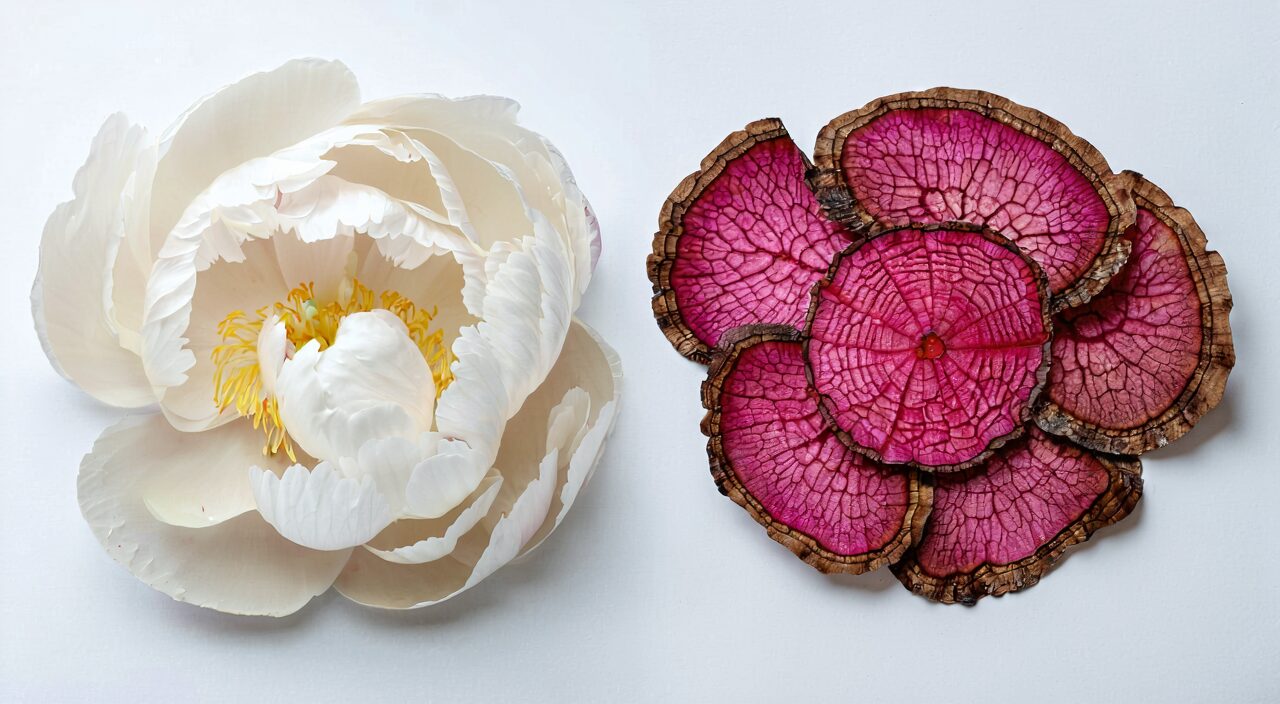
In Chinese medicine, Chi Shao (Red Peony Root) and Bai Shao are often compared. Although they are closely related, their differences are very distinct.
| Comparison Dimension | Bai Shao | Chi Shao |
|---|---|---|
| Plant source and processing | Mostly derived from cultivated varieties of Paeonia lactiflora; processing requires peeling and boiling in water | Mostly derived from wild Paeonia lactiflora or Paeonia veitchii; generally not peeled and not boiled for a long time, simply sun-dried or heat-dried |
| Appearance and properties | Surface whitish or pale pink-red, fine and smooth; cross-section flat, markedly starchy, color uniform | Surface brownish-red or brown, rough, with obvious longitudinal furrows, rootlet scars, and transverse elongated lenticel-like protrusions; cross-section slightly fibrous, bark relatively thin, xylem radial striations prominent, sometimes with cracks |
| Taste and property | Taste bitter and sour, property slightly cold | Taste bitter, property slightly cold, tending toward cooling and clearing |
| Traditional application emphasis | Focuses on nourishing blood, astringing yin, softening the liver to relieve pain, and subduing liver yang | Leans toward clearing heat and cooling blood, resolving stasis and relieving pain, used more in conditions related to blood heat and blood stasis |
After understanding these distinctions, if there is any ambiguity during purchase or use, pay extra attention to the product name and label description to avoid confusion. The two cannot be arbitrarily substituted for one another.
Which Herbal Formulas Use Bai Shao?
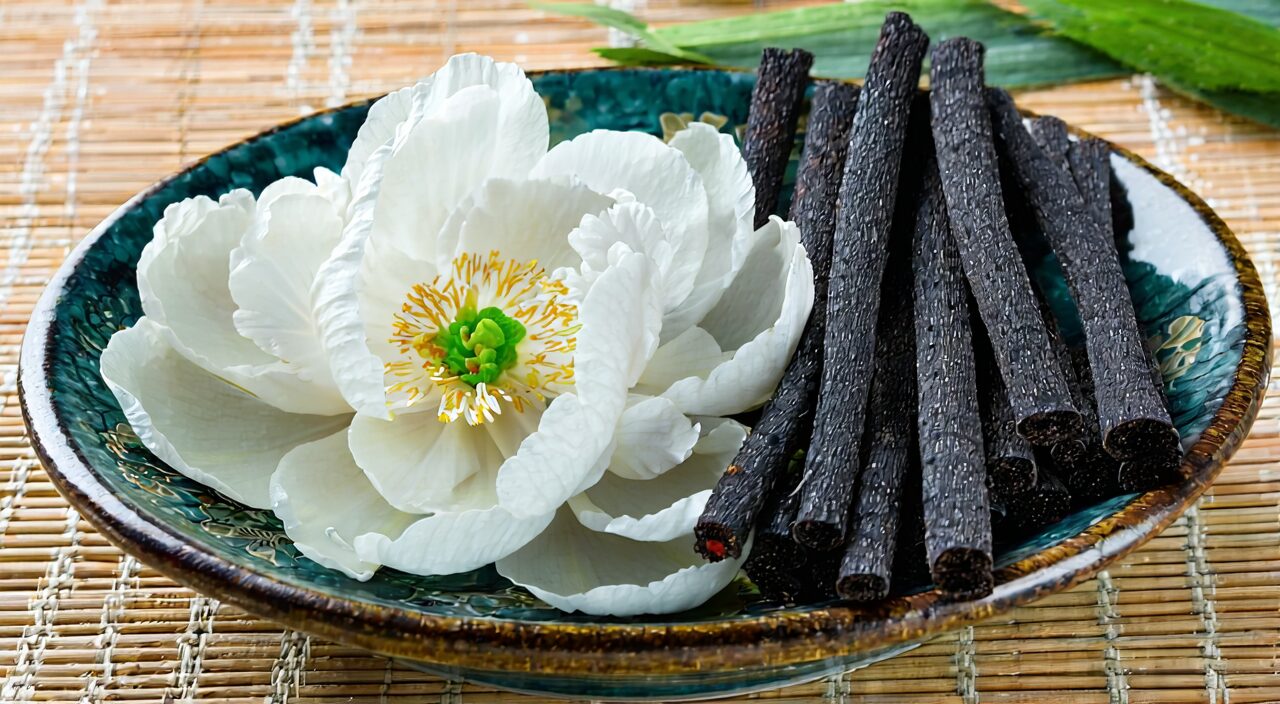
Bai Shao plays an important role in many classical formulas. Below are a few representative ones, with a brief explanation of the traditional thought behind combining Bai Shao with other ingredients in these formulas.
- Si Wu Tang (Four Substances Decoction): Composed of Dang Gui, Chuan Xiong, Bai Shao, and Shu Di Huang, it is traditionally regarded as a representative formula for supplementing and nourishing the blood. In this formula, Bai Shao mainly works together with Shu Di Huang and Dang Gui to astringe yin and nourish blood, while also moderating the acrid, dispersing nature of Chuan Xiong, enabling the whole formula to achieve a balance of tonifying without causing stagnation and moving without causing damage.
- Gui Zhi Tang (Cinnamon Twig Decoction): Made up of Gui Zhi, Shao Yao, Sheng Jiang (fresh ginger), Da Zao, and Zhi Gan Cao (honey-fried licorice), it is commonly used for external contraction of wind-cold with deficiency and disharmony between the nutritive and defensive qi. Here, Bai Shao and Gui Zhi work together — one astringes and the other disperses — to harmonize the nutritive and defensive qi and consolidate yin and the nutritive aspect, forming one of the core structural elements of the whole formula.
- Shao Yao Gan Cao Tang (Peony and Licorice Decoction): Comprising only Shao Yao and Gan Cao, it is a classic paired herb combination traditionally used to relieve various types of spasmodic and contractive pain, such as acute abdominal cramps or calf spasms, highlighting Bai Shao’s characteristics of softening the liver, relaxing the sinews, and easing urgency.
- Xiao Yao San (Free and Easy Wanderer Powder): Made up of Chai Hu, Dang Gui, Bai Shao, Bai Zhu, Fu Ling, Gan Cao, and others, it is mainly used for liver constraint and blood deficiency patterns. In it, Bai Shao nourishes blood and softens the liver, relieving urgency and pain, and works together with Chai Hu’s ability to soothe the liver and relieve constraint, achieving a simultaneous attention to both the organ’s substance and function, enabling the formula to better suit long-term stress and emotionally tense constitutions.
The application directions of these formulas each have their own emphasis. Whether a specific person is suitable for any of them still requires a comprehensive analysis of the current constitution, accompanying symptoms, and professional judgment. One should not decide to use them based solely on the formula name or partial indications. If you would like a deeper understanding of Si Wu Tang, Gui Zhi Tang, or Xiao Yao San, you can search within our site for related topic articles for further reference.
What Precautions Should Be Taken When Using Bai Shao?
In traditional use, there are some relatively clear precautions and incompatibility directions for Bai Shao, and understanding them can help avoid unnecessary risks.
First, traditional experience holds that people with yang-deficiency-cold constitutions, those with severe spleen-stomach deficiency, and those prone to diarrhea should use it cautiously. Because Bai Shao is slightly cold in property, its yin-astringing nature may aggravate cold pain in the abdomen or loose stools.
Second, the traditional incompatibility principle of “Eighteen Antagonisms” mentions that “various ginsengs, Asarum, and Shao Yao oppose Li Lu (Veratrum)”, meaning Bai Shao should not be used together with Li Lu. This reminder is still taken seriously in many formularies and modern medicinal product descriptions.
Furthermore, Bai Shao is not an herb that can be used casually in unlimited amounts or for extended periods. The specific dosage, duration of use, and combination methods all need to be determined based on individual differences, current health status, and the judgment of a professional. If severe, prolonged, or recurrent abdominal pain, menstrual abnormalities, spontaneous sweating or night sweats, headache and dizziness occur, or are accompanied by marked anxiety, palpitations, weight loss, fatigue, or black stools, one should not rely on a single herb for self-regulation but should promptly consult a physician or related professional to rule out underlying problems.
Summary
Bai Shao is a traditional medicinal material using the root, and relies on the processing method of boiling and peeling to form its unique whitish appearance. When identifying it, focus on the fineness of the surface, cross-sectional features, and the slightly sour and bitter taste. Traditional TCM categorizes it within the regulatory approaches of nourishing blood and regulating menstruation, astringing yin and stopping sweating, softening the liver to relieve pain, and subduing liver yang, whereas Chi Shao emphasizes clearing heat and cooling blood and resolving stasis to relieve pain. The two differ in origin and processing and must not be confused. In modern research, although component studies on Bai Shao show certain biological activity trends, they cannot yet be directly equated with clinical efficacy. Classical formulas such as Si Wu Tang, Gui Zhi Tang, Shao Yao Gan Cao Tang, and Xiao Yao San reflect the compatibility value of Bai Shao from different angles. When using Bai Shao, traditional contraindications such as yang-deficiency-cold patterns, diarrhea tendency, and incompatibility with Li Lu should be noted; specific use requires a comprehensive judgment combining individual conditions and professional advice. The content of this article serves only as a Chinese medicine general knowledge reference and cannot replace professional diagnosis or individualized health guidance.