
What Is Ephedra Root? Identification, Medicinal Part & Formulas
In traditional Chinese medicine, ephedra (Ma Huang) is a very well-known medicinal herb. But when people first hear about “ephedra root,” they often wonder: Is it the same as ephedra? What are the differences? Actually, ephedra root is derived from the underground part of the same plant, yet its use is almost entirely different from the aerial stem. Whether you are learning about natural ways to manage sweating or are simply curious about herbal diversity, understanding the appearance, medicinal part, traditional perspective, and common formulas of ephedra root helps build a clear distinction and prevent misuse due to confusion.
What Does Ephedra Root Look Like? How to Identify It?
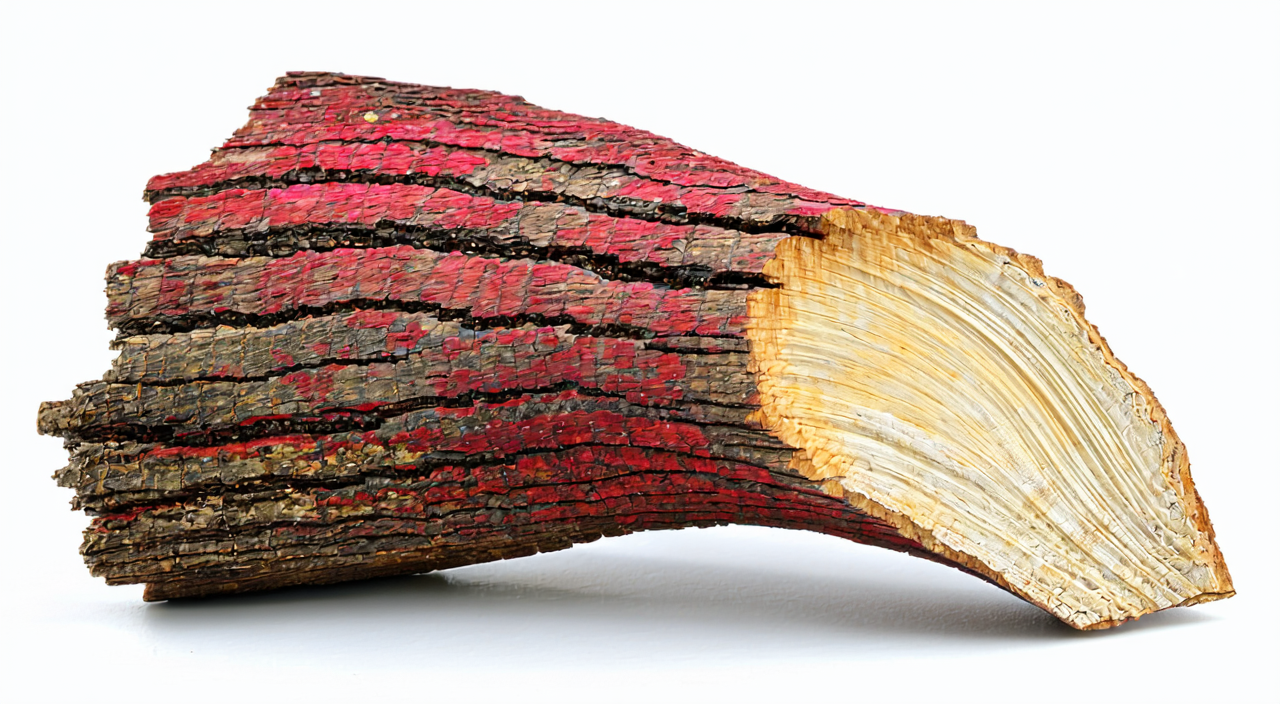
Ephedra root is not the green aerial stem we usually see; it is the root and rhizome that grow underground. The dried medicinal material is long cylindrical, slightly curved, often branched, varying in length and thickness, with a diameter usually around 0.5 to 1.5 cm. Its surface is mostly reddish-brown or grayish-brown, with prominent longitudinal wrinkles, and feels relatively rough. Sometimes you can also see raised traces of branch roots or remnant fibrous roots.
When broken, the ephedra root reveals a typical woody cross-section: the color is pale yellow or yellowish-white, with distinct fibrous texture, a firm texture, and not easily broken. At the rhizome part, nodes can be seen, sometimes with bud scars or tiny scale leaf remnants. These features are completely different from the common, light and brittle aerial stem. For identification, focus on the key points: “woody, reddish-brown and rough, strongly fibrous cross-section.” When contrasted with the ephedra stem, which appears yellowish-green, hollow or with a distinct pith, the difference is obvious.
What Is the Medicinal Part of Ephedra Root?
The medicinal part of ephedra root is very clear: only the underground root and rhizome are used, excluding the aerial parts. The main sources include the dried roots and rhizomes of Ephedra sinica, Ephedra intermedia, or Ephedra equisetina. Harvesting usually occurs in autumn, when the aerial parts gradually wither and the roots have accumulated sufficient nutrients. After digging, soil and fibrous roots are removed, and the roots are directly dried in the sun. This processing method is relatively simple and preserves the natural shape and color of the root. Note that during harvesting and processing, mixing with the aerial stem is generally avoided, because their traditional uses are entirely different, as we will explain in detail later.
How Does TCM Understand Ephedra Root?
Traditional Chinese medicine’s understanding of ephedra root mainly revolves around its property of securing the exterior and stopping sweating. Its nature and flavor are sweet, astringent, and neutral, and it enters the Heart and Lung meridians. Ancient practitioners observed that while the aerial stem of the same ephedra plant excels at dispersing and opening the pores, the root excels at astringing and consolidating the body surface. This concept of “same origin, different uses” reflects TCM’s nuanced observation of the actions of different medicinal parts.
In a modern context, if you often experience obvious sweating with slight activity during the day, or heavy sweating at night that stops upon waking (traditionally known as spontaneous sweating and night sweating), TCM regulation may consider combining astringent herbs such as ephedra root. However, this does not mean it can directly stop sweating, nor is it suitable for everyone. Such applications need to be based on an overall constitutional assessment; for instance, astringing methods are not appropriate when there is an external pathogen invasion, as we will discuss later.
What Is the Difference Between Ephedra Root and Ephedra (Stem)?
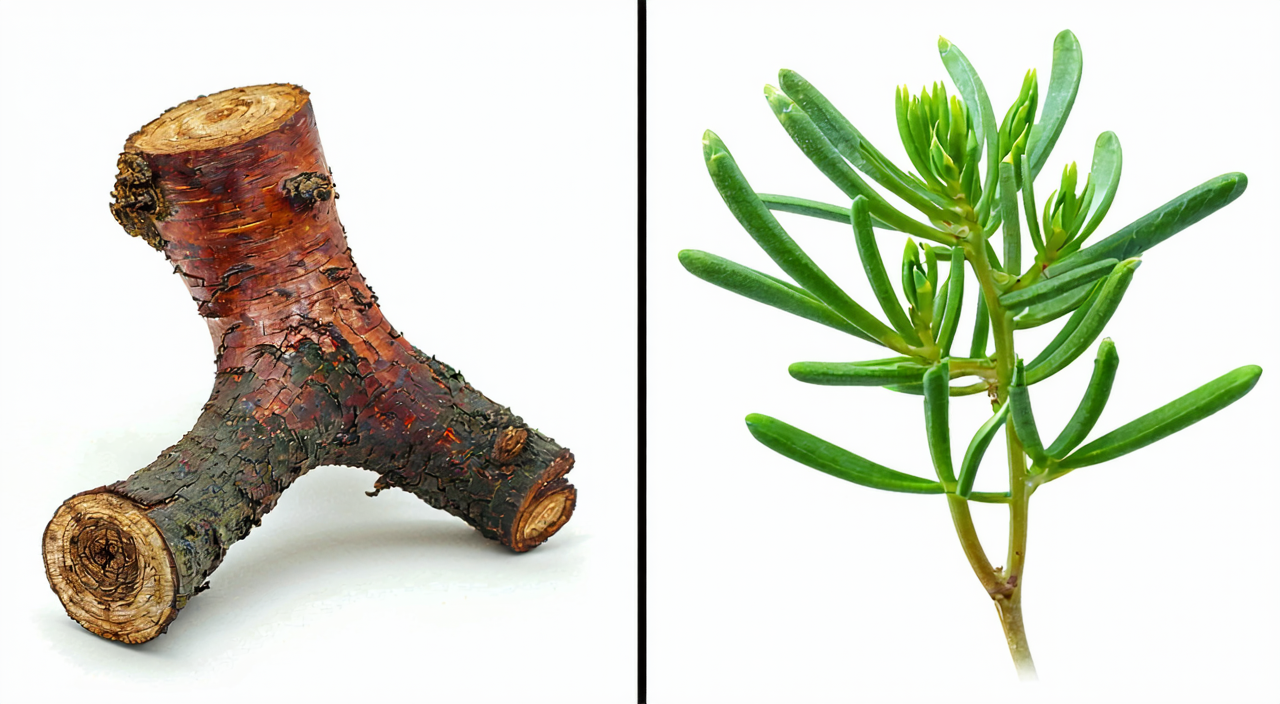
This is the most easily confused point and also the most critical. Simply put, ephedra (Ma Huang) uses the aerial stem—the green or yellowish-green young branches above ground—while ephedra root only uses the underground roots and rhizomes. Although they come from the same plant, due to the different parts, their constituents and traditional action directions differ greatly.
The aerial ephedra stem contains alkaloids such as ephedrine and is regarded in TCM as a commonly used herb that is acrid and warm to release the exterior, diffuse the lungs, and relieve asthma. It is often used for conditions like aversion to cold, fever, cough, and wheezing caused by external wind-cold. In contrast, ephedra root contains components like ephedradine and feruloylhistamine, and its general pharmacological profile leans more toward astringent and antisudorific effects. One could say that one disperses outward, while the other consolidates inward.
Regarding safety, if the wrong part is used—for example, intending to use the root to consolidate sweating but mistakenly using the stem—not only will it fail to reduce sweating, but it may aggravate sweating due to its dispersing nature and even cause palpitations, insomnia, and other stimulant effects. Therefore, never collect or mix the two on your own. Choose standardized ephedra root products and only consider use after fully understanding your own constitution, as a basic precaution.
Which Formulas Use Ephedra Root?
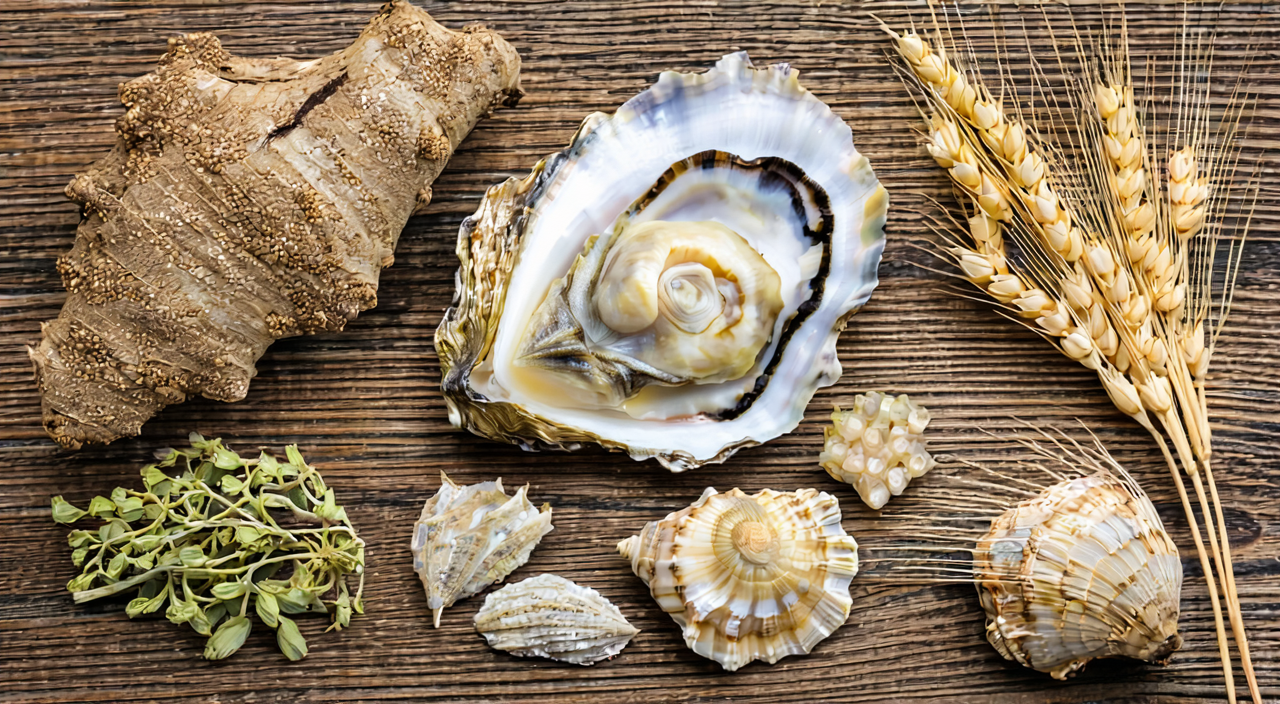
Ephedra root is not a leading herb in TCM formulas, but it plays a definite role in astringent and antisudorific combinations. Some representative traditional formulas include:
- Muli San (Oyster Shell Powder): The composition includes calcined oyster shell, astragalus (Huang Qi), ephedra root, and light wheat (Fu Xiao Mai), etc. It is traditionally used for spontaneous sweating and night sweating with a tendency toward qi deficiency and unstable exterior. The combination emphasizes both boosting qi to secure the exterior and astringing to stop sweating.
- Mahuanggen San (Ephedra Root Powder): Recorded in ancient texts, it is often composed of ephedra root, Chinese angelica (Dang Gui), astragalus, etc., and is mostly associated with conditions like persistent sweating after childbirth. Adjustments are made according to the individual’s constitution.
- Other antisudorific formulas: Practitioners throughout history also combine ephedra root with herbs like light wheat and schisandra (Wu Wei Zi) when addressing abnormal sweating, based on pattern differentiation.
The composition of these formulas is based on professional pattern differentiation. It is not advisable for individuals to directly apply them based on their names alone. Whether they are suitable for your specific situation depends on your constitution and symptoms and should be assessed by an experienced professional.
What Precautions Should Be Taken When Using Ephedra Root?
First, it is not suitable when exterior pathogens have not been resolved. This refers to the early stage of an external invasion, with symptoms such as aversion to cold, fever, and headache. At this time, the body is expelling pathogens through sweating and other means. If astringent methods are used hastily, it may trap the pathogens inside, which TCM often describes as “closing the door and leaving the burglar inside.”
Second, there are many causes of sweating. If it is long-term, recurrent, or accompanied by chest pain, difficulty breathing, palpitations, unexplained weight loss, persistent low fever, etc., one should not simply focus on stopping sweat, but should seek a professional medical evaluation.
Third, absolutely avoid mixing the aerial stem of ephedra with its root. The differences in safety profile and chemical composition have been explained above; treating them as equivalent can bring unnecessary risks. Even when using a standardized ephedra root product, it is advisable to start with a small amount, observe your own reactions, and ensure it suits you.
Finally, regarding ephedra root, we should keep a balanced mind and regard it as a way to understand traditional herbal applications, rather than a simple solution to a single problem.
Summary
Ephedra root and ephedra stem share the same origin but different functions. It is a commonly used herb in TCM for securing the exterior and stopping sweating. The key identification points are its woody rhizome, reddish-brown longitudinal wrinkles, and fibrous cross-section. In traditional formulas like Muli San, ephedra root is often combined with other qi-boosting or astringent herbs to address abnormal sweating patterns. However, its use is appropriate only when exterior pathogens have been resolved and the constitution is suitable. Before self-use, one must clearly distinguish the root from the stem and consider the root cause of sweating. This article is for informational reference only and cannot replace professional diagnosis. If you have persistent or significant sweating problems, it is recommended to consult a doctor promptly.