
What Is Fu Xiao Mai? Medicinal Part, Identification Methods, and Common Formulas
When experiencing insomnia, excessive sweating, or emotional stress, some people turn to dietary therapy or herbal remedies. Fu Xiao Mai is a relatively mild Chinese medicinal herb often used to stop sweating and calm the mind. Although it is called “wheat,” it differs from the plump wheat used in everyday food. This article explains what Fu Xiao Mai is, how to identify it, its medicinal part, how it differs from regular wheat, common formulas that include it, and usage precautions, providing a reference for those who want to better understand this herb.
What Does Fu Xiao Mai Look Like? How to Identify It?
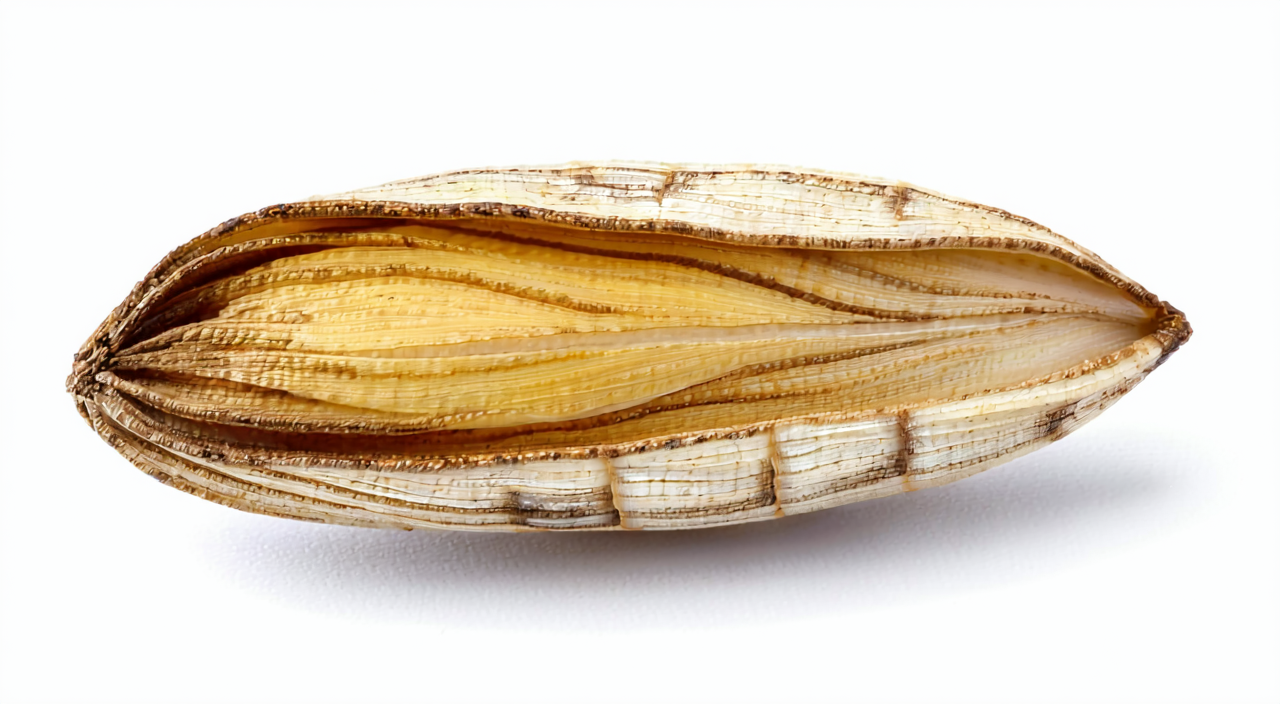
Fu Xiao Mai is the shriveled caryopsis of the wheat plant (Triticum aestivum L.) from the Poaceae family. It is oblong-elliptical in shape, about 6–7 mm long and 2.5–3 mm in diameter. The surface is yellowish-white or light yellow-brown, slightly wrinkled, with a distinct ventral groove. It is extremely light in weight, feels hollow when held, and typically floats on water—hence its Chinese name, which means “floating wheat.” When purchasing, you can assess quality by observing natural color, uniform wrinkling, and the absence of mold, but evaluation should ultimately follow pharmacopoeial standards.
What Is the Medicinal Part of Fu Xiao Mai?
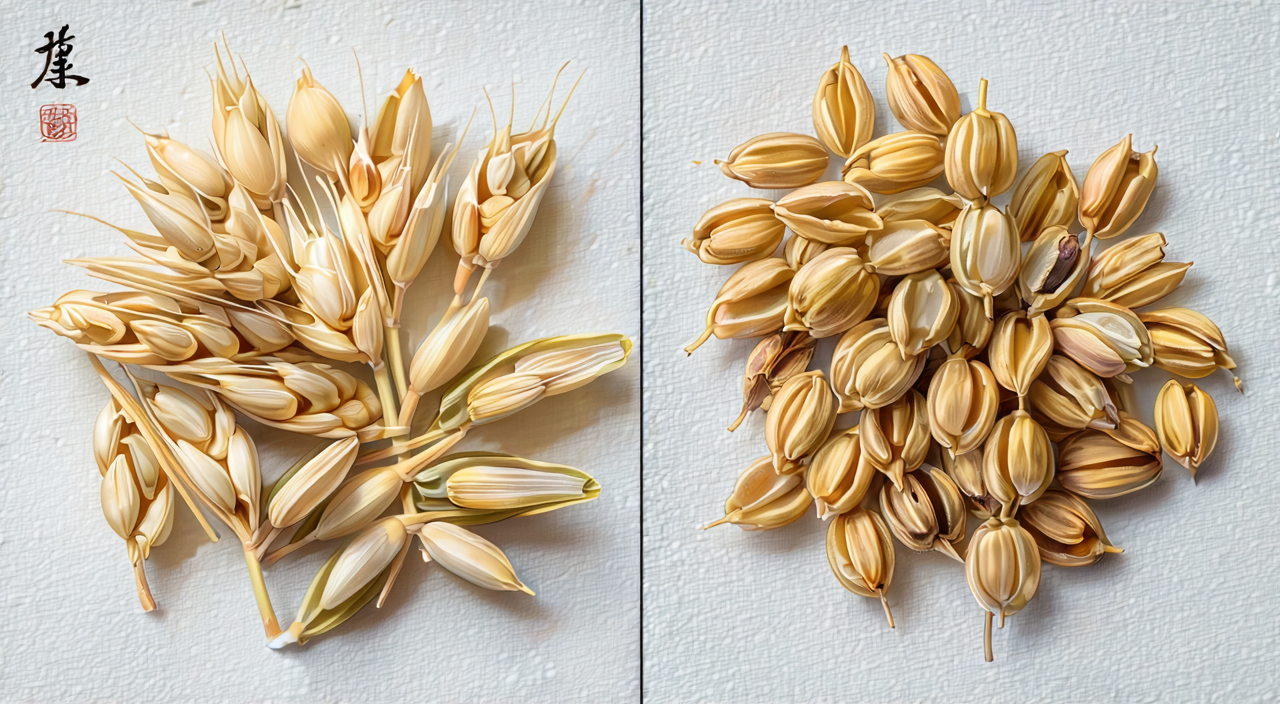
The medicinal part of Fu Xiao Mai is the shriveled caryopsis selected from mature wheat fruits. During wheat harvesting, after the plump grains are separated, the remaining light, unfilled caryopses are collected, cleaned of impurities, and dried to become the Chinese medicine Fu Xiao Mai. Traditionally, those that readily float on water are considered superior in quality. Winnowing or water flotation is often used to separate Fu Xiao Mai from heavy wheat grains. After drying, it should be stored in airtight, moisture-proof containers to prevent insect infestation or spoilage.
How Does Traditional Chinese Medicine View Fu Xiao Mai?
In traditional Chinese medicine (TCM), Fu Xiao Mai is considered cool in nature, sweet and salty in taste, and enters the Heart meridian. Its actions are commonly understood in terms of supplementing qi, clearing heat, and stopping sweating. For excessive sweating due to deficiency, such as spontaneous sweating or night sweats, Fu Xiao Mai is frequently used in supportive formulas. Classical herbal texts record that it “nourishes heart qi and abates deficiency heat,” which is why it often appears in traditional formulas addressing emotional unrest and irritability. However, its suitability must be determined by a qualified professional based on individual constitution and symptoms.
Brief Overview of Modern Research
Modern chemical research has found that Fu Xiao Mai contains starch, proteins, amino acids, B vitamins, trace elements, and other components. Some studies suggest that Fu Xiao Mai extracts may offer support for regulating the nervous system and alleviating emotional stress, but research is still at a preliminary stage and has not yet produced definitive conclusions. Therefore, such findings serve primarily as supplementary references to traditional use and should not be interpreted as a guarantee of therapeutic effect.
Differences Between Fu Xiao Mai, Regular Wheat, and Nuo Dao Gen
Many people easily confuse Fu Xiao Mai with edible wheat, but the two have clear differences. Regular wheat is a plump caryopsis, hard and dense, rich in starch and gluten, and mainly used in food processing. Fu Xiao Mai, on the other hand, is a shriveled, light caryopsis with relatively fewer nutrients but specific uses in traditional medicine. Additionally, Nuo Dao Gen is the rhizome and rootlets of glutinous rice (Oryza sativa var. glutinosa). It is neutral in nature and sweet in taste, commonly used for stopping deficiency sweating. Although its effect is similar to Fu Xiao Mai, the source is different, so they should be distinguished in practice. Fu Xiao Mai primarily focuses on nourishing the heart and clearing deficiency heat, while Nuo Dao Gen tends to benefit the stomach and arrest sweating. They can be combined in formulas or used separately depending on the specific condition.
Which Formulas Contain Fu Xiao Mai?
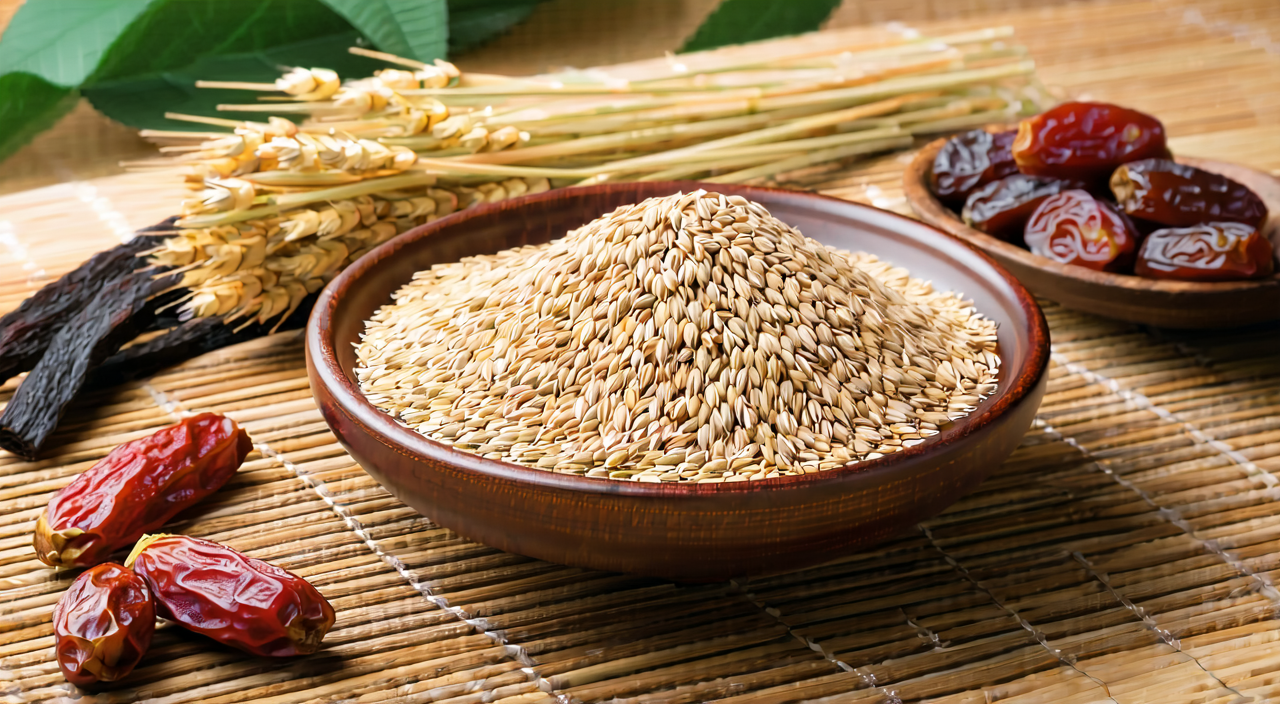
Fu Xiao Mai appears in several classic formulas. Gan Mai Da Zao Tang is composed of Gan Cao (licorice), wheat, and Da Zao (jujube). The “wheat” in this formula traditionally sometimes uses Fu Xiao Mai to calm the mind, relieve emotional tension, and address insomnia. Mu Li San (Oyster Shell Powder) typically includes Huang Qi (astragalus), Ma Huang Gen (ephedra root), and Mu Li (oyster shell); Fu Xiao Mai is often added to strengthen the exterior and stop sweating, commonly used for spontaneous sweating and night sweats. Fu Xiao Mai Tang is a formula centered around Fu Xiao Mai itself, combined with other herbs to target specific sweating patterns. Additionally, some anti-sweating formulas may include Fu Xiao Mai as an astringent adjunct. Each formula has its own emphasis regarding composition and application. Whether it is suitable for an individual requires comprehensive assessment based on constitution, symptoms, and guidance from a professional.
What Precautions Should Be Taken When Using Fu Xiao Mai?
Firstly, Fu Xiao Mai is a dried caryopsis of wheat and contains gluten, so individuals with gluten allergy or intolerance should avoid using it. Secondly, the causes of excessive sweating are complex; it may be due to qi deficiency, yin deficiency, or be related to hyperthyroidism, infection, or endocrine disorders. If accompanied by fever, palpitations, weight loss, or thyroid enlargement, the underlying condition should be evaluated first, and one should not rely solely on Fu Xiao Mai for management. Furthermore, in cases of long-term heavy sweating or significant anxiety and chest tightness, medical consultation is recommended to rule out other health issues. Pregnant women, breastfeeding mothers, and infants should exercise caution and ideally use it under professional guidance.
Summary
As a Chinese medicinal herb with a clear source and long history of use, Fu Xiao Mai stands out from regular wheat due to its shriveled, light character. In TCM, it is often used to supplement qi, clear heat, and stop sweating, and can be found in formulas such as Gan Mai Da Zao Tang and Mu Li San. However, sweating problems have various causes, and Fu Xiao Mai is not suitable for every situation—particularly for those with gluten sensitivity. If sweating recurs or is accompanied by other symptoms, professional advice should be sought. This article is for informational reference only.