
What Is Chou Wu Tong? Medicinal Parts, Identification, and Common Formulas
Many readers who hear the name “Chou Wu Tong” naturally think of the common parasol tree and assume that its leaves are the Chinese medicinal material. In fact, Chou Wu Tong used in Chinese medicine is not the same thing as the leaf of the parasol tree. Chou Wu Tong is derived from the young branches and leaves of Clerodendrum trichotomum, a plant in the Verbenaceae family, and it is named for the plant’s distinctive odor. Understanding what Chou Wu Tong is can help with identifying the herb and also prevent confusion with similar materials such as parasol tree leaves and Xi Xian Cao. This article explains the appearance, medicinal parts, traditional Chinese medicine understanding, differences from similar herbs, common formulas, and precautions for use, serving as a popular science reference for overseas Chinese readers.
What Does Chou Wu Tong Look Like? How Is It Identified?
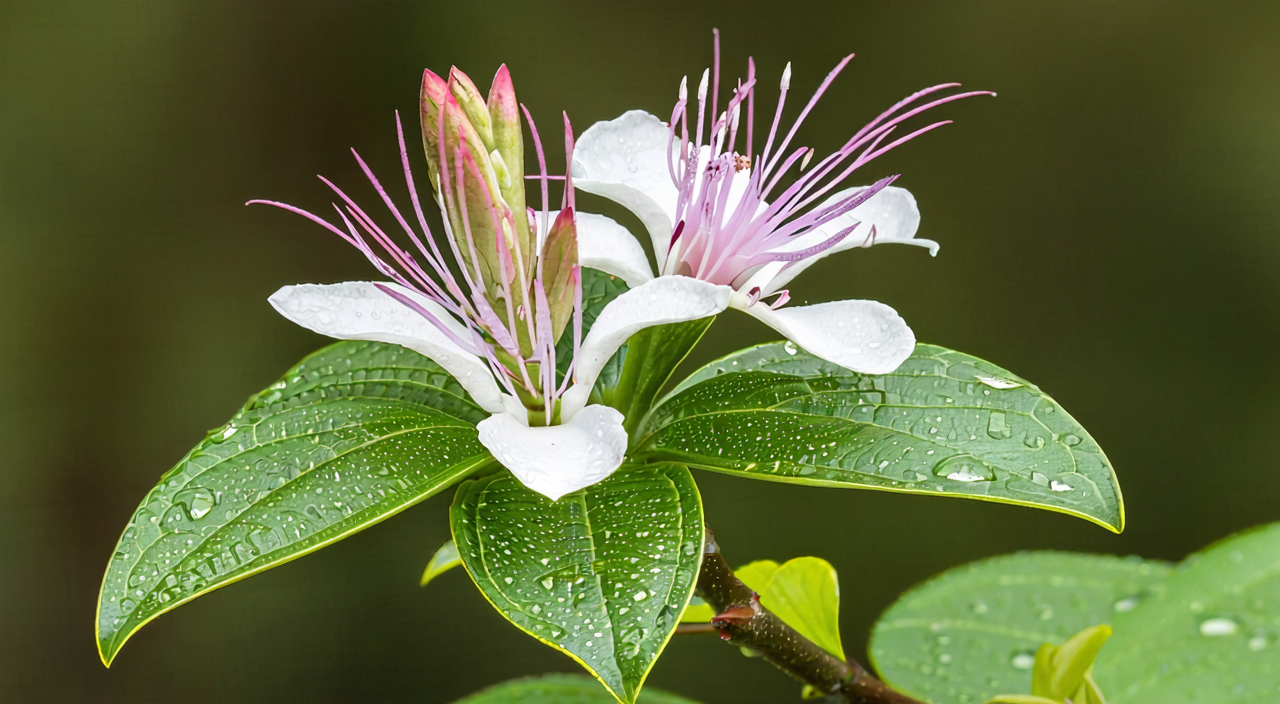
The plant morphology of Chou Wu Tong has several relatively obvious features that can help with preliminary identification in the field or among medicinal materials. It is usually a shrub or small tree, and obvious lenticels can be seen on the surface of the branches. The leaves are opposite, mostly broadly ovate or ovate-cordate in shape, with an acuminate apex and a base that is often truncate or slightly cordate. The leaf margin is serrate, the upper surface feels relatively rough, and the underside is lighter in color.
One of the most commonly mentioned identification methods is to rub the leaves and smell them. When the leaves of Chou Wu Tong are rubbed, they give off a rather noticeable, distinctive odor. Some people describe it as slightly fishy, foul, or stuffy, which is also the origin of the name “Chou Wu Tong.” Its smell differs from that of ordinary parasol tree leaves; after being rubbed, ordinary parasol tree leaves usually do not have this strong and distinctive odor.
As for the inflorescence, Chou Wu Tong forms cymes during the flowering period. The corolla is mostly white or pale pink, and the calyx may enlarge and turn purplish red after flowering. This feature is relatively easy to observe during the flowering and fruiting period. Taken together, the opposite broadly ovate leaves, rough leaf surface, lenticels on the branches, distinctive odor after rubbing, and inflorescence shape are common key points for identifying Chou Wu Tong.
What Are the Medicinal Parts of Chou Wu Tong?
The medicinal parts of Chou Wu Tong are mainly the young branches and leaves of Clerodendrum trichotomum, not the root, fruit, or leaves of the ordinary parasol tree. Traditional harvesting usually takes place in summer and autumn, when the branches and leaves are growing vigorously. The young branches and leaves are collected, old branches and impurities are removed, and the material is then dried in the sun or in the shade before use.
In the actual medicinal material, Chou Wu Tong often includes some young stems and leaves. The leaves are mostly wrinkled or broken, but after unfolding intact leaves, one can see the opposite broadly ovate or ovate-cordate shape. The odor of the dried material may be slightly weaker than that of the fresh product, but it may still retain a certain distinctive smell. Understanding this can help with preliminary judgment when purchasing or evaluating the herb.
The young branches and leaves used as the medicinal parts are not equivalent to parasol tree leaves used for landscaping in traditional Chinese medicine. Special attention should be paid to the source to avoid mistakenly using ordinary parasol tree leaves as Chou Wu Tong because of the similar name.
How Does Traditional Chinese Medicine Understand Chou Wu Tong?
From the perspective of traditional Chinese medicine, Chou Wu Tong is often classified as an herb that dispels wind-dampness and unblocks the channels, and it is also often mentioned as having a certain calming effect on the liver. In traditional materia medica literature, Chou Wu Tong is mostly used in approaches for regulating presentations such as wind-dampness painful obstruction, numbness of the limbs, hemiplegia, headache, and dizziness. The term “hemiplegia” mentioned here is a traditional syndrome description; it does not refer to any specific disease in modern medicine, nor should it be understood as meaning that Chou Wu Tong can resolve these problems on its own.
Traditional Chinese medicine usually takes a holistic approach and views wind-dampness obstruction and channel blockage as a group of related manifestations. In traditional formulas or combinations, Chou Wu Tong may be used together with other wind-dampness-dispelling herbs to create a synergistic approach. For example, it is often combined with herbs such as Xi Xian Cao for patterns involving heavy limbs and impaired joint movement due to wind-dampness. Whether it is suitable for an individual should be determined by considering constitution, symptom characteristics, and advice from a qualified professional; it should not be self-applied mechanically.
Readers should also not directly equate the traditional term “calming the liver” with modern blood-pressure-lowering effects. In Chinese medicine, states such as “liver yang hyperactivity” are not exactly equivalent to blood pressure readings, so one should not self-treat blood pressure with Chou Wu Tong simply because traditional texts mention its liver-calming action.
What Directions Can Modern Research Provide?
Modern research on Chou Wu Tong has mainly focused on its chemical constituents and some pharmacological activities. Some experimental studies may have observed that Chou Wu Tong extracts have certain effects on inflammation-related markers, vascular tone, or the central nervous system. Other studies have examined its potential anti-inflammatory and analgesic effects. However, most of these studies are still at the laboratory or preliminary exploratory stage and are not equivalent to clinical treatment conclusions.
In particular, although Chou Wu Tong may show effects on blood pressure-related indicators in some studies, this must never be used as a basis for adjusting medication on one’s own or replacing standard blood pressure management. Hypertension and cardiovascular or cerebrovascular problems require systematic evaluation and standardized management. It is not advisable to try this herb on one’s own merely based on research findings on Chinese medicinal materials. For general readers, modern research content can serve as a direction for understanding, but it should not be used as a basis for use.
How Does Chou Wu Tong Differ from Parasol Tree Leaf and Xi Xian Cao?
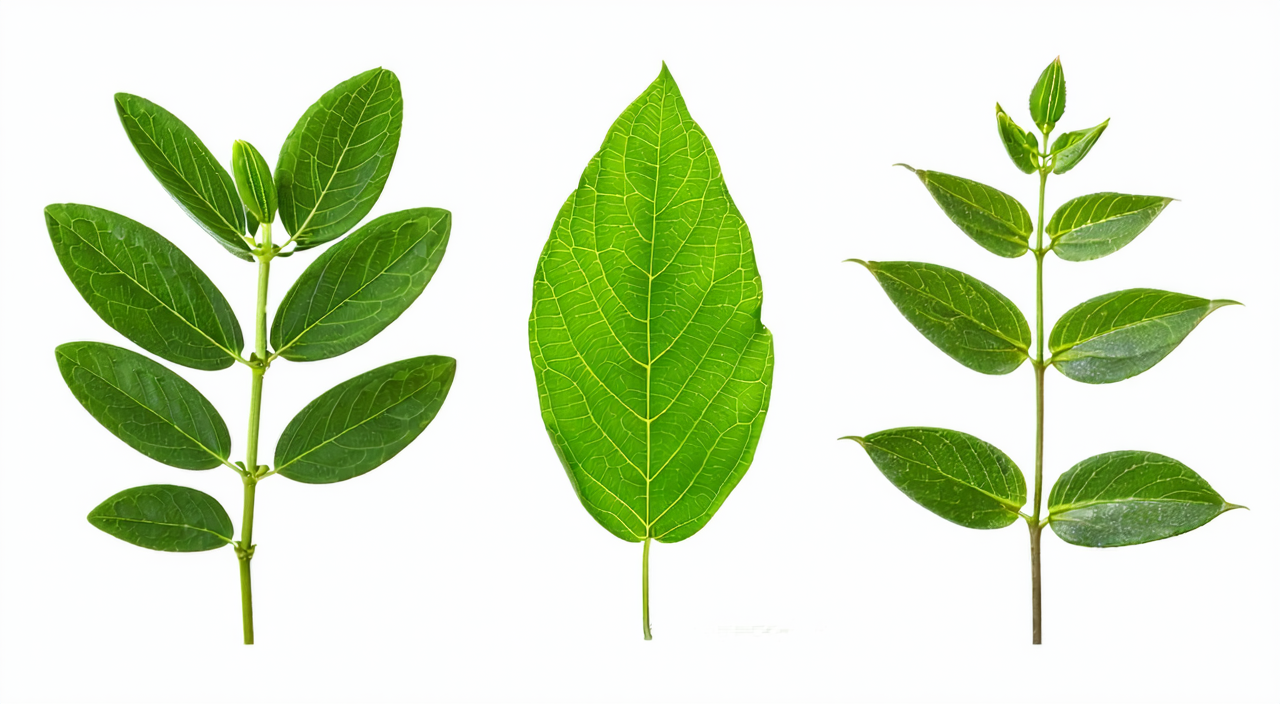
These three are easily confused because of their similar names or uses, but they can be distinguished to some extent by plant source and appearance.
Chou Wu Tong and Parasol Tree Leaf
Chou Wu Tong comes from Clerodendrum trichotomum in the Verbenaceae family, while parasol tree leaf comes from the parasol tree, Firmiana simplex, in the Sterculiaceae family. The two belong to different families and genera, and their plant sources are clearly different. In appearance, Chou Wu Tong leaves are opposite, broadly ovate or ovate-cordate, with a rough surface and a distinctive smell after rubbing. Parasol tree leaves are usually palmately lobed, with obvious lobes and larger blades, and after rubbing they generally do not have the particular stuffy or foul odor of Chou Wu Tong. In terms of medicinal direction, Chou Wu Tong is often used in approaches related to dispelling wind-dampness and unblocking the channels, while parasol tree leaf has other uses in traditional and modern applications. The two should not replace each other.
Chou Wu Tong and Xi Xian Cao
Xi Xian Cao is an herbaceous plant in the Asteraceae family, while Chou Wu Tong is a shrub or small tree in the Verbenaceae family; their plant sources are completely different. In appearance, Xi Xian Cao is herbaceous, with opposite stem leaves whose shape may vary by species, but the overall plant form is clearly different from the woody branches of Chou Wu Tong. In terms of odor, Xi Xian Cao also has a certain smell after rubbing, but it is not the same as the distinctive odor of Chou Wu Tong. Traditionally, Chou Wu Tong and Xi Xian Cao are often used together. For example, in Xi Tong Wan, both are the main medicinal ingredients, which shows that their actions are similar but their sources are different; they should not be confused.
Which Formulas Use Chou Wu Tong?
Traditional formulas or Chinese patent medicines that contain Chou Wu Tong commonly include Xi Tong Wan, Chou Wu Tong Pian, and some wind-dampness-dispelling formulas. In traditional use, such formulas are mostly used in approaches for regulating presentations such as wind-dampness painful obstruction, heavy and aching limbs, and impaired joint movement. For example, Xi Tong Wan often combines Xi Xian Cao with Chou Wu Tong and is a traditional combination for dispelling wind-dampness and unblocking the channels.
Chou Wu Tong Pian usually uses Chou Wu Tong as the main raw material and is often used in related situations for dispelling wind-dampness and unblocking the channels. It should be noted that the specific composition, manufacturing process, and suitable population for these formulas or patent medicines may vary depending on the product source, so they cannot be judged by name alone. Before use, one should make a comprehensive judgment based on the product instructions, one’s constitution, current symptoms, and advice from a qualified professional.
In wind-dampness-dispelling formulas, Chou Wu Tong may be combined with other herbs that dispel wind-dampness and unblock the collaterals to enhance the approach for presentations such as heavy limbs and numbness. However, these formulas are not suitable for everyone. Chinese medicine emphasizes pattern differentiation. Different wind-dampness presentations can vary in terms of cold, heat, deficiency, and excess. If the direction is incorrect or the dosage is inappropriate, the formula may not be suitable. Therefore, it is not advisable to choose a formula containing Chou Wu Tong on one’s own based only on one or two symptoms.
What Precautions Should Be Taken When Using Chou Wu Tong?
Although Chou Wu Tong has a basis in traditional use, certain precautions should still be observed.
First, people with low blood pressure should be cautious. Traditional understanding and some research suggest that Chou Wu Tong may have certain effects on blood pressure, so people who already have low blood pressure and are prone to dizziness or fatigue should not use it on their own. Second, people with weak gastrointestinal function should also be careful. Chou Wu Tong has a distinctive odor, and some people may experience gastrointestinal discomfort, nausea, or decreased appetite after taking it. If obvious discomfort occurs, they should stop using it and consult a professional. Third, special populations such as pregnant women, breastfeeding women, and children are generally not advised to use it on their own because of a lack of sufficient safety data. Fourth, misidentification of the source is the most common problem. Ordinary parasol tree leaves, Xi Xian Cao, or other plant leaves with similar appearance are easily confused. Collecting the herb oneself or purchasing it from an unregulated source carries higher risks, so one should give priority to material with a clear source that has been properly processed.
In addition, even if modern research mentions that Chou Wu Tong may be related to lowering blood pressure, research findings must never be used as a basis for self-treatment. Patients with hypertension or cardiovascular and cerebrovascular diseases must consult a doctor if they need to adjust medication. For wind-dampness-type symptoms, if there is obvious joint swelling, deformity, persistent pain, worsening limitation of movement, or accompanying systemic manifestations such as fever, rash, or fatigue, one should seek medical attention promptly rather than relying only on a single herb or formula.
Summary
What is Chou Wu Tong? Simply put, it is the young branches and leaves of Clerodendrum trichotomum, not ordinary parasol tree leaves. For identification, one can start with features such as the opposite broadly ovate leaves, rough leaf surface, lenticels on the branches, distinctive odor when rubbed, and inflorescence. Traditional Chinese medicine mostly understands it from the perspectives of dispelling wind-dampness, unblocking the channels, and calming the liver, and it is commonly seen in formulas or preparations such as Xi Tong Wan and Chou Wu Tong Pian. Before use, special attention should be paid to misidentification of the source, low blood pressure, gastrointestinal discomfort, pregnancy, and other special situations, and one should avoid directly treating modern research findings as a basis for self-medication. This article is for educational reference only and cannot replace professional diagnosis or treatment advice.