
What Is Xu Chang Qing? Medicinal Parts, Identification Methods, and Common Formulas
Xu Chang Qing is a commonly seen Chinese medicinal herb in TCM clinical practice and herbal markets. Many overseas Chinese readers encounter this name when learning about herbs related to dispelling wind and relieving pain, joint discomfort, or itchy skin. It can appear alone in traditional formulas and is also frequently combined with other medicinal herbs. To truly understand Xu Chang Qing, it is necessary to start with its source, appearance, medicinal parts, and precautions for use. This article is for general information only and is not a substitute for professional diagnosis or treatment advice.
What Does Xu Chang Qing Look Like? How Is It Identified?
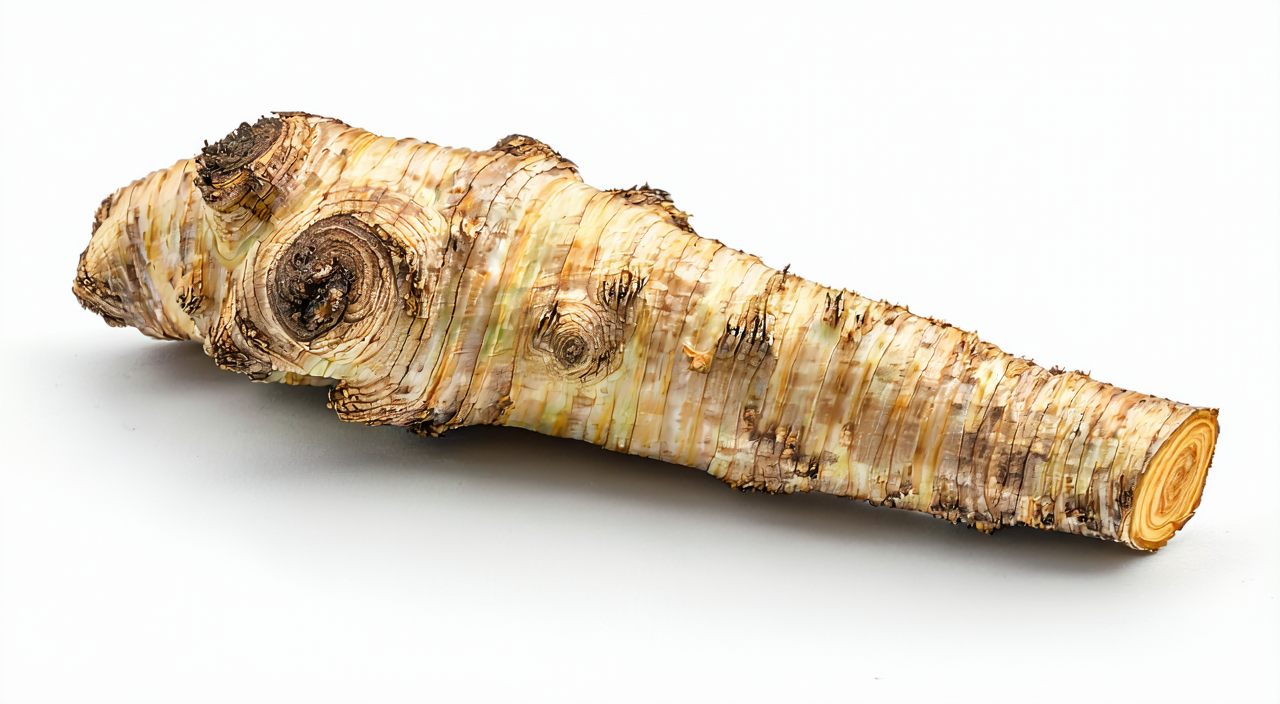
Xu Chang Qing comes from the dried roots and rhizomes of Cynanchum paniculatum, a plant in the family Asclepiadaceae. The whole herb is not identified mainly by its flowers or leaves; rather, the roots and rhizomes are the primary identification feature.
In appearance, the rhizome of Xu Chang Qing is relatively short and often has a small amount of above-ground stem residue. The roots are mostly slender and cylindrical, sometimes slightly curved, generally thin in diameter, and the surface is pale brownish-yellow, yellowish-white, or pale brownish-brown. The root surface often has fine longitudinal wrinkles. The texture is relatively brittle, and the fractured surface is fairly flat. Sometimes a yellowish-white wood core or a subtle layering between the bark and wood can be seen. Some specimens may also have a few fibrous roots, but the overall appearance is still dominated by slender main roots.
One of the more distinctive features of Xu Chang Qing is its smell. Its roots and rhizomes have a special aroma, which is traditionally considered related to its volatile components. The smell is pungent and fragrant but not irritating. If stored for too long or decocted at high temperature for a prolonged period, the aroma tends to weaken. For this reason, some traditional usage methods emphasize adding it later or avoiding prolonged decoction. During identification, smell can be used as a supplementary clue, but the herb should not be judged by smell alone; the root shape, surface color, fracture characteristics, and plant source should also be considered together.
What Are the Medicinal Parts of Xu Chang Qing?
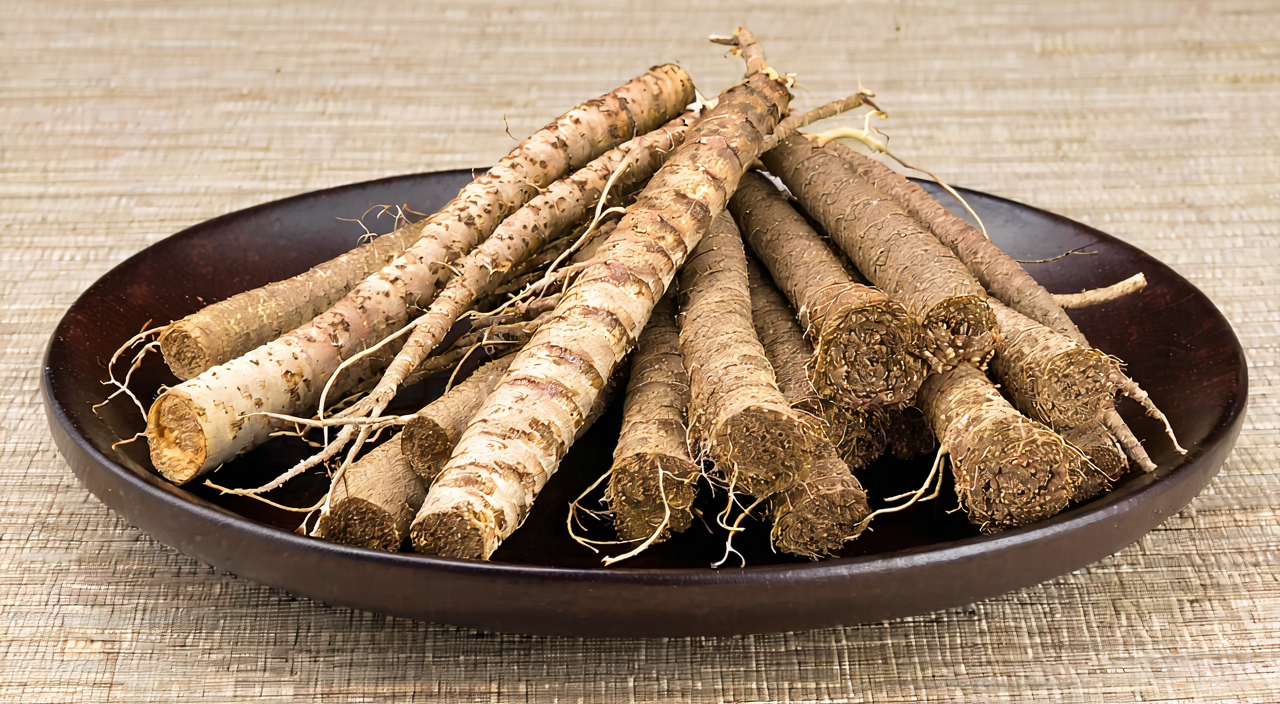
The medicinal parts of Xu Chang Qing are the dried roots and rhizomes. Unlike some herbs that use only the root, only the stem and leaves, or only the fruit, the medicinal part of Xu Chang Qing is concentrated in the underground portion.
In terms of harvesting and processing, it is traditionally harvested mostly in autumn. The above-ground parts, sediment, and impurities are removed, and the roots and rhizomes are dried in the sun or at low temperature. After drying, they should be stored in a cool, dry place to preserve the aroma as much as possible. Because they contain volatile components, they should be sealed, protected from light, and kept dry during storage to prevent loss of aroma. If the herb has become noticeably soft, damp, or has a very weak aroma, this may indicate poor storage conditions or prolonged storage, and its quality should be rechecked.
Regarding decoction, some traditional experience holds that Xu Chang Qing should not be decocted for a long time, or should be added near the end. The reason is that volatile components are easily lost during prolonged high-temperature decoction, and the aroma is considered closely related to some of its traditional effects. Whether to add it near the end should be based on the specific formula, preparation instructions, or professional advice; the decoction method should not be changed arbitrarily on one’s own.
How Does Traditional Chinese Medicine Understand Xu Chang Qing?
In traditional Chinese medicine theory, Xu Chang Qing is commonly understood and used from the perspectives of dispelling wind and relieving pain, invigorating blood and unblocking collaterals, and relieving itching and resolving toxicity.
Dispelling wind and relieving pain is one of the most commonly mentioned traditional uses of Xu Chang Qing. For limb and joint discomfort, localized pain, or migratory discomfort caused by factors such as wind evil, dampness evil, or inhibited qi and blood circulation, Xu Chang Qing is sometimes used as an auxiliary herb in formulas. It may be suitable for certain conditions characterized mainly by migratory pain, cold pain, or a feeling of soreness and distention. However, whether it is suitable should be judged according to individual constitution and symptom presentation, and it should not be selected based on a single herb alone.
In terms of invigorating blood and unblocking collaterals, Xu Chang Qing is often used to improve conditions related to inhibited qi and blood circulation. Traditionally, it is believed that obstructed qi and blood circulation may lead to local distention and pain, numbness, or impaired movement. Under this approach, Xu Chang Qing is usually combined with other herbs that invigorate blood, unblock collaterals, move qi, and relieve pain, rather than relying on this one herb alone. For pain that is fixed in location, clearly stabbing, or accompanied by swelling and heat, it is even more important to identify the cause first.
In terms of relieving itching and resolving toxicity, Xu Chang Qing is also recorded in traditional external treatment or internal use approaches for skin itching, eczema, hives, and insect or snake bites. It may be suitable for certain skin discomfort related to wind, dampness, heat, or toxicity, but skin problems are complex. Recurrent or severe skin symptoms should first be clearly diagnosed, rather than relying solely on a single Chinese herb for treatment.
How Does Modern Research View Xu Chang Qing?
Modern research mainly focuses on the volatile components, phenolic components, and other constituents in Xu Chang Qing. Some studies suggest that extracts of Xu Chang Qing may have certain effects on some inflammation-related markers or pain models, and some studies have also attempted to explore it from the perspectives of anti-inflammatory, analgesic, and anti-allergic activity. However, most of these studies are still at the experimental stage or involve small-scale observations, and their conclusions cannot yet be directly equated with clinical efficacy, nor should they be regarded as a basis for replacing standard treatment.
Therefore, modern research can serve as a supplement for understanding the traditional uses of Xu Chang Qing, but it does not mean that it can be used on one’s own to treat pain, skin diseases, or joint disorders. Especially for long-term pain, chronic skin conditions, or autoimmune-related problems, evaluation by a physician is even more necessary.
What Are the Differences Between Xu Chang Qing, Bai Qian, and Xi Xin?
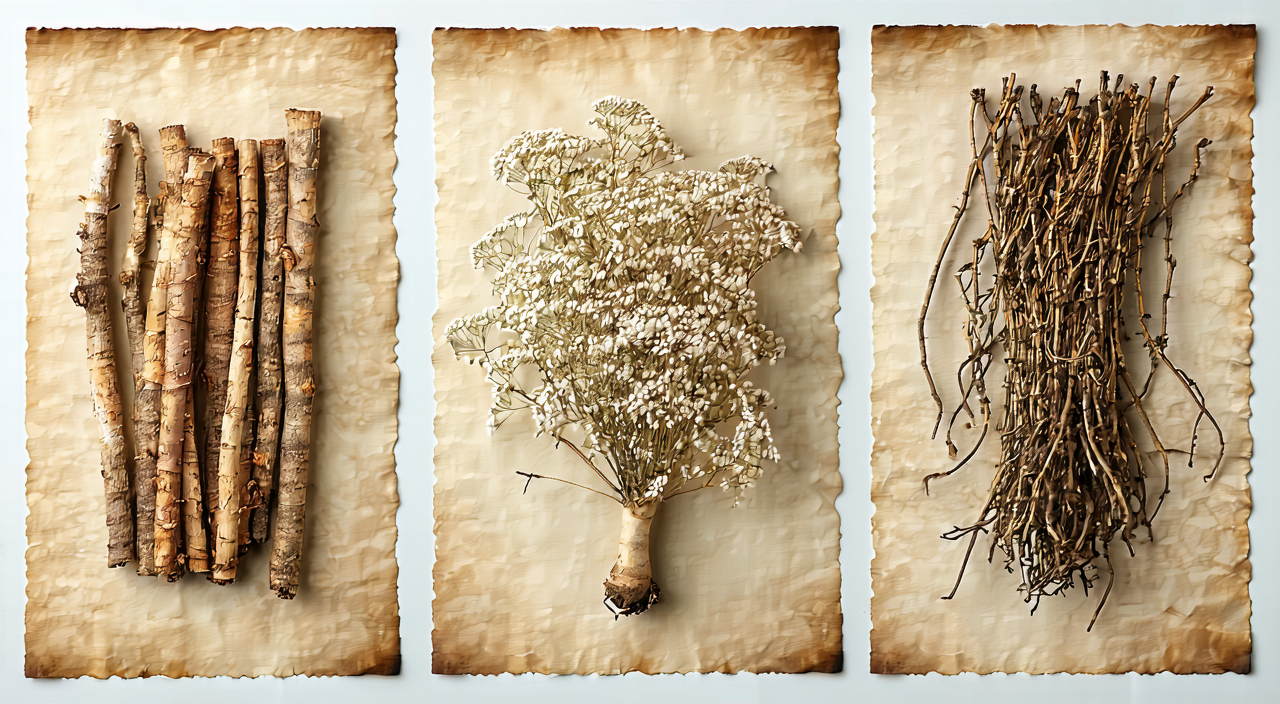
Xu Chang Qing, Bai Qian, and Xi Xin are all medicinal materials whose roots are used, and their appearances are easily confused by some users. Their sources, smells, and root shapes have relatively clear differences.
Xu Chang Qing comes from a plant in the family Asclepiadaceae, and its medicinal parts are the roots and rhizomes. Its roots are relatively slender and long, with a yellowish-white or pale brownish-yellow surface, and a distinct aroma and pungent-fragrant sensation after breaking. Bai Qian is mostly derived from Cynanchum stauntonii or Cynanchum glaucescens in the family Asclepiadaceae. It also uses the roots and rhizomes, but Bai Qian has a weaker smell. Its rhizome has nodes and looks like a slender ‘goose quill’ in shape. Traditionally, it is more often used to transform phlegm and direct qi downward, which is different from Xu Chang Qing’s uses of dispelling wind, relieving pain, and relieving itching. Xi Xin comes from plants in the family Aristolochiaceae. Its smell is pungent, strong, and intense, and its roots are relatively thin and often curled. Traditionally, it is used to disperse wind-cold, open the orifices, and relieve pain. However, because species and safety requirements are strict, it must not be confused with Xu Chang Qing.
In short, Xu Chang Qing has a pungent-fragrant but relatively mild smell and slender roots; Bai Qian has a weak smell and clearly jointed rhizomes; Xi Xin has a strong, pungent, and dispersing smell, and its plant source and traditional uses are even more different. When purchasing or using these herbs, users should confirm the correct herb name, Latin name, and reputable source, and should not judge only by appearance.
Which Formulas Use Xu Chang Qing?
Xu Chang Qing appears as a combined ingredient in some traditional formulas and modern Chinese patent medicines, with common applications focusing on dispelling wind and relieving pain, invigorating blood and unblocking collaterals, and relieving itching.
Xu Chang Qing San is a traditional formula name, often used in traditional approaches related to wind-damp bi pain and lower back and leg pain. Because formulas with the same or similar names may differ across historical formula books, the specific composition and usage should be based on authoritative literature or product instructions. Wind-dampness-relieving preparations are one of the common related categories in modern society. Some products used for joint pain, muscle soreness, and wind-damp-type discomfort may contain Xu Chang Qing, but formulas vary greatly between products, so users should carefully check the ingredients and package insert. Formulas for dispelling wind and relieving pain also often combine Xu Chang Qing with herbs such as Du Huo, Wei Ling Xian, Fang Feng, Qin Jiao, Dang Gui, and Chuan Xiong to enhance the synergistic effects of dispelling wind, removing dampness, invigorating blood, and relieving pain.
It should be noted that formulas and Chinese patent medicines are combined applications under TCM theory. Whether they are suitable for an individual should be judged comprehensively according to constitution, symptoms, course of disease, and product instructions. Users are not advised to combine and take herbs on their own based only on formula names or single herbs, especially for chronic pain, joint deformity, obvious redness, swelling, heat and pain, or cases of unknown cause. In such cases, a doctor or professional should be consulted.
What Should Be Noted When Using Xu Chang Qing?
When using Xu Chang Qing, several points require special attention.
First, volatile components are easily lost. In traditional use, it is often emphasized that the herb should not be decocted for a long time or should be added near the end, but the specific decoction method should follow the requirements of the formula. Changing the decoction time on one’s own may affect the herb’s properties and may also cause waste.
Second, people with allergic constitutions should be cautious. A small number of people may be sensitive to Xu Chang Qing or its volatile components. If symptoms such as rash, itching, breathing discomfort, or swelling of the lips occur after use, stop using it immediately and consult a doctor.
Third, people with a bleeding tendency or those using anticoagulant medications should avoid using herbs that invigorate blood and unblock collaterals on their own. Xu Chang Qing is traditionally classified as an herb that invigorates blood and unblocks collaterals, so it may not be suitable for people with active bleeding, heavy menstrual bleeding, thrombocytopenia, or those in the perioperative period. Whether it can be used should be determined by a doctor.
Fourth, use during pregnancy, breastfeeding, and in children should be especially cautious. Because relevant safety data are limited, these groups are not advised to take Xu Chang Qing-containing herbs or preparations on their own.
Fifth, for unexplained pain, recurrent pain, severe pain, or pain accompanied by chest tightness, palpitations, fever, weight loss, or worsening at night, medical examination should be prioritized rather than self-treating with Chinese herbs for pain relief. For skin itching that does not heal for a long time, recurs repeatedly, or is accompanied by exudate or infection, the cause should also be identified first.
Overall, Xu Chang Qing is a Chinese medicinal herb that should be used under the guidance of TCM theory and is not suitable as a daily health supplement taken casually. Before use, one should confirm the herb source, dosage, decoction method, and personal condition, and consult a doctor, pharmacist, or professional TCM practitioner when necessary.
Summary
Xu Chang Qing is a Chinese medicinal herb whose roots and rhizomes are used medicinally. Traditionally, it is commonly used to dispel wind and relieve pain, invigorate blood and unblock collaterals, and relieve itching and resolve toxicity. In appearance, its main characteristics are slender roots, a short rhizome, and a special aroma. It is easily confused with Bai Qian and Xi Xin, but their sources, smells, and uses are different, so they should be distinguished during use. Formulas or Chinese patent medicines containing Xu Chang Qing should be selected under professional judgment and in combination with individual constitution and symptoms, and they should not be taken long term on one’s own. This article is for general information only and is not a substitute for professional diagnosis or treatment advice.