
Jing Jie Lian Qiao Tang
Overview
Jing Jie Lian Qiao Tang was first recorded in the Ming dynasty work Wan Bing Hui Chun by Gong Tingxian. The original text includes formulas with the same name in both the sections on ear disorders and nasal disorders, primarily for ear and nasal conditions caused by wind-heat and constrained fire. Later, the Qing dynasty work Za Bing Yuan Liu Xi Zhu by Shen Jinao also recorded a formula with the same name. Japanese physician Mori Michihaku subsequently modified the ancient formula to develop the Yiguan Tang Jing Jie Lian Qiao Tang, which became a commonly used heat-clearing, toxin-resolving, wind-dispersing, pathogen-expelling formula in modern Japanese Kampo medicine.
Formula Composition
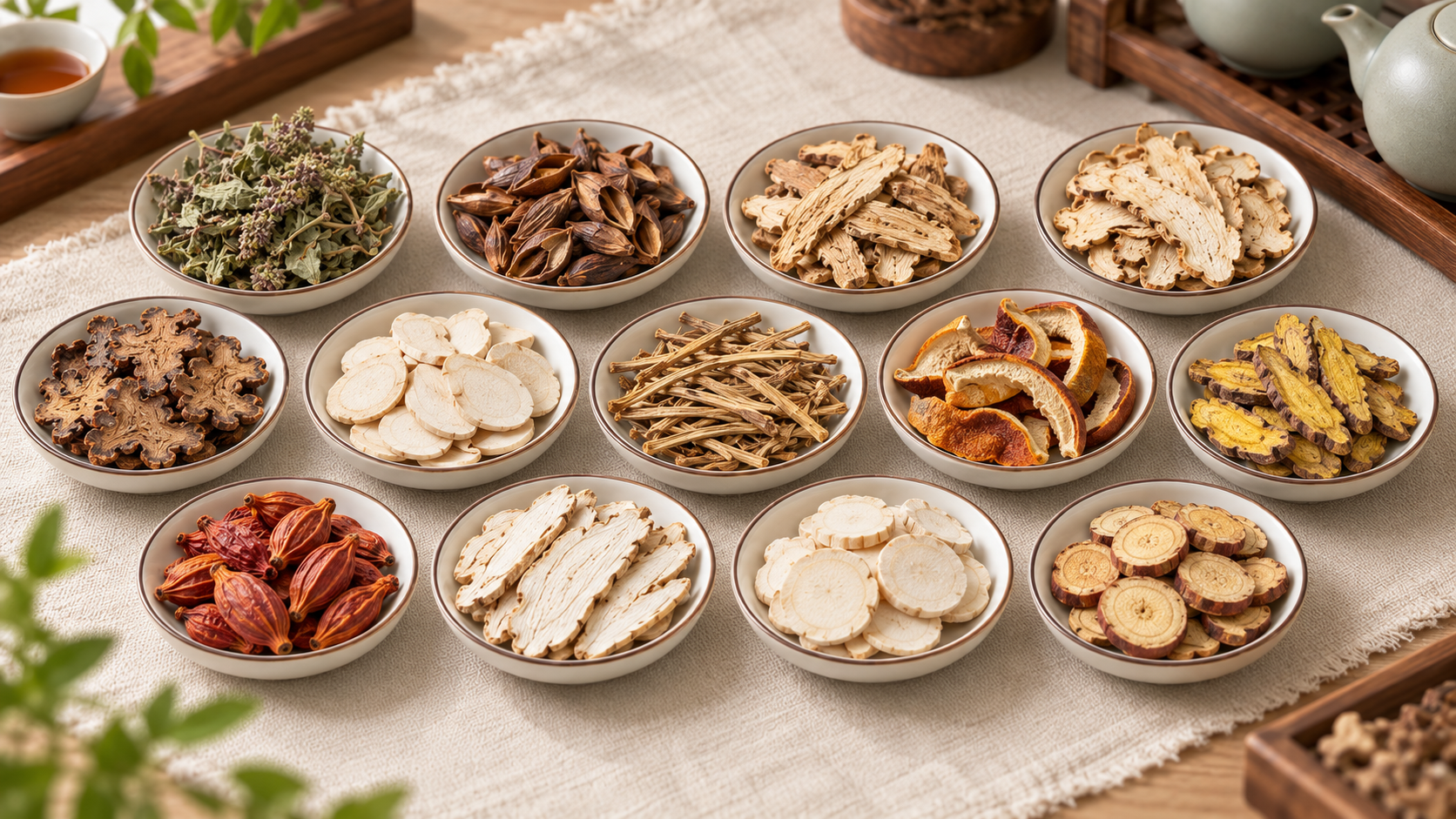
Different versions may contain herbs such as Jing Jie, Lian Qiao, Fang Feng, Chai Hu, Huang Qin, Zhi Zi, Bai Zhi, Jie Geng, Chuan Xiong, Dang Gui, Bai Shao, Sheng Di Huang, Zhi Ke, and Gan Cao.
Note: Formulations may vary considerably by region and manufacturer; refer to the actual product instructions.
Traditional Actions and Indications
In modern Kampo practice, it is commonly used according to pattern differentiation for heat-predominant, suppuration-prone conditions such as chronic rhinitis, sinusitis, recurrent tonsillar discomfort, acne, or eczema.
Precautions
- Seek medical attention promptly in cases of high fever, facial or orbital swelling and pain, difficulty breathing or swallowing, or rapidly spreading infection.
- Formulations sharing the same name may differ; verify the complete ingredient list before use.
- Pregnant women, children, people with abnormal liver or kidney function, and those taking multiple medications should consult a qualified professional.
- For long-term or recurrent inflammation, the causes of infection, allergy, or structural abnormalities should also be investigated.