
Sang Ju Yin
Overview
Sang Ju Yin originated from Wen Bing Tiao Bian, written by the Qing dynasty physician Wu Jutong. It is one of the classic traditional Chinese medicine formulas used for early externally contracted fever and cough-related symptoms.
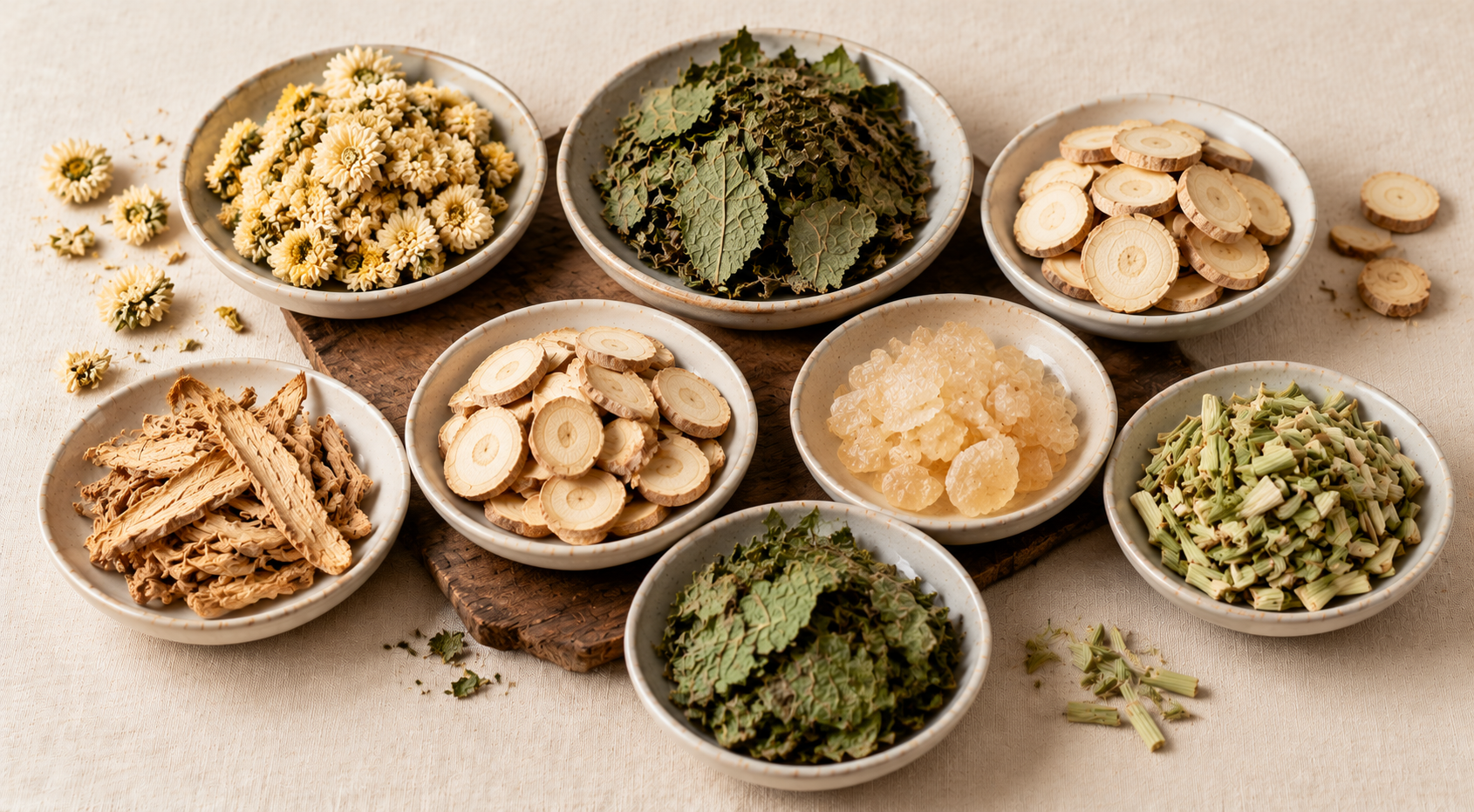
Formula Composition
Sang Ju Yin consists of mulberry leaf, chrysanthemum flower, apricot kernel, forsythia fruit, mint, platycodon root, licorice, and reed root.
Note: The specific formula proportions may vary among different sources and dosage forms. Please follow the instructions for the actual product.
Traditional Actions and Indications
In modern applications, Sang Ju Yin is commonly used in early cases of the common cold, some upper respiratory tract infections, and acute bronchitis in which cough is the primary symptom. It is particularly suitable for people with relatively pronounced cough, mild fever, slight thirst, and possibly accompanying throat discomfort. Whether it is appropriate should be determined based on the specific symptoms and individual circumstances.
Precautions
- Sang Ju Yin is not suitable for all cases of the common cold or cough. If pronounced aversion to cold, absence of sweating, clear nasal discharge, or other signs of cold invasion are prominent, avoid selecting it based solely on the presence of cough.
- People with cough that persists for a long time, recurs repeatedly, or is accompanied by an underlying respiratory disorder are advised to clarify the cause before selecting a treatment.
- Pregnant women, breastfeeding women, children, older adults, and people with chronic diseases are advised to consult a physician or qualified traditional Chinese medicine practitioner before use.
- People taking other medications should first confirm whether any drug interactions or other medication restrictions exist.
- If difficulty breathing, persistent high fever, chest pain, coughing up blood, or marked worsening of symptoms occurs, seek medical attention promptly.