
What Is Croton Seed Cake? Medicinal Parts, Identification, and Common Formulas
Croton Seed Cake is a medicinal substance that overseas Chinese medicine enthusiasts often describe as “known by name but rarely seen.” It is not simply harvested from a plant; it is a processed product obtained by specially preparing the mature seed kernels of the Euphorbiaceae plant Croton tiglium and pressing out most of the fatty oil. Because the raw croton seed kernel is extremely high in oil and powerfully irritant, it has historically been classified as a drastic purgative in Chinese medicine and can only be used after strict defatting and toxicity reduction. As a result, the processing and distribution of Croton Seed Cake are subject to extremely strict control. This article provides objective reference information from the perspectives of identifying characteristics, medicinal origin, traditional understanding, and modern safety considerations, and is by no means a suggestion to use it on your own.
What Does Croton Seed Cake Look Like? How to Identify It
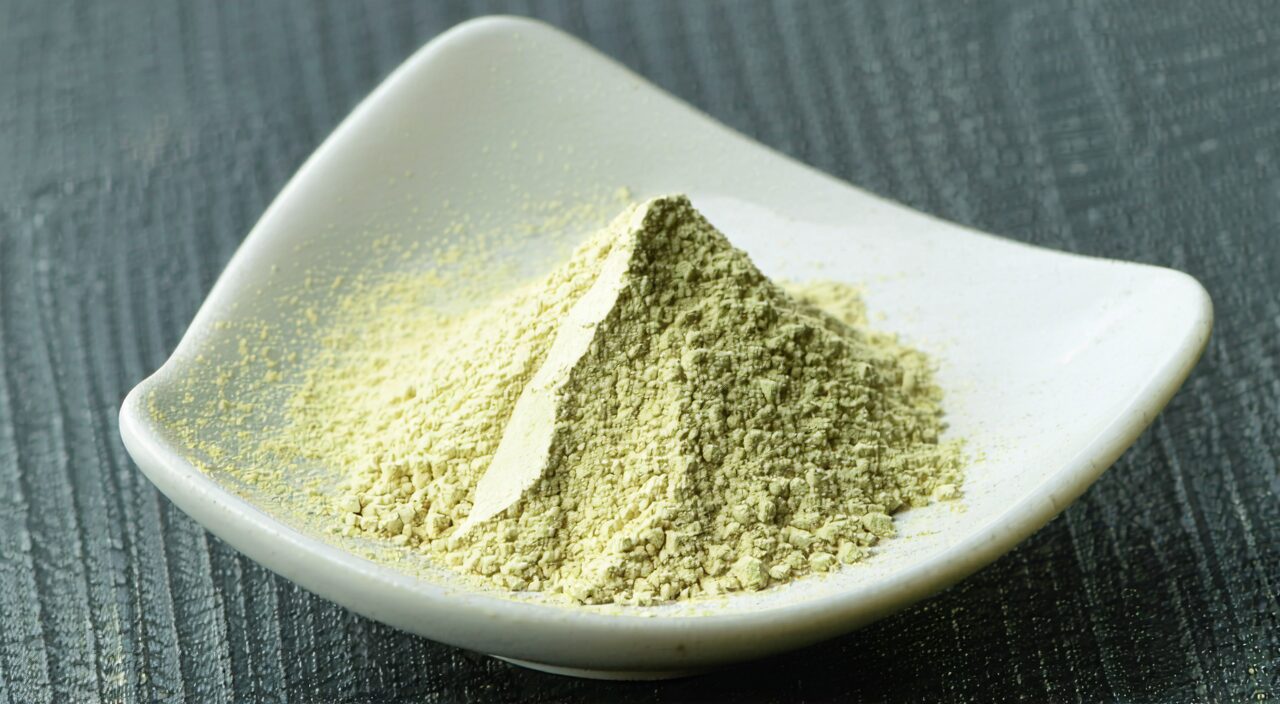
Croton Seed Cake is easily mistaken for an ordinary plant powder based on its appearance, but careful observation reveals its unique features. It usually appears as a pale yellow or yellowish-white loose powder with a relatively light texture. When rubbed between the fingers, it feels slightly granular rather than as fine and smooth as flour or starch. After the oil-removal processing, the oiliness of Croton Seed Cake is markedly reduced; if a small amount is placed on oil-absorbing paper and pressed, it will not immediately produce an oily ring in the way untreated croton kernels do. Under a magnifying glass, tiny fragments of endosperm cells and a few broken pieces of seed coat can be observed, and sometimes extremely fine vascular bundle remnants are visible—all tissue traces left by the processing. Its odor is rather unique, carrying a faint greasy note, but much less intense and pungent than that of raw croton seed. Because it readily absorbs moisture and forms clumps, qualified processed Croton Seed Cake is normally packaged in sealed containers during distribution and must pass microscopic examination to ensure that it does not contain excessive amounts of under-defatted coarse croton powder, thereby guaranteeing uniformity during dispensing and a relatively controllable safety margin.
What Is the Medicinal Part of Croton Seed Cake?
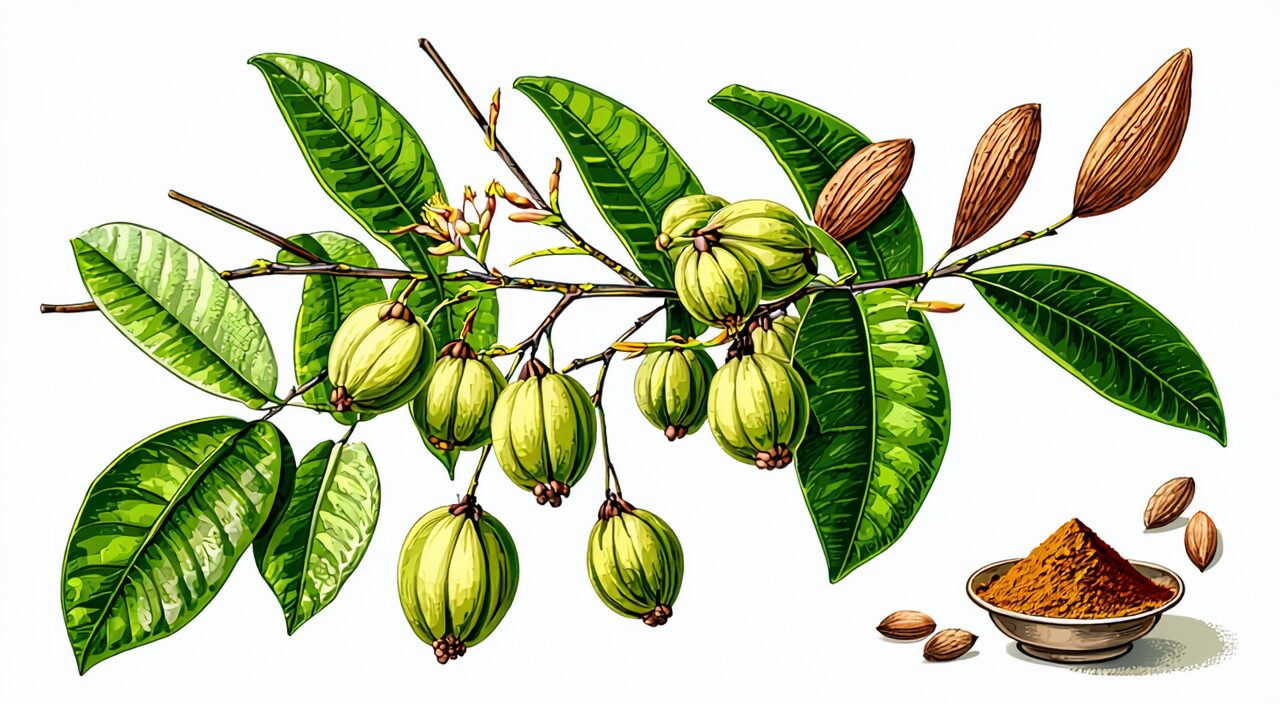
Croton Seed Cake is not derived from an independent medicinal part; rather, it is the defatted processed form of croton seed kernels. The source plant, Croton tiglium, is a tree or shrub. Its fruit is a capsule that is harvested near maturity. After the outer fruit wall is removed, the almost spherical seeds are taken out and the hard seed coat is peeled off, revealing the seed kernel that is rich in fatty oil. In traditional processing, the cleaned seed kernels are dry-fried until the surface is slightly scorched, and then a portion of the oil is pressed out, or they are ground into a paste and repeatedly pressed between oil-absorbing papers. This reduces the fatty oil content from over 40% to about 18–20%, and the resulting loose powder is Croton Seed Cake. From this processing sequence, it is clear that the medicinal source of Croton Seed Cake is essentially a toxicity-reduced processed product of mature seed kernels, not a crude botanical drug. In various historical periods and regions, processing standards specified detailed requirements for the degree of defatting and powder fineness to keep the toxicity within a manageable range.
How Does Chinese Medicine Understand Croton Seed Cake?
In traditional Chinese medicine, Croton Seed Cake is not a regular conditioning herb but a drastic medicinal substance selected with extreme caution for specific acute patterns. It is considered acrid in flavor, hot in nature, and significantly toxic, entering the Lung, Stomach, and Large Intestine meridians; it is classified as a harsh purgative that drives out water. Traditionally, Croton Seed Cake has been used mainly to address internal accumulations caused by cold stagnation, such as abdominal cold pain and severe constipation with pronounced cold signs. Furthermore, in patterns of severe edema, abdominal distention, and fluid retention, ancient physicians sometimes relied on its attacking and expelling power to reduce swelling, but this was usually an extraordinary measure considered only when other methods had proven ineffective. Croton Seed Cake has also been described as having the potential to induce vomiting of phlegm and saliva and to benefit the throat and open the orifices; in emergencies such as throat impediment with phlegm congestion and respiratory distress, it may have been used as a strategy to unblock obstructions. However, all such uses belong to an extremely specialized level of practice. These concepts all derive from ancient medical texts and the accumulated experience of generations of practitioners. They represent only the traditional rationale within a historical and professional context and must not be arbitrarily applied without specific pattern differentiation and strict regulation.
What Are the Key Focuses of Modern Research?
Modern research on Croton Seed Cake is almost entirely focused on its toxicity, irritant properties, and the mechanisms of toxicity reduction through processing. It is known that the main toxic constituents are phorbol ester compounds, which are extremely irritating to the skin and mucous membranes. Direct contact with a very small amount can cause local redness, blistering, or even ulceration. Oral ingestion can trigger violent gastrointestinal reactions, ranging from nausea, vomiting, and abdominal pain to severe watery diarrhea, bloody diarrhea, and dehydration, which may rapidly progress to electrolyte imbalance and circulatory collapse. For this reason, all major pharmacopoeias impose strict limits on the fatty oil content, macroscopic and microscopic identification, and toxicity markers of Croton Seed Cake. Although some studies have explored the potential of trace components in Croton Seed Cake to inhibit abnormal cell proliferation, such explorations remain at the stage of basic experimentation and are still extremely far from any safe clinical application. In short, the core message of modern understanding concerning Croton Seed Cake can be summed up in one phrase: toxicity control.
What Is the Difference Between Croton Seed Cake and Croton Seed?
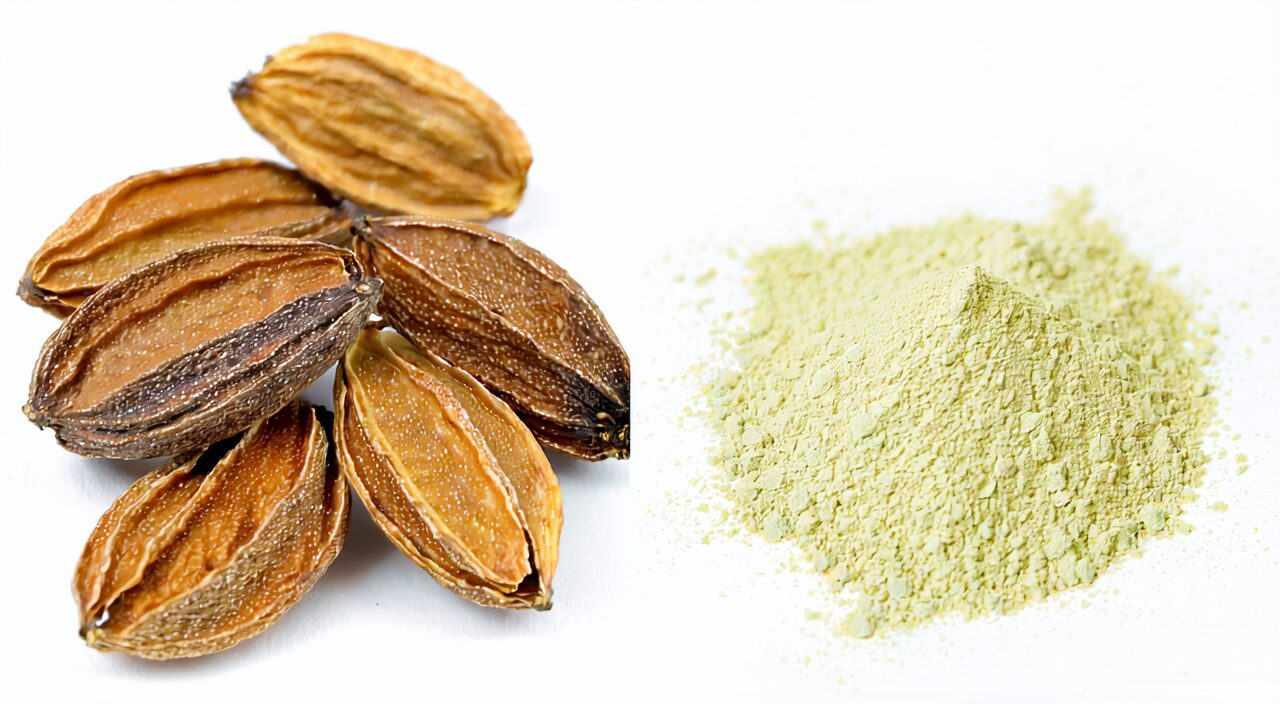
The fundamental difference between Croton Seed Cake and Croton seed (mainly the seed kernel) lies in whether they have undergone processing to remove the oil, and the corresponding difference in toxicity level. Croton seed kernels are flattened ellipsoidal, yellowish-brown to dark brown on the surface, hard in texture, and rich in oil—holding one in the hand makes it feel distinctly greasy in moments. Their fatty oil content typically reaches 40–60%, and they are strongly irritant. In contrast, Croton Seed Cake is a loose powder obtained after pressing out the oil. Its color lightens to pale yellow or yellowish-white, the oiliness is markedly reduced, the glossy cut surface disappears, and rubbing it between the fingers no longer produces an oily, sticky sensation. In medicinal contexts, unprocessed croton seed kernel is almost never permitted for internal use; it must be made into the cake form before it can be incorporated with extremely careful dosage consideration. Although the drastic purgative action of Croton Seed Cake has been somewhat moderated compared to the raw kernel, this does not mean it is “safe”: only a very narrow safety window has been obtained under strict professional handling. There is no justification for treating the two as equivalent, and one should never attempt to collect croton seeds and process them into a homemade preparation.
Which Formulas Use Croton Seed Cake?
Throughout historical formulary texts, Croton Seed Cake appears primarily in formulas that require strong purgation and the opening of blockages, and the total dosage and administration methods are always subject to extremely stringent limits. One representative formula is Sanwu Beiji Wan (Three-Substance Emergency Pill), which combines Croton Seed Cake with dried ginger and rhubarb; it was traditionally used for sudden abdominal pain, distention, and constipation caused by cold and excess accumulations, functioning as an emergency remedy in urgent situations. Zhouche Wan (Vessel and Cart Pill) pairs Croton Seed Cake with Qianniuzi (Pharbitis seed), rhubarb, green tangerine peel, and costus root, among others, aiming to drastically expel water and move qi to break stagnation; it was used for severe fluid retention and extreme abdominal distension, and its action is very violent. Baochi San (Infant-Protecting Powder), a pediatric powder, also contains a minute amount of Croton Seed Cake, but the dosage is extremely small and can only be used by very experienced practitioners after pattern differentiation for specific conditions such as milk and food stagnation or phlegm congestion with convulsions. It must never be considered a common digestive aid for children. Without exception, these three formulas contain highly toxic substances, once again illustrating that Croton Seed Cake is by no means an ordinary Chinese herb and must never be imitated or compounded privately.
What Precautions Should Be Taken with Croton Seed Cake?
First and foremost, it must be stated unequivocally: Croton Seed Cake is a toxic Chinese medicinal material. It may only be dispensed and used on the basis of strict evaluation by appropriately qualified professionals according to the specific disease condition. Self-purchase, storage, or ingestion is absolutely prohibited. Even accidental use of a minuscule amount can rapidly trigger severe diarrhea, profound dehydration, electrolyte disturbances, and even circulatory collapse, which may be life-threatening. Common symptoms after accidental ingestion include burning pain in the mouth, nausea, frequent vomiting, abdominal cramps, and watery diarrhea, sometimes accompanied by tenesmus and bloody stools. Should any of these occur, immediately cease contact, retain any remaining substance, and go to a medical facility as soon as possible for emergency treatment. Pregnant and breastfeeding women are absolutely contraindicated, as Croton Seed Cake may induce strong uterine contractions. Individuals with deficient constitution, the elderly, infants and young children, and those with chronic digestive tract diseases also fall strictly within the scope of contraindications. Under no circumstances should one ever self-add Croton Seed Cake to teas, dietary remedies, or so-called “detox” products; this is extremely dangerous behavior.
Summary
Croton Seed Cake is a drastically potent processed medicinal agent that demands the highest degree of respect. From the identification of its pale yellow, loose powder, to its origin in defatted croton seed kernels, and to the professional context in which it is cautiously used in a very small number of classical formulas, everything points to one core conclusion: the space between an effective dose and a toxic dose is exceptionally narrow, and it must never be approached by general enthusiasts as if it were an ordinary herb. For those interested in the culture of Chinese medicine abroad, understanding its role in traditional acute-pattern thinking is sufficient; safety must always be the foremost consideration, and no form of contact or use should be attempted without qualified guidance.