
What Is Bai Fan? Medicinal Source, Identification, and Common Formulas
What is Bai Fan? In the context of Chinese herbal medicine, Bai Fan is not the root, stem, or leaf of a plant. Instead, it is a hydrated potassium aluminum sulfate crystal produced by processing and refining alunite. It is typically colorless or white, transparent or translucent, brittle, and easily broken. Traditional herbal texts describe both internal and external uses. Because Bai Fan is a processed mineral product containing aluminum, it should not be used solely on the basis of its traditional name or folk experience. Particular attention should be paid to dosage, method of use, site of contact, and individual health conditions.
This article introduces Bai Fan’s source, identification methods, processed forms, traditional understanding, representative formulas, and modern safety discussions, helping overseas Chinese-language readers develop a more organized understanding of this Chinese medicinal material.
What Does Bai Fan Look Like? How Can It Be Identified?
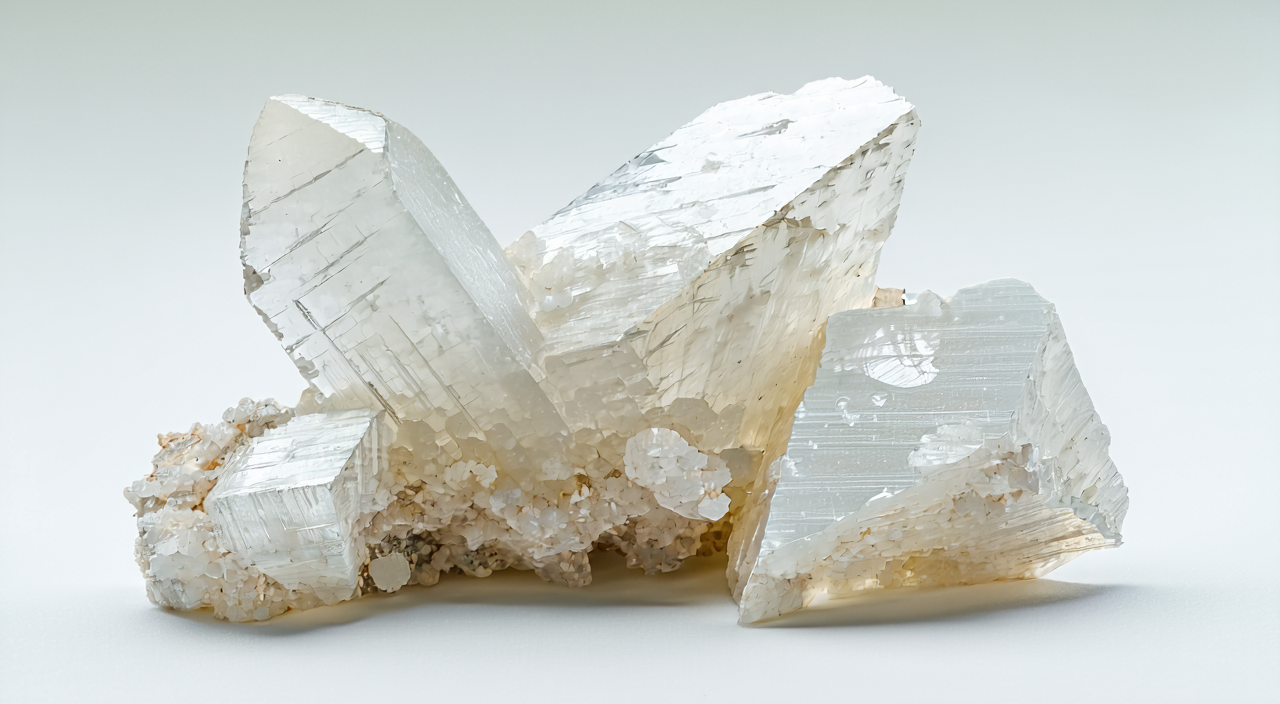
Bai Fan usually appears as irregular crystal chunks, granules, or flakes, although processing may produce relatively regular crystals. Its common colors are colorless or white, and the crystals range from transparent to translucent, often with a glass-like luster on the surface. It is relatively brittle and can break easily when compressed or struck, with a crystalline fracture. After being stored in a dry environment, its appearance may vary slightly depending on impurities, processing methods, and storage conditions.
Organoleptic Characteristics of Bai Fan
From the perspective of traditional herbal identification, Bai Fan is often described as having little odor and a sour, astringent taste, producing a noticeable puckering sensation in the mouth. However, it is not advisable to lick or taste it for identification, especially when the sample has an unknown source, unclear labeling, or has not been tested. In practice, priority should be given to packaging information, the product name, source, batch number, and quality inspection details rather than relying only on color and taste.
Bai Fan cannot be completely distinguished from ordinary stones, food seasonings, or other white minerals by sight alone. Properly produced medicinal materials should have clear Chinese or English labeling and specify their intended use. If the crystals have an unusual color, contain obvious impurities, are severely damp, or have an abnormal odor, they should not be used without professional guidance.
What Is the Medicinal Part of Bai Fan?
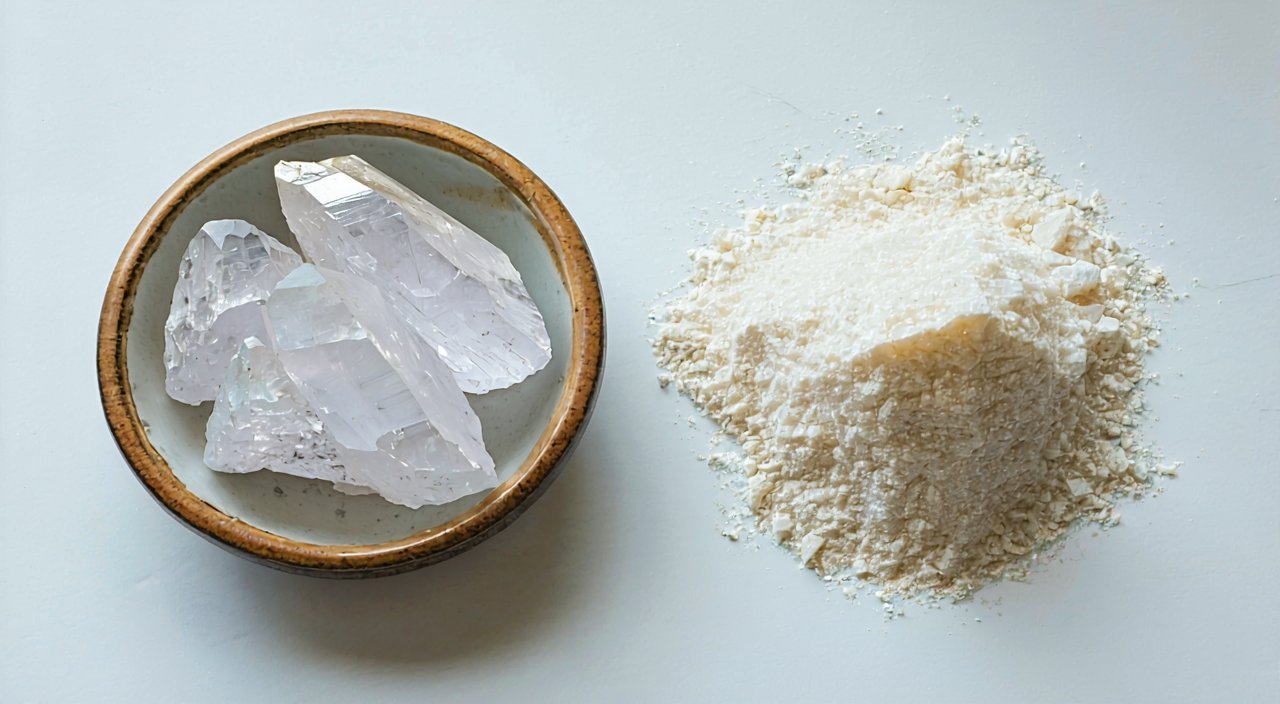
Strictly speaking, Bai Fan has no medicinal part in the sense used for botanical medicines. Its medicinal source is a processed mineral product obtained by refining alunite, and its main component is generally described as hydrated potassium aluminum sulfate. Differences in place of origin, purity, processing techniques, and storage conditions may affect its appearance and compositional stability. Therefore, medicinal Bai Fan should be distinguished from products with an unreliable source or unclear specifications.
Bai Fan can also be calcined to produce calcined alum, known as Ku Fan. During calcination, some of the water of crystallization is removed, causing changes in its properties, appearance, and traditional uses. Calcined alum generally appears as a white powder or irregular chunks with a relatively loose and brittle texture, although its precise form is also affected by the degree of processing. Although Bai Fan and calcined alum have similar names, they are not exactly the same material for use and should not be substituted for one another without professional judgment.
References to a medicinal source on herbal medicine pages are intended mainly to help readers understand the nature of the product. They do not constitute a recommendation to purchase, process, or combine it independently. When internal use or application over a relatively large area is involved, the product instructions and professional advice should be considered.
How Does Traditional Chinese Medicine Understand Bai Fan?
Traditional Chinese medicine commonly understands Bai Fan in terms of astringing, drying dampness, and resolving toxicity. In ancient herbal texts and formula books, Bai Fan was traditionally used for directions such as resolving toxicity and killing parasites, drying dampness and relieving itching, astringing dampness and stopping bleeding, and securing the intestines to relieve diarrhea. Some medical texts also included it in combinations intended to dispel wind-phlegm, transform phlegm, and open the orifices. These descriptions belong to traditional theory and historical usage experience and do not represent conclusions about efficacy in the sense of modern medicine.
For external use, Bai Fan or calcined alum is traditionally associated with approaches to dampness, itching, discharge, or localized bleeding. However, damaged skin barriers and mucosal areas require particular caution, and children’s skin is more sensitive to irritation. Internal use requires even greater attention to dosage, processing, combination with other substances, and duration of use. It should not be increased independently simply because it is a mineral medicine.
Traditional Chinese medicine generally evaluates medicinal materials in combination with symptoms, constitution, cold-heat and deficiency-excess patterns, and the course of an illness. The same medicinal material is not suitable for everyone, and the role of Bai Fan in a formula is also influenced by the other ingredients and the overall pattern-based approach. Therefore, descriptions of traditional properties are useful for understanding general applications but cannot replace individualized assessment by a physician or qualified Chinese medicine professional.
What Does Modern Research Focus On?
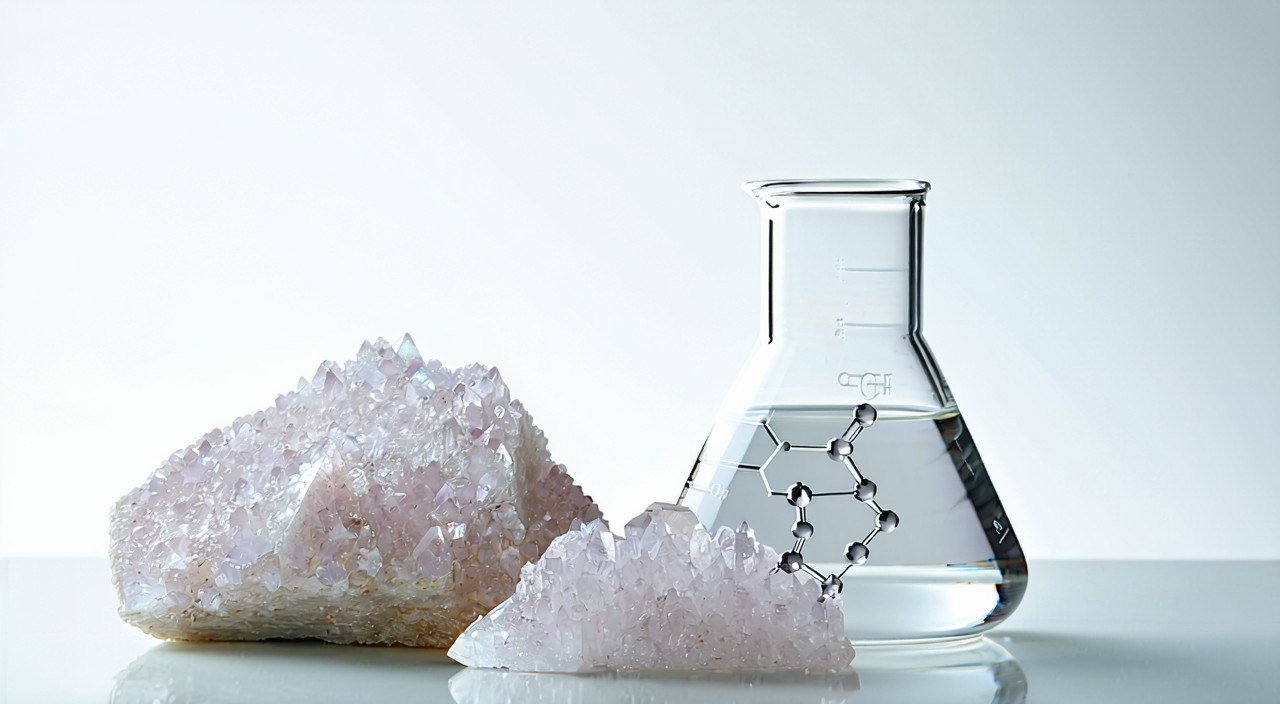
One major focus of modern discussions about Bai Fan is exposure to aluminum salts. Bai Fan contains aluminum, and its actual effects after human contact or ingestion may depend on the dose, frequency, duration, absorption, kidney excretion capacity, and simultaneous exposure to other aluminum-containing sources. Alum used in food processing, medicinal Bai Fan, and aluminum salt preparations used in experimental research are not identical in purity, purpose, route of exposure, or regulatory requirements. They should not be compared simplistically.
Another concern is localized irritation. At higher concentrations or when used improperly, Bai Fan may irritate the skin, eyes, mouth, and other mucous membranes. Particular caution is needed on damaged areas. Modern research also examines the absorption, metabolism, and long-term exposure risks of aluminum salts, but study conditions and conclusions vary. A definitive health conclusion should not be drawn from a single experiment alone.
At present, the more prudent approach is to understand traditional use experience and modern risk assessment separately. Traditional texts can describe historical directions of use, while modern research helps assess composition, exposure, and safety boundaries. For long-term, repeated, or high-dose use, especially internal use, consult a doctor, pharmacist, or qualified Chinese medicine professional.
What Are the Differences Between Bai Fan, Calcined Alum, and Borax?
Bai Fan, calcined alum, and borax may all appear as white or light-colored mineral substances, but their sources, chemical compositions, water content, and traditional uses are different.
Bai Fan and Calcined Alum
Bai Fan is a hydrated potassium aluminum sulfate processed from a mineral source. It commonly appears as transparent or translucent crystal chunks with a glass-like luster. Calcined alum is a processed product made by calcining Bai Fan. Its water of crystallization is reduced, and its appearance commonly changes into a white powder or a loose, brittle form. The two may be used differently in traditional formulas and external preparations, so they should not be substituted for one another merely because their names are similar.
Bai Fan and Borax
Borax is a different type of boron-containing mineral salt, with a chemical composition and physical properties distinct from those of Bai Fan. Borax may appear as a white powder, granules, or crystals, and its appearance can sometimes be confused with Bai Fan. However, it is not a substitute for Bai Fan. Neither substance should be mixed or used based only on similar color, and industrial-grade, cleaning-grade, or unidentified mineral salts should never be used on or in the human body.
Which Traditional Formulas Contain Bai Fan?
Traditional formula books include formulas containing Bai Fan or calcined alum, such as Bai Jin Wan, Fan Shi Wan, and Ku Fan San. The ingredients, processing methods, dosage forms, and amounts may vary among different medical texts, schools of practice, and product versions. Even formulas with the same name may not have exactly the same composition.
Bai Jin Wan is often presented in traditional sources as a representative formula containing Bai Fan. Its traditional application is generally associated with identifying patterns involving phlegm turbidity and obstruction. Fan Shi Wan is the name of a formula that uses an alum-related medicinal material in combination with other ingredients; its exact composition and intended use should be confirmed in the specific medical text or official product instructions on which it is based. Ku Fan San generally reflects the traditional external or localized use of calcined alum, but the actual application site, concentration, and preparation requirements must be determined from the specific prescription.
These formulas are provided only as examples for learning about traditional Chinese medicine formulas. They should not be prepared independently or copied from ancient prescriptions based on their names alone. If use involves children, pregnancy, breastfeeding, chronic disease medication, or symptoms that persist or recur, a qualified professional should assess the situation in light of constitution, symptoms, product instructions, and medication history.
What Precautions Are Needed When Using Bai Fan?
First, self-administering large amounts of Bai Fan internally is not recommended, nor is it advisable to extend the duration of use or increase the frequency without guidance. Aluminum-containing substances require consideration of total exposure. People with impaired kidney function may have a reduced ability to excrete these substances and should be evaluated under medical supervision. Children and people who are pregnant or breastfeeding should also consult a doctor or pharmacist before use.
Second, when used externally, avoid contact with the eyes, mouth, and other sensitive mucous membranes. Do not apply it to large areas, deep or severely damaged wounds, clearly infected areas, or wounds that are actively bleeding or oozing. If burning pain, redness, swelling, blistering, persistent itching, or any other unusual reaction occurs, stop contact and seek professional advice promptly. If it enters the eyes, do not rub them repeatedly. Rinse them with running clean water as soon as possible and seek medical care when appropriate.
Third, alum used in food processing is not the same as medicinal Bai Fan. Food additives have specific purposes and usage standards. Being food-grade does not mean that a substance is suitable for self-directed internal use, and medicinal Bai Fan should not be used directly in food preparation. When purchasing or identifying a product, check its official label, ingredient information, intended use, and quality details. Avoid industrial raw materials and products from unknown sources.
If symptoms are severe, persistent, or recurrent, or are accompanied by marked anxiety, depression, palpitations, chest tightness, pain, abnormal breathing, severe abdominal pain, persistent vomiting, black stools, unexplained weight loss, or other concerning signs, consult a doctor or another qualified professional promptly. Do not rely solely on Bai Fan or related formulas for self-treatment.
Summary
Bai Fan is a hydrated potassium aluminum sulfate crystal produced by processing alunite, while calcined alum is its calcined form. Both differ from borax in source and properties. Traditional Chinese medicine associates Bai Fan with applications such as resolving toxicity, drying dampness, and astringing, but aluminum salt exposure and mucosal irritation make proper use especially important. Alum used in food processing should not be equated with medicinal Bai Fan. This article is for educational reference only; actual use should be evaluated according to individual circumstances and professional advice.