
What is Polygonum aviculare? Medicinal Parts, Identification, and Common Formulas
Many people feel it sounds both unfamiliar and distinctive when they first hear the name “Polygonum aviculare” (knotgrass). It is not a household supplement like ginseng or goji berry, but it plays a fairly frequent role in traditional Chinese formulas for promoting urination and relieving strangury. If you have ever seen a patch of slender grass growing close to the ground with distinctly swollen stem nodes along roadsides or in wild fields, you have probably already encountered knotgrass. This article will take you from its visual identification and medicinal parts, through traditional TCM understanding, to how it differs from Dianthus and Plantain, and common formula combinations.
What does Polygonum aviculare look like? How to identify it?
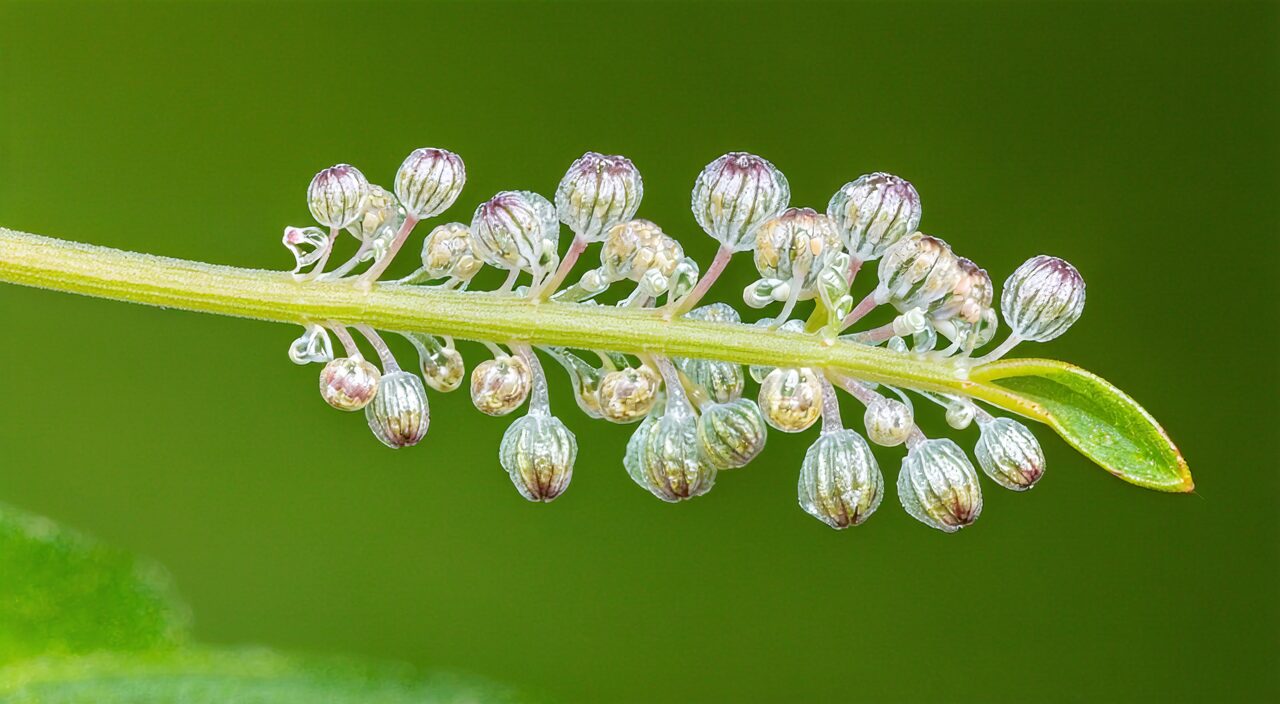
Polygonum aviculare is an annual herb of the Polygonaceae family. The plant is not tall and often grows prostrate or ascending, with a flexible, slender overall appearance. If you want to tell it apart from other similar weeds, there are a few key characteristics worth noting.
First, the stems. The stems are slender and much branched, with fine longitudinal ridges on the surface, and the nodes are clearly swollen — one of the typical features of the Polygonaceae family. The stem color often has a purplish-red hue at the base and gradually turns green toward the top.
Second, the leaves. The leaves are alternate, relatively small, narrowly elliptical or oblanceolate, with a blunt or rounded apex and gradually narrowed base, almost sessile. The most distinctive identification marker is the membranous ocrea (stipule sheath) — it wraps around the stem at the base of the leaf stalk, is whitish and translucent, and often torn at the tip. This structure is not common in many grasses, and once you see it, you can generally point toward a Polygonaceae plant.
The flowers and fruits are also quite characteristic. The flowers grow in the leaf axils, starting to bloom sporadically almost from the middle and lower parts of the stem. The perianth is green with reddish or whitish margins, 5-lobed, small and inconspicuous. The achenes are trigonous-ovoid, dark brown, and enclosed in the persistent perianth. Overall, knotgrass gives an impression of being “fine, fragmented, and understated” — with no showy inflorescence, yet it can form dense patches when growing in mass.
What is the medicinal part of Polygonum aviculare?
The medicinal part of Polygonum aviculare is the dried aerial portion — that is, the mixture of stems, leaves, flowers, and fruits after removing the roots and excess impurities. Although the root is part of the knotgrass plant, it is not used in traditional decoction pieces.
Harvesting usually takes place in summer when the plant is growing vigorously and flowers are just opening or fruits are beginning to form. At this stage, the active constituents in the whole herb are generally considered to be more concentrated. The aerial parts are cut, soil and dead leaves removed, and then either dried in the sun directly or cut into sections and sun-dried. Dried knotgrass decoction pieces appear as segments or broken pieces; the stems are cylindrical with swollen nodes, the leaves are wrinkled and fragmented, the color is greenish or yellowish-green, with faint odor and slightly bitter taste.
When used, the dried herb is commonly added directly to decoctions. It can also be boiled in water for external washing of the skin according to specific needs. Regardless of the method, it is advisable to obtain it through formal channels to ensure correct species identification and clean processing.
How does TCM understand Polygonum aviculare?
Within the theoretical framework of traditional Chinese medicine, Polygonum aviculare is classified as a water-draining and dampness-percolating herb. It is bitter in taste, slightly cold in nature, and enters the Bladder meridian. Traditionally, it is mainly used in two broad directions: one is promoting urination and relieving strangury, and the other is killing parasites and stopping itching.
From the perspective of promoting urination and relieving strangury, knotgrass is often included in traditional formulas addressing symptoms such as strangury, difficult urination, frequent and urgent urination, and painful urination caused by damp-heat pouring downward. TCM holds that bitterness can dry dampness and cold can clear heat; the bitter-cold nature of knotgrass helps clear damp-heat from the lower energizer and expel it through urination. In this context, it is commonly combined with herbs such as Dianthus, Plantago seed, and talc.
From the perspective of killing parasites and stopping itching, knotgrass is sometimes used for skin conditions such as damp sores, eczema, and genital itching. In traditional use, it can be taken internally or used as an external wash, following the idea of clearing damp-heat and relieving itching. However, usage in this direction often requires comprehensive consideration of specific symptoms, constitution, and whether other concurrent patterns are present, and it is not a routine single-herb application.
It needs to be emphasized that the above is only the traditional understanding in TCM. Knotgrass is more a medicinal ingredient within a therapeutic framework rather than a specific cure for a single disease.
What do modern studies suggest?
Modern research on Polygonum aviculare mainly focuses on its chemical constituents and pharmacological activities. Studies indicate that it contains flavonoids (such as avicularin, myricitrin, etc.), phenolic acids, tannins, and other compounds. Some in vitro experiments and animal studies have observed that extracts of knotgrass exhibit certain diuretic, antioxidant, bacteriostatic, and anti-inflammatory activities.
However, these studies are mostly still at the laboratory stage and cannot be directly equated to clinical efficacy, nor can they be used as a basis for daily health maintenance. From a popular science perspective, understanding the modern research on knotgrass adds another dimension of knowledge, yet in practical application one should still revert to traditional experience and individualized judgment.
What are the differences between Polygonum aviculare, Dianthus, and Plantain?
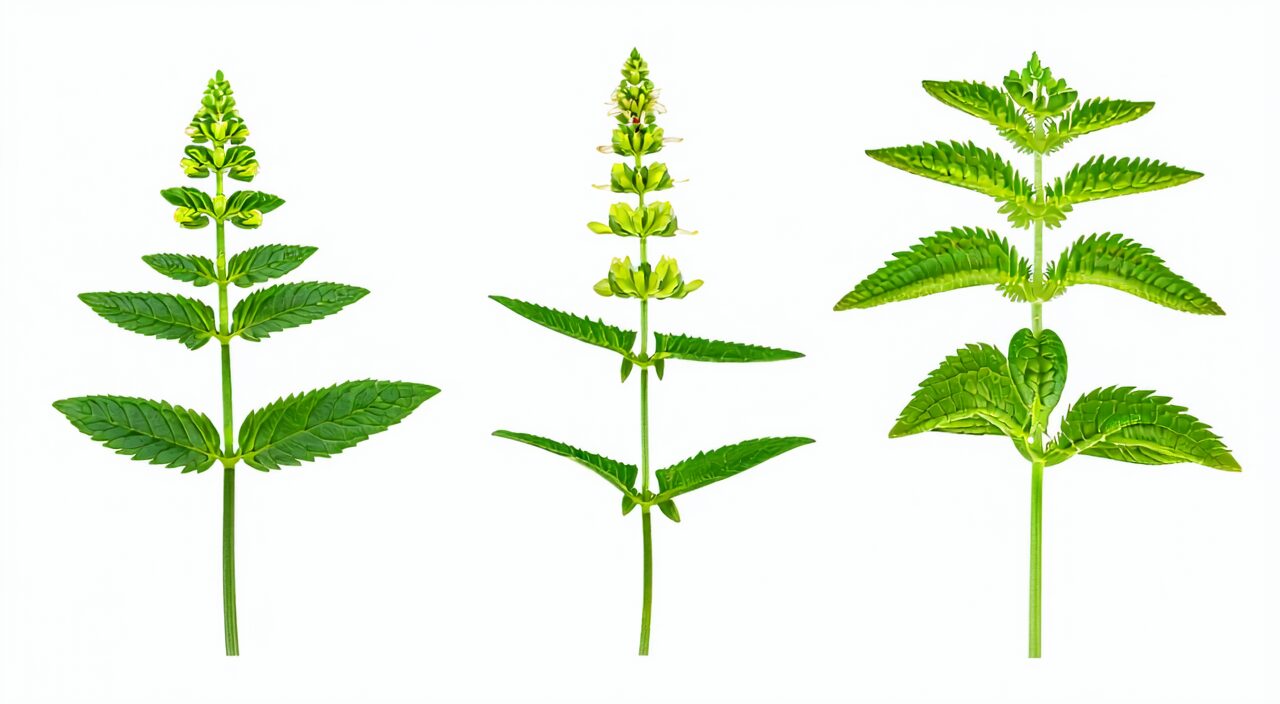
Many friends interested in herbal medicine easily confuse Polygonum aviculare with Dianthus (Dianthus superbus) and Plantain (Plantago asiatica), and indeed they share similar diuretic and strangury-relieving effects. However, in terms of plant morphology and traditional application, the three have rather obvious differences.
In leaf shape: knotgrass leaves are small and alternate, possessing a membranous ocrea; Dianthus leaves are opposite, linear-lanceolate, and fused into a short sheath at the base, without the transparent ocrea seen in knotgrass; Plantain leaves are basal, broadly ovate or long elliptical, with distinct leaf stalks and parallel veins — completely different from knotgrass’s small ground-hugging leaves. As for stem nodes, both knotgrass and Dianthus have relatively swollen nodes, but the swelling is somewhat less pronounced in Dianthus, while Plantain has no obvious aerial stem.
In traditional application: knotgrass tends to clear bladder damp-heat, with additional parasite-killing and itch-stopping effects; Dianthus is stronger in breaking blood stasis, promoting menstruation, and relieving strangury, and is traditionally considered more focused on bloody strangury; Plantain mainly clears heat, promotes urination, percolates dampness and stops diarrhea, and also has a phlegm-transforming and cough-soothing aspect. Therefore, although they sometimes appear together in the same formula, their emphases are not identical. The actual choice needs to be differentiated based on specific presentations and constitution.
Which formulas use Polygonum aviculare?
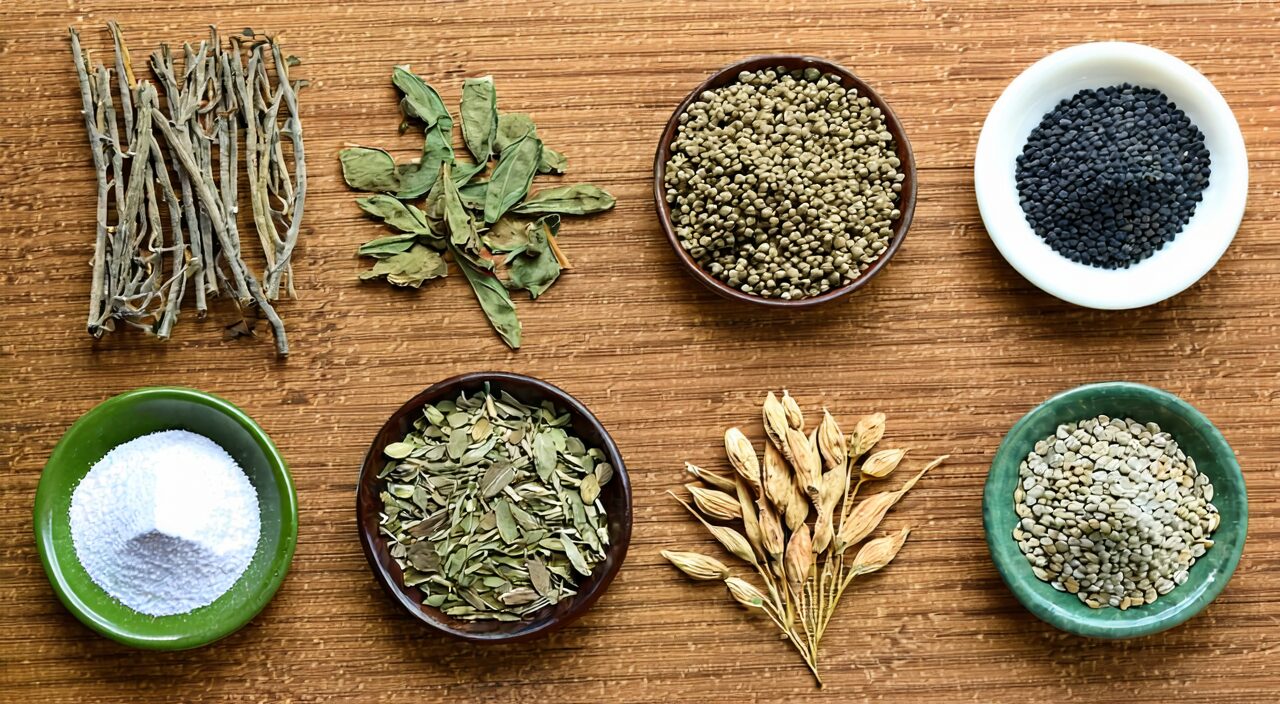
Polygonum aviculare is rarely used alone in traditional formulas; it more often plays its role through combination with other herbs. The following categories of formulas are common illustrative cases that can serve as a direction for understanding.
Ba Zheng San (Eight-Herb Powder for Rectification) is one of the representative formulas containing knotgrass. It is combined with Dianthus, Plantago seed, talc, Akebia stem, gardenia, rhubarb, and licorice. Traditionally, it is used for difficult urination, dribbling and painful urination, and frequent urgent urination caused by damp-heat pouring downward. This type of formula is relatively cold in nature, and whether it is suitable still needs to be judged in light of individual constitution, symptoms, and professional advice.
Bianxu Tang (Knotgrass Decoction) originates from the book “Zá Bìng Yuán Liú Xī Zhú” (The Sources of Miscellaneous Diseases). It uses knotgrass as the chief herb, combined with phellodendron, sophora root, and others. Traditionally, it is used for damp-heat vaginal discharge, genital itching, and similar conditions, often administered as a decoction both internally and as an external wash. In ancient literature, it is more associated with damp-heat related vulvar itching.
Furthermore, many empirical formulas for strangury flexibly add or subtract knotgrass according to the patient’s specific presentation. For example, when dark, rough urination is severe, it is often used with heat-clearing and strangury-relieving herbs; when there is a tendency toward hematuria, it may be combined with cooling-blood and hemostatic substances. The dosage and combination of knotgrass vary among different formulas, and self-formulating is not recommended. If you are interested in a certain type of formula, you can gain a better understanding by studying its compositional principles and then seeking professional opinion for further judgment.
What precautions should be taken when using Polygonum aviculare?
Although Polygonum aviculare is a traditional herb, it is not suitable for everyone and should not be taken casually over the long term. The following points deserve special attention.
First, women during pregnancy should avoid using knotgrass. In TCM tradition, knotgrass is considered slightly cold and promotes downward drainage, which may have adverse effects on pregnancy; therefore, pregnant women are generally not within the scope of use.
Second, people with spleen-stomach deficiency and cold, prone to diarrhea, or with poor appetite need to be cautious. The bitter-cold nature of knotgrass may, to a certain extent, damage the yang qi of the spleen and stomach. If the digestive function is inherently weak, long-term or large-dose use may lead to abdominal discomfort, loose stools, and other reactions.
Third, when urinary symptoms recur, the cause should be clarified first. Frequent urination, urgency, and discomfort during urination can arise from many causes, such as urinary tract infection, stones, and prostate issues. Not all situations are suitable for using knotgrass. Before a clear diagnosis is made, one should not rely solely on knotgrass or other herbs for management. Especially when symptoms such as fever, low back pain, visible blood in the urine, or severe urination pain appear, it is even more important to see a doctor promptly.
Finally, safety data on long-term, large-dose use of Polygonum aviculare are insufficient. The traditional experience of short-term use within formulas cannot be directly extrapolated to support long-term single-herb infusion for drinking. Maintaining a cautious and respectful attitude toward the medicinal nature of any Chinese herb is the best protection for your body.
Summary
Polygonum aviculare is a water-draining and dampness-percolating Chinese herb whose aerial parts are used medicinally. It is easily identified visually by swollen stem nodes, small alternate leaves, and membranous ocrea. Traditionally it is often used to promote urination, relieve strangury, kill parasites, and stop itching, and is closely associated with formulas such as Ba Zheng San and Bianxu Tang. While paying attention to its effects, one must also recognize its bitter-cold character. Pregnant women and those with spleen-stomach deficiency should be particularly cautious. This article is intended for objective popular science reference only and cannot replace professional diagnosis or treatment advice. Before any specific use, please consult relevant professionals in light of individual circumstances.