
What Is Chenpi? Medicinal Parts, Identification Method, and Common Formulas
When people hear about chenpi, the first thing many think of is a refreshing citrus aroma. As a traditional substance used in both food and medicine, chenpi is quite commonly found in daily tea infusions, soups, and herbal formulas. So, what exactly is “chenpi,” why is aging emphasized, and how does its medicinal part differ from qingpi and juhong? For those just beginning to learn about Chinese medicinal materials, these questions may not be entirely clear. This article offers a relatively objective, science-based reference for overseas readers, covering visual identification, medicinal parts, traditional Chinese medicine concepts, differences from similar materials, and common formulas.
What Does Chenpi Look Like? How Do You Identify It?
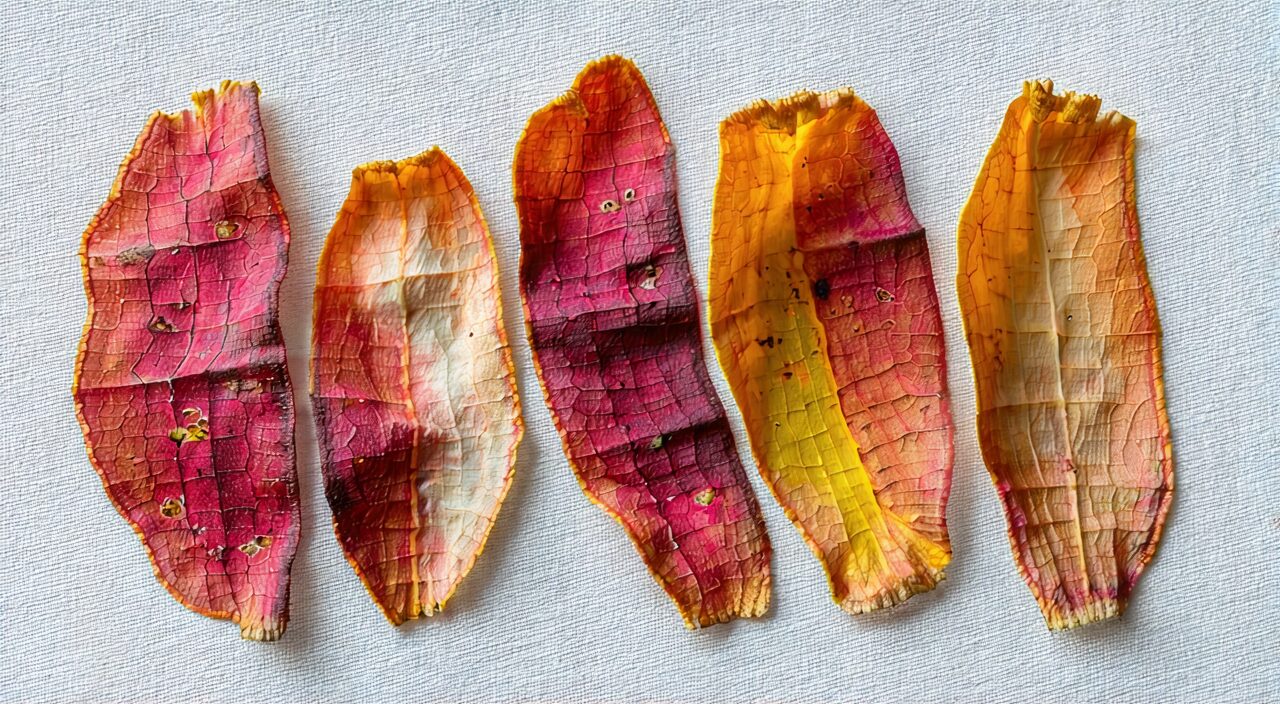
Chenpi is made by drying and aging the ripe peel of tangerines. When identifying it, first pay attention to the following characteristics.
In terms of shape, dried chenpi typically appears as irregular pieces or lobes, with the edges often curled inward. The outer surface color is orange-red or reddish-brown, sometimes deepening with prolonged storage. Many small depressions are visible to the naked eye on the outer surface; these are the oil chambers, where the volatile oils of chenpi are stored. The inner surface is yellowish-white or pale yellowish-brown, relatively rough, and sometimes residual vascular bundles can be seen.
Aroma is an important aspect of identifying chenpi. Good-quality chenpi carries a rich yet clear citrus fragrance that does not feel stuffy or sour. When broken and brought close to the nose, a distinctive fresh scent can be detected. If it smells moldy, sour, or faintly rancid and stale, it may indicate improper storage or poor quality.
When tasted, dried chenpi gives a slightly pungent and mildly bitter sensation upon chewing, followed by a sweet aftertaste, but the overall experience is not harsh. These characteristics can help in making a preliminary quality judgment when purchasing, though a final assessment still needs to consider the origin, variety, and processing method.
What Is the Medicinal Part of Chenpi?
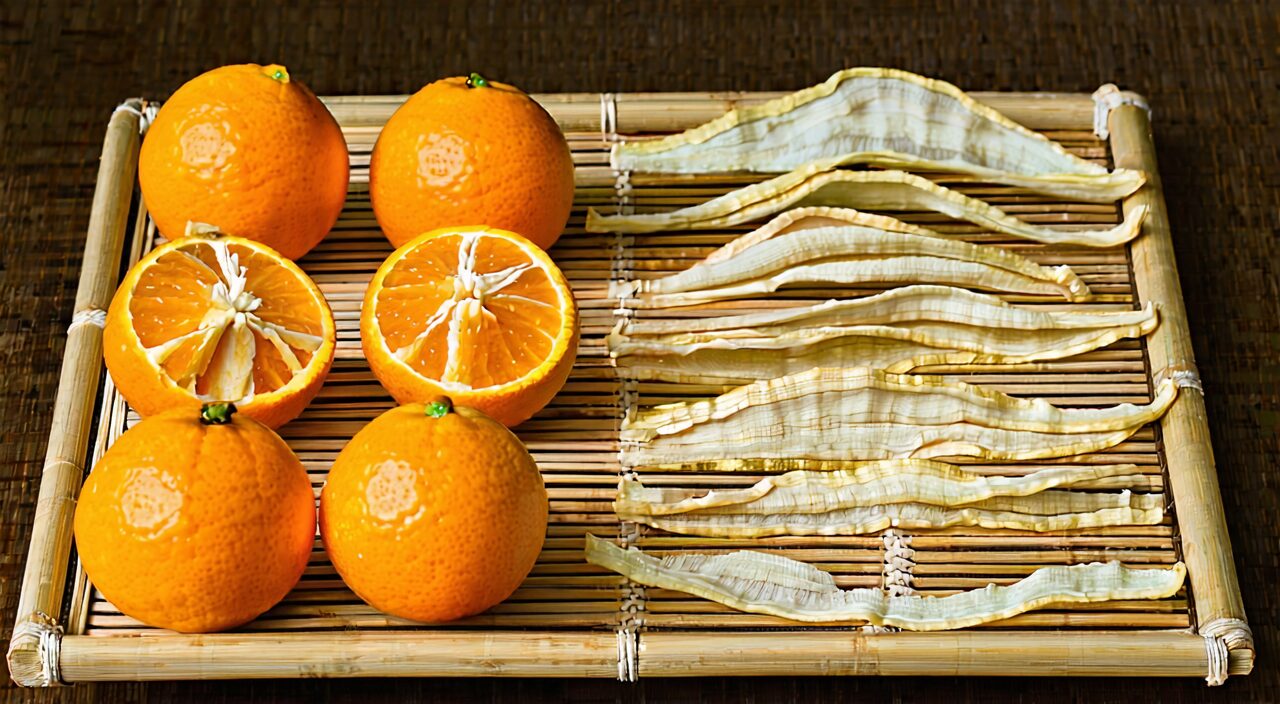
The medicinal part of chenpi is the dried mature peel of tangerine (Citrus reticulata) and its cultivated varieties. Ripe tangerines are harvested, the peels are removed, and after sun-drying or low-temperature drying, they are stored for a period of time to age naturally. The traditional view holds that fresh tangerine peel has a relatively strong drying nature; after an appropriate period of storage, its internal components undergo certain transformations, and its properties become milder. Therefore, the character “chen” (aged) is customarily emphasized, which is also the origin of the name “chenpi.”
During processing, the peel is usually separated into several lobes that remain connected at the base and then dried in the sun or by heat. In some regions, the outer rind and inner white pith may be trimmed to varying degrees. In practical use, chenpi is not the same as ordinary snack tangerine peels; attention must be paid to the source, harvest time, and drying method. When used medicinally, the mature peel of specific cultivated varieties is generally required; not just any edible tangerine peel can be directly used as chenpi.
Some households dry tangerine peels themselves to make infusions. Although this practice is common, it is necessary to pay attention to the variety of the tangerine peels, whether they have been thoroughly washed, whether pesticide residues are present, and whether mold has developed. Traditionally, it is still recommended to use chenpi that has been properly processed and aged, so as to avoid unnecessary burdens on the body due to improper handling.
How Does Traditional Chinese Medicine Understand Chenpi?
Within traditional Chinese medical theory, chenpi is usually understood in terms of regulating qi and strengthening the spleen, as well as drying dampness and transforming phlegm. It is acrid, bitter, and warm in nature, and enters the spleen and lung meridians. Acridity can move and disperse, bitterness can dry dampness, and warmth facilitates circulation. Thus, it is commonly used in cases of qi stagnation and dampness obstruction in the middle burner, manifesting as fullness and distension in the chest and abdomen, indigestion, and reduced appetite. It is also considered in approaches to address cough with phlegm-dampness.
When improper diet, emotional influences, or external dampness cause dysfunction of the spleen and stomach qi dynamic and internal accumulation of water-dampness, a person may experience epigastric and abdominal bloating, belching, nausea, and loose stools. Chenpi is often employed as an auxiliary agent for moving qi and transforming dampness, used in combination with other herbs to help restore the normal transportation and transformation function of the spleen and stomach. For respiratory-related discomforts with copious, thin phlegm or chest oppression due to phlegm-dampness congestion, it is traditionally thought that chenpi can assist in drying dampness and transforming phlegm, thereby reducing phlegm-dampness production.
It should be noted that these insights are based on traditional Chinese medical theory and historical experience, primarily offering a perspective for understanding the body. They cannot replace modern medical diagnosis. Whether the use of chenpi is suitable depends on individual constitution, specific presentations, and assessment by a professional TCM practitioner.
What Does Modern Research Focus on Regarding Chenpi?
In modern research, scientists primarily focus on components such as volatile oils, flavonoids, and polysaccharides found in chenpi. In vitro or animal experiments have observed that these components may possess certain antioxidant activities, can regulate gastrointestinal smooth muscle movement, and may promote the secretion of digestive juices. These findings provide some support from a modern perspective for certain traditional uses of chenpi.
However, such laboratory-level results cannot be directly equated to effects after ingestion or consumption by humans. Understanding this information can serve as a starting point for further attention and learning, but it should not be construed as advice or guarantee for any specific health concern. More high-quality clinical research is still needed regarding the effects of chenpi on particular health conditions.
What Are the Differences Between Chenpi, Qingpi, and Juhong?
Although chenpi, qingpi, and juhong stem from similar sources, they differ markedly in harvesting stage, part used, or emphasis in traditional application.
Qingpi generally uses the peel of unripe tangerines or young fruits; it is hard in texture, with a greenish or greyish-green skin. In traditional Chinese medicine, qingpi is considered to have a strong qi-breaking action and focuses more on soothing the liver, breaking stagnant qi, and dispersing accumulation. It is commonly used for conditions such as distending pain in the chest and hypochondrium, breast distension and pain, and hernia pain caused by liver qi depression. For individuals with a weak constitution or qi deficiency, however, it is considered quite drastic, so it is used with caution.
Juhong is made using the outer red peel of ripe tangerines after scraping off the inner white pith and then drying it, or directly processing the outer peel of varieties like Huazhou pomelo. In traditional understanding, its ability to dry dampness and transform phlegm is comparatively strong, making it more suitable for conditions dominated by phlegm-dampness, such as copious phlegm with cough and chest stuffiness with nausea.
Simply put, chenpi mainly regulates qi and strengthens the spleen while drying dampness and transforming phlegm, with a relatively gentle nature; qingpi has a strong qi-moving force that tends to break and disperse; and juhong excels at transforming phlegm. Although all three are related to tangerine, they differ considerably in emphasis within traditional applications and should not be casually substituted. When self-administering daily, it is even more important to distinguish their characteristics and choose based on individual circumstances under the guidance of an experienced professional.
Which Formulas Use Chenpi?
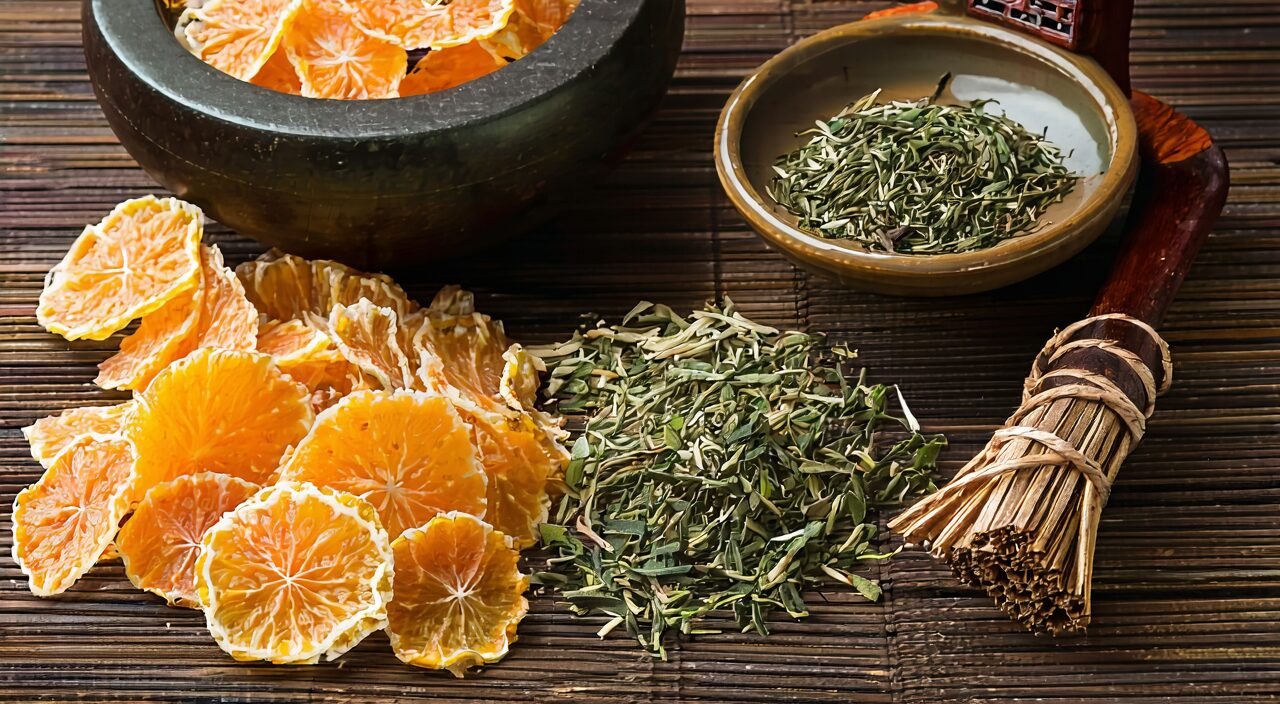
Chenpi appears in many classic formulas. Several relatively common ones are listed below to help readers understand its general role in formula composition.
Erchen Tang is a well-known formula for transforming phlegm, with Pinellia (Banxia) and Chenpi as the core herbs. Traditionally, it is often used for cough with copious phlegm, chest and epigastric stuffiness, and nausea and vomiting caused by phlegm-dampness patterns. In the formula, chenpi moves qi and transforms dampness, assisting Pinellia and Poria (Fuling) in better transforming phlegm while reducing dampness turbidity encumbering the spleen.
Pingwei San focuses on Atractylodes (Cangzhu), Magnolia Bark (Houpo), Chenpi, and Licorice (Gancao). It is commonly used for epigastric and abdominal distension and fullness, lack of appetite, bland taste in the mouth, and loose stools caused by dampness encumbering the spleen and stomach. In this formula, chenpi primarily helps regulate qi and harmonize the middle, dry dampness, and revive the spleen, enabling the entire formula to transform dampness without stagnating qi.
Liujunzi Tang is formed by adding Chenpi and Pinellia to Sijunzi Tang; it is suitable for situations where the spleen and stomach are qi deficient accompanied by phlegm-dampness. The presentation may include both fatigue, lack of strength, and poor appetite, along with easy bloating and copious phlegm. Chenpi and Pinellia, combined with Ginseng (Renshen), Atractylodes (Baizhu), and Poria, act to supplement without causing stagnation and to eliminate phlegm and regulate qi.
Baohe Wan is one of the representative formulas for dispersing food and guiding out stagnation; it is often used for epigastric and abdominal fullness, belching with fetid odor, acid regurgitation, and nausea caused by food accumulation. Chenpi is used in this formula to regulate qi and harmonize the stomach, assisting the digestant herbs such as Hawthorn (Shanzha), Medicated Leaven (Shenqu), and Radish Seed (Laifuzi) to work better and preventing excessive dispersing from damaging the stomach qi.
One particularly important reminder is that although these formulas are classic, each corresponds to specific pathogenesis and must be assessed by a TCM practitioner based on individual constitution and pattern before use. Self-formulating and taking herbal formulas based on online articles is not recommended, as improper combination or mismatched patterns may instead worsen discomfort.
What Precautions Should Be Taken When Using Chenpi?
Although chenpi is quite common in daily life, there are still several aspects that warrant attention.
For people whose constitution tends toward yin deficiency with dryness-heat, or who are experiencing dry cough with scanty phlegm, blood-streaked sputum, dry mouth, and dry throat, as well as those with internal exuberant damp-heat or internal excess heat, excessive use of chenpi is traditionally believed to potentially damage fluids and assist heat. Therefore, such individuals should exercise greater caution before use. People with marked qi deficiency, who often feel tired and weak, short of breath, and disinclined to speak, are also advised against taking it in large amounts over a long period on their own.
In terms of usage, some people like to steep chenpi in water for a long time as a substitute for daily water intake. This may, due to high concentration, irritate the gastric mucosa, leading to increased stomach acid or gastric discomfort. It is advisable to consume it in moderation and pay attention to concentration and frequency. At the same time, when purchasing chenpi, be mindful of whether it has been fumigated with sulfur or has developed mold. Sulfur-fumigated chenpi often has an unnaturally vivid color and a pungent odor, while moldy chenpi will show moldy spots on the surface or emit a distinct musty smell. All these situations may pose safety concerns. If obvious digestive or respiratory discomfort occurs repeatedly or over a long period, or if accompanied by palpitations, chest tightness, pain, severe abdominal pain, persistent vomiting, black stools, weight loss, etc., one should not rely solely on chenpi for management but should promptly consult a doctor or a professional TCM practitioner.
Summary
As a representative example of a medicinal and edible substance in traditional Chinese medicine, chenpi is made from aged mature tangerine peel. Irregular shape, orange-red color, visible oil chambers, and a clear citrus aroma are its main identifying points. Though it shares its origin with qingpi and juhong, clear differences exist in maturity, part used, and traditional application emphasis. In formulas, chenpi is often used for moving qi, harmonizing the middle, drying dampness, and transforming phlegm, but whether it is specifically suitable still needs to be assessed based on individual constitution, symptoms, and professional advice. This article is provided solely for science-based reference and cannot replace professional diagnosis or treatment recommendations.