
What Is Agarwood? Medicinal Parts, Identification Tips, and Common Formulas
Agarwood is often known for its unique aroma and collectible value, but from a traditional Chinese medicine (TCM) perspective, it is also a medicinal substance with a special origin. Agarwood is not the ordinary trunk or root of a tree; rather, it is the resin-impregnated wood that slowly forms when trees such as Aquilaria sinensis sustain specific injuries. This “fragrance condensed from wounds” is not only scarce in yield but has also traditionally been used in various therapeutic directions. This article will cover agarwood’s appearance and identification, the medicinal part used, differences from similar fragrant woods like sandalwood, and common formulas that include agarwood, helping overseas Chinese readers interested in Chinese medicinal materials build a relatively clear cognitive framework.
What does agarwood look like? How to identify it?
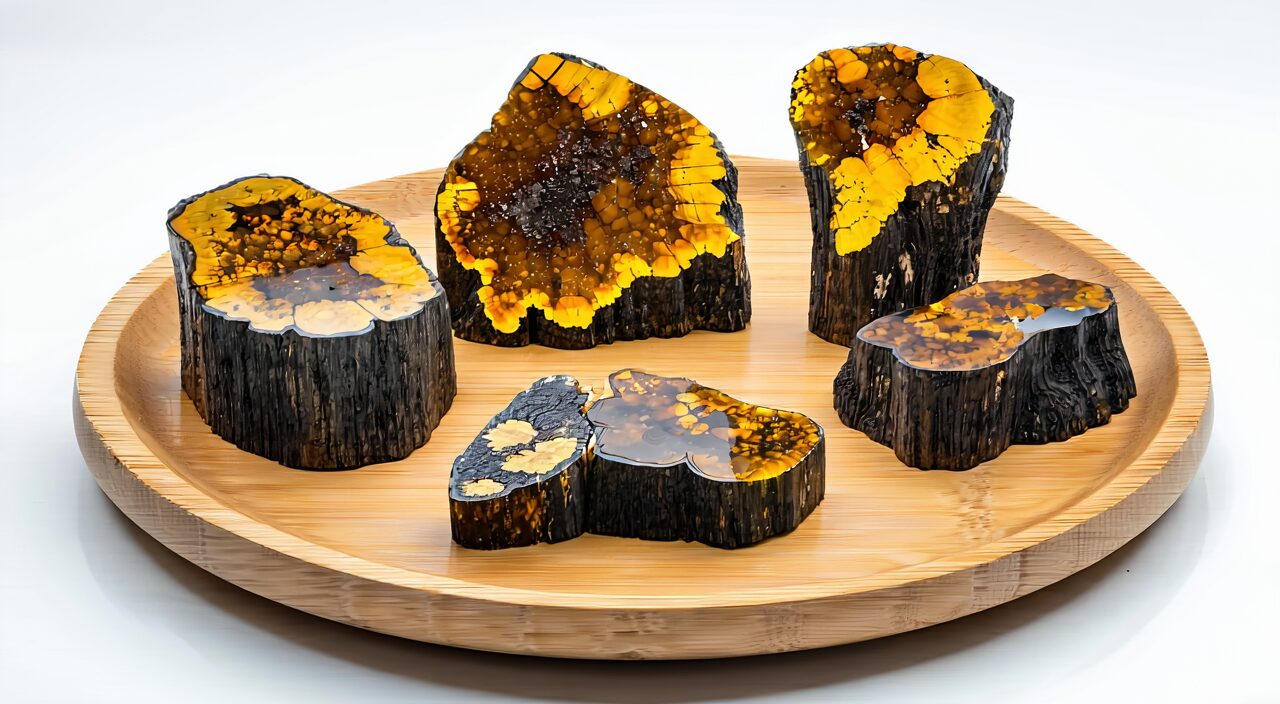
The appearance of agarwood is distinctly different from ordinary wood. Common medicinal or aromatic agarwood is mostly irregular lumps, flakes, or short columnar pieces of varying sizes. The surface is generally yellowish-brown, brownish-brown, to dark blackish-brown, with visible dark resin lines. These lines often appear as patches, streaks, or sheets, with an oily sheen, indicating resin accumulation. In terms of texture, agarwood is typically hard and heavy, though some samples with uneven resin content may be slightly lighter.
The traditional “sinking in water” characteristic refers to agarwood with a high resin content and density greater than water, which sinks immediately upon immersion. However, when identifying agarwood, one should not rely solely on this trait, as some pieces with less resin may half-sink or float on water yet still possess a distinct aroma and medicinal value. A more reliable identification method is to observe the resin grain, combined with the odor when heated or burned. When a small amount of scrapings is gently heated or lightly burned, genuine agarwood releases a subtle, lasting sweet or woody fragrance without any pungent off-notes.
What is the medicinal part of agarwood?
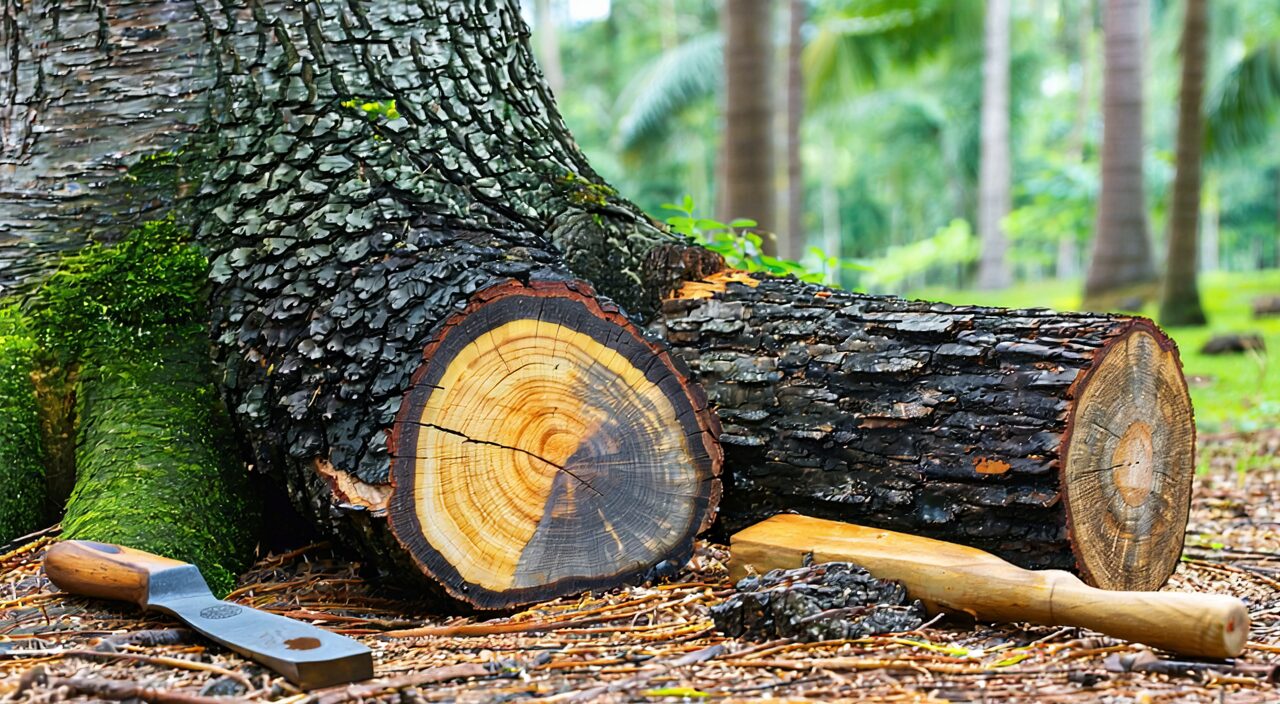
The medicinal part of agarwood is the resinous wood, not the bark, fruit, or leaves. When plants from the Thymelaeaceae family, such as Aquilaria sinensis, are subjected to stimuli like lightning strikes, wind breakage, insect infestation, or deliberate cutting, the plant secretes resin to repair the wound. This resin combines with xylem cells and gradually forms agarwood over several years or even decades. This process resembles the tree’s “self-defense and repair,” earning agarwood the nickname “diamond in the wood.”
During harvesting, the resin-containing wood is usually carved out from the trunk, and the surrounding white wood without resin is removed, leaving behind the darker, oil-rich portion. Through trimming, drying, and other processing steps, it becomes the agarwood medicinal material seen on the market. It should be noted that wild agarwood resources are now extremely scarce, and many countries have listed Aquilaria sinensis as a protected species. Artificially induced resin formation has become the main harvesting method.
How does TCM understand agarwood?
Traditional Chinese medicine’s understanding of agarwood mainly revolves around “moving qi,” “warming the middle,” and “grasping qi.” Agarwood is acrid and bitter in flavor and warm in nature, traditionally entering the spleen, stomach, and kidney channels. For discomfort caused by qi stagnation such as chest oppression, abdominal distension, and hypochondriac pain, agarwood is often used as one of the materials for moving qi and relieving pain, particularly tending to address qi stagnation in the middle and lower burners.
When vomiting or hiccups occur due to stomach cold, agarwood, with its warming middle nature, may be used to assist in stopping vomiting, often combined with warming and cold-dispersing herbs such as fresh ginger and cardamom. In addition, agarwood has the traditional function of grasping qi and calming panting. For deficiency-type panting caused by the kidney failing to grasp qi, agarwood is often paired with herbs like processed aconite and cinnamon bark to help stabilize breathing. These understandings are based on traditional TCM thinking, and in specific applications, a professional must make judgments by combining individual constitution and symptoms. These cannot be simply applied at will.
What does modern research say about agarwood?
Modern research on agarwood focuses mainly on its chemical components and pharmacological activities. Agarwood contains volatile oils, chromones, terpenoids, and other constituents, among which the volatile oil is considered an important material basis for its aroma and some of its pharmacological effects. Some experimental studies indicate that agarwood’s volatile oil has certain sedative, anti-inflammatory, and smooth muscle spasmolytic effects, which may echo, to some extent, the traditional ideas of moving qi and relieving pain, and grasping qi to calm panting.
However, current modern research on agarwood is still predominantly in vitro experiments and animal studies, and high-quality human studies are insufficient. Therefore, these findings serve better as background references for traditional uses and cannot directly equate laboratory results with clinical efficacy. For those wishing to use agarwood to address certain issues, it is still advisable to build on a full understanding of its traditional scope of application and one’s own condition, and to consult professionals in relevant fields.
What are the differences between agarwood, sandalwood, and rosewood?
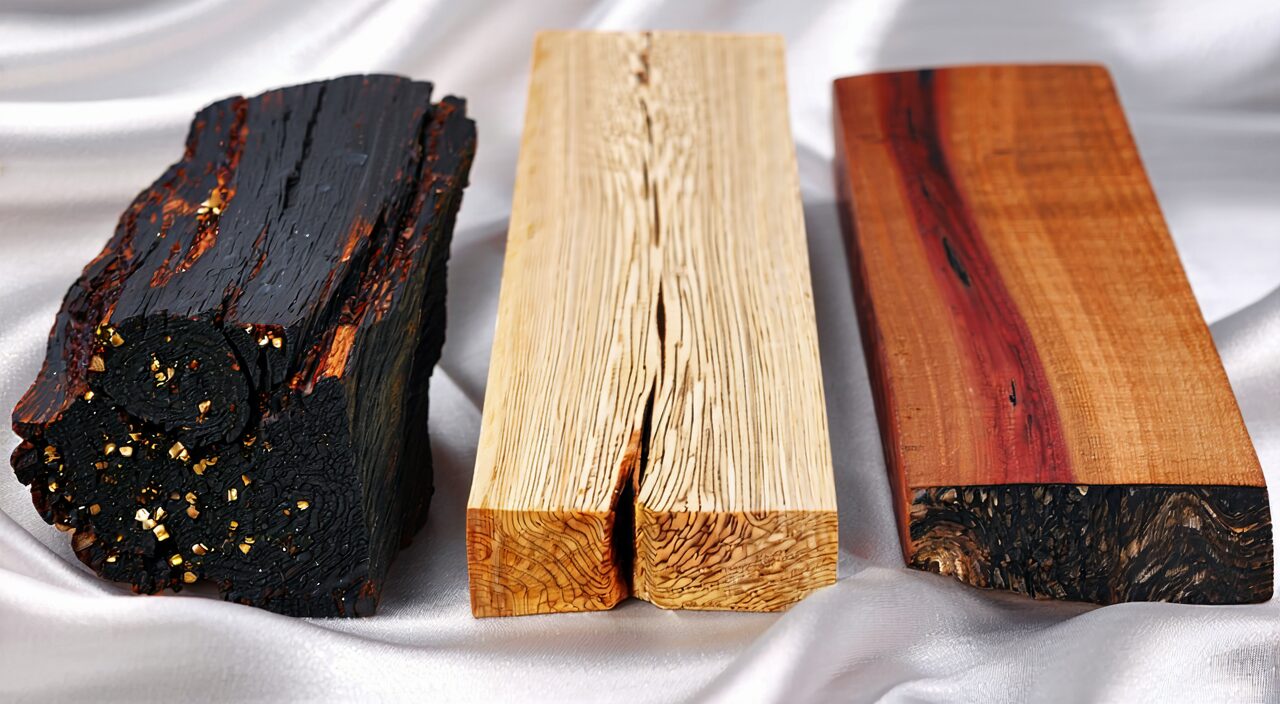
Agarwood, sandalwood, and rosewood are all commonly encountered fragrant wood-based medicinal materials, but their origins, application directions, and appearances differ greatly. Agarwood originates from the resinous wood of plants like Aquilaria sinensis, representing a combination of resin and wood. Sandalwood comes directly from the dried heartwood of plants in the Santalaceae family, relying primarily on its naturally produced volatile fragrance without a resin deposition process. Rosewood is the heartwood of the leguminous plant Dalbergia odorifera; it also has a unique aroma, but its traditional usage leans more towards invigorating blood and resolving stasis.
In appearance, agarwood typically has irregular dark resin streaks with a hard and oily texture. Sandalwood commonly appears as pale yellow to yellowish-brown wood chips with relatively straight grain and a clear, mellow fragrance. Rosewood is mostly purplish-red or brownish-red, dense in texture, and emits a relatively strong scent when burned. In traditional applications, agarwood tends to move qi and relieve pain, and warm the middle to downbear counterflow; sandalwood is more often used to regulate qi and harmonize the stomach, and relieve chest oppression; rosewood is commonly used to disperse stasis, stop bleeding, and settle pain. When selecting among them, one must note that the three cannot be casually substituted, and specific dosage and combination also require professional judgment.
Which formulas use agarwood?
In traditional Chinese medicine formulas, agarwood is often an important component of combinations, mainly used for patterns such as qi stagnation, qi counterflow, stomach cold, or kidney failing to grasp qi. The following are several well-known formulas containing agarwood, provided only as references for understanding traditional usage concepts.
Agarwood Qi-Descending Powder is a typical formula for moving qi and relieving pain, often used for chest and hypochondriac distension and oppression, and epigastric pain attributed to qi stagnation, where agarwood is paired with Sichuan chinaberry fruit and corydalis to prioritize dredging. In Si Mo Tang (Four Milled Herbs Decoction), agarwood is combined with betel nut, lindera root, and ginseng; it is commonly used to regulate chest oppression, rapid breathing, and poor appetite caused by emotional distress, emphasizing breaking qi, descending counterflow, and simultaneously supporting the upright qi. Hei Xi Dan (Lead-Containing Elixir) uses agarwood with lead, processed aconite, and cinnamon bark; traditionally it is indicated for insufficient kidney yang with deficiency panting and profuse phlegm, but this formula contains mineral drugs and must strictly adhere to traditional processing and dosage standards. Su He Xiang Wan (Storax Pill) represents the category of warming and opening the orifices. In it, agarwood acts to warm the interior and move qi, often accompanied by storax, clove, and frankincense, and is indicated for chest oppression and abdominal pain due to cold closure pattern. It cannot be arbitrarily used for conditions beyond closure patterns.
It must be emphasized that these formulas are all traditional classics with complex compositions and precise indications. Whether they suit a specific individual must be determined by a qualified TCM professional through pattern differentiation based on constitution, symptoms, and disease conditions, and individuals should not attempt to obtain and consume the herbs on their own.
What should be noted when using agarwood?
First, the conservation of agarwood resources is an important issue. Wild Aquilaria sinensis has been included in relevant protection lists. Consumers should, as far as possible, choose products with clear origins, legally collected, or artificially induced resin formation, and avoid purchasing agarwood that cannot be traced or is suspected to come from illegal sources.
Second, the problem of mixed genuine and fake agarwood in the market is quite prominent. Common tactics include dyeing ordinary wood and soaking it in oil, or using wood with similar shapes as counterfeits. When distinguishing, aside from observing resin grain and the odor when heated, professional institutional testing may be relied upon if necessary. One should maintain vigilance toward “agarwood” priced significantly below market norms.
Regarding usage, agarwood is traditionally considered warm in nature. For those with yin deficiency with effulgent fire constitution, such as individuals who frequently experience heat in the palms and soles, dry mouth and throat, and night sweats, or for patients with excess heat patterns, using it alone or in large doses may aggravate discomfort. Pregnant women are generally advised not to use agarwood or related preparations on their own. Special attention must also be paid to the fact that agarwood chips and aromatic products used for daily incense are not equivalent to medicinal agarwood for internal consumption and should not be confused. If agarwood is to be used as a medicinal material, it is recommended to first assess personal circumstances and consult a professional; do not blindly follow folk remedies.
Summary
Agarwood is a Chinese medicinal material with a special origin and clear traditional application directions. The core of its identification lies in the appearance of the resinous wood, its resin grain, and its unique fragrance, rather than relying solely on whether it sinks in water. TCM’s understanding of agarwood centers on traditional concepts such as moving qi and relieving pain, warming the middle to stop vomiting, and grasping qi to calm panting. Traditional formulas containing agarwood each have their own emphasis but all require use after pattern differentiation. Considering the importance of resource conservation and the issue of authenticity in the market, selecting and using agarwood should be handled with caution. This article is provided only as popular science reference and cannot replace professional diagnosis or treatment advice. For health-related decisions, always consult a doctor or relevant professional.