
What Is Andrographis? Medicinal Parts, Identification, and Common Formulas
Many friends interested in Chinese medicine hear the name “Chuan Xin Lian” (Andrographis) for the first time and mistakenly think it has some magical power to penetrate the heart, or tend to confuse it with other bitter herbs. In reality, Andrographis is a commonly used medicinal herb originally from South and Southeast Asia and widely cultivated in southern and southwestern China. This article provides a clear overview of Andrographis from the perspectives of morphological identification, medicinal parts, TCM understanding, comparison with other heat-clearing herbs, common preparations, and precautions.
What does Andrographis look like? How to identify it?
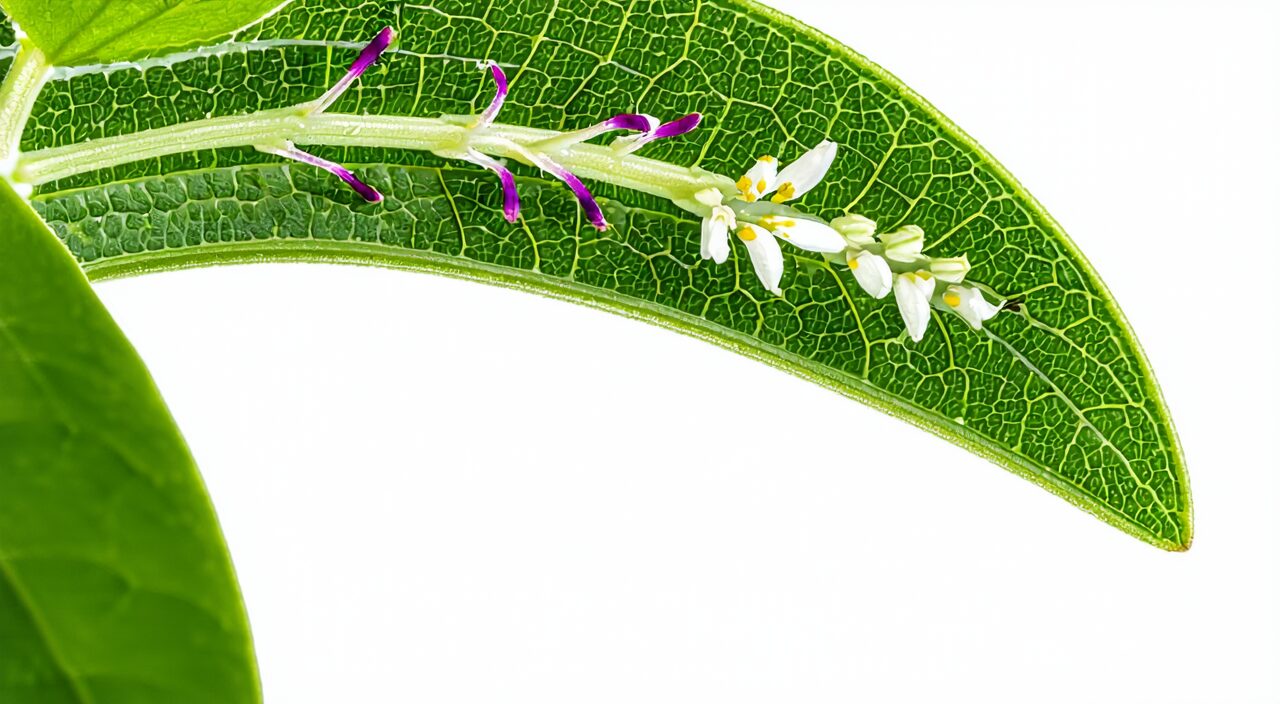
Andrographis paniculata is an annual herb in the Acanthaceae family with very distinctive identifying features. Its stem is typically square (four-angled), with nodes that are slightly swollen and palpable ridges. The leaves are opposite, narrowly lanceolate to oblong-elliptic, with acuminate tips and cuneate bases; the upper surface is green, the underside slightly paler, and the margins are shallowly toothed or nearly entire. Notably, if you hold a fresh leaf in your mouth for a moment, you experience an extremely intense bitterness—a key identification point for andrographis.
At flowering, loose panicles emerge from the branch tips or leaf axils. The flowers are small, two-lipped, white or with faint purple markings, and the calyx and bracts often bear tiny glandular hairs. In the herbal market or as prepared granules, the andrographis we see is usually already cut into segments of dried aerial parts, yellowish-green in appearance, with square stems, many broken leaves, but still showing the outline of lanceolate leaves. The odor is mild, yet the taste is directly and lingeringly bitter. This extremely bitter taste is exactly what distinguishes andrographis from many similar-looking weeds.
What is the medicinal part of Andrographis?
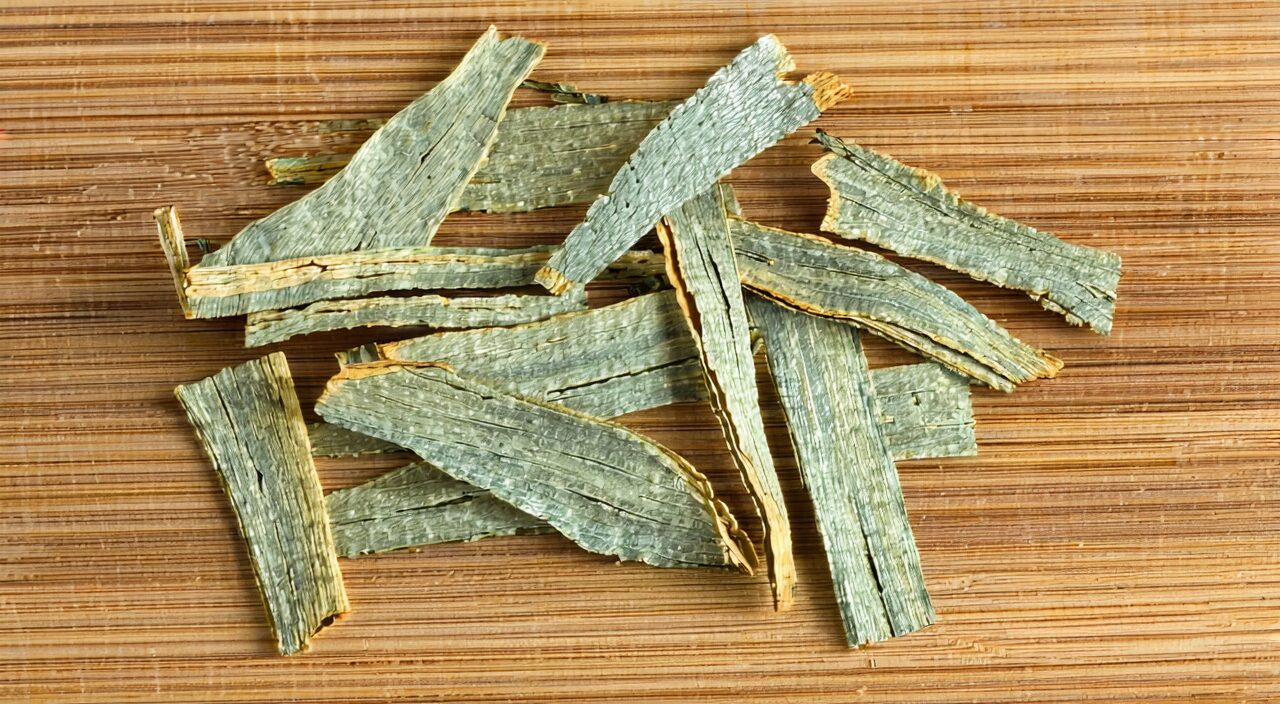
The medicinal part of Andrographis is its dried aerial parts—the stems, leaves, and flowering branches harvested above ground, then sun-dried or cut and dried. Traditional harvesting is done in summer and autumn when the stems and leaves are lush and just beginning to flower, when the plant’s secondary metabolites are thought to be relatively high. After harvesting, impurities are removed, and it is either cut into sections and sun-dried directly, becoming the common decoction pieces. In the market, apart from traditional cut pieces, there are also granules, tablets and other products made from andrographis extracts, but all still originate from the aerial parts of the plant, just in different processed forms.
How does Traditional Chinese Medicine view Andrographis?
In Traditional Chinese Medicine, andrographis is bitter in taste and cold in nature, entering the Lung, Stomach, Large Intestine, and Small Intestine meridians. It is a classic heat-clearing and detoxifying herb. Traditionally, it is commonly used for patterns of heat-toxin excess, such as a red, swollen, sore throat, cough with yellow sputum due to lung heat, and diarrhea or dysentery caused by damp-heat. Because it directly targets the lung and stomach while also clearing damp-heat from the intestines, andrographis is often chosen in warm disease or damp-heat conditions where heat affects multiple organs.
Its action of “cooling the blood and reducing swelling” was also traditionally valued for boils, sores, and red, swollen, hot skin conditions, commonly seen in external washes or internal combinations. However, andrographis has a pronounced bitter-cold nature; it is unsuitable for people without clear heat signs or those with spleen-stomach deficiency-cold. Whether it is appropriate for a specific situation must be analyzed comprehensively based on the tongue, pulse, and overall condition, rather than using it on one’s own based on just one or two symptoms.
What does modern research say about Andrographis?
Modern phytochemical research has isolated various diterpene lactones from andrographis, among which andrographolide and dehydroandrographolide are the most studied. Some experimental studies suggest that these compounds show a certain degree of anti-inflammatory, antimicrobial, and immunomodulatory effects in vitro, especially demonstrating interventional potential against some upper respiratory and enteric pathogens. However, most of these studies are still at the cellular or animal model stage, and the relevance to long-term safe human use still requires more high-quality clinical evidence. Therefore, andrographis should not be simply regarded as a “natural antibiotic” or a casual herb to substitute for other treatments.
What are the differences between Andrographis, Houttuynia, and Isatis root?
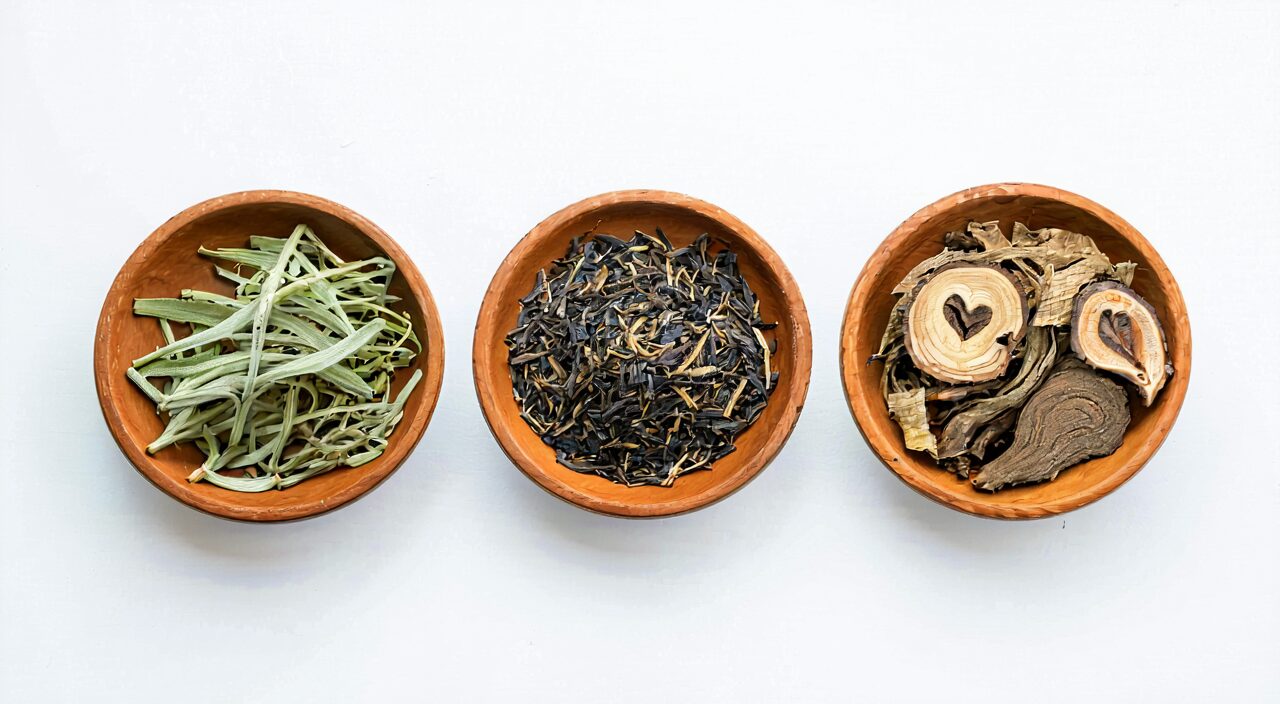
Andrographis, Houttuynia (fish mint), and Isatis root (Ban Lan Gen) are three commonly used heat-clearing herbs, but their origins, appearances, and clinical emphases are markedly different. Houttuynia is the aerial part of Houttuynia cordata (Saururaceae); the whole plant carries a distinctive fishy smell, the leaves are heart-shaped, and it is often used fresh or dried. It excels at clearing lung heat, resolving abscesses, and expelling pus, and was traditionally used for lung abscess, phlegm-heat cough and wheezing, and damp-heat strangury. Isatis root is the dried root of Isatis tinctoria (Brassicaceae), appearing as cylindrical root slices, without the stem and leaf morphology of the aerial parts; its action tends to cool blood and benefit the throat, and it is commonly used for wind-heat colds, sore throat, and warm-disease macules.
Andrographis is far more bitter than Houttuynia and Isatis root, its heat-clearing power is more drastic, and it also addresses intestinal damp-heat. This differs from Houttuynia’s focus on upper-jiao lung heat and Isatis root’s focus on the blood level and throat heat-toxins. Visually, the three are almost never confused: Houttuynia pieces show broken heart-shaped leaves and stem segments with a distinct fishy odor; Isatis root consists of thick root slices, slightly sweet then bitter; Andrographis is green cut pieces with square stems and lanceolate leaves, intensely bitter. Understanding these differences helps in more purposefully identifying and selecting the appropriate herb when needed.
Which formulas include Andrographis?
Unlike traditional classical formulas that commonly use Forsythia, Lonicera, Scutellaria and the like, Andrographis appeared relatively late in classical texts and is not a standard ingredient in classical formulas such as Guizhi Tang or Mahuang Tang. What truly popularized Andrographis are modern preparation technologies. Common products available today, such as Andrographis tablets, Compound Andrographis tablets, and Andrographolide drop pills, all belong to modern Chinese patent medicines. Their formulation thinking mostly comes from clinical experience and pharmacological screening rather than direct inheritance from ancient texts like the Shang Han Lun.
Andrographis tablets are generally made from single-herb andrographis, extracted, granulated, and pressed into tablets, mainly used to assist with throat discomfort, oral ulcers, or diarrhea caused by heat-toxin excess. Compound Andrographis tablets often combine other heat-clearing or dampness-resolving herbs to broaden the scope of use, commonly used for sore throat, headache, and fever at the early stage of wind-heat common cold. Andrographolide drop pills further concentrate the lactone components, are small and portable, and have traditionally been used as an adjunct for symptoms such as fever and sore throat related to upper respiratory infections. Although these preparations come from the same raw material, the dosage forms and compound combinations differ; whether they are suitable still needs to be judged comprehensively based on the individual’s current presentation, the product information, and professional advice. They should not be used blindly or taken long-term without differentiation.
What precautions should be taken when using Andrographis?
Although Andrographis is a commonly used herb, because of its strong bitter-cold nature and the active lactones it contains, extra caution is needed when using it. First, some individuals may have allergic reactions to andrographis components, such as rashes, itching, or gastrointestinal discomfort; discontinue immediately if these occur. Second, existing clinical data suggest that long-term or excessive use of andrographis preparations may carry a risk of liver injury, especially in those with pre-existing weak liver function or when used together with other drugs metabolized by the liver, where the risk may be higher. Therefore, extending the duration of use or arbitrarily increasing the dosage on one’s own is not advised.
Furthermore, safety data for the use of andrographis during pregnancy, lactation, preconception, and in children are relatively limited; it is generally recommended to avoid self-use. It is particularly worth noting that andrographis injections historically caused many severe adverse reactions, and the injectable form has now been strictly restricted or even withdrawn from the market domestically. Consumers should not seek out or use such injectable products in any form. People with spleen-stomach deficiency-cold, prone to diarrhea, with poor appetite and no clear heat signs, should also refrain from casual use. Even when choosing oral preparations, one should remain cautious, fully understand one’s own constitution, symptoms, and product information, and seek professional guidance when necessary.
Summary
Andrographis is a markedly bitter and focused heat-clearing herb, with the aerial part’s square stems, lanceolate leaves, and strong bitterness serving as its most direct hallmarks. In TCM, it is mainly used for patterns of heat-toxin excess and damp-heat. Modern preparations such as Andrographis tablets and andrographolide drop pills have incorporated it into more convenient dosage forms. However, because its bitter-cold medicinal nature is rather strong and there are potential risks such as allergy and liver injury, it is essential to consider one’s personal condition and professional opinion before use, and it is not advisable to follow trends by using it long-term. This article is for informational and educational reference only and cannot replace professional diagnosis or individualized advice.