
What Is Rhubarb? Medicinal Parts, Identification, and Common Formulas
Rhubarb is one of the most representative herbs in traditional Chinese medicine. Because its action is strong and swift, it has long carried the nickname “the General.” Many overseas enthusiasts interested in Chinese medicine come across formulas or raw herbs and become curious about rhubarb: what does it actually look like? Which part of the plant is used? How does it differ from the easily confused Rumex (tu da huang)? What are the main formulas that include rhubarb? And what points require special attention in daily use? This article unfolds around these common questions, covering appearance, medicinal part, usage ideas, and safety boundaries, in the hope of helping you understand rhubarb more fully.
What does rhubarb look like? How to identify it?
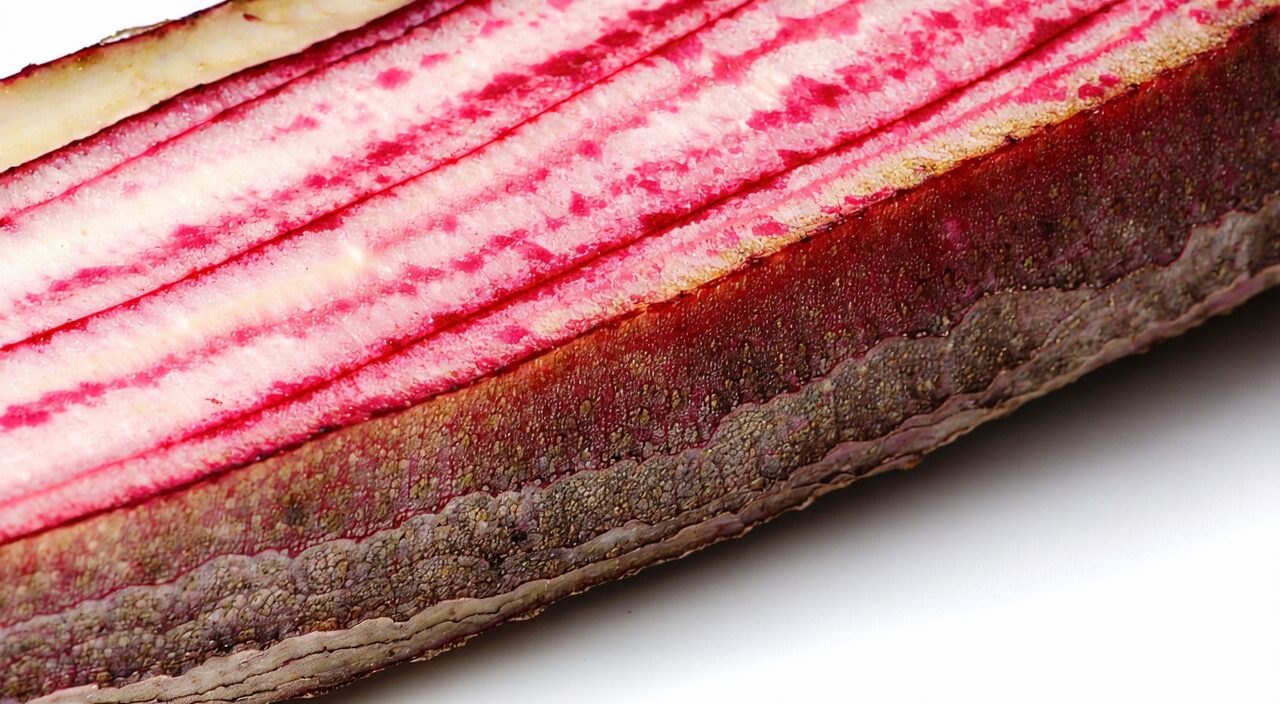
When entering a Chinese pharmacy or browsing herb displays, being able to accurately identify rhubarb is very helpful for avoiding misuse.
The medicinal material rhubarb has several relatively stable external characteristics:
- Shape: Mostly subcylindrical, conical, or irregularly lumpy, often processed into thick slices or chunks.
- Color and texture: The surface is yellowish-brown to reddish-brown, sometimes showing whitish net-like lines, commonly called “brocade lines.” The fractured surface is pale reddish-brown or yellowish-brown, distinctly granular.
- Key identifying point: On the fractured surface, ring-arranged or scattered “star spots” are often visible; these are the anomalous vascular bundles of rhubarb and are highly distinctive.
- Texture and taste: The texture is firm, the odor has a distinctive slight fragrance, and when chewed it feels sticky to the teeth, with a noticeably gritty sensation.
Traditional experience generally considers specimens that are large, firm in texture, with distinct brocade lines on the fractured surface and a fragrant odor as the best quality. If you find an herb whose fractured surface lacks star spots and whose color and texture differ significantly from the above description, you need to be alert to the possibility that other types of root herbs have been mixed in.
What is the medicinal part of rhubarb?
The medicinal part of rhubarb is the root and rhizome, mainly sourced from the dried roots and rhizomes of Rheum palmatum L., Rheum tanguticum Maxim. ex Balf., or Rheum officinale Baill. of the Polygonaceae family.
Harvesting and processing generally take place in late autumn after the stems and leaves have withered, or in early spring before sprouting. After digging up, the fibrous roots are removed, the outer bark is scraped off, and then the material is cut into chunks or thick slices before being dried. In some producing areas, depending on requirements, the rhubarb may also be steamed thoroughly and then air-dried or heat-dried, thus yielding the raw material for prepared rhubarb.
Because the medicinal part is concentrated in the root and rhizome, rhubarb accumulates abundant active substances, which also determines its relatively potent properties. Understanding this helps to distinguish it from other botanically named herbs and also explains why processing methods significantly influence its final application.
How does Chinese medicine understand rhubarb?
Traditional Chinese medicine’s understanding of rhubarb centers on its downward-draining, stagnation-clearing, and heat-clearing power. Rhubarb is bitter in taste and cold in nature, entering the Spleen, Stomach, Large Intestine, Liver, and Pericardium meridians.
In terms of functional directions, rhubarb is often involved in the following aspects:
- Purgation and removing accumulation: Aimed at constipation, abdominal distension, and pain caused by excess heat accumulation.
- Clearing heat, draining fire, cooling blood, and resolving toxins: Used for red eyes, swollen throat, mouth sores caused by intense heat toxin, as well as blood-heat-induced hematemesis and epistaxis.
- Invigorating blood and resolving stasis: Often combined with blood-invigorating herbs, traditionally used for amenorrhea due to blood stasis, traumatic injuries, and postpartum abdominal pain due to static blood.
- Draining dampness and relieving jaundice: Can be used for damp-heat jaundice.
The application of rhubarb places great emphasis on processing and decoction methods. Different processed products have different emphases on action, roughly compared as follows:
| Processing Type | Action Characteristics | More Often Used For |
|---|---|---|
| Raw rhubarb | Stronger purgative power | Short-term use during severe accumulation |
| Wine-fried rhubarb | Relatively milder purgation, blood-invigorating action more prominent | Blood stasis related problems |
| Prepared (steamed) rhubarb | Purgative power further weakened | Tends toward clearing heat and invigorating blood |
| Charred rhubarb | Very weak purgative action | Mainly used for stopping bleeding |
Decoction time also influences the effect. If used for purgation, prolonged decoction is generally not advisable; if a more moderate downward action is desired, decoction time may be appropriately extended. This shows that “how to use” often requires judgment based on individual circumstances and should not be applied mechanically on one’s own.
What components and actions does modern research focus on for rhubarb?
Modern research on rhubarb mainly focuses on its anthraquinone constituents, such as rhein, emodin, aloe-emodin, as well as combined anthraquinones and sennosides. These components are considered the main material basis for rhubarb’s purgative effect.
In addition, some research has found that rhubarb shows certain potential in anti-inflammatory, antimicrobial, blood lipid regulation, liver protection, cholagogic effects, and influencing gut microbiota. It should be noted that these findings mostly come from laboratory studies or small-scale clinical observations, and are more about exploring the possible mechanisms behind traditional uses. They hint at rhubarb’s rich pharmacological directions but cannot be directly equated to usage recommendations for a specific health problem. Individual responses vary, and whether it is suitable for use still requires professional judgment.
What is the difference between rhubarb (da huang) and Rumex (tu da huang)?
Da huang (rhubarb) and tu da huang (Rumex spp.) differ by only one word in Chinese, and confusion does exist on the market, but their sources and characteristics have clear distinctions, and they are generally not recommended as substitutes for one another.
The two can be distinguished mainly from the following aspects:
| Comparison Item | Rhubarb (Da Huang) | Rumex (Tu Da Huang) |
|---|---|---|
| Family and genus | Polygonaceae, Rheum genus | Polygonaceae, Rumex genus (e.g., Rumex japonicus, Rumex patientia, Rumex obtusifolius, etc.) |
| Example original plants | Rheum palmatum, Rheum tanguticum, Rheum officinale, etc. | Rumex japonicus, Rumex patientia, Rumex obtusifolius, etc. |
| Root shape | Subcylindrical, conical, or irregularly lumpy | Conical or cylindrical |
| Surface color | Yellowish-brown to reddish-brown, brocade lines visible | Brownish-brown |
| Cross-section features | Has “star spots” (anomalous vascular bundles), distinctly granular | Often has radial striations, lacking star spots |
| Odor and taste | Fairly distinct fragrant odor; chewy and sticky to the teeth, with a gritty sensation | Fragrant odor is mild; sticky sensation when chewed is not obvious |
| Traditional action characteristics | Relatively strong purgative action | Purgative action is usually weaker, sometimes showing a certain astringent tendency |
| Can they be substituted? | Generally not substituted | Should not replace rhubarb, especially when strong purgation to remove accumulation is needed |
If the appearance features of a given herb sample differ greatly from typical rhubarb and accurate judgment is difficult, the prudent approach is to consult an experienced Chinese pharmacist or professional to avoid safety issues caused by species confusion.
Which formulas use rhubarb?
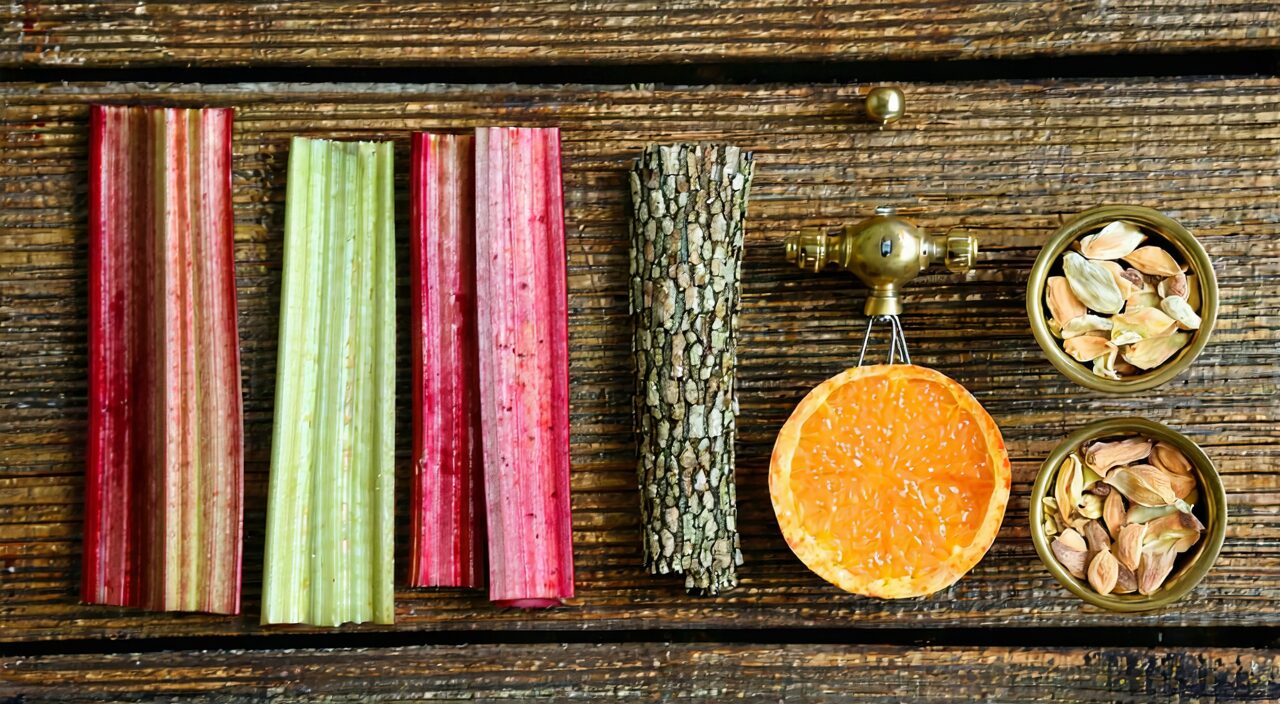
Rhubarb appears relatively frequently in classic formulas, often combined with different herbs to adapt to conditions involving cold, heat, deficiency, and excess. The following four common formulas are listed to help understand the traditional usage direction of rhubarb in formulas. Specific application must be based on pattern differentiation and cannot be applied mechanically on one’s own.
- Da Cheng Qi Tang (Major Order the Qi Decoction): Composed of rhubarb, mirabilite, immature bitter orange, and magnolia bark, it is a drastic purgative formula. Traditionally used for excess heat accumulation and constipation, abdominal fullness, distension, hardness, and pain due to yang brightness bowel excess.
- Da Huang Mu Dan Tang (Rhubarb and Moutan Decoction): The formula includes rhubarb, moutan bark, peach kernel, wax gourd seed, and mirabilite. It is prominent in draining heat, breaking stasis, dispersing masses, and reducing swelling, commonly used for early stage intestinal abscess.
- Tao He Cheng Qi Tang (Peach Kernel Qi-Coordinating Decoction): Combines peach kernel, rhubarb, cinnamon twig, licorice, and mirabilite. It has the action of expelling stasis and draining heat, traditionally used for lower burner blood accumulation patterns causing contracture of the lower abdomen and manic-like states.
- Wen Pi Tang (Warm the Spleen Decoction): Reflects the idea of combining cold and warm herbs. Rhubarb is paired with aconite, dried ginger, ginseng, and licorice, mainly targeting constipation and abdominal pain caused by internal accumulation of cold and yang qi deficiency.
In these formulas, the role played by rhubarb ranges from purgation and blood activation to warming purgation. The use of a formula is never about just one herb but about comprehensively judging the symptoms, constitution, and pattern. If you are interested in learning more about a particular formula, it is recommended to evaluate it under the guidance of a professional while taking your specific situation into account.
What precautions are needed when using rhubarb?
Although rhubarb is widely used, its relatively strong pathogen-attacking force imposes several safety boundaries that must be taken seriously.
- Do not self-administer long-term or frequently. Over-reliance on rhubarb may interfere with normal intestinal function and bring risks such as electrolyte disturbances, diarrhea, and dehydration.
- For recurrent constipation, find the root cause. If constipation recurs repeatedly, or is accompanied by significant abdominal distension and pain, blood in the stool, or unexplained weight loss, the more important direction is to identify the cause rather than to continuously rely on a single herb.
- Specific populations must be extremely cautious. Pregnant women, women during menstruation, breastfeeding women, and those with weak constitutions or spleen-stomach deficiency cold are generally not suitable for using rhubarb.
- Use should be under professional guidance. Whether decocting raw slices or taking patent Chinese medicines that contain rhubarb, for those unsure whether their constitution is suitable, it is advisable to choose under the guidance of an experienced Chinese medicine practitioner.
- Stop use and consult a doctor immediately if abnormalities occur. If severe diarrhea, vomiting, persistent abdominal pain, or darkened stools appear during use, stop taking it immediately and seek medical attention as soon as possible.
Understanding rhubarb within a framework of “has clear applicable conditions, needs short-term use, and requires close observation” is a safer attitude.
Summary
Rhubarb, as a commonly used herb with clear actions, can be identified by its yellowish-brown surface, brocade lines, and star spots on the fractured surface. Its medicinal part is the root and rhizome. Processing and decoction methods significantly affect its direction of action. It differs from Rumex in source and characteristics and should not be used interchangeably. Classic formulas containing rhubarb also cannot be separated from the overall consideration of pattern differentiation and combination. For overseas Chinese medicine enthusiasts, understanding this basic knowledge helps to add a layer of rational reference when encountering related products. This article is for popular science reference only and cannot replace professional diagnosis or treatment advice.