
What Is Japanese Thistle? Medicinal Parts, Identification, and Common Formulas
For many friends interested in traditional herbal medicine, the name Da Ji (Japanese Thistle) may not be unfamiliar, but few can clearly explain what it is, what it looks like, and how to use it. It is especially confusing when “Da Ji” and “Xiao Ji” (Field Thistle) appear together. This article discusses the origin, visual identification, medicinal parts, common formulas, and precautions of Da Ji, aiming to help readers build a relatively complete framework of understanding.
What Does Da Ji Look Like? How to Identify It?
Da Ji is a plant of the Cirsium genus in the Asteraceae family, commonly seen in the wild or cultivation. The first impression is often tall, robust, and with a distinct “aggressiveness”—because it is covered with spines in many places.
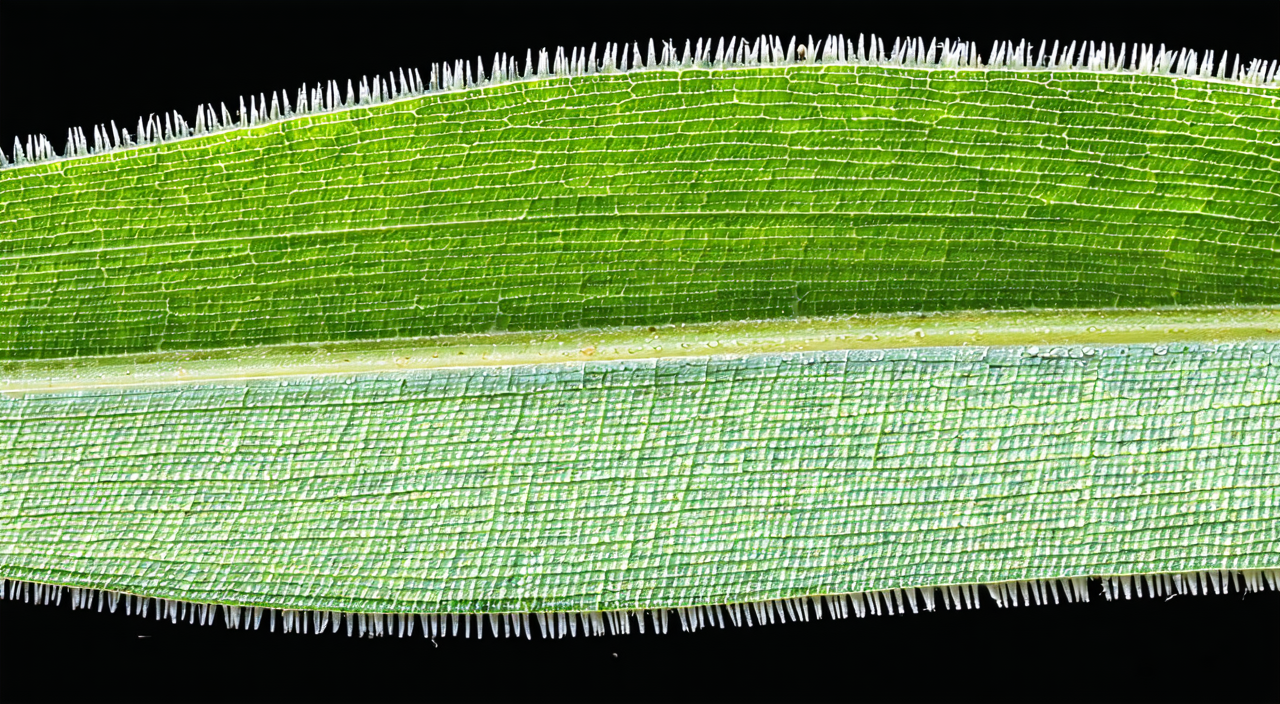
The plant height is usually between 50 cm and 150 cm, some even exceeding 2 meters, resembling a small shrub from afar. Stems are erect, branched above, with longitudinal ridges on the surface and white or brown cobweb-like hairs. The leaves are a key part for identification. Basal leaves and lower stem leaves are large, oblanceolate or oblong-elliptic, pinnately deeply lobed or almost completely divided, with irregular serrations on the margin, each serration tipped with a hard spine. The leaf surface is green, the underside slightly paler, and both surfaces often have sparse prickly hairs along the veins. Touching the leaves will clearly feel prickly.
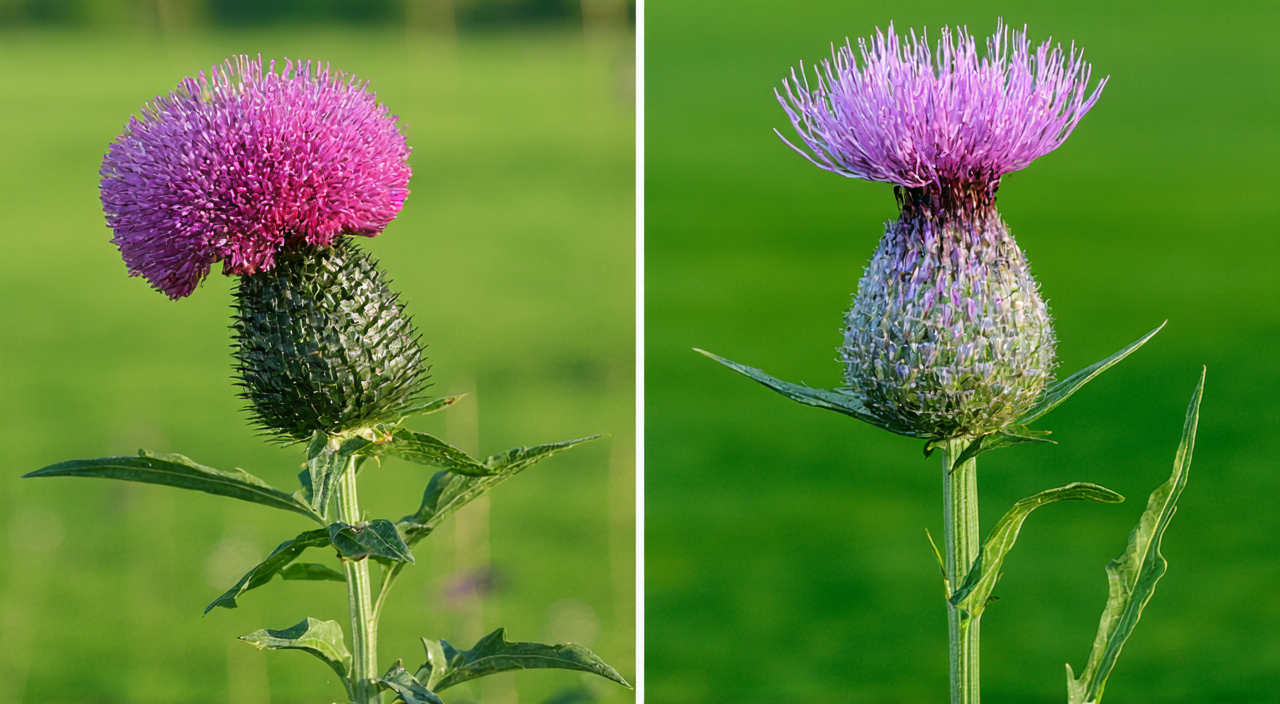
The flower heads are also special. The heads are numerous, arranged in corymbs at the stem apex. The involucre is campanulate, with multiple layers of bracts, the apex also spiny. The corolla is purple-red, occasionally white, all tubular flowers without obvious ray florets like chrysanthemums. The entire flower head looks like a fluffy purple-red ball, about 2 to 3 cm in diameter. The flowering period is usually in summer; when fruiting, the achenes have feathered pappus at the top, dispersed by wind.
The underground part: the root is long-fusiform or conical, robust and straight, surface brown, cross-section yellowish-white. The root is important for identification as it is also a medicinal part. However, note that some similar-looking Cirsium species in the wild, such as Cirsium eriophorum or Cirsium setosum (or others), may be mistaken. Misidentification and misuse occur from time to time, so non-professionals are advised not to harvest and use based solely on pictures.
What Are the Medicinal Parts of Da Ji?
In Chinese herbal products, Da Ji commonly has two medicinal parts: the dried aerial parts and the dried root. Different regions and usage habits may emphasize one over the other, but their traditional uses are not entirely identical and should not be used interchangeably.
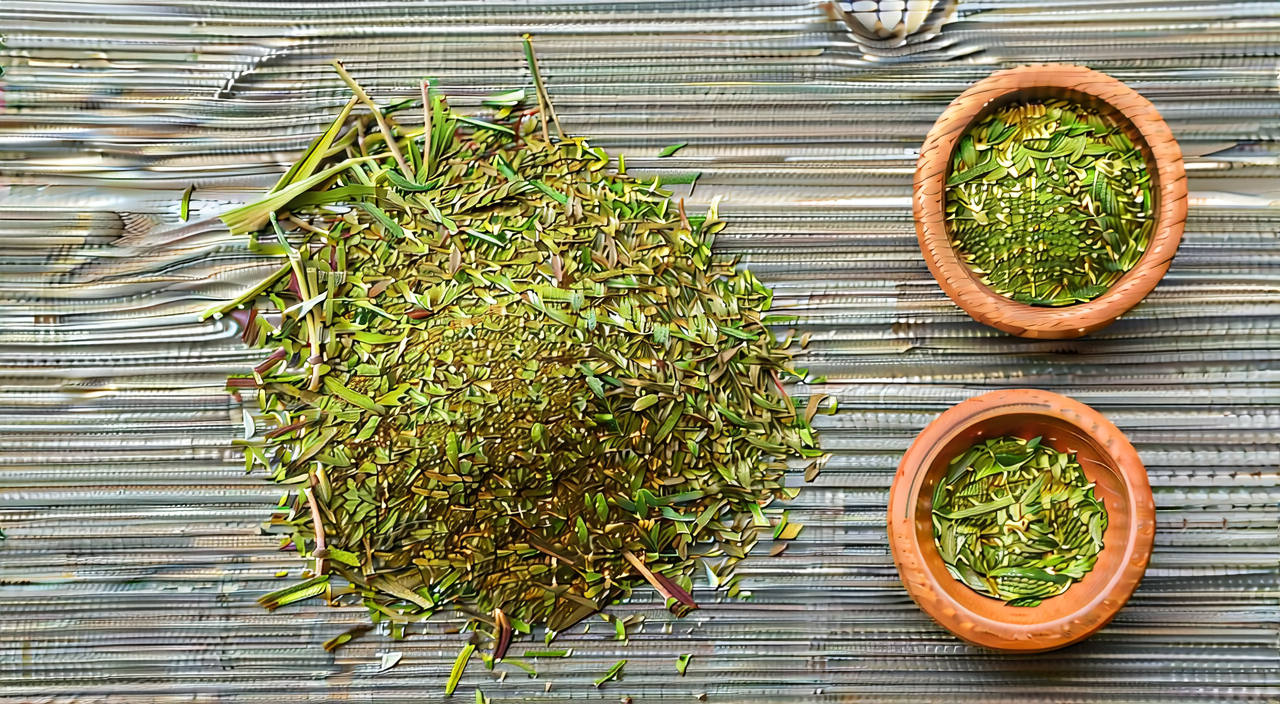
The aerial parts are generally harvested in summer or autumn when the flowers bloom, impurities removed, and sun-dried or cut into sections for drying. The medicinal material shows cylindrical stems, greenish-brown surface, with longitudinal ridges and white soft hairs, cross-section hollow or with white pith; leaves are mostly crumpled and broken, when spread out can be seen pinnate deep lobes and marginal spines, flower heads often remain at branch tips. The dried root is mostly collected in autumn, washed off sediment and sun-dried; the root is long-conical, robust, dark brown surface, with longitudinal wrinkles, hard texture, fibrous fracture.
In traditional usage experience, both aerial parts and root can be used for cooling blood, stopping bleeding, dispersing stasis, detoxifying and reducing carbuncles, but fresh use or after charring has different applications. For example, Da Ji Char, prepared by stir-frying Da Ji pieces over high heat until the surface is burnt-black and the interior is brown, then spraying with water to extinguish sparks and drying, aims to moderate its cold nature and tend towards astringent hemostasis. Therefore, when learning about or purchasing related products, comprehensive judgment is needed based on the labeled medicinal part, processing method, and individual condition; different parts should not be casually substituted.
How Does TCM Understand Da Ji?
Traditional Chinese medicine’s understanding of Da Ji revolves around “cooling blood, stopping bleeding, dispersing stasis, detoxifying and eliminating carbuncles.” Its nature and flavor are sweet, bitter, and cool, mainly entering the Heart and Liver meridians. It should be noted that “cooling blood and stopping bleeding” refers, within the traditional theory framework, to bleeding manifestations caused by reckless movement of blood heat, such as coughing blood, epistaxis, vomiting blood, hematuria, hematochezia, and metrorrhagia. Da Ji is often considered an herb for adjusting this pattern. Its cooling nature aims to clear heat from the blood level, guiding blood back to its normal course; at the same time, it can invigorate blood and disperse stasis, preventing stasis from remaining after bleeding is stopped—a characteristic valued in TCM formula composition.
Besides hemostasis, Da Ji is also used for carbuncles, sores, and toxicity. Traditionally it is believed to clear heat, detoxify, disperse stasis, and reduce swelling, providing auxiliary effects for skin redness, swelling, heat, and pain. It can be taken orally or applied externally by pounding fresh material, but when applied externally attention must be paid to skin reactions and should not be abused.
It is important to note that these are all traditional usage directions and experiential summaries, not diagnoses or treatments in the modern medical sense, nor do they directly equate to statutory drug efficacy. Whether it is suitable for a specific person depends on many factors such as constitution, symptom duration, overall health status, etc., requiring professional judgment. One cannot decide to use it solely based on an article.
What Are the Differences Between Da Ji (Japanese Thistle) and Xiao Ji (Field Thistle)?
Many people easily confuse Da Ji with Xiao Ji when first encountering them. In fact, they are two different medicinal herbs with distinct plant morphology and traditional uses.
From overall plant appearance, Da Ji plants are taller, mostly above 1 meter, sometimes reaching 2 meters, while Xiao Ji is generally about 30 to 80 cm tall, appearing shorter and more slender. In leaf morphology, Da Ji leaves are distinctly pinnately deeply lobed, with broad lobes and long, hard marginal spines that are notably prickly; Xiao Ji leaves are mostly entire or undulate with shallow lobes, with short spines on the margin that are relatively soft and less prickly. Regarding inflorescence, Da Ji heads are larger, involucral bracts in many layers with sharp spines at the apex, corolla purple-red; Xiao Ji heads are smaller, involucral bracts fewer, apical spines shorter, flowers also purple-red or pale purple, but overall looking less “showy.”
In terms of medicinal material appearance, Da Ji aerial part stems are thicker, longitudinal ridges obvious, leaves mostly fragmented, marginal spines hard and easy to distinguish; Xiao Ji stems are slender, marginal spines fine, often curling inward when dried. Da Ji roots are robust, fusiform or conical; Xiao Ji roots are relatively thin and weak, and clinically Xiao Ji mostly uses aerial parts. In traditional application, although both have the direction of cooling blood and stopping bleeding, Da Ji leans more towards dispersing stasis and eliminating carbuncles, while Xiao Ji is more diuretic and unblocks strangury; each has its emphasis and cannot be mixed.
Which Formulas Use Da Ji?
Da Ji appears frequently in classical formula books, especially in formulas centered on cooling blood and stopping bleeding. The following are several representative examples, only as references for understanding traditional usage directions.
Shi Hui San is a classic cooling blood and hemostatic formula. It uses Da Ji and Xiao Ji together, combined with lotus leaf, cebaiye (Platycladi Cacumen), baimaogen (Imperatae Rhizoma), qiancao (Rubiae Radix), zhizi (Gardeniae Fructus), dahuang (Rhei Radix et Rhizoma), mudanpi (Moutan Cortex), and zonglvpi (Trachycarpi Petiolus), all charred to preserve their properties. Traditionally it is often used for various upper body bleeding caused by blood heat reckless movement, such as hematemesis, hemoptysis, etc. This formula’s approach emphasizes clearing and descending, cooling blood, with astringent action.
Da Ji Yin mainly uses Da Ji as the principal herb, combined with other cooling blood and diuretic substances, traditionally used for blood strangury, hematuria, etc. Specific combinations differ slightly in various medical records, but the core thinking revolves around Da Ji’s blood-cooling and hemostatic action.
Da Ji San often uses Da Ji plus puhuang (Typhae Pollen), qiancao gen (Rubiae Radix), etc., to enhance stasis-dispersing and hemostatic effects, applicable for metrorrhagia, postpartum hemorrhage, etc. The exact composition and indications vary with physicians’ experience and specific symptoms, and cannot be copied directly.
Additionally, many self-drafted cooling blood hemostatic formulas or clinical empirical formulas include Da Ji. Traditionally, these formulas need to be adjusted under a TCM practitioner’s guidance according to constitution, without a fixed standard. Readers may use this as a window to understand traditional formulas but should not compose formulas or blindly experiment on their own.
What Precautions Should Be Taken When Using Da Ji?
Although Da Ji has clear uses in traditional experience, improper use can also cause problems. The following points deserve particular attention.
First, Da Ji’s nature is relatively cool, so it may not be suitable for people with spleen-stomach deficiency cold, who easily have diarrhea, poor appetite, aversion to cold, and cold limbs. If such individuals use it blindly, it might worsen the deficiency cold manifestations. Second, there are many causes of bleeding; not all bleeding belongs to blood heat. For example, in cases of qi deficiency failing to contain blood, or blood stasis obstructing vessels, simply cooling blood and stopping bleeding may not address the pathology and could even be counterproductive. Therefore, users need to evaluate based on a clear determination of the bleeding nature and their own constitution, combined with professional advice. Third, wild harvesting carries significant risks. There are many species in the Cirsium genus, some similar in appearance. Mistaken identification and ingestion can cause adverse reactions. Even if correctly identified, wild herbs may be contaminated by environmental pollution, heavy metal residues, etc. Collecting and using them directly without professional guidance is not recommended. Fourth, if taking anticoagulants or other medications affecting coagulation function, Da Ji’s blood-cooling and hemostatic action may interact with the drug’s effect. In such cases, it is imperative to consult a doctor or pharmacist in advance; do not use them simultaneously without caution.
In summary, Da Ji is a distinctive traditional herb. Learning about it can broaden our understanding of traditional medicine, but in practical usage, a cautious and rational attitude is necessary, putting safety first.
Summary
As a traditional herb with a long history, Da Ji has accumulated considerable application experience in cooling blood, stopping bleeding, dispersing stasis, and eliminating carbuncles. Its tall plant, deeply lobed spiny leaves, and purple-red flowers make it relatively easy to identify in the wild, yet it is also easily confused with close relatives such as Xiao Ji. Different medicinal parts and processed products have different usage directions, and traditional formulas like Shi Hui San and Da Ji Yin often include it. Understanding this information helps to view Chinese medicinal materials more comprehensively, but any medicinal approach needs to be combined with individual specific conditions and treated carefully under professional guidance. This article is for informational purposes only.# What Is Japanese Thistle? Medicinal Parts, Identification, and Common Formulas
For many friends interested in traditional herbal medicine, the name Da Ji (Japanese Thistle) may not be unfamiliar, but few can clearly explain what it is, what it looks like, and how to use it. It is especially confusing when “Da Ji” and “Xiao Ji” (Field Thistle) appear together. This article discusses the origin, visual identification, medicinal parts, common formulas, and precautions of Da Ji, aiming to help readers build a relatively complete framework of understanding.
What Does Da Ji Look Like? How to Identify It?
Da Ji is a plant of the Cirsium genus in the Asteraceae family, commonly seen in the wild or cultivation. The first impression is often tall, robust, and with a distinct “aggressiveness”—because it is covered with spines in many places.
The plant height is usually between 50 cm and 150 cm, some even exceeding 2 meters, resembling a small shrub from afar. Stems are erect, branched above, with longitudinal ridges on the surface and white or brown cobweb-like hairs. The leaves are a key part for identification. Basal leaves and lower stem leaves are large, oblanceolate or oblong-elliptic, pinnately deeply lobed or almost completely divided, with irregular serrations on the margin, each serration tipped with a hard spine. The leaf surface is green, the underside slightly paler, and both surfaces often have sparse prickly hairs along the veins. Touching the leaves will clearly feel prickly.
The flower heads are also special. The heads are numerous, arranged in corymbs at the stem apex. The involucre is campanulate, with multiple layers of bracts, the apex also spiny. The corolla is purple-red, occasionally white, all tubular flowers without obvious ray florets like chrysanthemums. The entire flower head looks like a fluffy purple-red ball, about 2 to 3 cm in diameter. The flowering period is usually in summer; when fruiting, the achenes have feathered pappus at the top, dispersed by wind.
The underground part: the root is long-fusiform or conical, robust and straight, surface brown, cross-section yellowish-white. The root is important for identification as it is also a medicinal part. However, note that some similar-looking Cirsium species in the wild, such as Cirsium eriophorum or Cirsium setosum (or others), may be mistaken. Misidentification and misuse occur from time to time, so non-professionals are advised not to harvest and use based solely on pictures.
What Are the Medicinal Parts of Da Ji?
In Chinese herbal products, Da Ji commonly has two medicinal parts: the dried aerial parts and the dried root. Different regions and usage habits may emphasize one over the other, but their traditional uses are not entirely identical and should not be used interchangeably.
The aerial parts are generally harvested in summer or autumn when the flowers bloom, impurities removed, and sun-dried or cut into sections for drying. The medicinal material shows cylindrical stems, greenish-brown surface, with longitudinal ridges and white soft hairs, cross-section hollow or with white pith; leaves are mostly crumpled and broken, when spread out can be seen pinnate deep lobes and marginal spines, flower heads often remain at branch tips. The dried root is mostly collected in autumn, washed off sediment and sun-dried; the root is long-conical, robust, dark brown surface, with longitudinal wrinkles, hard texture, fibrous fracture.
In traditional usage experience, both aerial parts and root can be used for cooling blood, stopping bleeding, dispersing stasis, detoxifying and reducing carbuncles, but fresh use or after charring has different applications. For example, Da Ji Char, prepared by stir-frying Da Ji pieces over high heat until the surface is burnt-black and the interior is brown, then spraying with water to extinguish sparks and drying, aims to moderate its cold nature and tend towards astringent hemostasis. Therefore, when learning about or purchasing related products, comprehensive judgment is needed based on the labeled medicinal part, processing method, and individual condition; different parts should not be casually substituted.
How Does TCM Understand Da Ji?
Traditional Chinese medicine’s understanding of Da Ji revolves around “cooling blood, stopping bleeding, dispersing stasis, detoxifying and eliminating carbuncles.” Its nature and flavor are sweet, bitter, and cool, mainly entering the Heart and Liver meridians. It should be noted that “cooling blood and stopping bleeding” refers, within the traditional theory framework, to bleeding manifestations caused by reckless movement of blood heat, such as coughing blood, epistaxis, vomiting blood, hematuria, hematochezia, and metrorrhagia. Da Ji is often considered an herb for adjusting this pattern. Its cooling nature aims to clear heat from the blood level, guiding blood back to its normal course; at the same time, it can invigorate blood and disperse stasis, preventing stasis from remaining after bleeding is stopped—a characteristic valued in TCM formula composition.
Besides hemostasis, Da Ji is also used for carbuncles, sores, and toxicity. Traditionally it is believed to clear heat, detoxify, disperse stasis, and reduce swelling, providing auxiliary effects for skin redness, swelling, heat, and pain. It can be taken orally or applied externally by pounding fresh material, but when applied externally attention must be paid to skin reactions and should not be abused.
It is important to note that these are all traditional usage directions and experiential summaries, not diagnoses or treatments in the modern medical sense, nor do they directly equate to statutory drug efficacy. Whether it is suitable for a specific person depends on many factors such as constitution, symptom duration, overall health status, etc., requiring professional judgment. One cannot decide to use it solely based on an article.
What Are the Differences Between Da Ji (Japanese Thistle) and Xiao Ji (Field Thistle)?
Many people easily confuse Da Ji with Xiao Ji when first encountering them. In fact, they are two different medicinal herbs with distinct plant morphology and traditional uses.
From overall plant appearance, Da Ji plants are taller, mostly above 1 meter, sometimes reaching 2 meters, while Xiao Ji is generally about 30 to 80 cm tall, appearing shorter and more slender. In leaf morphology, Da Ji leaves are distinctly pinnately deeply lobed, with broad lobes and long, hard marginal spines that are notably prickly; Xiao Ji leaves are mostly entire or undulate with shallow lobes, with short spines on the margin that are relatively soft and less prickly. Regarding inflorescence, Da Ji heads are larger, involucral bracts in many layers with sharp spines at the apex, corolla purple-red; Xiao Ji heads are smaller, involucral bracts fewer, apical spines shorter, flowers also purple-red or pale purple, but overall looking less “showy.”
In terms of medicinal material appearance, Da Ji aerial part stems are thicker, longitudinal ridges obvious, leaves mostly fragmented, marginal spines hard and easy to distinguish; Xiao Ji stems are slender, marginal spines fine, often curling inward when dried. Da Ji roots are robust, fusiform or conical; Xiao Ji roots are relatively thin and weak, and clinically Xiao Ji mostly uses aerial parts. In traditional application, although both have the direction of cooling blood and stopping bleeding, Da Ji leans more towards dispersing stasis and eliminating carbuncles, while Xiao Ji is more diuretic and unblocks strangury; each has its emphasis and cannot be mixed.
Which Formulas Use Da Ji?
Da Ji appears frequently in classical formula books, especially in formulas centered on cooling blood and stopping bleeding. The following are several representative examples, only as references for understanding traditional usage directions.
Shi Hui San is a classic cooling blood and hemostatic formula. It uses Da Ji and Xiao Ji together, combined with lotus leaf, cebaiye (Platycladi Cacumen), baimaogen (Imperatae Rhizoma), qiancao (Rubiae Radix), zhizi (Gardeniae Fructus), dahuang (Rhei Radix et Rhizoma), mudanpi (Moutan Cortex), and zonglvpi (Trachycarpi Petiolus), all charred to preserve their properties. Traditionally it is often used for various upper body bleeding caused by blood heat reckless movement, such as hematemesis, hemoptysis, etc. This formula’s approach emphasizes clearing and descending, cooling blood, with astringent action.
Da Ji Yin mainly uses Da Ji as the principal herb, combined with other cooling blood and diuretic substances, traditionally used for blood strangury, hematuria, etc. Specific combinations differ slightly in various medical records, but the core thinking revolves around Da Ji’s blood-cooling and hemostatic action.
Da Ji San often uses Da Ji plus puhuang (Typhae Pollen), qiancao gen (Rubiae Radix), etc., to enhance stasis-dispersing and hemostatic effects, applicable for metrorrhagia, postpartum hemorrhage, etc. The exact composition and indications vary with physicians’ experience and specific symptoms, and cannot be copied directly.
Additionally, many self-drafted cooling blood hemostatic formulas or clinical empirical formulas include Da Ji. Traditionally, these formulas need to be adjusted under a TCM practitioner’s guidance according to constitution, without a fixed standard. Readers may use this as a window to understand traditional formulas but should not compose formulas or blindly experiment on their own.
What Precautions Should Be Taken When Using Da Ji?
Although Da Ji has clear uses in traditional experience, improper use can also cause problems. The following points deserve particular attention.
First, Da Ji’s nature is relatively cool, so it may not be suitable for people with spleen-stomach deficiency cold, who easily have diarrhea, poor appetite, aversion to cold, and cold limbs. If such individuals use it blindly, it might worsen the deficiency cold manifestations. Second, there are many causes of bleeding; not all bleeding belongs to blood heat. For example, in cases of qi deficiency failing to contain blood, or blood stasis obstructing vessels, simply cooling blood and stopping bleeding may not address the pathology and could even be counterproductive. Therefore, users need to evaluate based on a clear determination of the bleeding nature and their own constitution, combined with professional advice. Third, wild harvesting carries significant risks. There are many species in the Cirsium genus, some similar in appearance. Mistaken identification and ingestion can cause adverse reactions. Even if correctly identified, wild herbs may be contaminated by environmental pollution, heavy metal residues, etc. Collecting and using them directly without professional guidance is not recommended. Fourth, if taking anticoagulants or other medications affecting coagulation function, Da Ji’s blood-cooling and hemostatic action may interact with the drug’s effect. In such cases, it is imperative to consult a doctor or pharmacist in advance; do not use them simultaneously without caution.
In summary, Da Ji is a distinctive traditional herb. Learning about it can broaden our understanding of traditional medicine, but in practical usage, a cautious and rational attitude is necessary, putting safety first.
Summary
As a traditional herb with a long history, Da Ji has accumulated considerable application experience in cooling blood, stopping bleeding, dispersing stasis, and eliminating carbuncles. Its tall plant, deeply lobed spiny leaves, and purple-red flowers make it relatively easy to identify in the wild, yet it is also easily confused with close relatives such as Xiao Ji. Different medicinal parts and processed products have different usage directions, and traditional formulas like Shi Hui San and Da Ji Yin often include it. Understanding this information helps to view Chinese medicinal materials more comprehensively, but any medicinal approach needs to be combined with individual specific conditions and treated carefully under professional guidance. This article is for informational purposes only.# What Is Japanese Thistle? Medicinal Parts, Identification, and Common Formulas