
What Is Daqingye? Medicinal Parts, Identification Methods, and Common Formulas
For those familiar with traditional Chinese medicine, the name “Daqingye” might sound both familiar and vague. It often appears in the ingredient lists of some heat-clearing patent medicines, but when mentioned alone, many people don’t know exactly what it looks like, which part is used, or what the relationship is between Daqingye, Banlangen (Isatis root), and Qingdai (Indigo Naturalis). This article approaches from the perspective of the original plant, clarifying key points for identifying Daqingye, its medicinal part, traditional understanding, and common formula directions, helping readers build a relatively clear framework.
What Does Daqingye Look Like? How to Identify It?
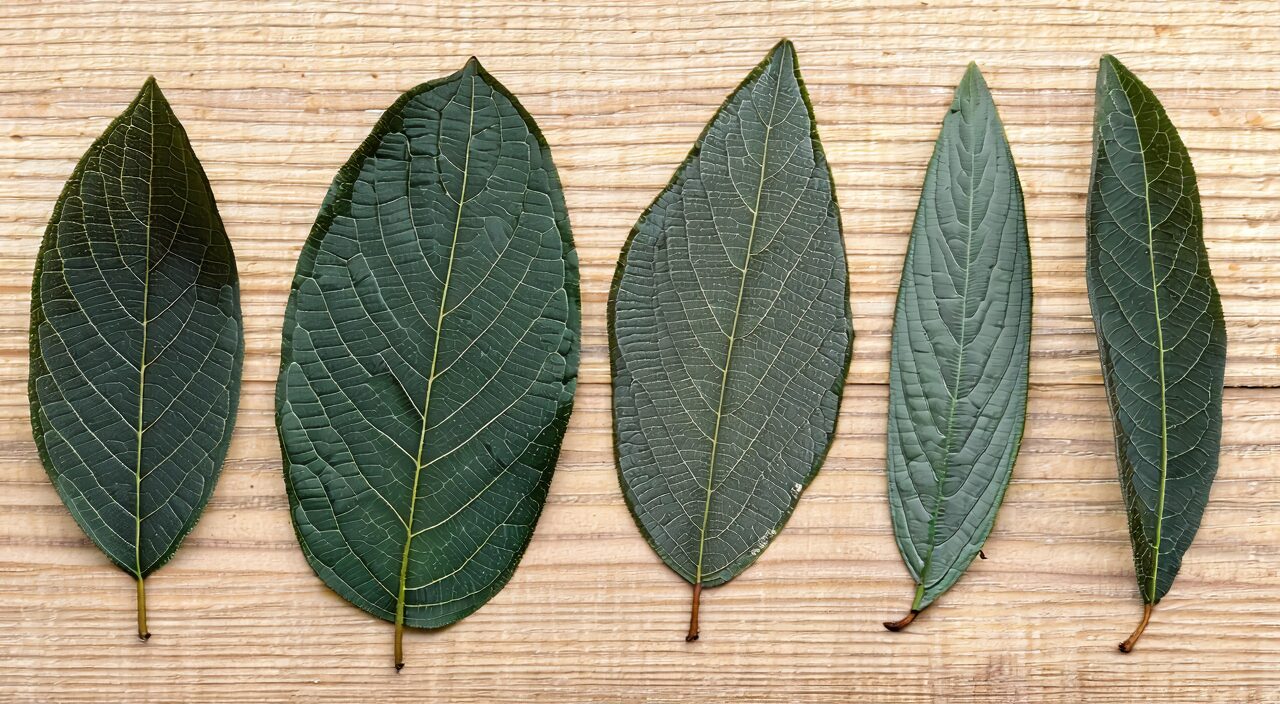
Daqingye is the dried leaves of the Isatis indigotica plant. In the herb market, they often appear wrinkled, broken, and fragmented; intact leaves are relatively rare. Complete leaves are mostly long-elliptic or broadly lanceolate, generally 5–15 cm long and 3–5 cm wide, with a blunt tip and a cuneate or slightly asymmetrical base. The leaf color is usually grayish-green or dark green, sometimes with a very thin grayish-white powdery bloom on the surface. The texture is brittle and easily breaks when bent. After drying, the veins remain relatively clear, with the midrib slightly raised on the underside and the lateral veins forming a reticulate pattern. The Daqingye commonly seen in the market is often broken leaf fragments or curled leaf pieces, dark in color, and easily confused with similar-looking dried leaves. Therefore, when selecting, you can pay attention to whether the leaves have a grayish-green hue, a crisp and dry texture, and distinct reticulate venation.
What Is the Medicinal Part of Daqingye?
The part used for Daqingye is very specific: the dried or semi-dried leaves of Isatis indigotica, not the rhizomes or other parts. Harvesting usually occurs in summer and autumn when the leaves are lush. After picking, impurities and withered leaves are removed, and the leaves are sun-dried or dried at low temperature. From the same plant, the dried root is known as Banlangen (Isatis root), which is much more familiar to the public. Thus, Banlangen and Daqingye come from the same plant, but because different plant parts are used, their traditional applications have different emphases. Such “same source, different parts” situations are not uncommon in Chinese medicine—for example, perilla leaf and perilla seed, or mulberry leaf and mulberry bark. Although the plant is the same, the therapeutic directions of leaves and roots are not exactly identical. Understanding this helps clarify the approximate role each herb plays when encountering related formulas.
How Does Traditional Chinese Medicine Understand Daqingye?
From a traditional Chinese medicine perspective, Daqingye is bitter in taste and cold in nature, primarily entering the heart and stomach meridians. Traditionally, it is known for clearing heat, resolving toxins, cooling the blood, and resolving macules. Many ancient texts record its use in warm-heat diseases accompanied by fever, sore and swollen throat, or skin heat-toxin eruptions, meaning it helps vent and dissipate so-called “heat toxins” from the body through clearing and resolving. Because of these cold and bitter properties, it is not suitable for everyone, especially not for long-term or high-dose use. In practice, it is rarely used alone; rather, it is combined with other herbs to moderate its properties while clearing heat, preventing excessive cold from harming the spleen and stomach. For those just learning, Daqingye can be understood as a leaf-type herb that tends to clear “blood-level heat” or “qi-level heat.” Its direction of action is similar to Banlangen’s but with subtle differences, which will be elaborated later.
How Does Modern Research View Daqingye?
Modern phytochemical research has found that Daqingye contains indirubin, indigo, tryptanthrin, and various organic acids. Some in vitro experiments suggest these components may have certain inhibitory activities against some bacteria or viruses, while some studies have also observed anti-inflammatory and immunomodulatory effects. To some extent, this provides additional perspectives that corroborate traditional experience. However, most of these studies are basic laboratory research or observational studies and cannot be directly equated with effects in the human body. For those wishing to use Daqingye for health maintenance, it is still necessary to rely on professional differentiation and specific dosage forms to determine suitability, rather than making long-term self-administration decisions based solely on laboratory data.
What Are the Differences Between Daqingye, Banlangen, and Qingdai?
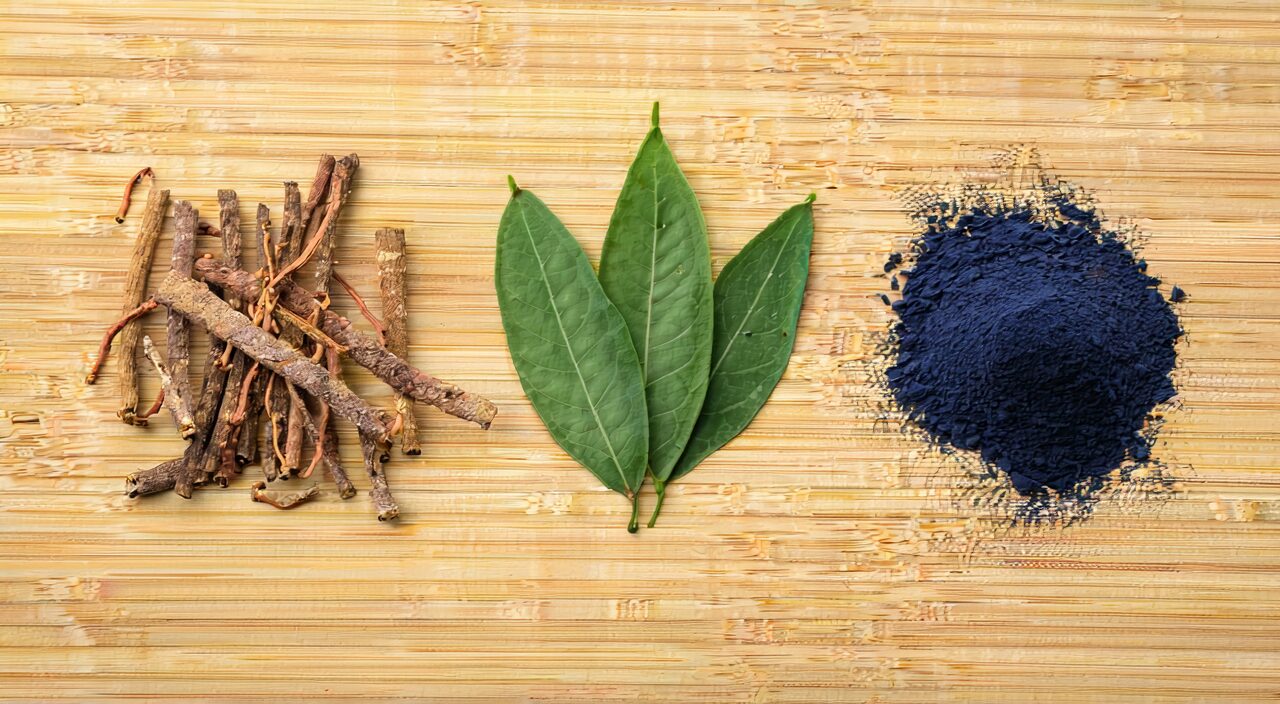
These three are often confused because they do indeed come from the same plant or related processing. Banlangen uses the underground root; it is cold in nature, with a more prominent traditional role in benefiting the throat and reducing swelling, commonly seen in strategies for sore, swollen throat, mumps, and similar conditions. Daqingye uses the above-ground leaves; its characteristics of cooling blood and resolving macules are relatively prominent, and it is used more in traditional contexts like warm-heat disease with skin eruptions and erysipelas. Qingdai is relatively special—it is a deep blue powder or mass made by soaking and processing the stems and leaves of plants such as Isatis indigotica or Polygonum tinctorium. It is a special pigment product, light in texture, traditionally leaning towards clearing liver fire, cooling blood, and stopping bleeding, commonly used for cough due to liver fire attacking the lungs, hemoptysis, or mouth and tongue sores. In simple terms, Banlangen leans toward benefiting the throat, Daqingye toward cooling blood and resolving macules, and Qingdai toward draining liver fire and stopping bleeding. Although all three are related to “clearing and resolving,” the specific zang-fu levels involved are not identical, so they cannot be arbitrarily substituted for one another.
Which Formulas Use Daqingye?
Many traditional formulas include Daqingye as a component. Below are several representative examples. Xijiao Daqing Decoction (Rhino Horn and Daqingye Decoction) is a formula commonly used for intense heat toxin with skin eruptions. In it, Daqingye is combined with rhinoceros horn (now often replaced with water buffalo horn), Scrophularia (xuanshen), and raw Rehmannia (shengdihuang) to enhance the blood-cooling and heat-clearing effect. Shenxi Dan (Mysterious Rhinoceros Pill) primarily uses water buffalo horn, Acorus (shichangpu), Daqingye, and Arnebia (zicao), and is traditionally employed for complex patterns of warm-heat disease presenting with clouded consciousness and a deep-red tongue with macules. There is also Daqingye Decoction, a formula directly named after Daqingye, which often combines herbs that clear heat, resolve toxins, cool blood, and vent pathogens. It should be clear that these formulas all have relatively strict indications and combination requirements; they cannot be used simply because fever or skin issues are present. They must be evaluated based on tongue appearance, pulse pattern, and overall presentation by an experienced professional.
What Precautions Should Be Taken When Using Daqingye?
Because Daqingye is cold in nature, people who commonly have spleen-stomach deficiency-cold, are prone to abdominal pain and diarrhea, or have obvious digestive issues after eating cold foods should be especially cautious when using it. Long-term or high-dose self-administration may affect digestive function and even aggravate existing discomfort. Additionally, due to morphological similarities, in some regions the leaves of Polygonum tinctorium or other plants may be used as Daqingye, and the confusion of sources can pose safety concerns. It is advisable to obtain it from reliable channels and pay attention to identification features. If persistent diarrhea, significant loss of appetite, or cold abdominal pain occurs during or after use, stop taking it promptly and consult a professional. Particularly in cases of recurrent symptoms accompanied by severe throat swelling and pain, breathing difficulty, persistent high fever, ulcers, or black stools, one should not rely solely on a single herb for self-treatment but should seek medical attention promptly to obtain a clear diagnosis.
Summary
As the leaf of Isatis indigotica, Daqingye shares the same origin as Banlangen but has its own unique features in visual identification and traditional application directions. Understanding what it looks like, which part is used, and how to distinguish it from similar herbs is the prerequisite for safe and rational use. Whether used alone or as part of a formula, Daqingye tends to be cold and cool, so those with spleen-stomach deficiency-cold need to pay particular attention. This article is for informational reference only and cannot replace professional diagnosis or personalized advice. Specific use should be combined with individual conditions and professional judgment.