
What Is Hematite (Daizhushi)? Its Medicinal Parts, Identification, and Common Formulas
Hematite (Daizhushi) is a mineral-based Chinese herb with a long history of use in traditional Chinese medicine. Because of its distinctive reddish-brown color and its heavy, sinking nature, it is often used in strategies related to upward-rebelling qi and exuberant liver yang. For those living abroad who want to understand the basics of Chinese medicinal materials, knowing what it is, how to identify it, which common formulas include it, and what precautions should be taken can make it easier to find direction when consulting or communicating with professionals. This article provides a systematic reference covering its appearance, medicinal parts, traditional TCM understanding, modern component research, and how to distinguish it from other minerals such as Red Halloysite (Chishizhi).
What Does Hematite Look Like? How to Identify It
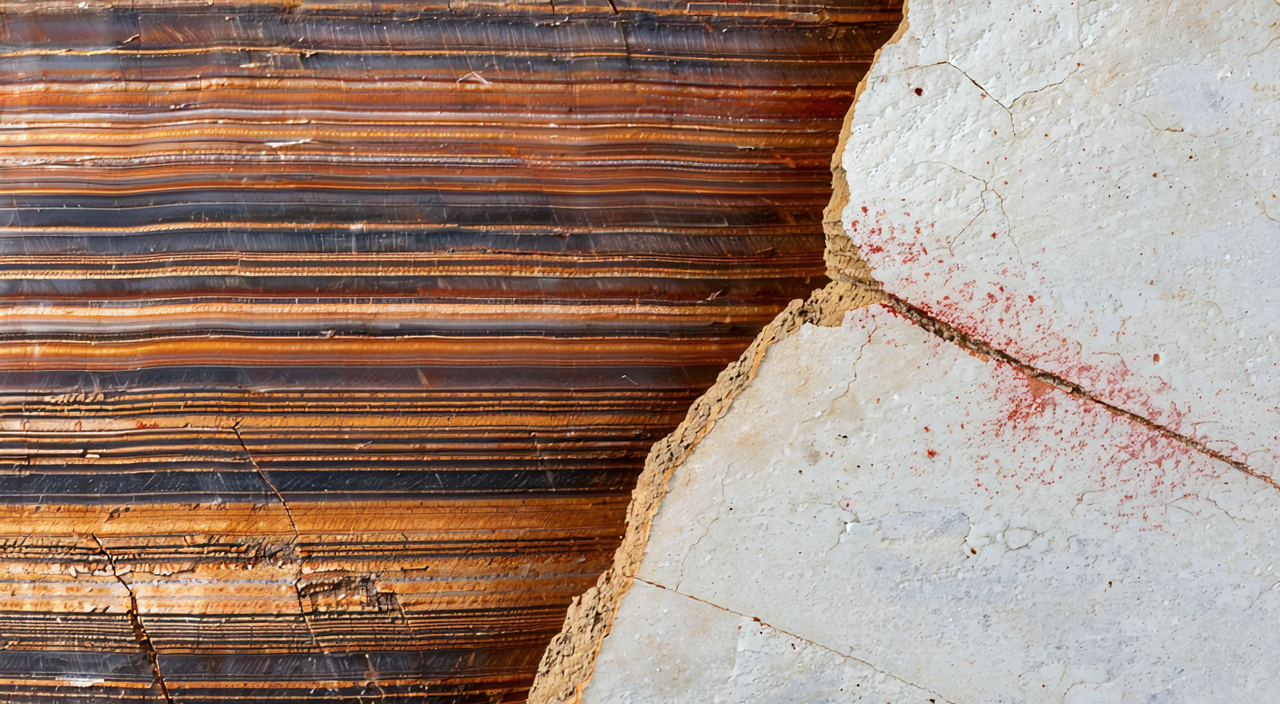
The original mineral of Hematite is mainly iron oxide in the form of hematite. It often occurs as irregular flat lumps or flat granular aggregates, varying greatly in size. The surface of a complete piece usually shows a distinct layered structure. In terms of color, the overall appearance is brownish-red, dark brownish-red, or iron red. Some surfaces may have gray-black or reddish-brown patches due to different degrees of oxidation. On close observation, a faint metallic luster can be seen on some surfaces, resembling rusty reflections, especially conspicuous on freshly broken sections. When broken open, the fracture often displays a lamellar, sheet-like structure with layers overlapping each other. The color is slightly lighter than the outer surface, and interwoven patterns of ochre-red and iron-gray can sometimes be seen. A simple, traditional identification method is to rub Hematite firmly on an unglazed white porcelain streak plate: it will leave a reddish-brown or cherry-red streak, whereas many minerals of similar appearance do not produce a red streak. If touched with the fingers, raw Hematite feels relatively dense and its hardness is much higher than a fingernail, making it difficult to scratch. However, it is quite brittle overall and can be shattered into small, flat fragments with a light tap. Taken together, these characteristics help distinguish Hematite from other reddish-brown minerals easily confused on the market.
What Is the Medicinal Part of Hematite?
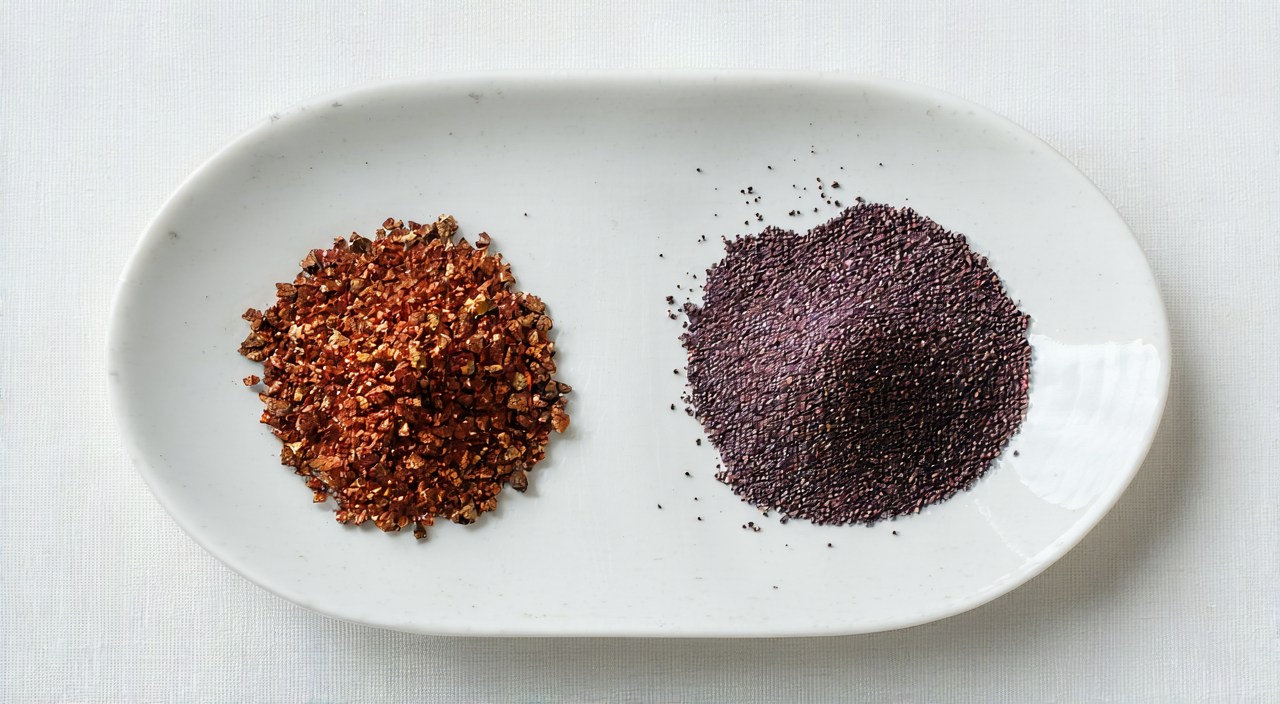
The medicinal part of Hematite is the entire natural mineral itself, making it a typical mineral-derived medicine. The commonly used species is the oxide mineral hematite, belonging to the corundum group. After mining, the attached soil and mixed stones are first removed, and pieces with a higher iron content, red color, and clear layered fracture are selected for medicinal use. Two main processing methods are used. One is raw Hematite (Sheng Daizhushi): after cleaning, it is directly smashed into small pieces or ground into a fine powder for use in prescriptions. The other is calcined Hematite (Duan Daizhushi): the cleaned Hematite is broken into appropriately sized pieces, repeatedly calcined at high temperature, and then quenched while still hot in vinegar, making the material friable and moderating its harsh, sinking tendency. It is then crushed or ground into powder. Traditionally, the raw product tends to be used for calming the liver, anchoring yang, and heavily settling rebellious qi, while the calcined product is more often employed for cooling the blood and stopping bleeding. Regardless of the specification, Hematite sold through regulated channels should undergo quality inspections such as iron content determination and tests for heavy metals and arsenic limits to ensure a relatively safe foundation for its use as a medicinal mineral.
How Does TCM Understand Hematite?
In the theoretical framework of traditional Chinese medicine, Hematite is often described as a substance with a “heavy quality and sinking nature.” It is bitter and cold in nature and flavor, and mainly enters the Liver, Heart, Lung, and Stomach meridians. Traditional understanding of its actions generally revolves around three core ideas. The first is calming the liver and anchoring yang, addressing manifestations caused by liver yang hyperactivity and internal stirring of liver wind, such as distending headaches, dizziness, irritability, and a quick temper, often used together with yin-nourishing or liver-calming herbs. The second is heavily settling and directing rebellious qi downward, mainly applied in cases of stomach qi rebelling upward, leading to nausea, vomiting, frequent belching, or even intractable hiccups, emphasizing guiding the upward-rebellious qi to descend through its sinking property. The third is cooling the blood and stopping bleeding, mainly for bleeding tendencies caused by heat in the blood level, such as vomiting of blood, nosebleeds, or flooding and spotting (uterine bleeding). The calcined product is more commonly seen in this approach. These understandings are based on traditional pattern differentiation and are not equivalent to an independent action of a single constituent on a specific symptom. They tend to view the person as an integrated whole to be regulated. Therefore, whether this therapeutic direction can be considered must be judged by a qualified professional based on the individual’s actual signs, tongue, and pulse findings.
What Are the Focal Points of Modern Research on Hematite?
Modern research on Hematite mainly focuses on mineral component identification and quality control, rather than a deep independent exploration of its pharmacological mechanisms. Chemical composition analysis shows that Hematite primarily contains ferric oxide (Fe₂O₃), which accounts for its reddish-brown appearance and heavy sensation. It also usually contains small amounts of silicon, aluminum, calcium, magnesium, and trace elements associated with the mineral. To ensure safety, pharmacopoeias in most regions set a minimum limit for the iron content in Hematite and maximum limits for heavy metals and harmful elements such as lead, arsenic, and mercury, so as to avoid risks brought by impurities from the mineral source. Moreover, in terms of authentication, techniques such as X-ray diffraction, infrared spectroscopy, and observation of microscopic characteristics are used to differentiate Hematite from other mineral medicines with a similar appearance, such as Red Halloysite (Chishizhi) and Magnetite (Cishi). These efforts provide fundamental data for establishing quality standards for Hematite and support proper usage norms from the material perspective.
How Does Hematite Differ from Red Halloysite and Magnetite?
These three medicinal materials are all mineral in origin and can sometimes be confused in appearance, but they have clear differences in their sources, characteristics, and traditional therapeutic logic. Red Halloysite (Chishizhi) belongs to the silicate mineral group of halloysite, mainly occurring as fine, clay-like masses or irregular lumps. Its color ranges from reddish to purplish-red, sometimes with grayish-white patches. It is relatively soft and can be scraped into powder with a fingernail; when moistened, it develops a sticky feel. In traditional practice, it is mostly classified as an astringent substance, commonly used in patterns such as chronic diarrhea, blood in the stool, and uterine bleeding. Magnetite (Cishi) comes from magnetite ore and tends toward iron-black or gray-black in color. Its hardness is far greater than that of Hematite. The most notable feature is its strong magnetism that can attract iron filings. Traditionally, it is mainly used to settle fright, calm the spirit, promote inspiration, and relieve panting. Hematite (Daizhushi) is brownish-red to dark brownish-red in color, moderate in hardness, generally non-magnetic, and produces a reddish-brown streak on a streak plate. Traditionally, it centers on calming the liver, directing qi downward, cooling the blood, and stopping bleeding. Although these three minerals may all appear reddish or darkish, they each have their own emphasis in terms of hardness, magnetism, streak, and traditional therapeutic thinking, so distinguishing them clearly helps avoid misuse.
Which Formulas Use Hematite?
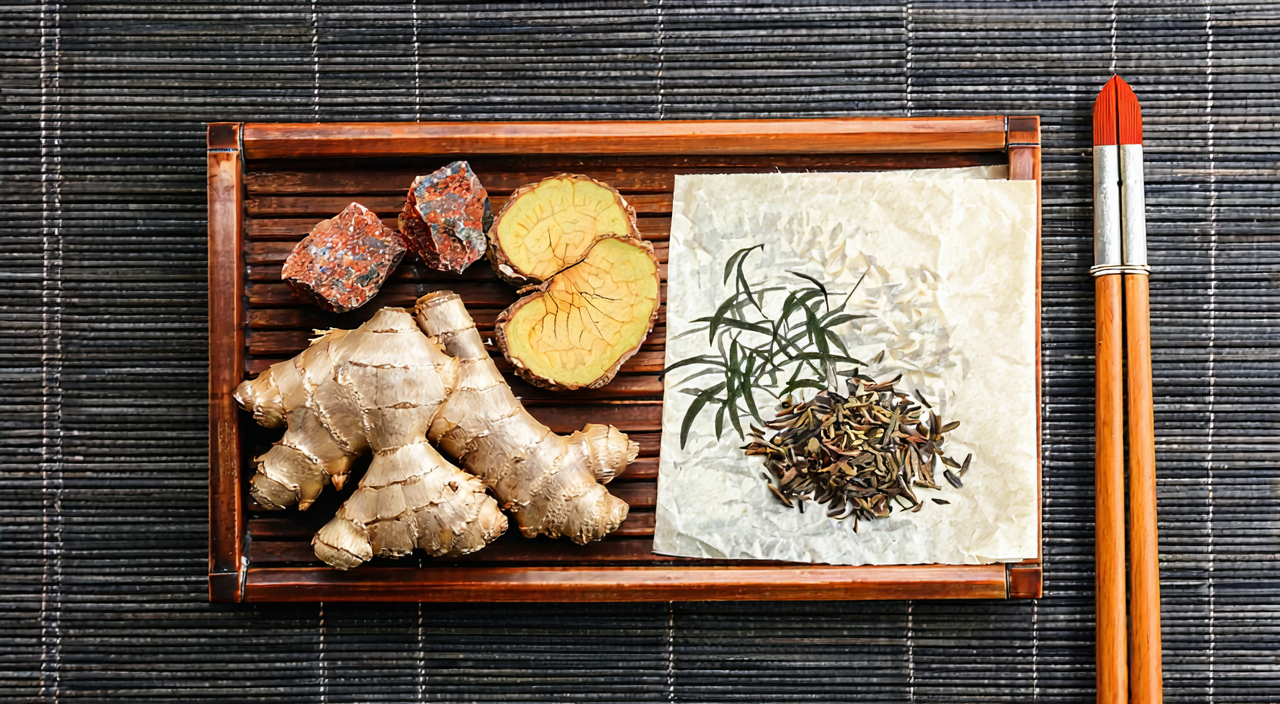
Some traditional formulas include Hematite as one of the ingredients and have been used over a long period in relevant contexts. They are listed here only as directions for further understanding. Xuanfu Daizhe Tang (Inula and Hematite Decoction) is a well-known formula in which Hematite is combined with Inula Flower (Xuanfuhua), Pinellia (Banxia), Fresh Ginger (Shengjiang), and others. Its overall action tends to harmonize the stomach and direct rebellious qi downward, and it has traditionally been used for manifestations such as epigastric stuffiness and hardness and persistent belching caused by stomach qi deficiency and internal obstruction of phlegm turbidity. Zhengan Xifeng Tang (Liver-Settling and Wind-Extinguishing Decoction) combines Hematite with Achyranthes Root (Niuxi), Dragon Bone (Longgu), Oyster Shell (Muli), and other substances, focusing on calming the liver and anchoring yang. It was traditionally applied for dizziness, vertigo, tinnitus, and sensations of heat in the head due to liver-kidney yin deficiency and liver yang hyperactivity. Additionally, there are combinations such as Hematite Decoction (Daizhushi Tang), which often pair Hematite with heat-clearing and blood-cooling substances, offering auxiliary management for bleeding conditions like hematemesis and epistaxis caused by blood heat. Each of these formulas has a different emphasis and is not a universal solution. Whether an individual is suitable for consideration must combine specific manifestations, constitutional status, and professional assessment. Self-administration or modification without guidance is not advisable.
What Precautions Should Be Taken When Using Hematite?
Although Hematite is a mineral medicine, its heavy, downward-bearing property is quite pronounced, and improper use may bring adverse effects. Pregnant individuals should usually avoid contact with or use of Hematite. For those who tend to have a weak spleen and stomach, are prone to diarrhea, have loose stools, or have a deficient-cold constitution, long-term use or use in relatively large doses may further impact digestive function. Caution and careful evaluation are also required for people who already have a tendency toward chronic constipation. Mineral-based medicinal materials cannot be ruled out from the possibility of heavy metal and impurity residues due to environmental or processing conditions. Therefore, only properly processed products that meet local or international quality standards should be chosen. Obtaining raw minerals on one’s own from unknown sources and using them directly is not acceptable. It is even less advisable to treat Hematite as a daily health supplement or a sole choice for long-term regulation. If relevant discomfort persists and recurs, intensifies, or is accompanied by chest tightness, palpitations, severe vomiting, abdominal pain, blood in the stool, or abnormal mental state, one should consult a physician promptly rather than remain at the stage of self-directed management.
Summary
Hematite (Daizhushi) is an iron-oxide-based mineral medicine mainly composed of ferric oxide (Fe₂O₃). Its typical features include a brownish-red appearance, a layered fracture, and a reddish-brown streak—details that distinguish it from materials such as Red Halloysite and Magnetite. Traditional Chinese medicine usually understands it through the perspectives of calming the liver and anchoring yang, heavily settling and directing rebellious qi downward, and cooling the blood and stopping bleeding. Some formulas, such as Inula and Hematite Decoction and Liver-Settling and Wind-Extinguishing Decoction, use Hematite in their related therapeutic directions, but all must be viewed cautiously in conjunction with the individual’s constitution and symptom presentation. At the same time, the use of mineral medicines especially requires attention to their source, processing method, and applicable contraindications, and potential risks should not be ignored. The contents of this article serve only as educational reference and cannot replace professional diagnosis or individualized advice.