
What Is Cordyceps Sinensis? Medicinal Parts, Identification Methods, and Common Formulas
Many people are both familiar and unfamiliar with Cordyceps sinensis—is it an insect or a herb? This special Chinese medicinal comes from a complex formed in nature by a fungus and the larva of a moth in the family Hepialidae. Traditional Chinese medicine classifies it as a prized tonic. There is no need to over-mythologize it or to reject it completely. Understanding its true appearance, identification points, medicinal parts, and common combinations helps form a clearer perception in an environment of mixed information.
What does Cordyceps sinensis look like? How to identify it?
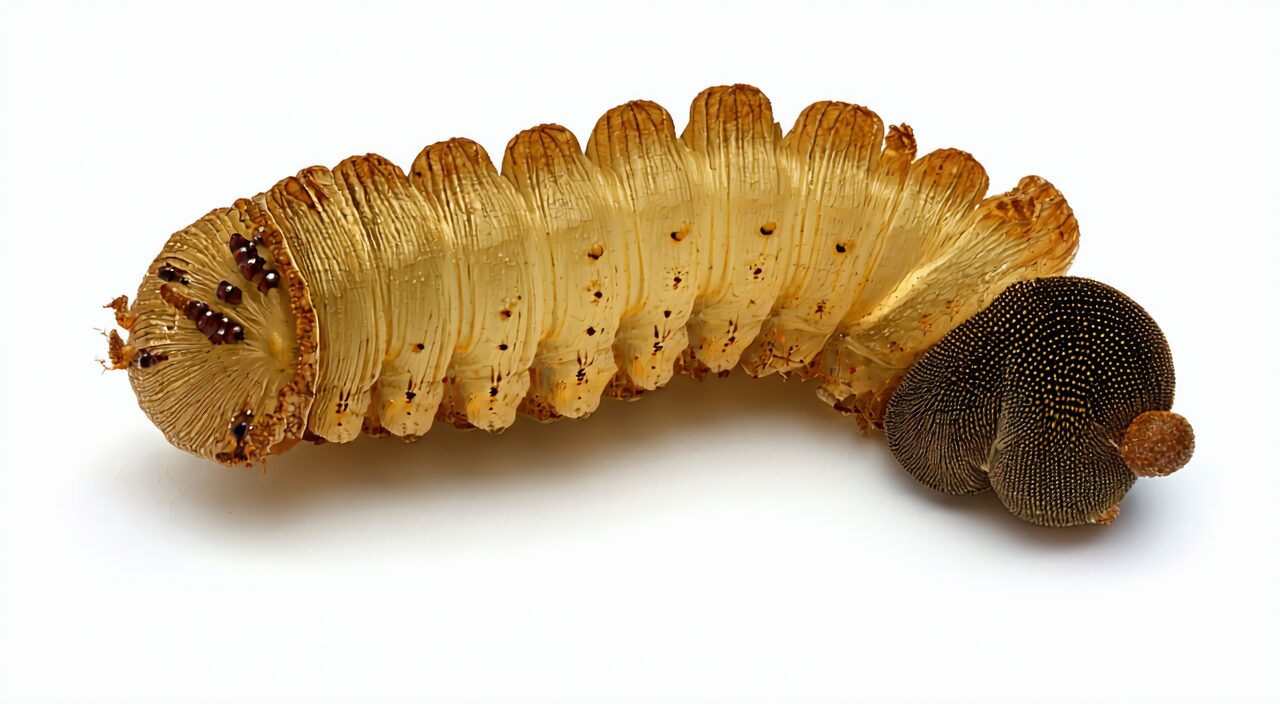
Genuine Cordyceps sinensis consists of two connected parts: the caterpillar-like body and the stroma growing from its head. The body resembles a silkworm, about 3–5 cm long and 0.3–0.8 cm in diameter. Its surface is dark yellow to yellowish brown with distinct annulations; it is thinner near the head and has 20–30 annulations overall. There are 8 pairs of legs, among which the 4 pairs in the middle are the most conspicuous, serving as an important identification feature. The body is brittle and breaks easily; the fracture surface is somewhat flat, pale yellowish white, often with a dark “V”-shaped or “一”-shaped digestive tract mark in the center. The stroma extends from the front of the head, forming a slender club shape, slightly curved, up to 4–7 cm long and about 0.3 cm in diameter. Its surface is dark brown to brownish black, slightly enlarged at the upper part. The texture is flexible and the fracture surface is whitish. Genuine Cordyceps sinensis has a slightly fishy aroma and a mildly bitter taste. When touching the surface of the body, inferior or adulterated products often feel excessively moist or have a pungent odor—these details can assist preliminary judgment when purchasing.
What is the medicinal part of Cordyceps sinensis?
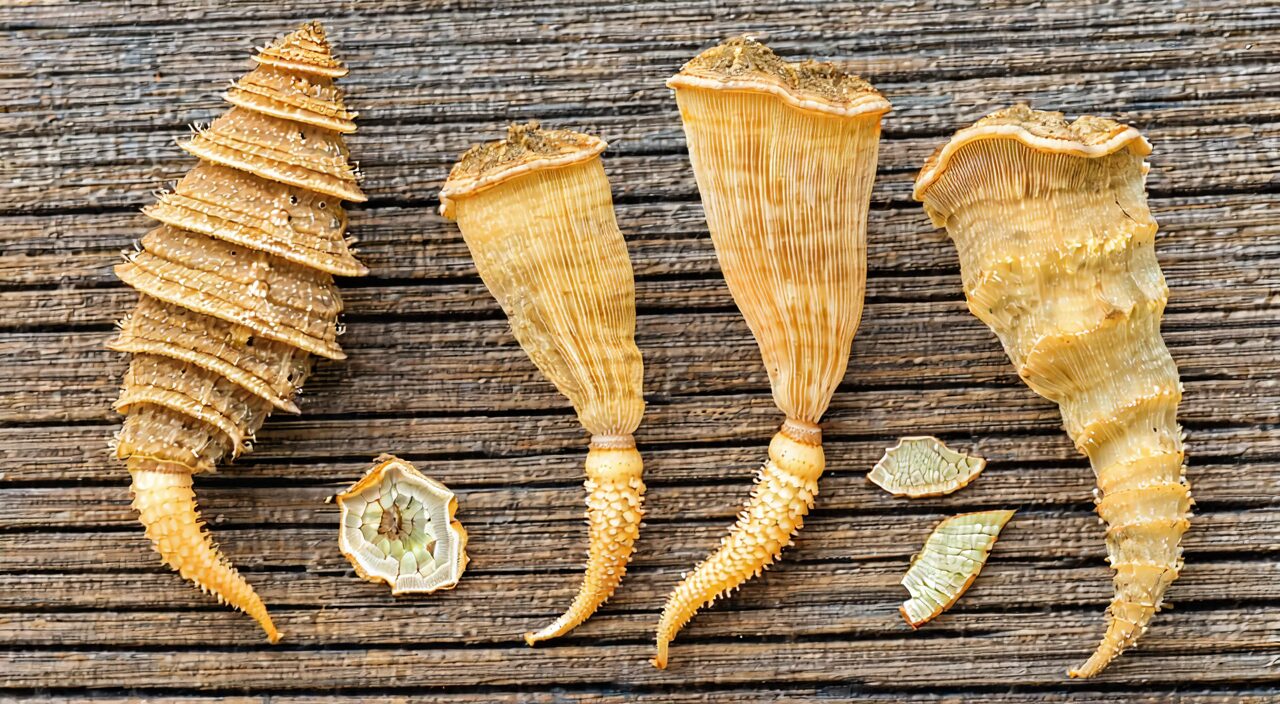
The medicinal part of Cordyceps sinensis is not simply the insect or the herb, but the dried complex of the stroma of the fungus Ophiocordyceps sinensis (family Ophiocordycipitaceae) parasitizing a larva of the family Hepialidae, together with the larva’s cadaver. In summer, when the stroma has just emerged from the ground and spores have not been released in large quantities, it is harvested, cleaned of mud and membranous attachments, and dried in the sun or at low temperature. The intact medicinal material usually keeps the body and stroma connected. On the market, decoction pieces may separate the body and stroma, but high-quality herbs generally require a plump body and a short stroma as preferred traits. The outer skin of the body is not removed during processing, and the whole complex can be used medicinally. Knowing this also helps avoid confusing mycelium products with the intact Cordyceps complex.
How does traditional Chinese medicine understand Cordyceps sinensis?
Traditional Chinese medicine considers Cordyceps sinensis to be neutral in nature and sweet in taste, entering the Lung and Kidney meridians. Its main functions are to tonify the kidney and replenish the lung, and to stop bleeding and resolve phlegm. Classic materia medica texts often describe its use for conditions such as chronic cough with deficiency-type dyspnea, consumptive cough with blood-streaked sputum, aching and weakness of the lower back and knees, and general debility after illness—conditions leaning toward insufficiency of the lung and kidney. It is not aimed at a single symptom but at restoring the coordinated function of the lung and kidney. Thus, it commonly appears in formulas for chronic deficiency and debilitation. It must be emphasized that Cordyceps sinensis is not suitable for all people with cough or asthma. If external pathogens have not been resolved or internal excess heat is flourishing, blind use may instead aggravate the condition. In all cases, it is advisable to consider whether it is appropriate under the guidance of someone experienced and familiar with one’s individual constitution.
What components and effects of Cordyceps sinensis attract modern research attention?
Modern research has isolated various components from Cordyceps sinensis, such as cordycepic acid, adenosine, cordycepin, cordyceps polysaccharides, ergosterol, and others. Laboratory and small-scale trials have shown that these components may exhibit immunomodulatory, anti-fatigue, anti-inflammatory, and antioxidant potential in vitro or in animal models. Studies have also explored their influence on respiratory system and renal function markers. However, most findings remain at the experimental stage, with limited human evidence. Dosages, pathways of action, and long-term safety still lack large-scale clinical confirmation. Therefore, such findings can only serve as a modern reference for understanding its traditional uses, not as direct clinical guidance. If one hopes to understand Cordyceps sinensis from a modern pharmacological perspective, it is better to regard this as a research direction rather than an established therapeutic conclusion.
How does Cordyceps sinensis differ from similar medicinal materials?
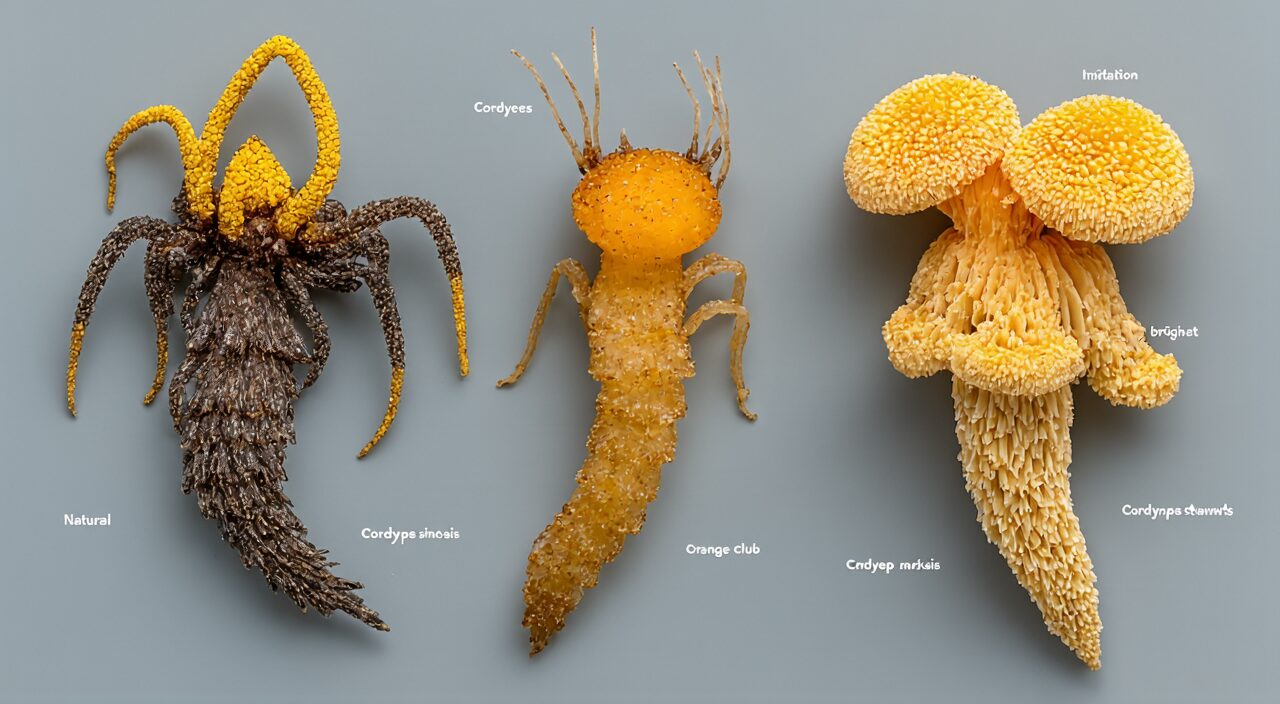
On the market, one often sees materials that look similar to Cordyceps sinensis but come from different sources. The most easily confused are Cordyceps militaris and Cordyceps hawkesii (Ya Xiang Bang Chong Cao). Cordyceps militaris is mostly artificially cultivated; its stroma is enlarged and orange-yellow or tangerine, with an inconspicuous or pupa-form body, making it more brightly colored. Its traditional application emphasis differs from that of Cordyceps sinensis, and its price is much lower. Cordyceps hawkesii is formed by the fungus Ophiocordyceps hawkesii parasitizing lepidopteran larvae. Its body looks more like a silkworm, with blurred surface annulations. The stroma is often twisted, slender, sometimes branched, and hollow in cross-section; its odor and taste also differ from the genuine product. Traditional literature holds that its medicinal strength is far inferior to Cordyceps sinensis. In identification, one can make a comprehensive judgment based on the prominent leg pairs, body annulations, stroma shape, fracture surface features, and odor, which requires some experience. For ordinary users, extra caution is needed regarding low-priced “Cordyceps” sold through informal channels.
Which formulas include Cordyceps sinensis?
In traditional formulas, Cordyceps sinensis is rarely used alone but is often combined with other herbs that tonify the lung and kidney. Among modern Chinese patent medicines, Bailing Capsules use fermented Cordyceps mycelial powder as the main ingredient, an approach derived from the functional direction of Cordyceps sinensis. They are often used as auxiliary regulation for chronic cough, asthma, and backache caused by deficiency of both lung and kidney. Jinshuibao Capsules also originate from fermented Cordyceps mycelial products, with a similar concept focusing on the aspect of lung and kidney insufficiency. Chongcao Qingfei Capsules combine Cordyceps sinensis, sea buckthorn cream, gecko, and other herbs, traditionally used for cough and chest tightness with dual deficiency of qi and yin accompanied by phlegm-heat manifestations. These patent medicines do not directly contain natural Cordyceps sinensis fruiting bodies but use modern technology to expand the scope of application. Suitability still needs to be evaluated based on specific symptoms, constitution, and product instructions, with pharmacist or physician consultation where necessary. In traditional dietary therapy, there is also the practice of stewing Cordyceps sinensis with old duck, but its scope of application is narrow and should not be casually imitated.
What precautions should be taken when using Cordyceps sinensis?
First, authenticity and quality directly affect safety. There is a possibility of heavy metal contamination or adulteration in wild Cordyceps sinensis; products with clear sources and test information should be chosen. Those allergic to Cordyceps or molds should avoid contact. Traditionally, it is considered unsuitable for use during colds and fevers, excess-heat syndromes, or when damp-heat or phlegm-heat accumulate internally. Moreover, Cordyceps sinensis may affect blood coagulation, so special caution is needed when used together with anticoagulants such as aspirin and warfarin; a physician should be informed beforehand. Safety studies in children, pregnant women, and nursing mothers are insufficient, so self-use is generally not recommended. For any severe or persistent discomfort, such as recurrent cough, chest pain, difficulty breathing, or significant weight loss, a formal medical evaluation should be sought first; Cordyceps sinensis must not replace necessary treatment.
Summary
Cordyceps sinensis is a special insect-fungus complex, not an ordinary plant-based medicinal material. During identification, paying attention to the body’s leg pairs, annulations, and stroma shape can reduce confusion. Traditionally, following the thinking of tonifying the kidney and replenishing the lung, it is commonly used for regulating deficiency conditions. However, whether distinguishing authenticity, understanding modern research, or selecting preparations containing its related components, careful judgment based on individual circumstances is essential. It should not be followed blindly or used as a substitute for standard medical care. This article provides only popular science reference; for any health concerns, please consult a professional.